Researched overview. This guide is based on published dermatology guidance, not on hands-on testing by BeautyKob. No product, supplement or brand is recommended, and no dose is given.
Table Of Content
- Quick answer
- What rejuvenation means, honestly
- Signs your skin may need gentler care
- Core principles
- Gentle ingredients, honestly
- A daily routine for gentle skin renewal
- Gentle exfoliation that renews skin safely
- Natural techniques that support rejuvenation, honestly
- Lifestyle habits, honestly
- Common mistakes that slow skin rejuvenation
- How long gentle rejuvenation takes, honestly
- Patch test
- When to get help
- Frequently asked questions
- Summary
Quick answer
Skin rejuvenation without harsh products means helping your skin look and feel better with gentle methods only: a mild cleanser, hydration, a few barrier-supporting ingredients, mild exfoliation once or twice a week, and daily sunscreen. It does not mean forcing rapid results. Your skin renews itself slowly — old cells shed and new ones reach the surface over weeks — and gentle care supports that process by not damaging the barrier. What gentle methods cannot do is just as important: they do not stimulate collagen production, tighten skin, repair damage, or reverse ageing. No cream does that. This guide is general information, not medical advice.
Contents: What rejuvenation means, honestly · Signs your skin may need gentler care · Core principles · Gentle ingredients, honestly · A daily routine · Gentle exfoliation · Natural techniques, honestly · Lifestyle, honestly · Common mistakes · How long it takes, honestly · Patch test · When to get help · FAQ
What rejuvenation means, honestly
Skin rejuvenation is usually described as improving texture, tone, hydration and elasticity. The honest version is smaller: gentle care can make skin feel smoother, look less dull, and stay comfortable — because the barrier is intact and the skin is hydrated. It does not make new collagen, tighten loose skin, or repair damage that has already happened.
Your skin does renew itself. Old cells on the surface shed and new cells move up to replace them. That process is slow. Skin-cell turnover is often quoted as “28 days”, but that is a rounded rule of thumb; Weinstein’s 1984 calculation put it at roughly 47–48 days, and the real figure varies by age, body site and skin condition. There is no fixed schedule — “four to six weeks” is a rough range, not a promise. Anyone who gives you a fixed date for visible renewal is guessing.
The original article said the skin “is made to rejuvenate itself” and that gentle care supports “the skin’s natural repair process”. That framing is misleading. Skin does not repair itself the way a cut heals; it slowly replaces surface cells while the deeper structure ages. Gentle care does not speed that up. It avoids slowing it down by damaging the barrier — and that is a real, useful difference.
Signs your skin may need gentler care
Harsh products — strong acids, rough scrubs, too many actives at once — can wear the barrier down without you noticing at first. Signs that your routine may be too harsh:
- Dullness. Dead cells build up and the surface reflects light unevenly, so skin looks flat.
- Rough or bumpy texture. The surface feels uneven even after moisturising.
- Dehydration. Skin feels tight, flaky or uncomfortable because a damaged barrier cannot hold moisture.
- Lines looking more visible. Dry skin makes fine lines look deeper. Dryness does not cause lines — it makes existing ones easier to see.
- Redness, stinging or breakouts after products that used to be fine.
If several of these appear together, the answer is usually less, not more: fewer actives, gentler products, and time for the barrier to settle.
Core principles
Gentle rejuvenation rests on three principles:
- Protect the barrier. The barrier is the outer layer of lipids and natural moisturising factors that keeps water in and irritants out. When it is intact, skin stays comfortable and hydrated. When it is damaged, skin dries out, stings and reacts. Everything in this guide serves the barrier first.
- Encourage turnover gently. Mild exfoliation or enzyme-based products can help dead cells shed without stripping the skin. Aggressive exfoliation does the opposite — it damages the barrier and slows recovery.
- Hydrate deeply. Hydrated skin feels smoother and softer and looks less dull. Hydration does not increase elasticity or reduce fine lines; it improves how skin feels and looks, which is enough.
Gentle ingredients, honestly
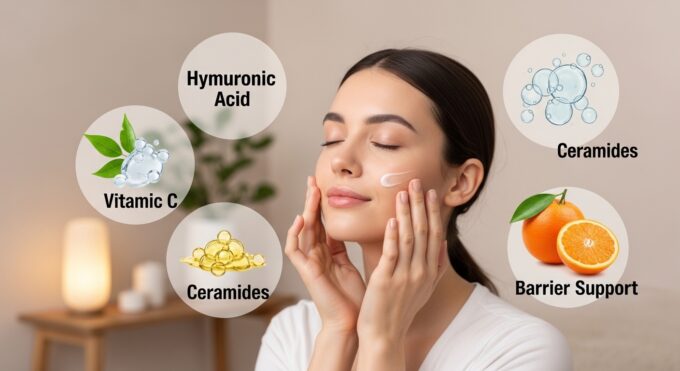
A few ingredients genuinely support the barrier and hydration. None of them is a treatment, and none of them tightens skin or makes collagen:
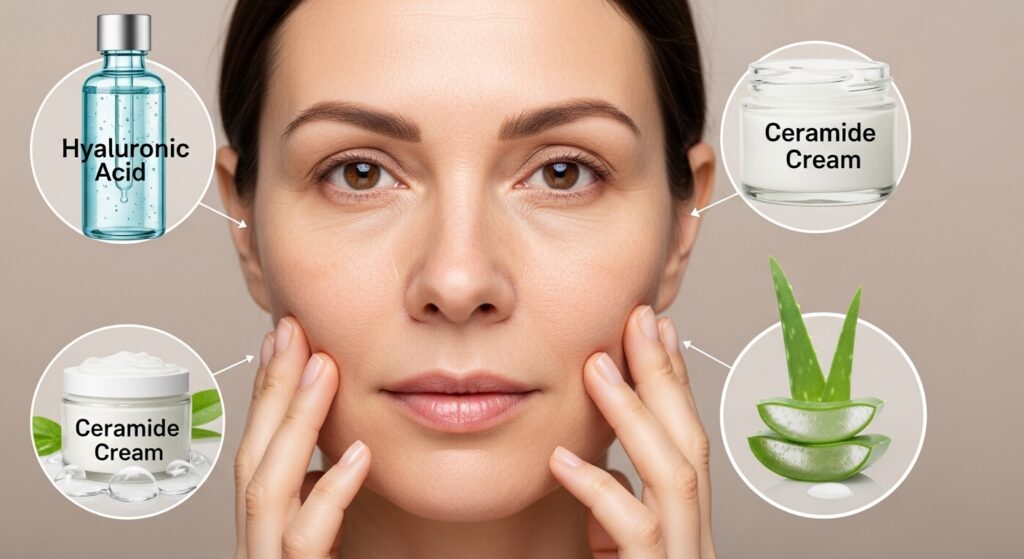
- Hyaluronic acid. A humectant that draws water into the skin. It hydrates and can make skin feel plumper for a while. It does not repair anything.
- Niacinamide. Supports the barrier and can help with redness and uneven tone. The evidence is reasonable but modest — niacinamide is a useful ingredient, not a transformation (Draelos 2006).
- Ceramides. Fats that are naturally part of the barrier. Ceramide creams help maintain it and reduce moisture loss.
- Peptides. Short chains of amino acids that are often said to help the skin make collagen and tighten it. The evidence for that is thin. Peptides are gentle and may support the barrier, but they do not tighten skin or reduce signs of ageing in any proven way.
- Vitamin C. An antioxidant that can brighten the look of skin and help protect against environmental damage. It is a cofactor for collagen synthesis, which is a real but modest role — it does not rebuild collagen or reverse ageing. Use it in mild doses; stronger is not better, and it can irritate.
No strength is recommended in this guide. A product that lists a percentage is not automatically better than one that does not, and higher concentrations irritate more often.
A daily routine for gentle skin renewal
A short, steady routine is the whole method:
Morning:
1. Gentle cleanser, lukewarm water.
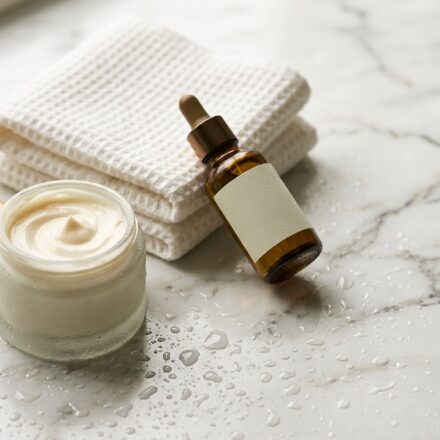
2. Hydrating serum — hyaluronic acid or niacinamide.
3. Light moisturiser with ceramides or glycerin.
4. Broad-spectrum sunscreen, SPF 30 or higher, reapplied every two hours when outdoors. Sunscreen is the single most effective step against premature ageing (Hughes et al. 2013), and skipping it undoes the rest of the routine.
Evening:
1. Gentle cleanser.
2. Nourishing serum — peptides, ceramides or hydrating ingredients.
3. Moisturiser to hold water in overnight.
Night is a practical time for this routine, because you are not wearing sunscreen or makeup and the products stay on undisturbed. It is not a biological repair window — the skin does not repair itself more at night, and there is no growth-hormone surge that rebuilds collagen while you sleep. The original article claimed exactly that; it has no good evidence behind it, and this guide does not repeat it.
Gentle exfoliation that renews skin safely
Exfoliation is the part of gentle rejuvenation most often done too harshly. Mild options that protect the barrier:
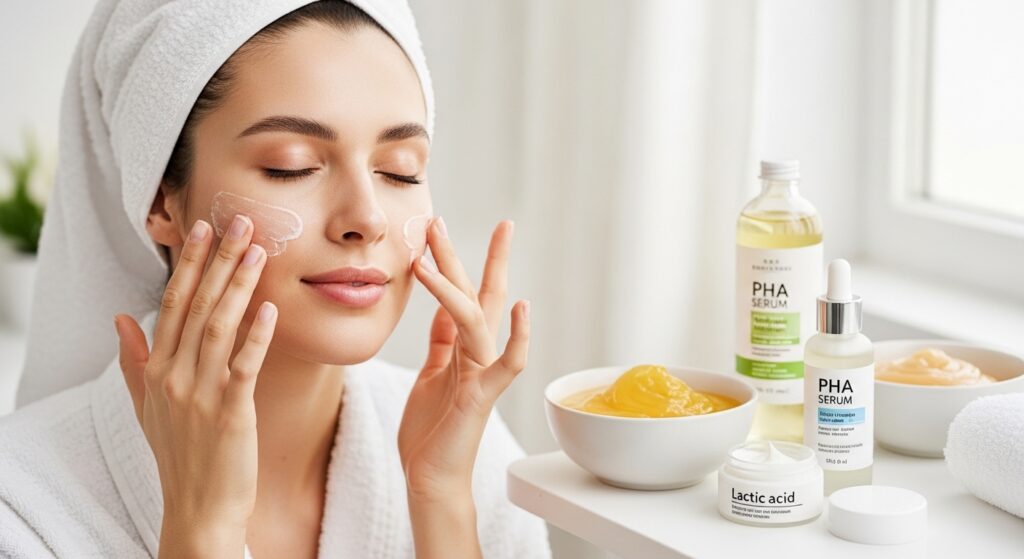
- Fruit-based enzyme exfoliants. They dissolve dead surface cells gradually and are usually well tolerated, including by sensitive skin.
- Polyhydroxy acids (PHAs). Larger molecules than other acids, so they work more slowly and irritate less.
- Low-strength lactic acid. A mild exfoliant that also hydrates. Use a low-strength product; do not chase a percentage. The original article said lactic acid is gentler because it is “naturally derived in milk” — that is not how it works. Lactic acid in skincare is usually made by fermentation, and what makes it gentler is its larger molecule and lower strength, not its source.
Use a mild exfoliant once or twice a week, and stop if you get redness, stinging, flaking or tightness. More often does not renew skin faster — it damages the barrier and slows recovery. Consistency matters more than intensity.
Natural techniques that support rejuvenation, honestly
A few natural methods sit alongside the products:
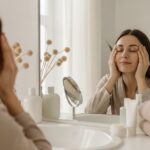
- Facial massage. Soft upward movements can feel relaxing and ease tension in the face. That is all they do. Massage does not enhance blood flow, supply oxygen and nutrients to skin cells, or increase radiance. There is no good evidence for any of those claims, and this guide does not make them.
- Lymphatic drainage massage. Often sold as a way to remove “toxins” and excess fluid and reduce puffiness. There is no good evidence it does any of that, and skin does not need detoxing — the liver and kidneys handle waste removal. Skip the claim; keep the massage if it feels good.
- Warm compress. A warm towel on the face for a few minutes feels soothing and can help tight muscles relax. It does not enhance circulation, and it does not help products absorb better. Nothing you do with your hands or with warmth increases absorption.
- Facial exercises. Gentle movements — raising the eyebrows, puffing the cheeks, stretching the jaw — can make stiff facial muscles feel more flexible. They do not tighten facial muscles, make skin firmer, improve tone, or lessen lines. Facial exercises are relaxation, not a workout for your skin.
Lifestyle habits, honestly
Products are only part of the picture, and lifestyle claims are where the original article overstated most:
- Food. A varied diet with fruit, vegetables, nuts and omega-3 fats supports general health. It is not a skin treatment. Antioxidants in food do not protect skin cells from oxidative stress in any way you can measure on your face, and no diet restores radiance.
- Water. Drinking enough water is good for your health. It does not directly hydrate skin or keep it elastic. Skin hydration comes from the barrier holding water in, not from how much you drink.
- Sleep. Adults need 7 or more hours a night (CDC). Poor sleep is linked to worse-looking skin in observational studies — for example, one small study of 60 women (Oyetakin-White et al. 2015) found poor sleepers had roughly double the intrinsic ageing score and about 30% slower barrier recovery at 72 hours — but it was small, observational and funded by a cosmetics company, so it shows an association, not proof. Sleep matters; it is not a treatment.
- Stress. Long-term stress can make skin feel more reactive, and stress is linked to inflammation in general. That link is modest and indirect. Stress does not “disintegrate the skin wall” — that line in the original article is garbled — and managing stress is good for your wellbeing, not a skin therapy.
Common mistakes that slow skin rejuvenation
- Over-exfoliating. Strong acids or scrubs used too often damage the barrier and cause irritation, dryness and sensitivity. Once or twice a week with a mild product is enough.
- Too many actives at once. Layering several strong products overwhelms the skin and makes it more sensitive. Add one thing at a time.
- Skipping sunscreen. Sunlight speeds ageing and undoes any rejuvenating work. SPF 30+ every morning is not optional.
- Skipping moisturiser. Without it, the barrier loses water and skin looks dull and feels tight, however good the rest of the routine is.
How long gentle rejuvenation takes, honestly
Gentle methods work slowly, and anyone who gives you a date is guessing:
- Hydration can feel better within days — skin feels softer and less tight.
- Texture and tone take weeks to months, and the change is gradual and varies from person to person.
- There is no week by which brightness or smoothness “becomes prominent”. The original article promised improvement in the first week and visible changes in the following few weeks. That is a fixed timeline with no source, and this guide does not repeat it.
- The long-term result of gentle care is skin that stays comfortable, hydrated and resilient, with fewer flare-ups — not transformed skin.
Patch test
Test any new product before using it on your face. The American Academy of Dermatology recommends testing a new product before using it on your face: apply a small amount to a quarter-sized patch of skin on the inside of your arm or the bend of your elbow, twice a day for 7 to 10 days. If there is redness, itching or swelling, do not use it on your face. A 24-hour test can miss an allergic reaction, which often takes several days to appear — that is why this guide uses the AAD 7–10 day patch-test method.
When to get help
Ask a dermatologist or pharmacist if: your skin stays red, sore, swollen or blistering; you have a rash that does not settle; you have a skin condition such as eczema, rosacea or acne that is getting worse; or you are unsure whether a product is safe for you. Bring the products you use, or photos of their ingredient lists. A dermatologist can also advise on in-clinic options — peels, laser, microneedling — which are medical procedures, not things to try at home.
Frequently asked questions
Q1: Can gentle products really rejuvenate skin?
They can make skin feel smoother, look less dull and stay comfortable by protecting the barrier and keeping it hydrated. They cannot stimulate collagen, tighten skin or reverse ageing.
Q2: Is gentle exfoliation enough, or do I need a strong acid?
For most people, mild exfoliation once or twice a week is enough. Strong acids work faster but irritate far more often, and a damaged barrier looks worse, not better.
Q3: Do peptides tighten skin?
No good evidence supports that. Peptides are gentle and may support the barrier, but the claim that they help the skin make collagen and tighten it is thin.
Q4: Does drinking more water hydrate my skin?
No — not directly. Skin hydration depends on the barrier holding water in. Drink water for your general health, and moisturise for your skin.
Q5: How long before I see a difference?
Hydration can feel better in days. Texture and tone take weeks to months, gradually, and vary from person to person. There is no fixed date.
Summary
Skin rejuvenation without harsh products means gentle care only: a mild cleanser, hydration, a few barrier-supporting ingredients, mild exfoliation once or twice a week, and SPF 30+ every morning. Skin renews itself slowly — turnover takes roughly seven weeks by the best calculation, not 28 days — and gentle care supports that process by not damaging the barrier. It does not stimulate collagen, tighten skin, repair damage or reverse ageing. Massage and facial exercises are comfort aids, not treatments. Patch test every new product for 7 to 10 days, and ask a dermatologist if your skin stays red, sore or swollen.
Related reading: Improving Skin Texture Naturally · Eradikate Acne Treatment for Cystic Acne
Sources: American Academy of Dermatology, 7 Rosacea skin care tips (patch-test method: apply a new product to a quarter-sized patch of skin on the inside of the arm for 7–10 days); American Academy of Dermatology, How to select anti-aging skin care products (broad-spectrum sunscreen, SPF 30 or higher, reapply every two hours outdoors). This is a researched overview, not a hands-on review.