Researched overview. This guide is based on published dermatology guidance, not on hands-on testing by BeautyKob. No product, supplement or brand is recommended, and no dose is given.
Table Of Content
- Quick answer
- What a face spa is — and is not
- Safety rules first
- Preparing for a safe face spa
- Step 1: Gentle cleansing
- Step 2: Exfoliation (optional)
- Step 3: Facial massage
- Step 4: Face mask application
- Step 5: Hydration and moisturising
- Step 6: Sun protection (daytime spa)
- Tools that enhance a home face spa — safely
- How often to do a face spa at home
- Skin-type tips
- Natural techniques to enhance spa results, honestly
- Common mistakes to avoid
- Patch test
- When to seek professional help
- Frequently asked questions
- Summary
Quick answer
A home face spa is a gentle self-care session: cleanse, optionally exfoliate mildly, massage lightly, apply a mask, hydrate, and use sunscreen if it is daytime. Done carefully, it can leave skin feeling clean, soft and calm. It is not a professional treatment, and it does not give professional results — no home session matches a clinic facial, and this guide does not claim it does. Safety comes first: clean hands and tools, gentle pressure, mild products, a patch test for anything new, and clear stop rules. If your skin is broken, infected, severely irritated, or you have a condition a clinician is treating, skip the spa and get advice instead. This guide is general information, not medical advice.
Contents: What a face spa is — and is not · Safety rules first · Preparing · Step 1: Gentle cleansing · Step 2: Exfoliation (optional) · Step 3: Facial massage · Step 4: Face mask · Step 5: Hydration and moisturising · Step 6: Sun protection · Tools, safely · How often · Skin-type tips · Natural techniques, honestly · Common mistakes · Patch test · When to seek professional help · FAQ
What a face spa is — and is not
A typical face spa has six steps: light cleansing, mild exfoliation, facial massage, a mask, hydration with serums and moisturisers, and sunscreen in the daytime. The order matters, the products matter, and the pressure of your hands matters.
What it is not:
- Not a professional treatment. A home session cannot match what a trained professional does with proper equipment and assessment. The original article said correct preparation could “provide the results of a professional spa at home”. That is an overclaim. A home spa is a gentler, simpler version — pleasant and useful, but not equivalent.
- Not rejuvenation in a medical sense. A home spa does not rejuvenate skin, repair the barrier, or reverse damage. It cleans, hydrates and comforts.
- Not a treatment for skin conditions. Acne, eczema, rosacea, pigmentation and scarring need a clinician’s advice, not a longer spa session.
Safety rules first
These rules are the spine of this guide. Read them before you start:
- Clean hands and tools. Wash your hands properly before you touch your face, and wash bowls, towels and tools before and after use. Dirty hands and tools carry bacteria onto the skin.
- Gentle pressure only. Too much pressure irritates skin and, in rare cases, can break tiny blood vessels near the surface. If it hurts or leaves lasting redness, you pressed too hard.
- Mild products only. No strong acids, no high-alcohol toners, no harsh scrubs, no products you have not used before without a patch test.
- Patch test anything new. Full method below — apply a small amount to a quarter-sized patch of skin on the inside of your arm or the bend of your elbow, twice a day for 7 to 10 days.
- Stop rules. Stop the session if your skin stings, burns, turns red and stays red, swells, or breaks out. Rinse with lukewarm water, apply a plain moisturiser, and leave the skin alone. Do not push through a reaction.
- Keep it short. A home spa is a 20–30 minute session, not an afternoon. Longer sessions and more steps do not give better results — they give skin more chances to react.
Preparing for a safe face spa
Preparation is mostly hygiene and a calm setting:
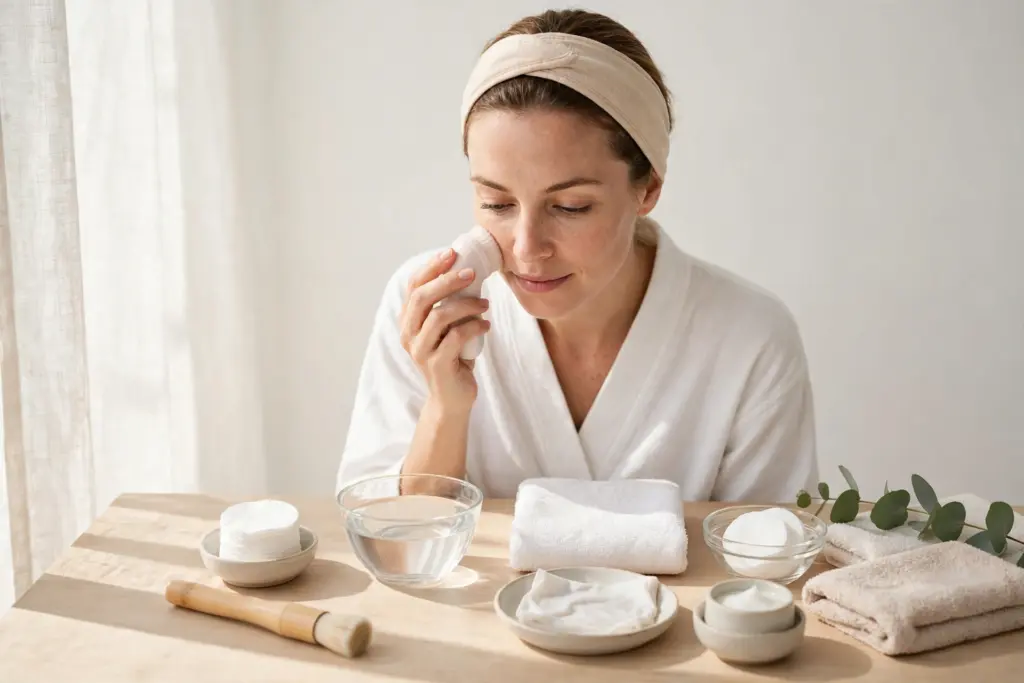
- Choose a quiet, comfortable place. Lay out clean towels, bowls and tools.
- Wash your hands properly, and keep them off your face except when you are deliberately applying something.
- Wash your face with a light, gentle cleanser and lukewarm water to remove makeup, dirt and oil. Lukewarm water cleans without stripping the skin.
- A warm towel compress for one or two minutes can feel soothing and help tight muscles relax. That is a comfort effect. It does not open pores — pores have no muscles and cannot open or close — and it does not help products work better.
- Choose products for your skin type, and avoid anything with harsh chemicals, strong fragrance or high alcohol content. If you are unsure about a product, patch test it first.
Step 1: Gentle cleansing
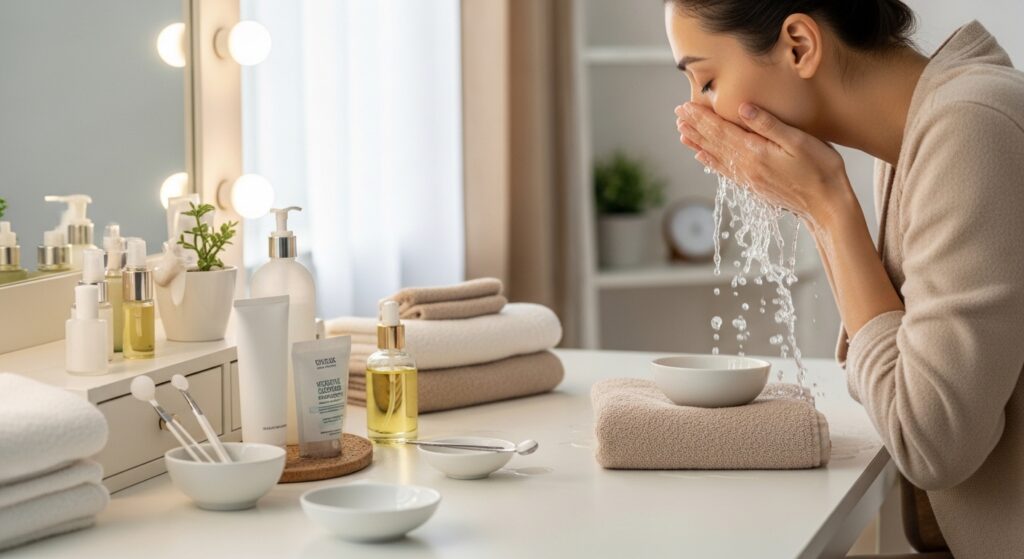
Use a soft, non-stripping cleanser. Apply it with slow circular movements using your fingertips — do not scrub. Cleansing prepares the skin for the steps that follow and keeps its natural moisture in place. Rinse with lukewarm water and pat dry with a soft towel.
Step 2: Exfoliation (optional)
Exfoliation is optional, and skipping it is always safe. If you exfoliate:
- Use a mild option: a fruit-based enzyme exfoliant, a polyhydroxy acid (PHA), or a low-strength lactic acid. These dissolve dead surface cells gradually without stripping the skin.
- Keep it to once or twice a week at most. More often over-stresses the skin and weakens the barrier.
- Stop if you get redness, stinging, flaking or tightness, and go back to cleanser, moisturiser and sunscreen until the skin settles.
- Do not exfoliate over active breakouts, sunburn, cold sores, eczema flares or broken skin.
Step 3: Facial massage
Facial massage is the most relaxing part of a home spa — and the part where the original article overstated the most.
- Use light upward strokes on the cheeks, jaw and forehead. Circle the temples slowly and tap very gently around the eyes. Keep the pressure light and the movements slow.
- Massage can ease tension in the face and feel calming. That is the whole claim.
- What it does not do: it does not enhance circulation, drain lymph, reduce puffiness in any lasting way, or help products absorb better. The original article claimed all of those. There is no good evidence for any of them. Massage is a comfort aid.
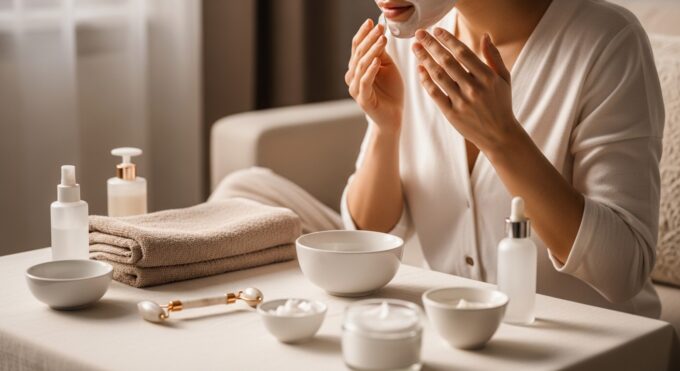
- Tools such as jade rollers or gua sha stones can be used with light pressure and proper technique. They are comfort aids too — they do not boost circulation, drain lymph, or make serums absorb. Clean them before and after use and dry them fully.
- Too much pressure is the main risk. Excessive massage can harm sensitive skin and, rarely, break tiny blood vessels. If your skin stays red after massage, you pressed too hard.
Step 4: Face mask application
Choose a mask for what your skin needs:
- Hydrating masks — for dry or tight skin.
- Clay masks — for excess oil and congestion.
- Calming masks — for tired or stressed skin.
Apply evenly, avoiding the eyes and lips. Leave it on for the time the product suggests, usually 10–15 minutes, then rinse with lukewarm water. Leaving a mask on longer than advised can dry or irritate the skin — more time is not more benefit.
Step 5: Hydration and moisturising
After the mask, apply a serum suited to your skin type — hyaluronic acid for hydration, niacinamide to support the barrier, or a gentle antioxidant. Then apply a moisturiser to hold water in and support the barrier.
Layering serums and moisturisers does not “maximise absorption”. Products sit on the skin’s surface and work from there; no layering order makes them absorb more. Apply thinnest to thickest because it feels comfortable and keeps products from pilling — not because it drives them deeper.
Step 6: Sun protection (daytime spa)
If you do your face spa during the day, finish with a broad-spectrum sunscreen with SPF 30 or higher, reapplied every two hours when outdoors. Sun protection matters because UV damage undoes the work of the rest of the routine. Sunscreen is the single most effective step against premature ageing, and skipping it after a spa session wastes the effort.
Tools that enhance a home face spa — safely
Facial tools can make a home spa more pleasant, with precautions:
- Facial rollers. A comfort aid. They do not boost serum absorption or circulation. Clean before and after use, dry fully.
- Gua sha stones. A comfort aid for muscle tension. They do not drain lymph or lift skin. Light pressure only.
- Soft brushes. Can help with gentle exfoliation. Clean and dry them fully, and replace them when the bristles wear.
- Hygiene is the point. No home method sterilises a tool — cleaning removes dirt and most microbes, but only an autoclave sterilises, and that is not a home process. Wash tools with soap and water, dry them fully, and store them clean and dry. Never share tools, and do not use a tool on broken or infected skin.
How often to do a face spa at home
How often depends on your skin type and how strong the products are. As a rough guide:
- Sensitive skin: every 2 to 3 weeks, with the mildest products and the shortest session.
- Normal to combination skin: once a week.
- Oily skin: once or twice a week, using oil-balancing masks.
More often does not give better results. Overuse over-stresses the skin, and regular gentle care beats frequent intense sessions.
Skin-type tips
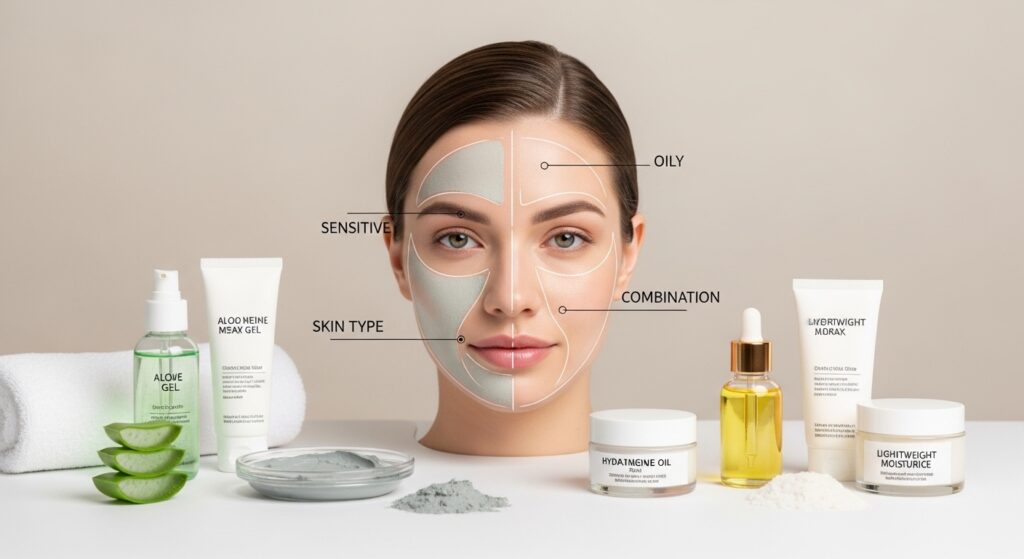
- Sensitive skin. Avoid strong acids and essential oils. Use soothing, moisturising products such as aloe vera gels or calming cream masks. Keep the session short.
- Oily skin. Use light moisturisers and clay or balancing masks. Do not over-dry the skin — stripping oil makes skin feel tight and can trigger more irritation, not less oil.
- Dry skin. Prioritise hydrating masks, oils and moisturisers. Exfoliate rarely, to preserve the barrier.
- Combination skin. Treat areas differently: hydrate the dry parts and use balancing masks on the oily parts. One routine does not fit the whole face.
Natural techniques to enhance spa results, honestly
A few additions can make the session more pleasant:
- Warm compress. Relaxes facial muscles and feels soothing. It does not open pores — pores cannot open or close.
- Aromatherapy. A scented candle or a diffuser can make the session feel calmer. Essential oils are common irritants, especially on sensitive skin — do not apply them undiluted to your face, and patch test anything that touches skin. A diffuser is safer than putting oil on your face.
- Meditation or slow breathing. A few calm minutes can help you feel less stressed, which supports your general wellbeing. It does not change your skin directly, and it is not a treatment for anything.
Common mistakes to avoid
- Harsh products that irritate or dry the skin.
- Over-exfoliating, which weakens the barrier.
- Too much pressure during massage.
- Wearing masks longer than advised, which can dry or irritate.
- Skipping hygiene — unwashed hands, dirty towels, tools that were not cleaned or dried.
- Expecting professional results. A home spa is a gentle self-care session. If you keep doing it waiting for a transformation, you will be disappointed — and you may push harder and hurt your skin trying to get one.
Patch test
Test any new product before using it in a face spa. The American Academy of Dermatology recommends testing a new product before using it on your face: apply a small amount to a quarter-sized patch of skin on the inside of your arm or the bend of your elbow, twice a day for 7 to 10 days. If there is redness, itching or swelling, do not use it on your face. A 24-hour test can miss an allergic reaction, which often takes several days to appear — that is why this guide uses the AAD 7–10 day patch-test method.
When to seek professional help
A home face spa is supportive care, not a substitute for professional advice. See a dermatologist if you have:
- Persistent acne, a skin infection, or severe irritation.
- Deep pigmentation or severe scarring.
- Sensitive skin that reacts to many different products.
- A rash, blistering, swelling or pain that does not settle.
A professional can assess the skin properly and advise on treatments — peels, laser, microneedling — which are medical procedures, not things to try at home.
Frequently asked questions
Q1: Can a home face spa give the same results as a professional facial?
No. A home session is gentler and simpler. It can leave skin feeling clean, soft and calm, but it cannot match a professional treatment.
Q2: How often should I do a face spa?
Roughly once a week for normal skin, every 2–3 weeks for sensitive skin, and once or twice a week for oily skin. More often does not help.
Q3: Do rollers and gua sha help products absorb?
No. Nothing you do with a tool increases absorption. Rollers and gua sha are comfort aids — they feel pleasant and can ease tension.
Q4: Is steam good before a mask?
Steam can feel relaxing, but it does not open pores or help a mask work better. Keep it brief and warm, not hot.
Q5: What should I do if my skin stings during a spa?
Stop. Rinse with lukewarm water, apply a plain moisturiser, and leave the skin alone. Do not push through a reaction, and do not repeat the product that caused it.
Summary
A safe home face spa is a short, gentle session: clean hands and tools, a mild cleanser, optional mild exfoliation once or twice a week, light massage, a mask for 10–15 minutes, hydration, and SPF 30+ in the daytime. Massage, rollers and gua sha are comfort aids — they do not improve circulation, drain lymph, or help products absorb. Pores do not open. Patch test every new product for 7 to 10 days, stop if your skin stings or turns red, and see a dermatologist for persistent acne, infection, severe irritation or scarring.
Sources: American Academy of Dermatology, 7 Rosacea skin care tips (patch-test method: apply a new product to a quarter-sized patch of skin on the inside of the arm for 7–10 days); American Academy of Dermatology, How to select anti-aging skin care products (broad-spectrum sunscreen, SPF 30 or higher, reapply every two hours outdoors). This is a researched overview, not a hands-on review.