Researched overview. This guide is based on published dermatology guidance, not on hands-on product testing by BeautyKob. No product in this guide was tested by us, and no brand is recommended.
Table Of Content
- Quick answer
- Why skin gets drier after bathing, not less
- What makes a routine “hydration-focused”
- Before you bathe
- Pre-oiling as a protective layer
- Dry brushing in moderation
- Water temperature and shower length
- Finding the right temperature
- Why shorter showers help
- Choosing cleansers that support hydration
- Ingredients worth looking for
- Ingredients worth avoiding
- Techniques that make a real difference
- Cleansing without over-stripping
- Layering hydration during the shower
- Exfoliating without overdoing it
- The post-bath window is where results actually happen
- Why the first few minutes matter most
- Layering for deeper hydration
- Adjusting the routine for different skin types
- Dry skin
- Oily skin
- Sensitive skin
- Seasonal adjustments
- Common mistakes that undo progress
- Patch test
- Frequently asked questions
- Summary
Quick answer
Most people shower to get clean and end up drier than when they started. The cause usually is not bathing itself — it is water that is too hot, showers that run too long, and moisturiser that goes on too late. A hydration-focused routine is a short list of adjustments: lukewarm water, showers of about 5–10 minutes, a gentle cleanser, and moisturiser applied within a few minutes of stepping out, while the skin is still slightly damp.
If your skin is red, sore, cracked, or has open sores or a rash, skip exfoliation and new products and ask a dermatologist or pharmacist first. This guide is general information, not medical advice.
Contents: Why skin gets drier after bathing · What makes a routine hydration-focused · Before you bathe · Water temperature and shower length · Choosing cleansers · Techniques that help · The post-bath window · Adjusting by skin type · Seasonal adjustments · Common mistakes · Patch test · FAQ
Why skin gets drier after bathing, not less
Skin absorbs a small amount of water on contact, but that moisture evaporates quickly once you are out of the shower unless the skin barrier — a layer of lipids and natural oils — is intact to hold it in. Hot water speeds this up by dissolving those protective oils faster than lukewarm water does, which is why a long hot shower often leaves skin tighter and drier than a shorter, cooler one.
This is a case where the immediate feeling and the actual skin outcome pull in opposite directions. A hot shower feels relaxing, but the oils being stripped away are doing a job — sealing water into the skin — and once they are gone, moisture escapes faster than usual.
Long showers, harsh soaps, and vigorous scrubbing all chip away at the skin barrier over time, often without any single session feeling like the cause. Delaying moisturiser, even by ten or fifteen minutes, gives the water the skin absorbed time to evaporate before anything is in place to seal it in.
There is also a common misconception that more cleansing equals healthier skin. In practice, over-cleansing strips the same protective oils a moisturiser is trying to restore, working against the goal rather than supporting it.
What makes a routine “hydration-focused”
A hydration-focused approach treats cleansing as one part of a larger goal — protecting the skin barrier — rather than the entire point of bathing. The emphasis shifts toward gentler products, shorter water exposure, and consistent timing, so skin comes out feeling calm and comfortable rather than tight or “squeaky-clean”.
“Squeaky clean”, in fact, is often a sign the skin barrier has been over-stripped rather than a sign of good hygiene. A well-cleansed but well-hydrated finish should feel soft, not bare.
A five-step routine done daily will outperform a ten-step routine abandoned after a week. Hydration-focused bathing is not about adding more products — it is about sequencing a few of the right ones consistently enough that the skin barrier has time to recover between showers.
Before you bathe
Pre-oiling as a protective layer
Applying a plain oil such as jojoba, almond, or coconut oil before showering creates a thin layer that reduces how much moisture gets stripped during cleansing. Letting it sit for 10–15 minutes beforehand gives the layer time to settle rather than washing off immediately once water hits it.
This step is optional rather than essential — it is most useful for people with naturally dry or sensitive skin who notice tightness even with a well-timed post-shower routine. Oils seal in moisture; they do not add water to the skin on their own, so pre-oiling is a support for the routine, not a replacement for moisturiser afterwards.
Dry brushing in moderation
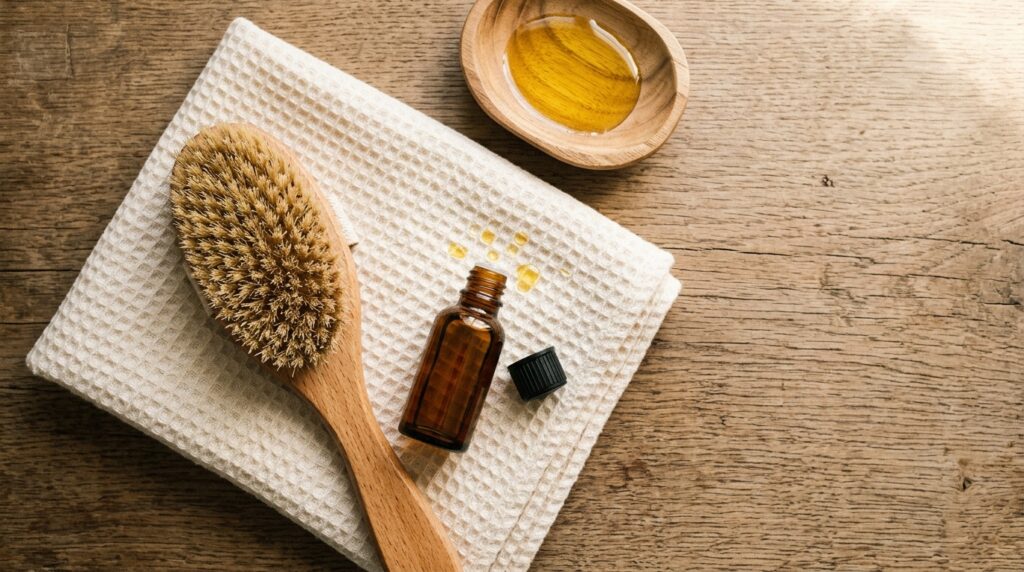
Dry brushing before a shower is a form of gentle exfoliation: a soft brush passed lightly over the skin removes some dead skin from the surface. Like most exfoliation methods, it is easy to overdo — too much pressure or frequency irritates skin rather than preparing it, so a light touch and once or twice weekly use is usually plenty. There is no good evidence that dry brushing improves circulation or helps skin take in hydration, so treat it as exfoliation only, and skip it entirely if your skin is irritated, broken, or sunburned.
Water temperature and shower length
Finding the right temperature
Lukewarm water cleans effectively while leaving the skin’s natural oils largely intact, which is the balance a hydration-focused routine is aiming for. Hot water might feel more relaxing in the moment, but if skin turns red or feels tight partway through a shower, that is usually a sign the water is too hot for what the skin barrier can tolerate.
| Skin concern | Helpful bathing habit |
|---|---|
| Dry skin | Use lukewarm water instead of hot |
| Tight skin after showering | Moisturise within a few minutes of stepping out |
| Flaky patches | Avoid harsh, fragranced soaps |
| Winter dryness | Shorten showers and switch to a heavier cream |
Why shorter showers help
Extended water exposure reduces skin’s capacity to retain moisture, independent of temperature. Keeping showers to somewhere between five and ten minutes limits this cumulative effect, and the benefit compounds — a slightly shorter shower every day adds up to meaningfully less barrier disruption over weeks.
Choosing cleansers that support hydration
Ingredients worth looking for
Glycerin, ceramides, and hyaluronic acid all help attract or retain moisture within the skin rather than stripping it during cleansing. Cleansers built around these ingredients tend to leave skin feeling coated rather than stripped, which is generally a sign they are working with the skin barrier instead of against it.
Ingredients worth avoiding
Strong sulfates and high alcohol content in cleansers are effective at removing oil, sometimes too effective, stripping away the same natural oils a hydration-focused routine is trying to protect. Heavy fragrance is a separate concern, more likely to irritate sensitive skin than to affect hydration directly, but it is worth avoiding for both reasons.
Techniques that make a real difference
Cleansing without over-stripping
Focusing soap on areas that actually need it — underarms, feet, groin — rather than scrubbing the entire body daily reduces unnecessary barrier disruption while still maintaining hygiene. This is not about cleansing less overall, just being more targeted about where thorough cleansing is actually necessary.
Layering hydration during the shower
Hydrating body washes or shower oils deposit a thin layer on skin during cleansing itself, which is useful for people who want protection built into the shower rather than relying entirely on a post-shower moisturiser. It is not a replacement for moisturising afterward, more of a head start.
Exfoliating without overdoing it
Exfoliating once or twice a week removes dead skin cells from the surface. More frequent exfoliation tends to backfire, damaging the same barrier the rest of the routine is trying to protect. Exfoliation does not make moisturiser work better by helping it “absorb” — it simply removes the rough surface layer, so skin feels smoother. Stop exfoliating if skin becomes red, sore, or flaky, and do not exfoliate skin that is sunburned, broken, or irritated.
The post-bath window is where results actually happen
Why the first few minutes matter most
Applying moisturiser within a few minutes of stepping out of the shower, while skin is still slightly damp, helps seal in the water the skin has already absorbed before it evaporates. Waiting even ten minutes noticeably changes the outcome — the same moisturiser applied to already-dry skin does less work than the same product applied to slightly damp skin. Dermatology guidance on dry skin recommends moisturising on damp skin for this reason.
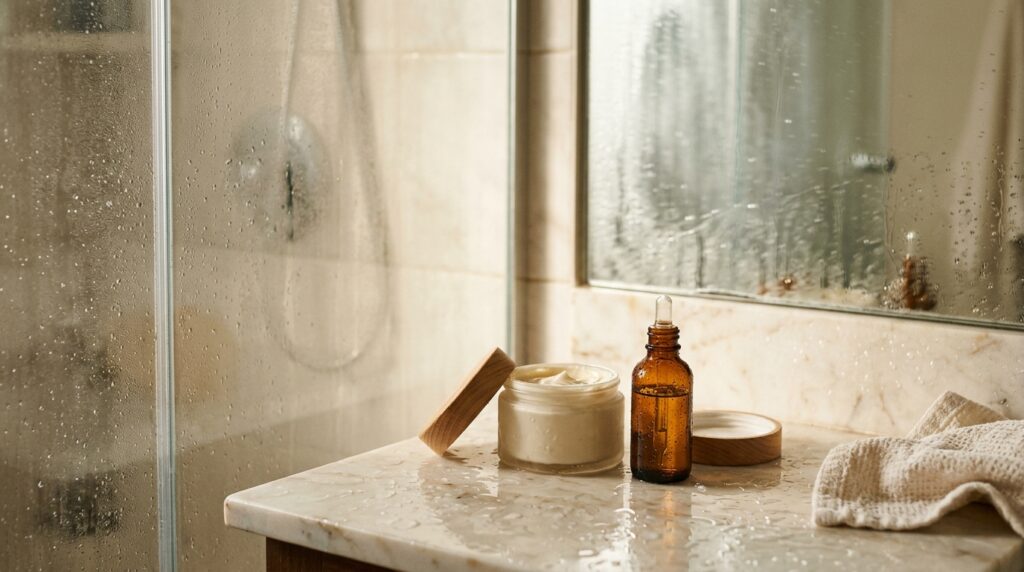
Keep your moisturiser within arm’s reach of the shower — on the counter, not in another room — so you are not tempted to get dressed first and moisturise later.
Layering for deeper hydration
Starting with slightly damp skin, applying a moisturiser, and following with a light oil on top creates a layering effect that seals in more moisture than any single product alone. Lotions work well for lighter, everyday hydration, while creams and body butters suit drier skin or colder climates that call for a heavier barrier. Water moisturises and oil seals — the order matters, and oil on its own is not a substitute for moisturiser.
Adjusting the routine for different skin types
Dry skin
Dry skin generally benefits from richer creams, added oils, and less frequent full-body cleansing, since it has less natural oil reserve to begin with and recovers more slowly from stripping.
Oily skin
Oily skin still needs moisturiser. Skipping it leaves skin dry and uncomfortable, which makes everything else harder. There is no good evidence that skin “produces more oil” to compensate for washing or drying products, so the reason to moisturise oily skin is comfort and barrier support, not oil control. Lightweight gel-based moisturisers hydrate without adding heaviness.
Sensitive skin
Sensitive skin tends to respond best to fewer products overall, with unscented, simply formulated options reducing the chance of irritation from any single ingredient.
Seasonal adjustments
| Season | Adjustment | Why |
|---|---|---|
| Winter | Shorter showers, heavier cream | Cold air and indoor heating both dry out skin |
| Summer | Lighter lotions, balanced cleansing | Sweat and humidity change how skin retains moisture |
| Year-round indoors | Extra attention to hydration | Air conditioning and heating both reduce ambient humidity |
Common mistakes that undo progress
- Showering too hot: feels good in the moment, strips protective oils fastest.
- Skipping moisturiser: water alone does not hydrate skin without something to seal it in.
- Using rough tools: loofahs and rough scrubbing can damage the barrier faster than they exfoliate it.
- Exfoliating daily: more is not better; once or twice a week is usually enough.
- Waiting too long to moisturise: the damp-skin window is only a few minutes.
Patch test
Before using a new body product more widely, patch test it: apply a quarter-sized amount to the underside of your arm or the bend of your elbow, twice a day, for 7 to 10 days. If you get redness, itching, swelling or a rash, stop using it. A 24-hour test can miss an allergic reaction, which often takes several days to appear — that is why this guide uses the AAD 7–10 day patch-test method. This is the American Academy of Dermatology’s patch-test method.
If you bathe in the morning and go outdoors, apply a broad-spectrum sunscreen with SPF 30 or higher after moisturising, and reapply every two hours when outdoors.
Frequently asked questions
How often should I follow a hydration-focused bathing routine?
Daily is fine, as long as showers stay short (5–10 minutes) and gentle. If skin is especially dry, focusing thorough cleansing on just a few areas rather than the whole body each day can reduce unnecessary stripping.
Is cold water actually better than hot water for skin hydration?
Cold water is not necessary, but lukewarm water is the practical middle ground — it cleans effectively without dissolving the natural oils the way hot water does. Extremely cold showers offer no additional hydration benefit over lukewarm ones.
Can body oil replace moisturiser entirely?
Oil alone is not usually enough, since oils seal in moisture rather than providing it. Applying a moisturiser first and layering oil on top tends to work better than using oil by itself.
What is the best window of time to moisturise after a shower?
Within a few minutes of stepping out, while skin is still slightly damp. This is when skin can hold on to moisture most effectively.
Are natural remedies like oat baths as effective as formulated skincare products?
Natural options like oat baths or plant oils can genuinely help, but they usually work best alongside well-formulated cleansers and moisturisers rather than replacing them entirely. Combining both approaches tends to produce more consistent results than relying on either alone.
Summary
Hydration-focused bathing is not about adding complexity — it is about a few specific, well-timed adjustments: lukewarm water, shorter showers, gentler cleansers, and moisturiser within a few minutes of stepping out, on damp skin. Small, consistent changes over weeks of steady practice do more than an elaborate routine done occasionally. No product in this guide was tested by us, and no brand is recommended.
Sources: AAD guidance on dry skin (moisturise on damp skin; lukewarm water; gentle, fragrance-free cleansers); AAD sunscreen guidance (broad-spectrum SPF 30 or higher, reapply every two hours outdoors); AAD patch-test method; AAD guidance on safely exfoliating at home. This is a researched overview, not a hands-on review.