Researched overview. This guide is based on published safety guidance and makeup technique, not on hands-on product testing by BeautyKob. No product in this guide was tested by us, and no brand is recommended.
Table Of Content
- Quick answer
- What makes eyeshadow look frosted?
- Choose pearl, silver or icy blue
- Pearl for a softer light-catching accent
- Silver for a clearer cool metallic effect
- Icy blue for visible color as well as reflection
- Build frosted eyeshadow in five steps
- 1. Keep the base thin and even
- 2. Map a soft matte boundary
- 3. Press on a small reflective area
- 4. Add narrow lash-line definition
- 5. Check the eye open and from a little farther away
- Six frosted eyeshadow looks to adapt
- 1. Pearl-center everyday eye
- 2. Silver lid with a taupe edge
- 3. Icy blue with a tiny wing
- 4. Pink-pearl monochrome
- 5. Frosted lid with a brown outer corner
- 6. A small silver accent over a matte eye
- Fix a finish that is not behaving as expected
- Help the finish stay put through the day
- Frosted eyeshadow looks for daytime, evening, and photos
- For daytime
- For evening
- For photos
- Mistakes to avoid with frosted eyeshadow looks
- Eye safety
- Sunscreen under makeup
- Patch test
- FAQ
- Summary
Quick answer
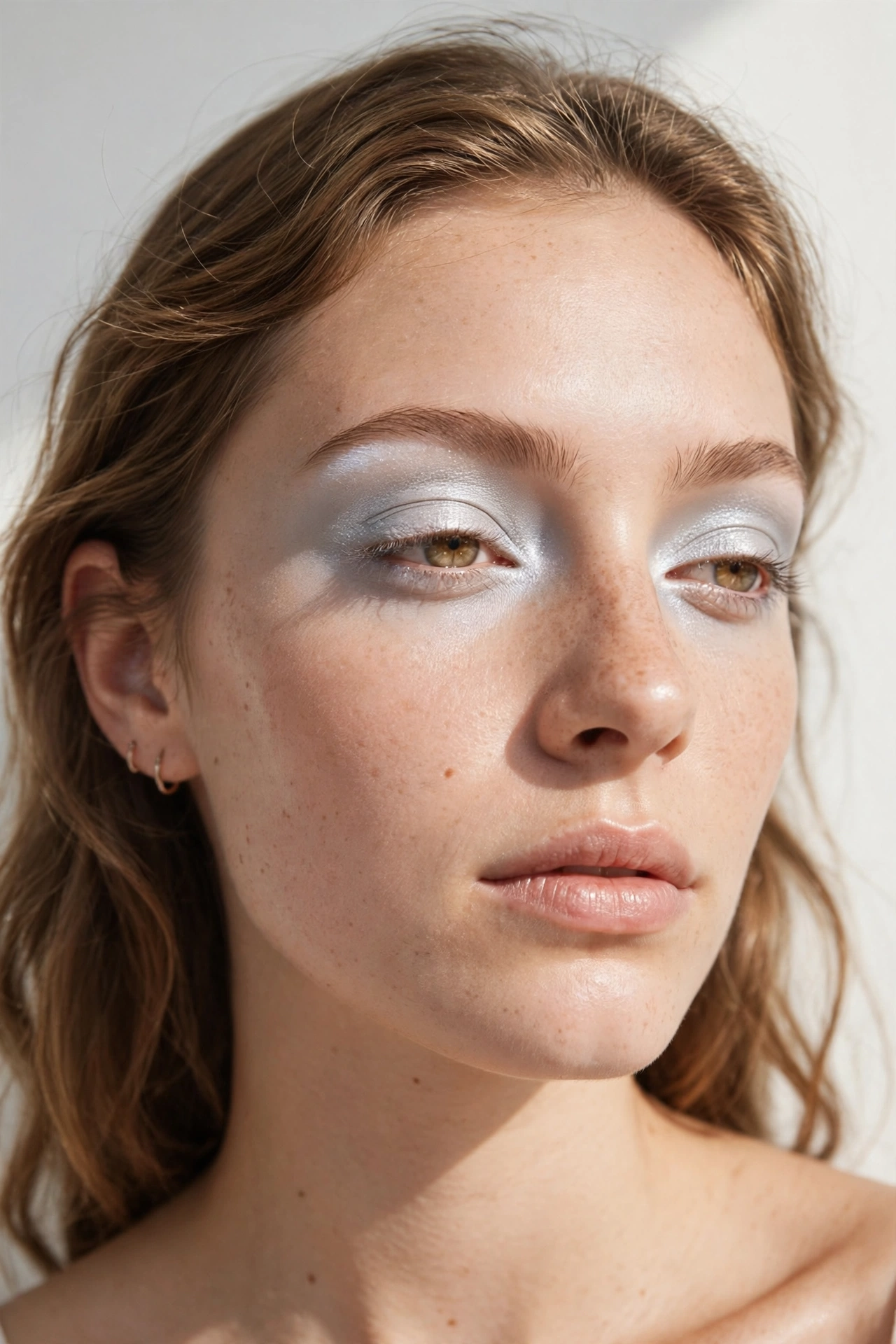
A frosted eyeshadow look uses a pale, reflective finish to make part of the lid catch the light. Pearl, silver and icy blue can create that effect, but they do not have to cover the entire eye. A smaller reflective area with a soft matte boundary is often easier to shape than a full lid of bright shimmer.
The challenge is balancing reflection with definition. This guide compares three color directions, explains a five-step placement method and gives six variations you can adapt. It describes makeup techniques and color families rather than tested product performance.
If your eyes sting, water or redden after using a shadow, stop using it. This guide is general information, not medical advice.
Contents: What makes eyeshadow look frosted? · Choose pearl, silver or icy blue · Five steps · Six looks · Fix the finish · Daytime, evening and photos · Mistakes · Eye safety · Sunscreen under makeup · Patch test · FAQ
What makes eyeshadow look frosted?
A frosted look usually combines a light color with noticeable reflection. The result may be a soft sheen or a stronger metallic effect, depending on the formula and how much you apply. “Frosted” is a styling description rather than a standardized finish across brands, so the same word on two labels can mean different amounts of shine.
It is different from scattering loose glitter over an eye look. You can create a frosted lid using an eye-area satin or shimmer shadow without adding separate glitter. Start with one reflective product so you can see its effect clearly.
A light shimmer can show texture as well as color. That does not automatically mean the application has failed. If you prefer a softer result, reduce the reflective area or choose a less metallic finish rather than repeatedly trying to cover natural texture.
Choose pearl, silver or icy blue
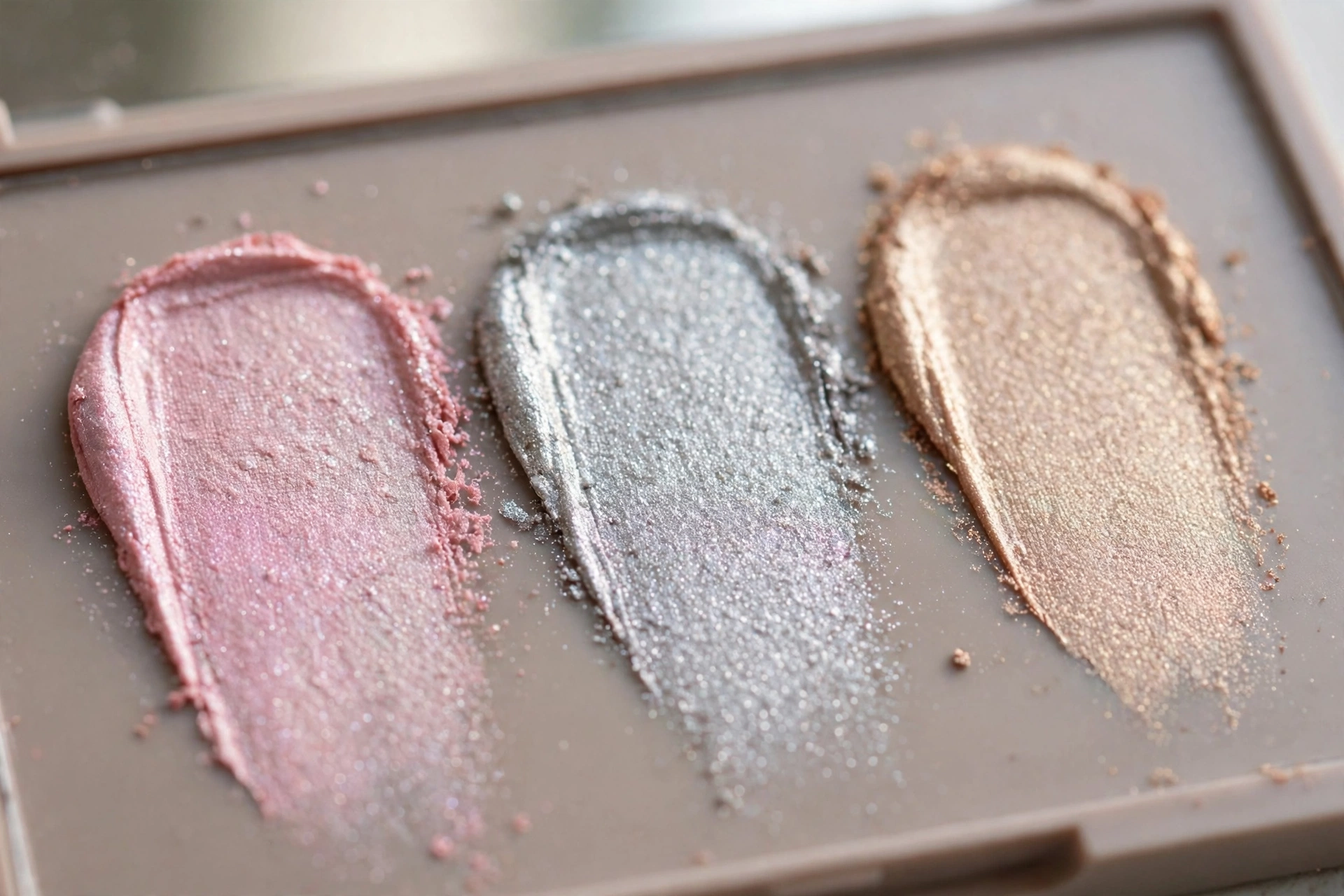
Pearl for a softer light-catching accent
Pearl can lean pink, champagne or cooler white. Compare it against your own lid before choosing. If a pale pearl looks stark, try a deeper champagne or pink-pearl direction, or use it only at the center of the mobile lid.
Silver for a clearer cool metallic effect
Silver creates a stronger gray-white reflection. Pair it with a muted taupe or another suitable matte shade around the boundary. A sheer layer and a dense metallic layer can look very different, so test the lighter option first.
Icy blue for visible color as well as reflection
A blue shimmer can become less obviously blue over a dark or warm base. Start with a small amount on a simple, even lid and check the color before adding depth. If pale blue turns chalky, compare a slightly deeper blue-silver shade instead of increasing the thickness.
Undertone labels and “warm or cool” rules are rough guides only. The swatch on your own skin in daylight decides — if a pearl looks stark or a blue turns chalky on you, the shade is wrong for your lid, whatever the label says.
Build frosted eyeshadow in five steps
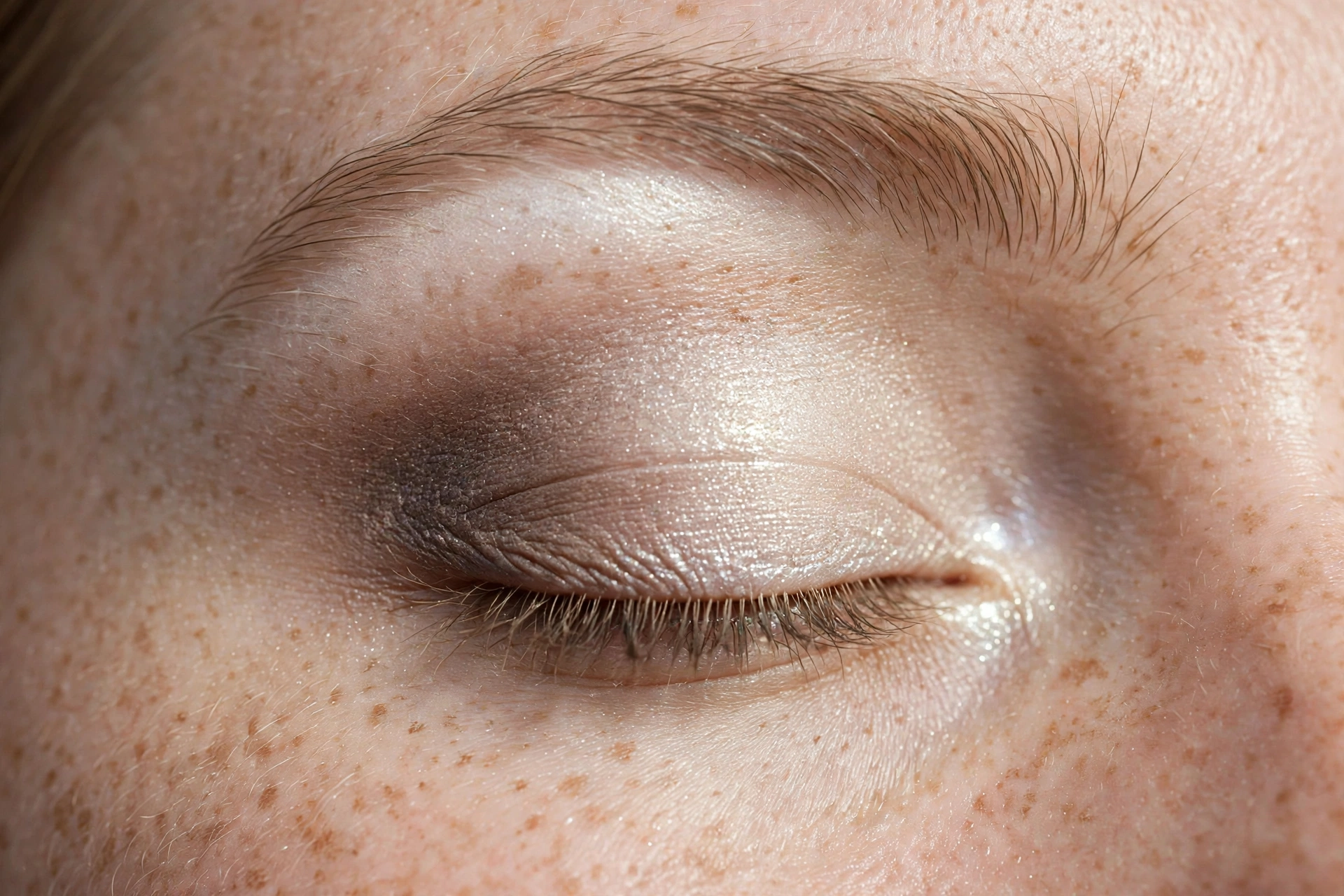
1. Keep the base thin and even
Start with a clean lid and let skincare settle. If you use eye primer, follow its directions. Avoid piling on base product to make the lid look completely texture-free. Extra layers can make it harder to judge how much shimmer you need.
2. Map a soft matte boundary
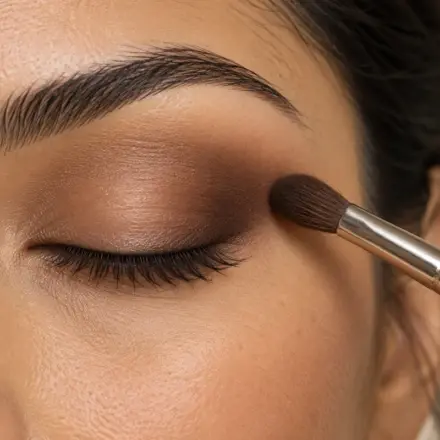
With brows relaxed and eyes open, place a small amount of transition shadow near the outer lid. Blend its upper edge before adding shimmer. Keep the shape compact on the first attempt, particularly if you have little visible lid space.
3. Press on a small reflective area
Use a clean flat brush and pick up a little eye-area shimmer. Press it onto the middle of the mobile lid. Extend inward or outward only if the shape needs it. Follow the product’s directions; a powder is not automatically suitable for wet use.
4. Add narrow lash-line definition
Use a small amount of coordinating matte shadow or a thin liner near the outer upper lashes. This helps separate the reflective lid from the lash line. Keep the darkest area smaller than the shimmer area if you want the frosted finish to remain the focus.
5. Check the eye open and from a little farther away
Add mascara if you want it, then compare both eyes in the mirror with relaxed brows. Check the visible shape rather than trying to make every mark identical. If shimmer reaches farther on one side, gently refine that boundary instead of enlarging the other side repeatedly.
Six frosted eyeshadow looks to adapt
1. Pearl-center everyday eye
Use a light matte base shade and a small pearl accent at the middle of the lid. Skip lower-lash shadow. Keep the rest of the face simple. The reflective area does not need to extend to every edge.
2. Silver lid with a taupe edge
Build a soft taupe boundary, then press silver onto the mobile lid. Keep a narrow deeper line at the outer upper lashes. If the result feels too stark, reduce the silver area and leave more of the matte base visible.
3. Icy blue with a tiny wing
Place blue shimmer across the central lid and finish with a short wing. Keep the upper lash line thin so the blue still shows. An open-eye eyeliner mapping method helps plan a wing around your own fold.
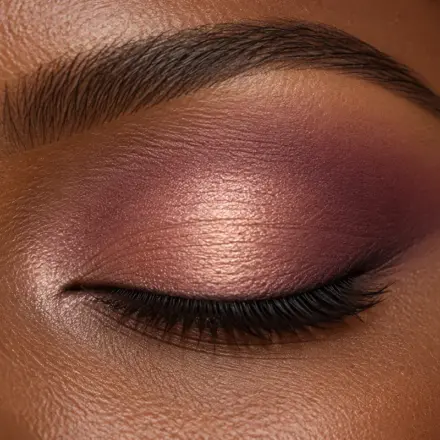
4. Pink-pearl monochrome
Choose a muted rosy transition and a pink-pearl lid shade. Keep the upper boundary matte so the colors remain distinguishable. This is softer than covering the whole crease with pale metallic pink. Choose a lip at a depth you enjoy rather than trying to match it exactly. This is the frosted finish applied to a pink base; a separate guide covers pink eyeshadow looks on their own.
5. Frosted lid with a brown outer corner
Use brown only near the outer lashes and connect it to the reflective lid with a midtone. A smaller dark area leaves the light finish visible. A brown smokey eye gradient gives the same outer-corner placement, with the frosted center added after.
6. A small silver accent over a matte eye
Complete a simple matte shape first and press silver onto only a small central section. This gives you a way to try the finish without building a full metallic lid. Stop before the accent merges with the upper boundary.
Fix a finish that is not behaving as expected
- The color looks chalky: Use less product or try a shade with more depth and less pale base. A heavier layer may increase the contrast you dislike.
- The lid looks flat: Restore a small matte area at the outer lashes. Keep some transition between that depth and the reflective center.
- Shimmer spreads too high: Use a smaller brush and soften only the boundary. Keep a clean brush separate from the shimmer brush.
- Fallout lands below the eyes: Press instead of sweeping and use smaller amounts. Doing eye makeup before complexion makeup can make cleanup easier.
- The finish gathers in a fold: Try thinner layers and follow the formula’s setting instructions. Keep checking the eye open while you place the product.
Help the finish stay put through the day
A frosted finish can fade, crease or lose its shine during the day, especially if the base is too thick. The fix is usually thinner layers, not more product. Start with a clean, dry lid, let any skincare settle, and use only a small amount of eye primer if you normally use one. Press the shimmer on instead of sweeping it, and let each layer settle before you add the next one. No technique can promise a fixed wear time — how long a finish holds depends on the product, your skin and the day.
- Use a thin base: A thick, creamy base can make shimmer slide. A thin, even layer gives the shadow something to hold on to.
- Press, do not sweep: Pressing keeps the reflective particles where you want them and reduces fallout under the eyes.
- Keep the outer edge matte: A small matte area at the outer lashes stops the shine from spreading too high and gives the eye its shape back.
- Check in daylight: A look that seems soft indoors can look much brighter outside. Step into natural light before you leave.
- Carry one small brush: A clean, small brush is enough to soften a harsh edge later. Avoid adding a whole new layer over the old one.
Frosted eyeshadow looks for daytime, evening, and photos
Frosted eyeshadow looks do not have to be evening-only. The same method works in different settings if you change the size of the reflective area and the depth of the outer edge.
For daytime
Choose a satin or soft pearl finish and keep the shine to the middle of the lid. Skip lower-lash shimmer, keep mascara light, and pair the eye with a muted lip. This version reads as fresh rather than dramatic, and it is easier to wear at work or for errands.
For evening
For evening, you can build a little more depth at the outer lashes and use a clearer silver or icy blue on the lid. Keep the upper boundary blended, and let one part of the face stay quiet: if the eyes are bright, choose a calmer blush and lip color so the look stays balanced.
For photos
Camera light can wash out a soft shimmer or make a bright one look white. Before photos, check the look with the camera flash or in bright light if you can. A slightly deeper transition shade often photographs better than a very pale one, because it keeps the eye shape visible.
Mistakes to avoid with frosted eyeshadow looks
- Covering the whole lid in shine: When the whole lid is reflective, the eye can lose its shape. Keep a matte edge and a small area of depth.
- Skipping the transition shade: Without a soft boundary, shimmer can look unfinished. A light matte transition makes the blend look intentional.
- Using too much product at once: A heavy first layer is harder to fix than a light one. Build slowly and stop when the color is visible with eyes open.
- Matching everything exactly: The lip, blush, and eye do not need to be the same frosted color. A muted, comfortable lip usually works better with a bright lid.
Eye safety
Keep brushes and eye cosmetics clean. Use products intended for the eye area, do not share them and stop using a product that irritates your eyes. Never share eye makeup with anyone, not even a close friend, and do not use testers at a shop unless they are applied with a single-use applicator.
Do not use eye makeup while you have an eye infection or the skin around the eye is inflamed — wait until the area has healed, and discard any eye cosmetics you were using when the infection started. Manufacturers usually recommend discarding mascara two to four months after purchase. Discard dried-up mascara; do not add water or saliva to moisten it. Wash your hands before applying eye makeup, and never apply or remove eye makeup in a moving vehicle. (FDA eye cosmetic safety guidance.)
Sunscreen under makeup
Wear broad-spectrum sunscreen SPF 30 or higher every morning, as the last skincare step before makeup. Let it set for a few minutes before applying eyeshadow, so the shadow has a dry surface to sit on. Reapply every two hours when outdoors. Sunscreen does not change how a frosted lid looks — a greasy or unset base does, so let each layer settle before the next.
Patch test
Before using a new eyeshadow or eye product more widely, patch test it: apply a small amount to the underside of your arm or the bend of your elbow, twice a day, for 7 to 10 days. If you get redness, itching, swelling or a rash, stop using it. A short one-day test can miss an allergic reaction, which often takes several days to appear — that is why this guide uses the American Academy of Dermatology’s 7 to 10 day patch-test method. Patch testing on your arm does not guarantee a product will suit the skin around your eyes, which is thinner and more sensitive — if the eye area stings or waters, stop using the product even if the arm test was fine.
FAQ
Can I wear a frosted lid without a dark crease?
Yes. A subtle transition and mascara may be enough. Add darkness only where you want more definition, rather than because every eye look is supposed to have a deep crease.
What lip color works with silver or icy blue?
Try a muted rose, a comfortable nude or another lip color you enjoy. Begin with a quieter finish while you judge the eye. A nude lip combination guide can help you compare liner depth and finish without matching every shade.
Does frosted shadow have to look dramatic?
No. Use a satin finish and keep the reflective area small. A thin pearl accent can be quite different from an opaque silver lid even though both use reflection.
Can I substitute craft glitter?
No. Use cosmetics intended for the eye area and follow their labels. Keep tools clean, do not share eye cosmetics and stop using a product that irritates. The FDA eye cosmetic safety guidance explains product-use precautions.
Can frosted eyeshadow looks work for hooded eyes?
Yes. Keep the reflective area on the mobile lid where it is visible with eyes open, and use a soft matte transition slightly above the fold so the shape does not disappear. A small silver or pearl accent in the center of the lid often works better than covering the whole lid.
How do I remove frosted eyeshadow without scrubbing?
Use a gentle eye makeup remover or cleansing product made for the eye area, hold a damp cotton pad over the lid for a few seconds, then wipe softly downward. Avoid rubbing, and wash your hands and brushes regularly to keep the eye area clean.
How long should I keep my mascara?
Manufacturers usually recommend discarding mascara two to four months after purchase. Discard it sooner if it dries up, smells different or irritates your eyes, and never add water or saliva to moisten it.
Summary
A frosted look is a small reflective area held inside a soft matte boundary. Choose pearl, silver or icy blue, press the shimmer onto the middle of the lid, keep a little depth at the outer lashes, and check the result with eyes open in daylight. Test new products on your arm for 7 to 10 days first, wear SPF 30+ under makeup, and keep eye makeup clean, unshared and replaced on time. No product in this guide was tested by us, and no brand is recommended.
Sources: FDA eye cosmetic safety guidance (https://www.fda.gov/cosmetics/cosmetic-products/eye-cosmetic-safety); AAD sunscreen guidance; AAD patch-test method. This is a researched overview, not a hands-on review.