Researched overview. This guide is based on published guidance, not on hands-on product testing by BeautyKob. No product in this guide was tested by us.
Table Of Content
- Quick answer
- Understanding why muscles stay tense
- The physical mechanics of tension
- The stress–muscle feedback loop
- Recognizing tension vs. something more serious
- Common, non-urgent signs
- When to see a doctor instead of self-treating
- At-home techniques that actually help
- Heat and cold therapy
- Stretching and foam rolling
- Breathing and progressive muscle relaxation
- Hydration, nutrition, and supplements
- Why fluid balance affects muscle function
- What the evidence actually shows on magnesium and Epsom salts
- A simple evening routine to prevent morning stiffness
- Why evening timing matters
- A sample 20-minute routine
- When self-care isn’t enough
- What physical therapy adds
- Massage, chiropractic, and other options
- FAQ
- Summary
Quick answer

Muscle tension is a state where fibres stay partly contracted even when the muscle is not actively being used. That constant low-grade activation reduces blood flow to the area and limits the muscle’s normal range of motion, which is part of why tense muscles feel stiff rather than simply sore. The most common triggers are sitting too long, poor posture, repetitive strain — and chronic stress, which keeps the body’s protective tightening response switched on far longer than it is needed.
What helps most at home:
- Heat for chronic stiffness, cold for acute pain or swelling — cold for around 15 minutes, heat for around 20 minutes.
- Static stretching — holding a position for 20–30 seconds, without bouncing.
- Foam rolling, slowly — about an inch per second, pausing around 30 seconds on tender spots, after a few minutes of easy movement.
- Slow breathing with a longer exhale than inhale, and progressive muscle relaxation — tensing one muscle group at a time, then releasing it.
- A short, consistent evening routine — even 15–20 minutes tends to prevent next-morning stiffness better than occasional longer sessions.
What does not help: stretching a cold muscle hard, rolling fast over tender spots, or pushing through pain. And some symptoms are not ordinary tension at all: numbness or tingling radiating down an arm or leg, loss of bladder or bowel control, or muscle stiffness paired with fever are signs to see a doctor rather than continue self-treatment. This guide is general information, not medical advice.
Contents: Why muscles stay tense · Tension vs something more serious · Heat and cold · Stretching and foam rolling · Breathing and muscle relaxation · Hydration, food and supplements · A simple evening routine · When self-care isn’t enough · Patch test · FAQ
Understanding why muscles stay tense
The physical mechanics of tension
Repetitive strain, poor posture and long periods of sitting are common physical triggers. Staying in one position — like a hunched desk posture — tends to overwork and shorten certain muscle groups while stretching and weakening the ones working against them. Typical tension shows up as an aching sensation, reduced flexibility and stiffness in specific areas — often the upper trapezius (shoulders), levator scapulae (neck) and erector spinae (lower back), which absorb the most strain from desk-based, forward-leaning posture. Hard, tender “knots” under the skin are common too: areas where muscle fibres have bound tightly together.
Occipital headaches starting at the base of the skull, difficulty turning the neck fully, and nighttime jaw clenching are all frequent symptoms of the same underlying tension pattern, even though they show up in different parts of the body. If you grind your teeth or have persistent jaw pain, a dentist is the right person to ask — jaw clenching is not something a body-care routine can fix on its own.
The stress–muscle feedback loop
When the brain perceives stress, it releases cortisol and adrenaline, which trigger an involuntary tightening response meant to protect the body from physical injury. This is useful for a genuine physical threat, but chronic psychological stress keeps this response switched on far longer than it is actually needed, and the result is muscle tension that has little to do with any specific physical strain.
The loop runs both directions: tight muscles can also reinforce a sense of alertness or unease in the brain, which is part of why persistent physical tension is often accompanied by irritability or mental fatigue rather than existing in isolation.
Recognizing tension vs. something more serious
Common, non-urgent signs
Typical tension: aching, reduced flexibility and stiffness in the shoulders, neck or lower back; tender knots; headaches starting at the base of the skull; difficulty turning the neck fully; nighttime jaw clenching.
When to see a doctor instead of self-treating
Some symptoms warrant medical attention rather than continued self-care. Numbness or tingling that radiates down an arm or leg, loss of bladder or bowel control, or muscle stiffness accompanied by fever can indicate nerve compression or a more serious underlying condition, and should not be treated as ordinary tension.
General stiffness after a hard workout or a long day is normal. Stiffness that does not improve over a couple of weeks, disrupts sleep, or interferes with daily tasks is a signal to see a physical therapist or doctor rather than waiting it out.
At-home techniques that actually help
Heat and cold therapy
Cold packs are most useful for acute pain or swelling, since they constrict blood flow and numb sharp sensations — typically applied for around 15 minutes, with a cloth between the pack and your skin. Heat therapy works differently, increasing blood flow to chronically stiff tissue, usually applied for about 20 minutes. Do not fall asleep with a heat pack on, and do not use heat on skin that is broken, numb or sunburned.
Using the wrong one for the situation is a common mistake: cold on a fresh injury and heat on longstanding stiffness is the general rule, not the reverse.
Stretching and foam rolling
Static stretching — holding a position for 20–30 seconds without bouncing — takes advantage of reciprocal inhibition, where lengthening one muscle group automatically encourages its opposing muscle group to relax. Doorway chest stretches, cat-cow spinal flexion and child’s pose are all straightforward options that target the areas most affected by desk posture.
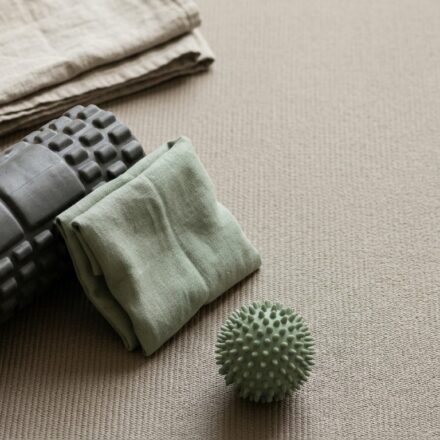
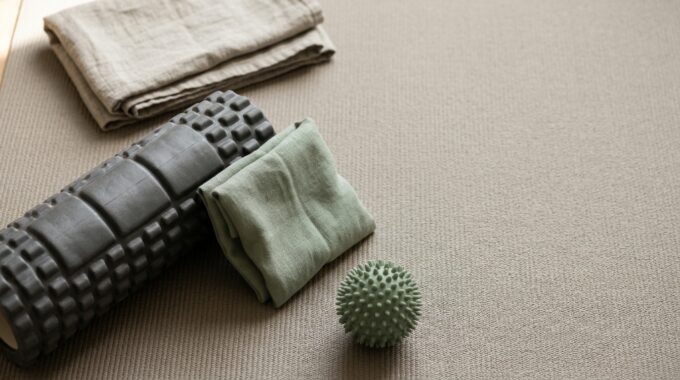
Foam rolling works on connective tissue rather than the muscle belly directly. Rolling slowly, roughly an inch per second, and pausing for about 30 seconds on especially tender spots gives the nervous system time to actually release the tension rather than just applying pressure and moving on. Warm up with a few minutes of easy movement before foam rolling or stretching cold muscles: stretching a genuinely cold muscle increases the risk of a minor strain rather than reducing tension. If rolling hurts sharply, stop — discomfort that makes you hold your breath is too much pressure.
Breathing and progressive muscle relaxation
Slow diaphragmatic breathing, with an exhale longer than the inhale, is one of the more reliably effective ways to shift the nervous system toward a calmer state, which in turn reduces the baseline signal keeping muscles contracted. Progressive muscle relaxation builds on this by deliberately tensing a muscle group for a few seconds and then fully releasing it, which trains the brain to recognise and let go of tension it might otherwise hold unconsciously.
Working from the feet upward — calves, thighs, torso, shoulders, hands, face — and pairing each release with a slow breath tends to work better than tensing everything at once.
| Technique | Best for | Typical duration |
|---|---|---|
| Cold therapy | Acute pain, swelling | Around 15 minutes |
| Heat therapy | Chronic stiffness | Around 20 minutes |
| Static stretching | Restoring range of motion | 20–30 seconds per stretch |
| Foam rolling | Localised knots and tightness | About 1 inch per second, 30-second pauses |
| Diaphragmatic breathing | Nervous system reset | Ongoing, several minutes |
Hydration, nutrition, and supplements
Why fluid balance affects muscle function
Muscle fibres depend on a balance of water and electrolytes to contract and release smoothly. Dehydration reduces fluid inside the cells, which can make fibres more prone to involuntary cramping. A light straw-coloured urine is a reasonably reliable everyday indicator of adequate hydration. Drinking water does not directly hydrate skin, and no food or drink “flushes” tension out of muscles — but staying hydrated supports normal muscle function, and that is enough reason to pay attention to it.
What the evidence actually shows on magnesium and Epsom salts
Magnesium genuinely plays a role in muscle function, in part by moderating calcium’s effect on nerve signalling that would otherwise keep fibres contracted. The evidence for meaningful magnesium absorption through the skin during an Epsom salt bath, however, is much less established — the warmth and general relaxation of a bath likely do more of the work than the magnesium itself, though the practice is not harmful and many people find it genuinely soothing.
Vitamin D deficiency is a recognised cause of persistent, widespread muscle discomfort, since vitamin D plays a role in calcium absorption relevant to normal muscle function. As with any supplement, checking with a doctor before adding a new one is reasonable, particularly if muscle pain is persistent rather than occasional. No supplement or dose is recommended in this guide.
A simple evening routine to prevent morning stiffness
Why evening timing matters
Tension that builds during the day tends to compound overnight if it is not addressed before bed, contributing to the stiffness many people feel first thing in the morning. A short, structured wind-down before sleep can interrupt that pattern rather than letting tension carry over. A warm bath 1–2 hours before bed also lines up with the body’s natural pre-sleep drop in core temperature — a 2019 meta-analysis found people fell asleep about 10 minutes sooner on average when they bathed in that window.
A sample 20-minute routine

- Warm bath (10 minutes): A warm bath, with or without Epsom salt, increases blood flow to the skin and supports the natural pre-sleep drop in core temperature. Keep the water warm, not hot.
- Gentle release (5 minutes): Lying with a foam roller or massage ball under the upper back or glutes, letting body weight settle rather than actively rolling.
- Slow stretching (5 minutes): Long, passive holds like a supine spinal twist or child’s pose, breathing slowly with longer exhales than inhales.
Patch test: before using a new bath or body product more widely, patch test it: apply a quarter-sized amount to the underside of your arm or the bend of your elbow, twice a day, for 7 to 10 days. If you get redness, itching, swelling or a rash, stop using it. A 24-hour test can miss an allergic reaction, which often takes several days to appear — that is why this guide uses the AAD 7–10 day patch-test method. This is the American Academy of Dermatology’s patch-test method.
If you stretch or walk outdoors: use a broad-spectrum sunscreen with SPF 30 or higher and reapply every two hours outdoors — the American Academy of Dermatology recommends it daily, including on cloudy days.
When self-care isn’t enough
What physical therapy adds
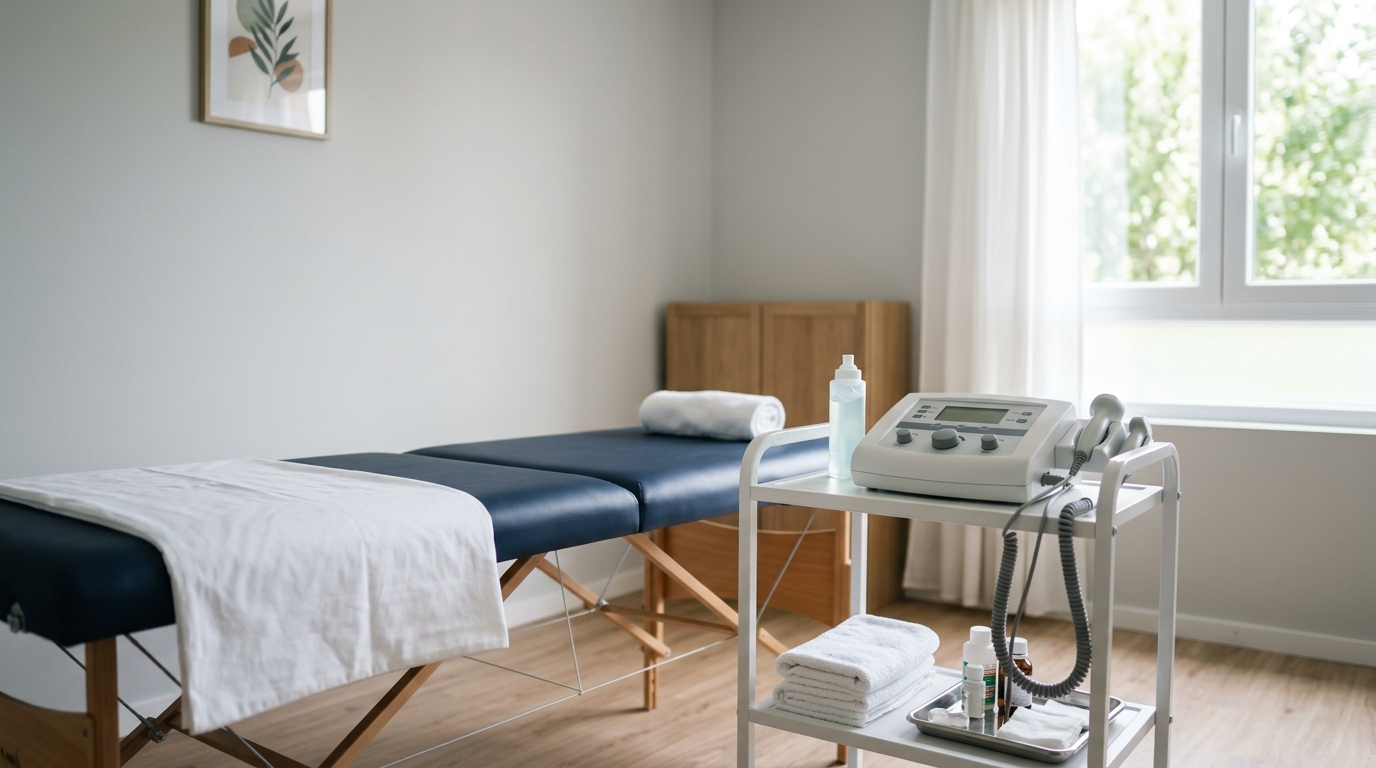
When self-directed techniques plateau, a physical therapist can identify specific biomechanical patterns — old injuries, structural imbalances, or repetitive strain patterns — that are harder to diagnose without professional evaluation. Techniques like manual therapy, dry needling and therapeutic ultrasound are tools physical therapists may use, though which approach fits depends on the specific issue and is best determined by an in-person evaluation rather than self-selection.
Massage, chiropractic, and other options
Professional massage therapy — including deep tissue and trigger point techniques — can address adhesions and tension patterns that are difficult to release through self-massage alone. Chiropractic care approaches tension through the lens of spinal mobility, and some people find adjustments helpful for reducing associated muscle guarding, though the broader evidence base for chiropractic treatment of muscle tension specifically is mixed, and it is worth discussing with a primary care doctor if symptoms are persistent or severe.
Acupuncture is another option some people pursue for chronic tension, with a smaller but growing body of research on its effects on musculoskeletal pain. As with any of these options, the honest position is that the evidence is limited and mixed — none of them is a proven fix for muscle tension, and persistent symptoms deserve a medical opinion first.
FAQ
How do I know if my muscle tension is serious?
Ordinary tension aches, feels stiff and improves with rest, heat and gentle movement over days. See a doctor promptly for numbness or tingling radiating down an arm or leg, loss of bladder or bowel control, stiffness with fever, or stiffness that does not improve over a couple of weeks.
Should I use heat or ice on a stiff neck?
For longstanding stiffness, heat — around 20 minutes, with a cloth barrier and never while falling asleep. For a fresh injury or acute swelling, cold — around 15 minutes. If you are unsure which applies, ask a pharmacist or doctor.
Does foam rolling actually work?
Foam rolling can ease the feeling of tightness in localised spots, especially when done slowly with pauses on tender areas. It works on connective tissue rather than the muscle itself, and it is a comfort aid — not a treatment for an underlying injury.
Do Epsom salt baths help muscle tension?
The evidence for magnesium being absorbed through the skin in a bath is limited. A warm bath itself is genuinely relaxing and can help you fall asleep sooner — the salt is optional, and the warmth is doing most of the work.
Can stress really cause muscle tension?
Yes. Stress triggers an involuntary tightening response meant to protect the body, and chronic stress keeps that response switched on. That is why breathing exercises and progressive muscle relaxation can help physical tension, not just mental stress.
Summary
Muscle tension is usually a mix of posture, repetitive strain and a stress response that stays switched on too long. Heat for chronic stiffness, cold for acute pain, slow stretching, unhurried foam rolling and breathing with a longer exhale than inhale are the at-home techniques with the best support — done briefly and consistently, ideally as a short evening routine. Supplements are not the answer here, and no dose is recommended. When tension comes with nerve symptoms, fever, or stiffness that will not improve, that is a doctor’s question, not a self-care one.
Sources: Haghayegh et al. 2019 (Sleep Med. Rev. 46:124–135, doi:10.1016/j.smrv.2019.04.008); AAD sunscreen guidance; AAD patch-test method. This is a researched overview, not a hands-on review.