Researched overview. This guide is based on published dermatology guidance and general sleep and wellbeing guidance, not on hands-on testing by BeautyKob. No product, supplement or brand is recommended, and no dose is given.
Table Of Content
- Quick answer
- What facial tension is
- What the techniques can and cannot do
- Preparing
- Forehead relaxation
- Temple pressure massage
- Eye area relaxation
- Cheek and mid-face massage
- Jaw release technique
- Breathing techniques that relax the face
- A short session, putting the techniques together
- Natural methods that support facial relaxation, honestly
- A weekly longer session
- Common mistakes to avoid
- Patch test
- Morning after
- When to get help
- Frequently asked questions
- Summary
Quick answer
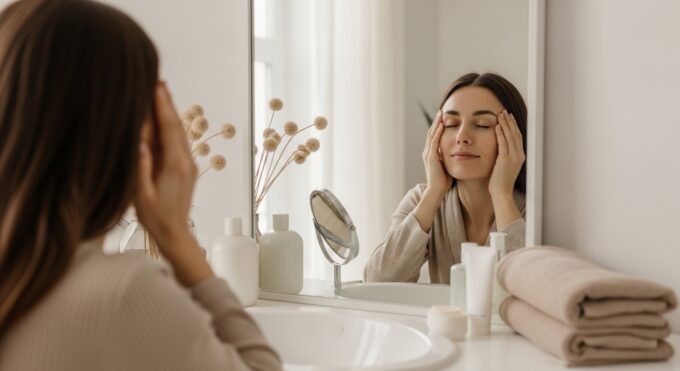
Face relaxation techniques are slow, gentle movements — light massage on the forehead, temples, cheeks and jaw, soft tapping around the eyes, and slow breathing — that help tense facial muscles feel looser and make a few minutes of your day calmer. That is the whole claim. They do not improve blood circulation, drain lymph, switch the body into a “rest and repair” mode, remove puffiness, erase lines, or make skin healthier. Those claims appear in the original article; none of them has good evidence behind it, and this guide does not repeat them. What the techniques honestly do is ease the feeling of tension in your face — and a calmer few minutes is worth having on its own. This guide is general information, not medical advice.
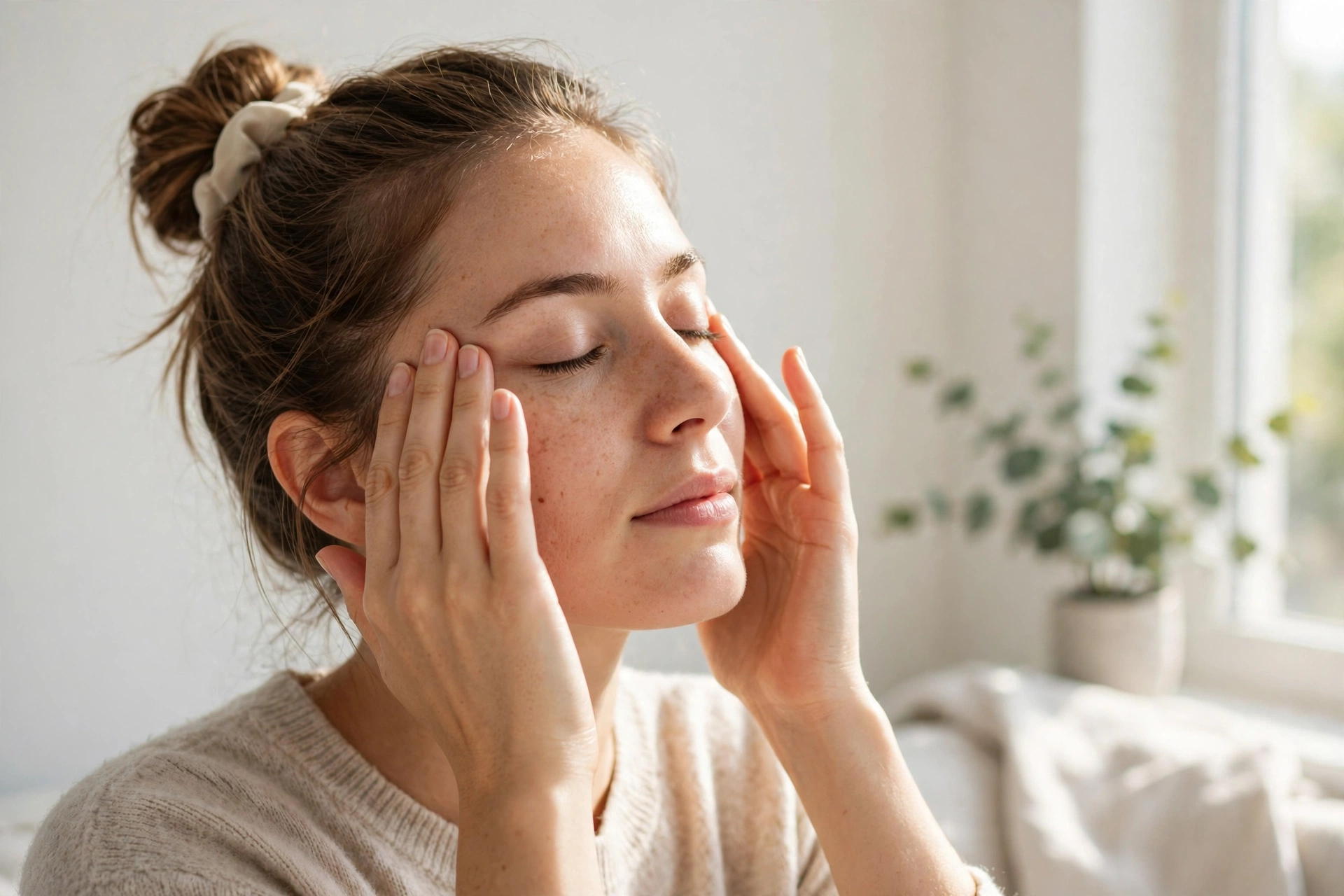
Contents: What facial tension is · What the techniques can and cannot do · Preparing · Forehead · Temples · Eye area · Cheeks and mid-face · Jaw release · Breathing · A short session · Natural methods, honestly · A weekly longer session · Common mistakes · Patch test · Morning after · When to get help · FAQ
What facial tension is
Tension in the face is real and common. When you are stressed, tired, concentrating hard, or spending hours at a screen, you tighten the muscles around the forehead, temples, jaw and eyes without noticing. Clenching the jaw or grinding the teeth, poor posture and too little sleep add to it. Over a day, that held tension can feel like tightness, a dull headache, tired eyes or a stiff jaw.
Tension does not directly cause skin problems. It does not make skin lose its glow, and relaxing the face does not make skin healthier. Repeated expressions — frowning, squinting — can deepen lines over years, because the same muscles fold the same skin again and again. That is a slow process, and a few minutes of massage does not undo it or prevent it. The honest reason to do these techniques is that tense muscles feel better when they loosen, not that your skin will change.
What the techniques can and cannot do
Be clear about this before you start, because the original article promised far more than the evidence supports:
- They can ease the feeling of tightness in the forehead, temples, jaw and around the eyes. They can give you a few calm minutes. They can make a routine you keep feel pleasant.
- They cannot improve blood circulation in any meaningful way, drain lymph, open pores, make products absorb better, reduce puffiness in any lasting way, lift the face, firm skin, or remove lines. Pores have no muscles and cannot open or close. Massage is a comfort aid, not a treatment.
- They are not a substitute for sleep, sunscreen, or care for a skin condition. If your jaw pain, headaches or teeth grinding are frequent, that needs a dentist or a clinician, not a massage routine.
Preparing
A couple of small steps make the techniques more comfortable:
- Wash your face with a gentle cleanser and lukewarm water — not hot water, which strips the skin’s natural oils. Clean skin lets your fingers move without dragging.
- Apply a little moisturiser or facial oil first. Massaging dry skin creates friction, which irritates and reddens it. The oil or cream is there to reduce friction, not to feed the skin anything extra.
- Sit somewhere quiet, switch off bright lights and phone notifications, and take a few slow breaths. A warm towel held to the face for a minute or two can feel soothing and help the muscles soften. That is a comfort effect — warmth does not open pores or prepare the skin to absorb anything.
- Wash your hands before you touch your face.
Forehead relaxation
The forehead is where stress shows first, because frowning and concentrating tighten it without you noticing.
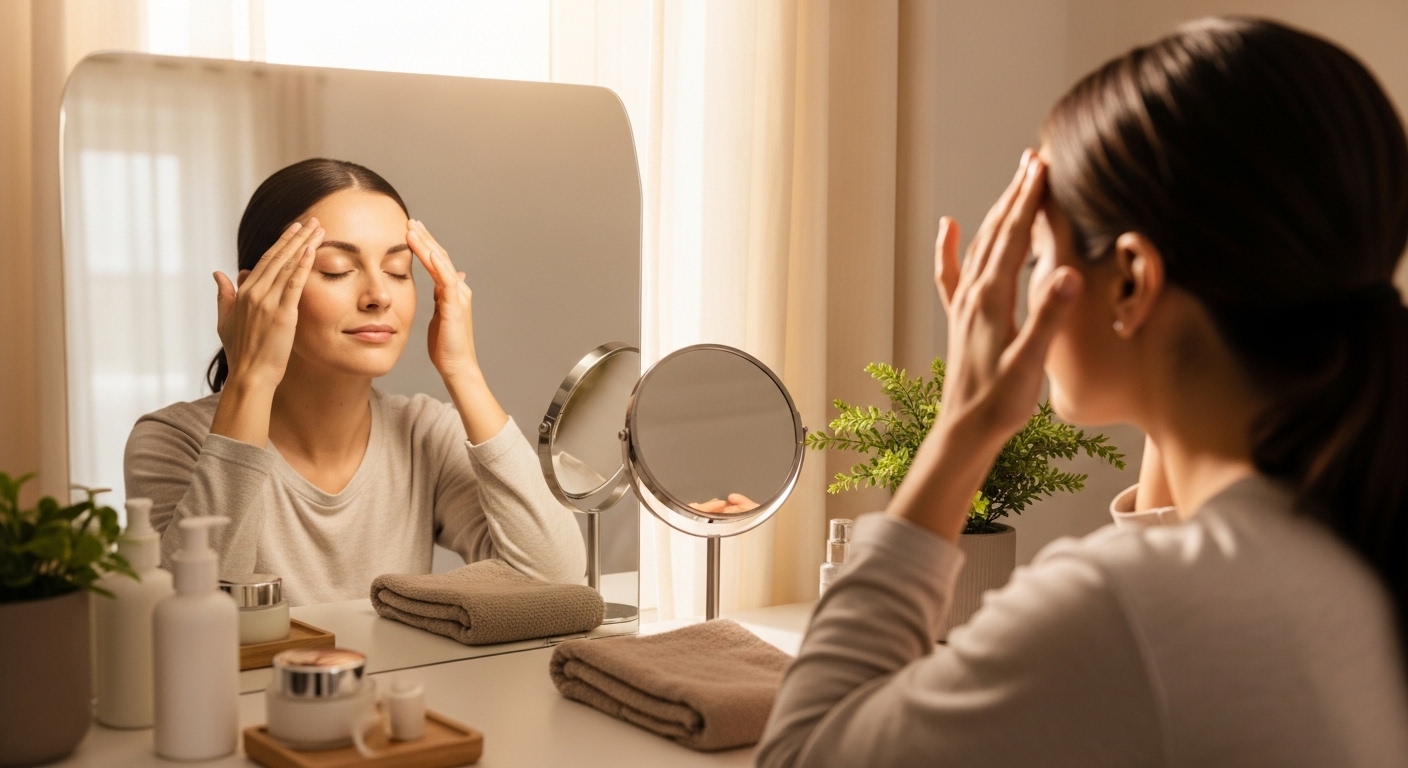
- Place both hands flat on your forehead and slide your fingers slowly outward toward the temples. Move slowly, for about a minute, with light pressure.
- Then press your fingertips gently along the brow line and push outward. Keep the pressure light — pressing hard does not relax a muscle faster, it irritates the skin over it.
- This eases the feeling of tightness. It does not smooth lines. Expression lines form over years of repeated movement; a minute of stroking does not erase them, and this guide does not claim it does.
Temple pressure massage
The temples are sensitive, and tension gathers there easily, especially after long screen time.
- Place two fingers on each temple and make slow, small circles for about thirty seconds. Breathe slowly while you do it.
- Keep the pressure gentle. The temples have thin skin over bone, and hard pressure there is uncomfortable, not more effective.
- This can ease the feeling of a tight head and, for some people, a mild tension headache. It is not a treatment for headaches. If headaches are frequent or severe, see a clinician.
Eye area relaxation
The skin around the eyes is the thinnest on the face, and the muscles there tire from reading, screens and poor sleep.
- Using your ring finger — the weakest finger, so it presses lightest — tap very gently around the orbital bone, starting at the inner corner and moving outward. The pressure must be very mild. Do not pull or drag the skin.
- Or rest your warm palms over your closed eyes for a few seconds and breathe slowly. The warmth and darkness feel restful.
- This can make tired eyes feel refreshed for a while. It does not remove puffiness in any lasting way, and it does not improve circulation. Puffiness that lasts, or swelling that is new, deserves a clinician’s look, not a tapping routine.
Cheek and mid-face massage
The cheeks carry tension too, especially when you clench your jaw or hold your face still while concentrating.
- Place your fingers beside your nose and stroke upward over the cheekbones, a few times, slowly and lightly.
- Then make slow, small circles on the cheeks. Keep the movements upward and outward, and keep the pressure light.
- This relaxes the cheek muscles. It does not enhance circulation, give a “healthy glow”, or move natural oils across the skin in any useful way. The benefit is the feeling of the muscles loosening, nothing more.
Jaw release technique
The jaw holds more tension than any other part of the face, especially if you clench your teeth or grind them under stress.
- Place your fingers along the jawline and massage in small circles, starting near the ears and moving toward the chin.
- Open and close your mouth slowly a few times, and press gently on the jaw muscles while you do it. This can lessen the feeling of tightness and, for some people, the headache that comes with it.
- Jaw massage often gives the most noticeable relief of all these techniques, because the jaw holds so much stress. It is still only relief of a feeling, not a fix.
- If you grind your teeth at night, wake with a sore jaw, or have jaw pain that keeps coming back, see a dentist. Grinding wears teeth and can damage the jaw joint. Massage does not treat it, and a night guard or other dental care may be needed. Do not rely on massage for a problem that needs a dentist.
Breathing techniques that relax the face
Slow breathing is the simplest part of this guide, and the most useful. As you breathe slowly and deeply, your body gets a signal to relax, and facial muscles tend to loosen on their own.
- A commonly suggested pattern is to breathe in through the nose for about four seconds, hold for about two seconds, and breathe out through the mouth for about six seconds. Repeat for a few minutes. This is a relaxation pattern people commonly use, not a prescription and not a treatment for anything.
- While you breathe, notice where your face is tense — forehead, jaw, eyes — and consciously soften those areas. Let your jaw hang slightly open and your tongue rest away from the roof of your mouth.
- Breathing does not lower cortisol in five minutes, switch on a repair mode, or change your skin. It helps you feel calmer, and a calmer few minutes is the point.
A short session, putting the techniques together
The techniques work best in a short session, about ten minutes, in the evening:
- Cleanse gently and apply a little moisturiser or facial oil.
- Forehead strokes, outward to the temples, for about a minute.
- Slow circles on the temples for about thirty seconds.
- Gentle tapping around the eyes.
- Upward strokes and slow circles on the cheeks.
- Small circles along the jawline, then open and close the mouth slowly.
- Finish with a few minutes of slow breathing, softening the forehead, jaw and eyes as you breathe out.
That is the whole session. It is a technique sequence, not a skincare routine — it does not replace cleansing, moisturising or sunscreen, and it does not need any product beyond a little moisturiser or oil to reduce friction.
Natural methods that support facial relaxation, honestly
A few habits sit alongside the techniques:
- Warm compress. A warm towel on the face for a few minutes feels soothing and can help tight muscles feel looser. That is all it does. It does not open pores, improve circulation, or help products absorb.
- Gentle face stretches. Slowly raising the eyebrows, puffing the cheeks, and stretching the jaw can make stiff facial muscles feel more flexible. These are gentle stretches, not exercises that firm or tone anything — facial exercises do not make skin firmer or reduce lines, and this guide does not claim they do.
- Herbal steam. Steam can feel relaxing, and some people enjoy it as part of a calm evening. It does not open pores — pores cannot open or close — and it does not stimulate circulation. Keep it brief and warm, not hot, so you do not overheat or dry the skin.
A weekly longer session
A short daily practice is better than a long one done rarely. If you like, add one longer session a week, twenty to thirty minutes:
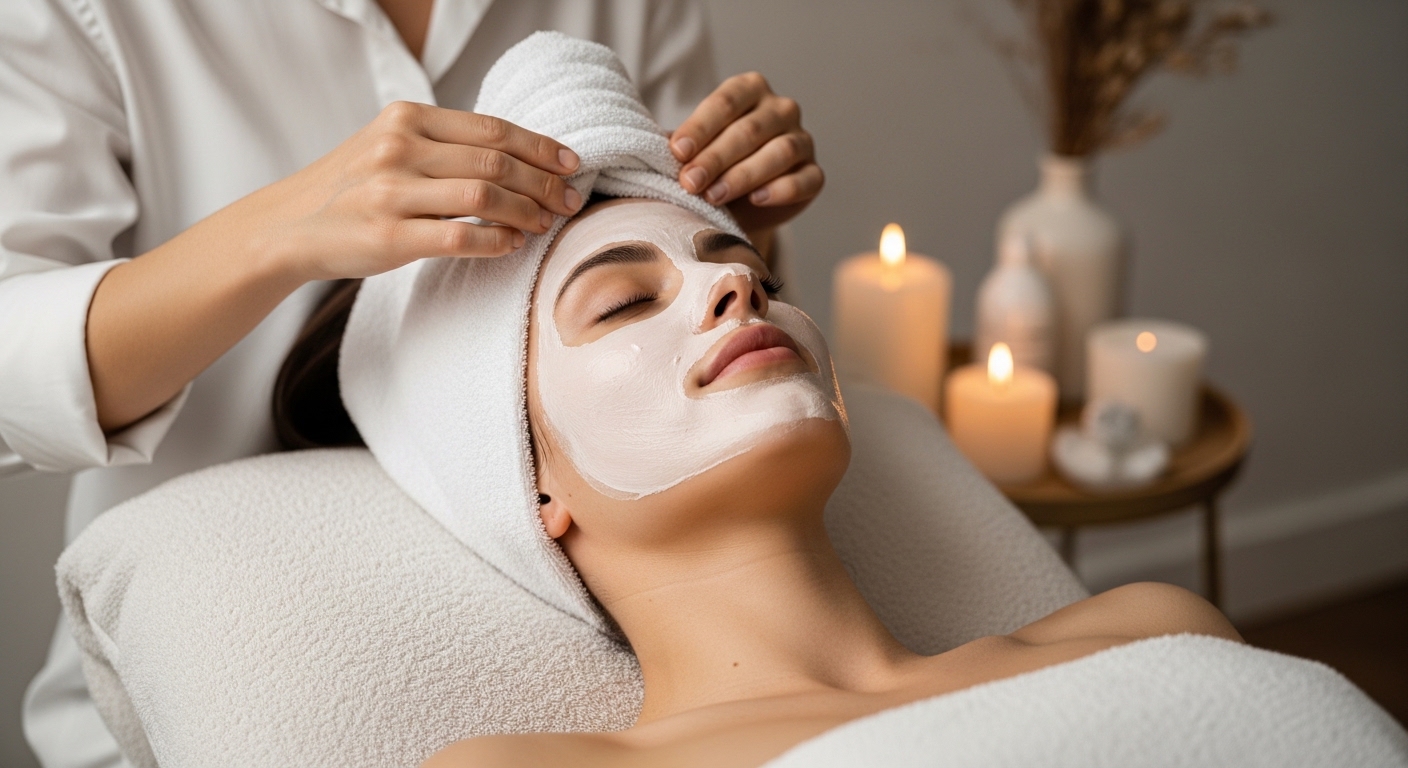
- Gentle cleansing, a warm towel compress, extended facial massage using the techniques above, a hydrating mask, and a few minutes for the neck and shoulders.
- The longer session is a rest from a stressful week, not a deeper treatment. It will not give better skin results than the short daily practice — it gives you more time to relax.
Common mistakes to avoid
- Too much pressure. The facial muscles are sensitive. Hard pressure does not relax them; it irritates the skin over them and can leave redness.
- Massaging dry skin. Friction without moisturiser or oil hurts and reddens the skin. Always apply something slippery first.
- Rushing. Hurrying through the movements removes the relaxation. Slow and conscious is the point.
- Expecting lines or puffiness to vanish. These techniques do not change skin. If you keep doing them waiting for a visible change, you will be disappointed. Do them because tense muscles feel better loose.
- Skipping consistency. An occasional session feels pleasant, but the benefit — a few calm minutes and looser muscles — comes from doing it regularly, even a few minutes a day.
Patch test
Any moisturiser or facial oil you use for massage is a product on your skin, and new products should be tested first. The American Academy of Dermatology recommends testing a new product before using it on your face: apply a small amount to a quarter-sized patch of skin on the inside of your arm or the bend of your elbow, twice a day for 7 to 10 days. If there is redness, itching or swelling, do not use it on your face. A 24-hour test can miss an allergic reaction, which often takes several days to appear — that is why this guide uses the AAD 7–10 day patch-test method.
Morning after
These techniques do not replace sunscreen. If you do them in the evening, wash gently in the morning, moisturise, and use a broad-spectrum sunscreen with SPF 30 or higher, reapplied every two hours when outdoors. Sunscreen is the single most effective step against premature ageing, and no massage technique substitutes for it.
When to get help
Ask a dentist or a clinician if: your jaw is sore most mornings, you grind your teeth at night, you have jaw pain that keeps coming back, or headaches are frequent or severe. Ask a dermatologist or pharmacist if: your skin stays red, sore or swollen after massage, you have a rash, or a skin condition such as eczema or rosacea is getting worse. Bring the products you use, or photos of their ingredient lists.
Frequently asked questions
Q1: Can face relaxation techniques remove wrinkles?
No. Lines form over years of repeated expression and sun exposure. Relaxing the muscles can ease the feeling of tightness, but it does not smooth lines or prevent them.
Q2: How often should I do these techniques?
A few minutes a day is enough. A longer session once a week is optional. More time or harder pressure does not give better results.
Q3: Do I need a special oil or tool?
No. A little of your usual moisturiser or a plain facial oil is enough to reduce friction. Rollers and gua sha stones are comfort aids only — they do not drain lymph, lift skin, or improve circulation.
Q4: Can these techniques help with puffiness?
They may make the eye area feel refreshed for a short while. They do not reduce puffiness in any lasting way. Puffiness that is new or persistent deserves a clinician’s look.
Q5: Is it safe to massage over acne or irritated skin?
No — skip massage over active breakouts, broken skin, sunburn, cold sores, eczema flares or any area that is sore. Massage can spread irritation and make it worse.
Summary
Face relaxation techniques are slow, gentle movements — forehead strokes, temple circles, light tapping around the eyes, cheek massage, jaw release and slow breathing — that help tense facial muscles feel looser. They do not improve circulation, drain lymph, open pores, remove puffiness, erase lines or make skin healthier. Do them for a few calm minutes a day, with a little moisturiser or oil to reduce friction, light pressure, and no expectation of a visible change. Patch test any new product for 7 to 10 days, wear SPF 30+ every morning, and see a dentist if jaw pain or teeth grinding keeps coming back.
Sources: American Academy of Dermatology, 7 Rosacea skin care tips (patch-test method: apply a new product to a quarter-sized patch of skin on the inside of the arm for 7–10 days); American Academy of Dermatology, How to select anti-aging skin care products (broad-spectrum sunscreen, SPF 30 or higher, reapply every two hours outdoors). This is a researched overview, not a hands-on review.