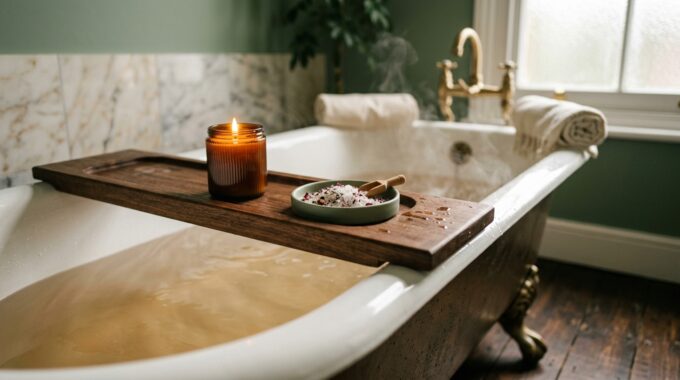
Researched overview. This guide is based on published research and dermatology guidance, not on hands-on product testing by BeautyKob. No product in this guide was tested by us, and no brand is recommended.
Table Of Content
- Quick answer
- The science behind why warm baths help you relax
- How warm water affects circulation and muscle tension
- The sleep connection: why timing beats temperature alone
- Getting the temperature and timing right
- Why hotter isn’t better
- How long you should actually stay in
- Building the ritual: environment and mindset
- What separates a ritual from a routine
- Setting up a distraction-free environment
- A short mental transition before you get in
- What to add (and what you can skip)
- Where people overcomplicate it
- Post-bath care that actually matters
- Moisturising while skin is still damp
- Staying warm afterward
- A simple step-by-step ritual
- Making it a habit, not a one-off
- Patch test
- Frequently asked questions
- Summary
Quick answer
A warm bath taken 1–2 hours before bed can help you fall asleep faster. The evidence comes from a 2019 systematic review and meta-analysis (Haghayegh et al., Sleep Medicine Reviews): the researchers screened 5,322 studies, 17 met their criteria, and 13 provided comparable data for pooling. Water of about 40–42.5 °C (104–108.5 °F), for as little as 10 minutes, was linked to better self-rated sleep quality and to falling asleep about 10 minutes faster on average when timed 1–2 hours before bed. Hotter water does not add benefit, and longer soaks dry the skin.
If you have a heart condition, low blood pressure, diabetes with reduced feeling in your feet, or you are pregnant, ask a doctor before using hot baths. Never fall asleep in the bath, and get out slowly — standing up quickly after a hot soak can make you dizzy. This guide is general information, not medical advice.
Contents: The science behind warm baths · Getting temperature and timing right · Building the ritual · What to add (and what to skip) · Post-bath care · A simple step-by-step ritual · Making it a habit · Patch test · FAQ
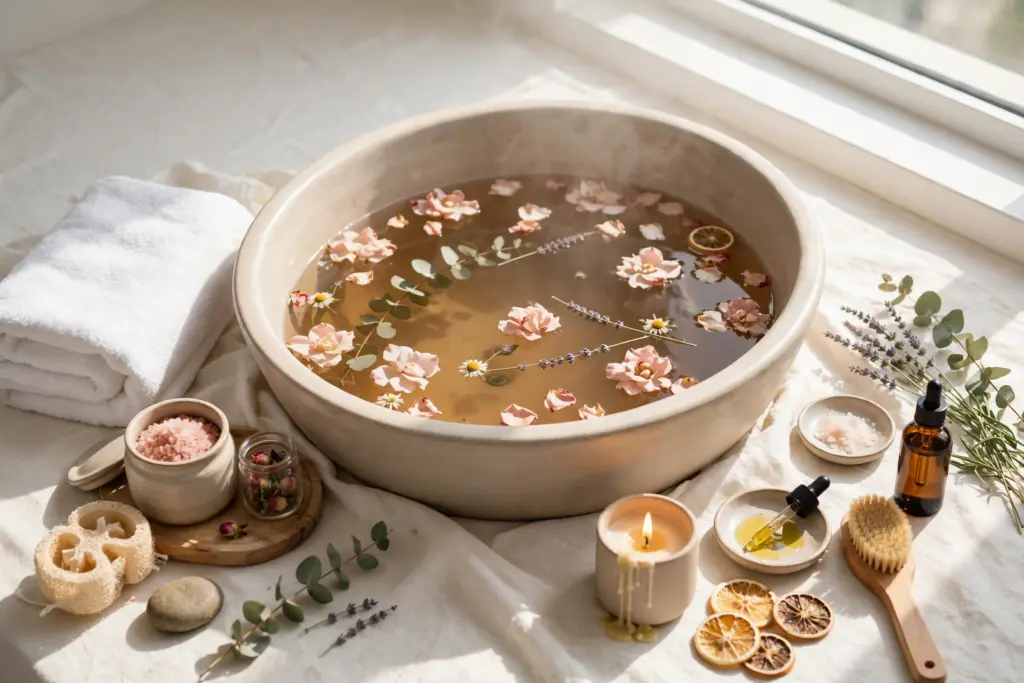
The science behind why warm baths help you relax
How warm water affects circulation and muscle tension
When you dip into warm water, blood vessels near the skin’s surface widen. Blood flow moves toward the hands and feet, and as that heat radiates away after you get out, core body temperature drops faster than it otherwise would — mimicking the natural fall in core temperature that precedes sleep. That cooling-down period after the bath is doing much of the work, which is why timing matters as much as temperature.
Warm water can also ease the feeling of tension in the lower back, neck, and shoulders after a day of sitting or standing, in the same way a hot compress feels soothing on a sore muscle. That is comfort, not treatment: a bath does not fix a muscle injury or a medical condition, and persistent pain should be checked by a clinician.
The sleep connection: why timing beats temperature alone
Your core body temperature dips slightly during the hour or two before you would normally fall asleep, as part of the circadian rhythm that signals sleep. A warm bath speeds up that drop indirectly: you move heat to the surface to cool off, and as soon as you get out of the water, that heat radiates away, putting your body ahead in the cooling-down process.
The 2019 review found the clearest benefit when the bath was taken 1–2 hours before bed, with about 90 minutes before bedtime close to ideal, giving the body enough time to cool off after the heat exposure. Bathing right before getting into bed does not allow the same cooling-down period.
Two caveats are worth stating plainly. First, the underlying studies were mostly small and done in generally healthy people, so this is solid support for a low-risk habit, not a treatment for a diagnosed sleep disorder. Second, the pooled result was a modest nudge — about 10 minutes faster to fall asleep on average — not a dramatic fix.
Getting the temperature and timing right
Why hotter isn’t better
Conventional wisdom suggests that the higher the water temperature, the more relaxing the bath. In practice, water that is too hot can do more harm than good — stripping oils from your skin and leaving you feeling depleted and drained rather than restored. The research on sleep benefits does not point toward scalding water; it points toward a specific, moderate range. Water above about 43 °C (109 °F) also carries a scald risk, so test with your hand or elbow before getting in, and keep the temperature moderate.
| Goal | Approximate water temperature | Approximate duration |
|---|---|---|
| General relaxation | 100–104 °F (38–40 °C) | 15–20 minutes |
| Sleep support | 104–109 °F (40–43 °C) | 10–20 minutes |
| Sensitive or dry skin | 98–102 °F (37–39 °C) | 10–15 minutes |
| Sore muscles | 102–106 °F (39–41 °C) | 15–25 minutes |
These are approximate ranges from the studies and from general guidance, not a personal prescription — individual comfort and skin sensitivity vary.
How long you should actually stay in
Soaking until your skin prunes is not a sign you are doing it right — it is a sign you are losing more water from your skin than you are retaining. Somewhere in the 15–20 minute range tends to capture the relaxation benefit without tipping into the dryness and fatigue that come with longer soaks.
Building the ritual: environment and mindset
What separates a ritual from a routine
A routine is something carried out on autopilot. A ritual is something done with attention. The physical process may look the same — same tub, same water, the same fifteen minutes — but the experience is different when you are actually present for it instead of mentally planning tomorrow’s to-do list.
Noticing the temperature against your skin, the sound of water settling, or the rhythm of your own breathing turns a bath from something to endure into a real break. That shift costs nothing and takes no extra time.
Setting up a distraction-free environment
Bright overhead lighting and a phone propped on the edge of the tub work against the whole point of the exercise. Low lighting cues the body toward rest, much as it does before sleep. Leaving your phone in another room removes the temptation to scroll, so the mind actually gets to rest instead of staying active.
None of this requires redesigning your bathroom. Turning off one light and leaving a device outside the door covers most of it.
A short mental transition before you get in
Rather than climbing straight from a screen into the tub, take thirty seconds to sit and breathe before starting the water. This brief pause signals a shift from “doing” mode to “resting” mode, which makes the bath itself feel more restful once you are in it.
What to add (and what you can skip)
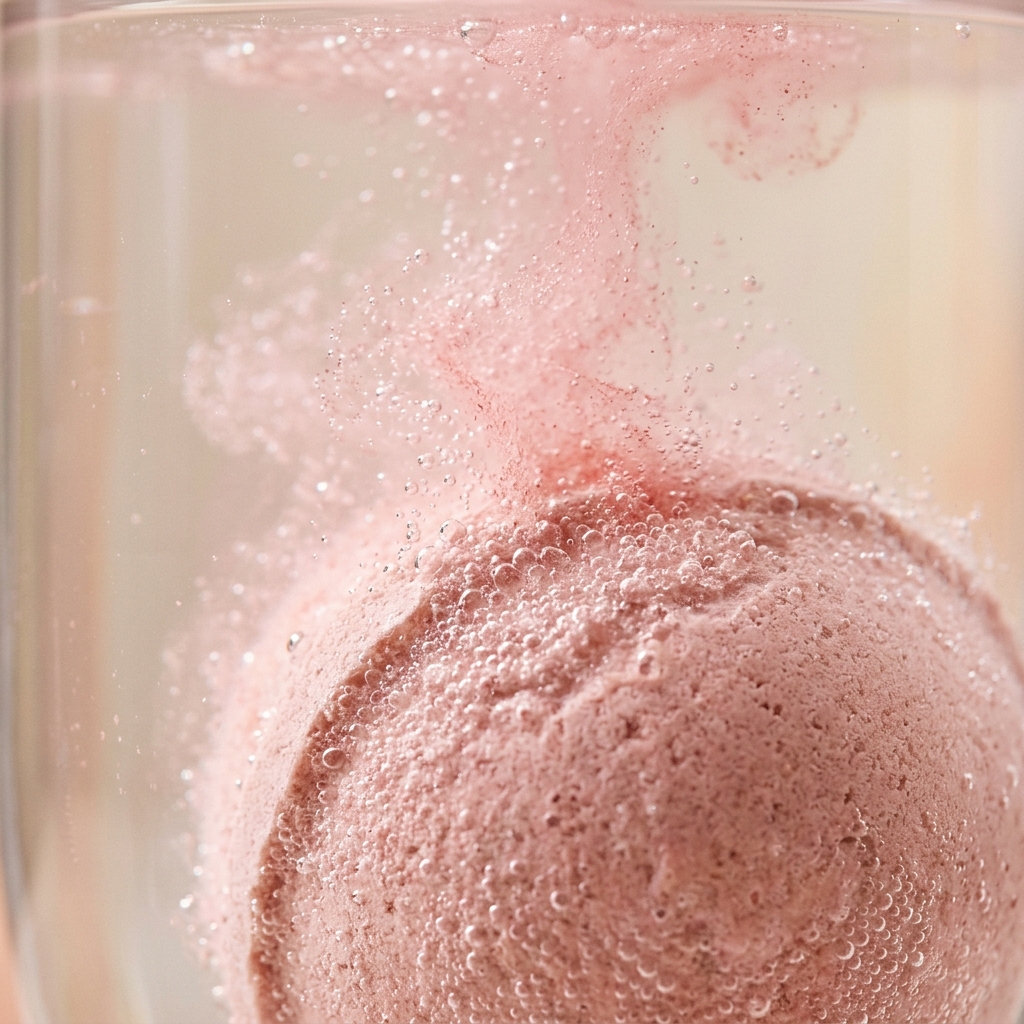
You do not need an extensive line of products for a bath to feel complete. A few additions are worth knowing about if you want to customise the experience:
- Epsom salt is commonly added to baths for muscle tension, but there is no good evidence that magnesium from bath water relaxes muscles or is absorbed through the skin in meaningful amounts. It is optional, not essential.
- Colloidal oatmeal can help soothe skin that is dry or irritated.
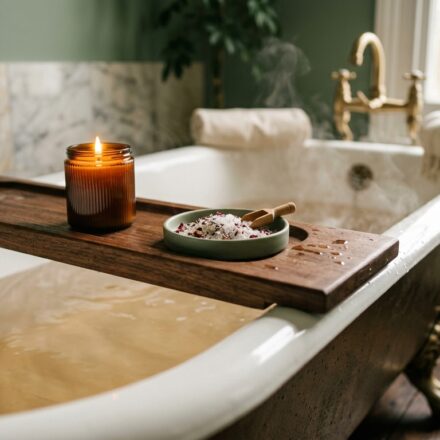
- A few drops of essential oil (lavender or chamomile are popular choices) diluted in a carrier oil before adding to running water — never dropped directly into the tub, as undiluted oils can irritate skin. Essential oils are common irritants, so use them sparingly and stop if your skin reacts.
Add any oils or salts while the tub is filling, rather than after. This distributes them evenly instead of leaving concentrated pockets that could sit directly against skin.
Where people overcomplicate it
| Common mistake | Why it backfires | Better approach |
|---|---|---|
| Water that is too hot | Strips natural oils, leaves skin dry and body tired | Keep water between about 100–109 °F |
| Staying in too long | Leads to water loss from the skin and dryness | Cap soak time around 15–20 minutes |
| Bringing a phone in | Keeps the mind in “alert” mode instead of resting | Leave devices in another room |
| Using too many products | Turns a simple ritual into a task list | Pick one or two additions, not five |
Post-bath care that actually matters
Moisturising while skin is still damp
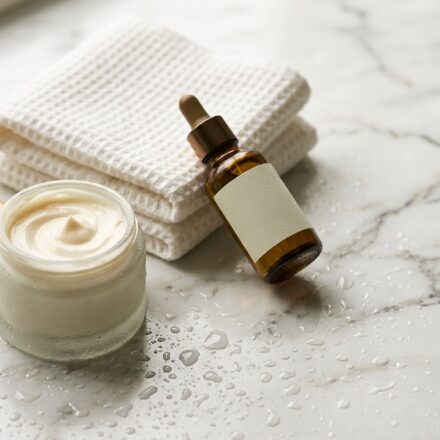
Moisturiser works best on skin that is still slightly damp rather than fully dry. Pat (don’t rub) skin dry and apply a moisturiser — ideally one with ceramides — within a few minutes of getting out of the tub to help seal in hydration before it evaporates. Dermatology guidance on dry skin recommends moisturising on damp skin for this reason.
Staying warm afterward
Stepping out of a warm bath into a cold bathroom undercuts the relaxation you just built. Wearing comfortable clothing and avoiding a sudden temperature drop helps extend the calm rather than shocking the system back to alert.
A simple step-by-step ritual
- Before: Dim the lights, turn off notifications, and put your phone outside the room.
- First few minutes: Ease in slowly rather than plunging in all at once, giving your muscles time to adjust without shock.
- During: Practice slow, deliberate breathing.
- Mid-bath: Gentle shoulder rolls or light stretching can help release further tension.
- Ending: Exit slowly, and pat skin dry rather than rubbing.
- After: Moisturise within a few minutes, dress warmly, and give yourself a few quiet minutes before moving on with the evening.
Making it a habit, not a one-off
Consistency outperforms intensity here. Even a short, five-minute version on a busy weeknight still carries benefit; save the more elaborate version for days when you actually have the time. Over weeks, the body begins to recognise the ritual itself as part of the wind-down process, which is part of why regular practice tends to outperform occasional “spa night” bathing.
Patch test
Before using a new bath product (salt, oil, or bath soak) more widely, patch test it: apply a quarter-sized amount to the underside of your arm or the bend of your elbow, twice a day, for 7 to 10 days. If you get redness, itching, swelling or a rash, stop using it. A 24-hour test can miss an allergic reaction, which often takes several days to appear — that is why this guide uses the AAD 7–10 day patch-test method. This is the American Academy of Dermatology’s patch-test method.
If you bathe in the morning and go outdoors, apply a broad-spectrum sunscreen with SPF 30 or higher after moisturising, and reapply every two hours when outdoors.
Frequently asked questions
What is the ideal water temperature for a relaxing bath?
Research on sleep benefits points to about 40–42.5 °C (104–108.5 °F) as the range most consistently linked to improved sleep quality. Going hotter does not add any benefit and tends to worsen skin dryness, especially with soaks lasting over 20 minutes.
Can a warm bath really help me fall asleep faster?
A 2019 meta-analysis of 13 studies found that a warm bath or shower of 40–42.5 °C, taken one to two hours before bed, was linked to better self-rated sleep quality and to falling asleep about 10 minutes faster on average. The effect comes from how the bath speeds up the body’s natural pre-sleep temperature drop.
How long should I stay in the bath?
Around 15–20 minutes captures most of the relaxation benefit without causing the skin dryness associated with prolonged water exposure. Staying in until your skin “prunes” is a sign you have gone past the useful window.
Does adding Epsom salt or oils actually make a difference?
They are optional rather than essential. A plain warm bath at the right temperature and timing still delivers the core benefits. There is no good evidence that Epsom salt relaxes muscles, and diluted lavender or chamomile oil can support relaxation through scent — but essential oils can also irritate skin, so use them sparingly.
Is it better to bathe in the morning or evening for relaxation?
Evening bathing, roughly 90 minutes before bed, is the timing most studied for relaxation and sleep benefits, aligning with the body’s natural temperature drop before sleep. Morning bathing can still feel good, but it is not linked to the same sleep-support mechanism.
Summary
The research is fairly consistent: a warm bath in the 40–42.5 °C range, taken about 90 minutes before bed for 15–20 minutes, does more for relaxation and sleep than a hotter, longer, or more product-heavy version. The ritual part — dim lights, no phone, a few minutes of intentional breathing — is what turns a technically correct bath into one that actually feels restorative. None of it requires special equipment or a long list of products; it mostly requires doing the simple version consistently rather than the elaborate version occasionally. No product in this guide was tested by us, and no brand is recommended.
Sources: Haghayegh et al. 2019, “Before-bedtime passive body heating by warm shower or bath to improve sleep: A systematic review and meta-analysis”, Sleep Medicine Reviews 46:124–135, doi:10.1016/j.smrv.2019.04.008 (screened 5,322 studies; 17 met criteria; 13 pooled; 40–42.5 °C; 1–2 hours before bed; about 10 minutes faster sleep onset on average); AAD guidance on dry skin (moisturise on damp skin; lukewarm water; gentle, fragrance-free cleansers); AAD sunscreen guidance (broad-spectrum SPF 30 or higher, reapply every two hours outdoors); AAD patch-test method. This is a researched overview, not a hands-on review.