Researched overview. This guide is based on published dermatology guidance, not on hands-on testing by BeautyKob. No product, supplement or brand is recommended, and no dose is given.
Table Of Content
- Quick answer
- What skin texture really means
- Texture by cause
- Gentle exfoliation without overdoing it
- Hydration: the fastest way to improve how texture feels
- Strengthening the skin barrier
- Collagen and skin smoothness, honestly
- Lifestyle changes that make a difference
- A practical weekly routine for smoother skin
- A 30-day plan
- Common mistakes that worsen texture
- Improving texture naturally for different skin types
- When natural methods may not be enough
- Realistic expectations
- Patch test before you commit
- Frequently asked questions
- Summary
Quick answer
Improving skin texture naturally is possible, but “naturally” needs an honest definition. It means working with your skin’s own renewal — gentle exfoliation once or twice a week, steady hydration, barrier repair and daily sunscreen — instead of harsh resurfacing or expensive treatments. It does not mean a home remedy can fix every texture problem: deep acne scars, thick sun damage and severe pigmentation need professional care. The first step is finding the cause, because rough skin from dehydration needs a different fix from rough skin caused by over-exfoliation. This guide is general information, not medical advice.
Contents: What skin texture really means · Texture by cause · Gentle exfoliation without overdoing it · Hydration · Strengthening the skin barrier · Collagen and skin smoothness, honestly · Lifestyle changes · A practical weekly routine · A 30-day plan · Common mistakes · Texture by skin type · When natural methods may not be enough · Realistic expectations · FAQ
What skin texture really means
Skin texture is how your skin looks and feels: small bumps, enlarged pores, rough patches, fine lines, flaky areas, congestion beneath the surface, and unevenness with dryness. Texture problems are often confused with acne, but they are not necessarily the same thing. Sometimes the issue is dead skin. Sometimes it is dehydration, inflammation, or a damaged barrier. Understanding the root cause is the first step, because each cause has a different fix.
Texture by cause
Dead skin cell buildup. Cell turnover slows as we age. Dead cells take longer to leave the surface, making skin rough and dull, and when they mix with oil they can block pores and form small bumps. Gentle exfoliation helps here — once or twice a week, not daily.
Dehydration. Dehydrated skin is not the same as dry skin. Dry skin lacks oil; dehydrated skin lacks water, and it can happen to any skin type, including oily skin. When skin cells lose water they shrink slightly and the surface looks lumpy and rough. Dehydration is one of the least considered causes of rough texture, and it is also one of the easiest to improve: humectants such as glycerin and hyaluronic acid, applied to slightly damp skin, with a moisturiser on top to hold the water in.
Over-exfoliation. It is ironic, but trying too hard to fix texture often makes it worse. Harsh scrubs, high-percentage acids and daily exfoliation damage the barrier. A weakened barrier causes inflammation, tightness and a rougher appearance — the opposite of what was intended. If your texture got worse after you started exfoliating more, exfoliating less is usually the fix.
Sun damage. UV radiation thickens the outer skin layer and breaks down collagen. Over time that means coarseness, unevenness and pores that look larger. Sunscreen is the single most effective step against this kind of texture change (Hughes et al. 2013) — more effective than any exfoliant.
Clogged pores. Overproduction of oil, especially when combined with poor cleansing or over-stripping, can lead to congestion. Tiny blockages form a bumpy surface. The fix is gentle cleansing and light exfoliation, not harsh stripping — stripping the skin does not reduce oil, and whether the skin compensates by producing more oil is disputed, not proven.
Lifestyle factors. Sleep deprivation, chronic stress, smoking, dehydration and a poor diet all affect skin renewal and collagen. Improving texture naturally means addressing these root causes instead of masking them — while being honest that lifestyle changes support skin health; they do not treat skin conditions.
Gentle exfoliation without overdoing it
Exfoliation helps — in moderation. Dead cells that have already loosened can be removed carefully, and softness improves straight away. Too much exfoliation causes small-scale damage that makes texture uneven.
For most people:
- Sensitive skin: 1–2 times weekly.
- Normal or combination skin: 2–3 times weekly.
- Oily skin: 2–3 times weekly.
Weak AHAs, PHAs or enzyme exfoliants are the gentlest options. Mild exfoliation works best combined with hydration and barrier repair. When your skin burns or stings, you have probably been doing too much.
Signs you are over-exfoliating:
- Persistent redness.
- Increased breakouts.
- Shiny but tight skin.
- Flaking and irritation.
If these happen, stop exfoliating and focus on repair for at least two weeks: gentle cleanse, hydrating serum, barrier moisturiser and sunscreen in the morning; cleanse, hydrate and a rich moisturiser in the evening. Avoid acids during this period.
Hydration: the fastest way to improve how texture feels
One of the simplest ways to improve texture is proper hydration. When skin cells are properly hydrated they plump slightly and sit more level, so the surface looks and feels smoother. Look for glycerin, hyaluronic acid, beta-glucan and aloe vera, and use hydrating products on slightly moist skin, followed by a moisturiser to prevent water loss.
Be honest about what hydration does: it improves how skin feels and looks, often noticeably, by correcting dehydration. It does not change the skin underneath, and it does not transform texture overnight. Anyone promising a dramatic improvement from hydration alone is overstating it.
Strengthening the skin barrier
Think of the skin barrier as armour. When it is damaged, texture problems multiply: roughness, sensitivity, inflammation and poor healing. To repair it, prioritise ceramides, cholesterol, fatty acids and low-percentage niacinamide (per Draelos 2006). Barrier repair often improves texture more than exfoliation alone, because healthy skin renews itself more effectively.
If your skin is irritated, take a two-week break from all actives and focus on the barrier. That reset is not wasted time — it is usually what makes the next step work.
Collagen and skin smoothness, honestly
Texture is more than surface. Firmness and smooth structure come from collagen, and collagen thins with age, leaving skin less even and pores looking larger.
What honestly helps collagen:
- Sunscreen, daily. UV damage destroys collagen over time; protecting it is the most effective step there is.
- Vitamin C. Vitamin C is a cofactor for collagen synthesis, which is a real but modest role — it supports the process, it does not rebuild collagen on its own. A low-strength vitamin C product is a reasonable addition, not a transformation.
- Peptides. Peptides are often sold as collagen builders, but the evidence is thin. They are not in the same league as sunscreen or retinoids, and this guide does not present them as equals.
- Retinoids. Retinoids are the strongest topical for fine lines, introduced slowly (one or two nights a week to start, pea-sized, 3–6 months to judge), with a pregnancy warning. They are not a “natural” method, but they are the honest comparison point: if a natural routine is not enough, a retinoid is what dermatology actually recommends.
- Sleep and not smoking. Adults need 7 or more hours of sleep a night (CDC). Poor sleep is linked to worse-looking skin in observational studies (Oyetakin-White et al. 2015 — small, observational, cosmetics-funded, association not proof). Smoking damages collagen; stopping helps skin over time.
What does not help collagen: massaging it in, “boosting circulation” with tools, or drinking collagen supplements — none of these has good evidence behind it.
Lifestyle changes that make a difference
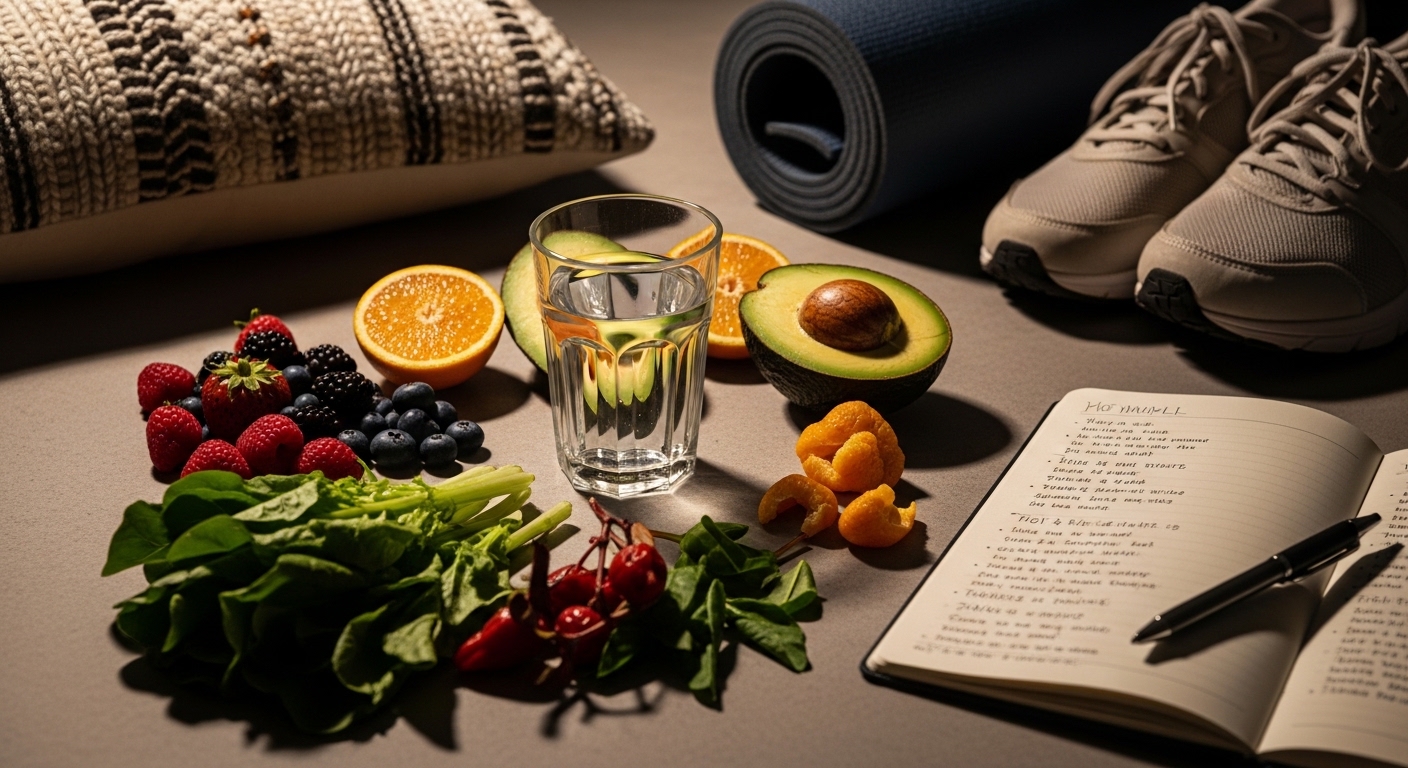
Improving texture naturally goes beyond products.
Sleep. Aim for 7 or more hours. Rested skin looks better; the claim stops there. The often-repeated line that deep sleep releases growth hormone that rebuilds collagen has no good source, and this guide does not repeat it.
Water. Drinking enough water supports your general health. It does not directly hydrate your skin — water you drink does not travel to the skin’s surface in any meaningful amount. Topical hydration is what changes how skin feels.
Nutrition. A varied diet with fruit, vegetables, healthy fats and lean protein supports general health, and there is some evidence that high-glycaemic foods are linked to acne (Smith 2007; AAD 2024: three of four trials showed benefit, not strong enough for a recommendation). But food is not a treatment: no diet fixes texture, and dairy is associated with acne mainly for milk, especially skim, with insufficient evidence to recommend avoiding it (AAD). Eat well for your health, not as a skin treatment.
Stress management. Chronic stress raises cortisol, and cortisol can increase oil production and inflammation. A calmer routine helps you keep the skincare routine itself — that is the honest benefit, not a direct effect on texture.
Exercise. Movement supports general wellbeing and sleep. Claims that exercise improves skin by “increasing circulation and nutrient delivery” are overstated and are not made here.
A practical weekly routine for smoother skin
A bare, basic structure:
- Monday: Hydration and barrier focus.
- Tuesday: Gentle exfoliation at night.
- Wednesday: Repair only.
- Thursday: Hydration focus.
- Friday: Gentle exfoliation.
- Weekend: Repair and protect.
Avoid two or more actives on the same day, and never exfoliate on skin that is already red or stinging.
A 30-day plan
- Week 1: Repair. Focus on hydration and strengthening the barrier.
- Week 2: Add mild exfoliation, once a week.
- Week 3: Add more hydration layers and observe the skin’s reaction.
- Week 4: Be consistent and review progress.
How long does improvement take? Smoother feel can come within a few weeks from hydration alone. Visible improvement in tone and evenness usually takes longer, and changes in collagen take months. There is no fixed week when results arrive — anyone giving one is guessing. Patience leads to sustainable results.
Common mistakes that worsen texture
- Over-exfoliating.
- Mixing retinol and strong acids too frequently.
- Skipping sunscreen.
- Using hot water, which strips the skin’s natural oils.
- Changing products weekly — give each change weeks, not days.
- Ignoring hydration and going straight to stronger actives.
Consistency is more powerful than intensity.
Improving texture naturally for different skin types
Every skin type behaves differently. What softens one person’s skin may irritate another’s. Adjust exfoliation, hydration and barrier care to your skin’s needs.
Sensitive skin. Sensitive skin is easily irritated and likely to turn red, burn or feel tight. The biggest mistake is over-exfoliating or experimenting with actives that are too harsh. Use PHAs instead of stronger AHAs — their larger molecules penetrate more slowly and irritate less. A papaya or pumpkin enzyme mask can gently dissolve surface build-up once a week. Choose fragrance-free products to reduce irritation triggers. Restrict exfoliation to 1–2 times per week, and focus on hydration and ceramide-based moisturisers. Signs of overdoing it are stinging, redness lasting more than 20 minutes, or sensitivity to products that never bothered you before. For sensitive skin, texture improves less by adding exfoliation and more by strengthening the barrier — once the barrier is reinforced, texture tends to improve on its own.
Oily skin. Oily skin tends to have clogged pores, congestion and pores that look enlarged. Most people with oily skin try to remove the oil with harsh cleansers or frequent exfoliation, and that usually backfires. Exfoliate lightly 2–3 times a week so pores do not clog. Consider a low-strength salicylic acid or azelaic acid for congestion — this guide does not state a specific percentage, which needs confirmation before it is recommended. Moisturise with a light, oil-free product, avoid alcohol-heavy toners, and use a gentle cleanser twice a day. Hydration matters here too: oily skin can also be dehydrated, and the surface looks smoother when it is properly hydrated. Improving texture for oily skin means balancing oil, not eliminating it.
Dry skin. Dry skin lacks oil and is frequently coarse, scaly or rough, usually because of barrier damage and dehydration rather than a buildup of dead cells. Excessive exfoliation makes dryness worse. Focus on repairing the barrier with ceramides, fatty acids and cholesterol. Use a mild lactic-acid exfoliant occasionally — about once a week — to lift flakes. Use moisturising serums and a heavier moisturiser at night, and avoid foaming cleansers that strip natural oils. Dry skin is also sensitive and responds to gentle renewal combined with intense hydration. Once the barrier is restored, roughness starts to fade. Consistency is critical, and constant product changing interferes with progress.
Combination skin. Combination skin has oily and dry areas — the T-zone (forehead, nose, chin) is usually oily, the cheeks dry. The difficulty is treating both without aggravating either. Apply exfoliants to the oily areas instead of all over the face. Use a lighter moisturiser on the T-zone and a richer one on the dry parts. Exfoliate once to three times a week, depending on how your skin responds. Do not use rough scrubs, which irritate the dry areas. Targeted care is the secret for combination skin: treat each area according to its needs rather than using one approach everywhere.
Mature skin. Maturity slows cell turnover, thins collagen, dries skin and makes texture uneven — fine lines, roughness and pores that look larger as elasticity falls. Improving mature texture means working below the surface as well as on it: light exfoliation 1–2 times per week to assist turnover, vitamin C or peptides with honest limits, high daily sun protection, richer creams, and a low-dose retinoid introduced gradually. Sun protection is particularly important, since UV damage accelerates collagen loss and worsens texture. Tolerance is everything: smoothness and firmness develop over time with consistent care, not from stronger products.
When natural methods may not be enough
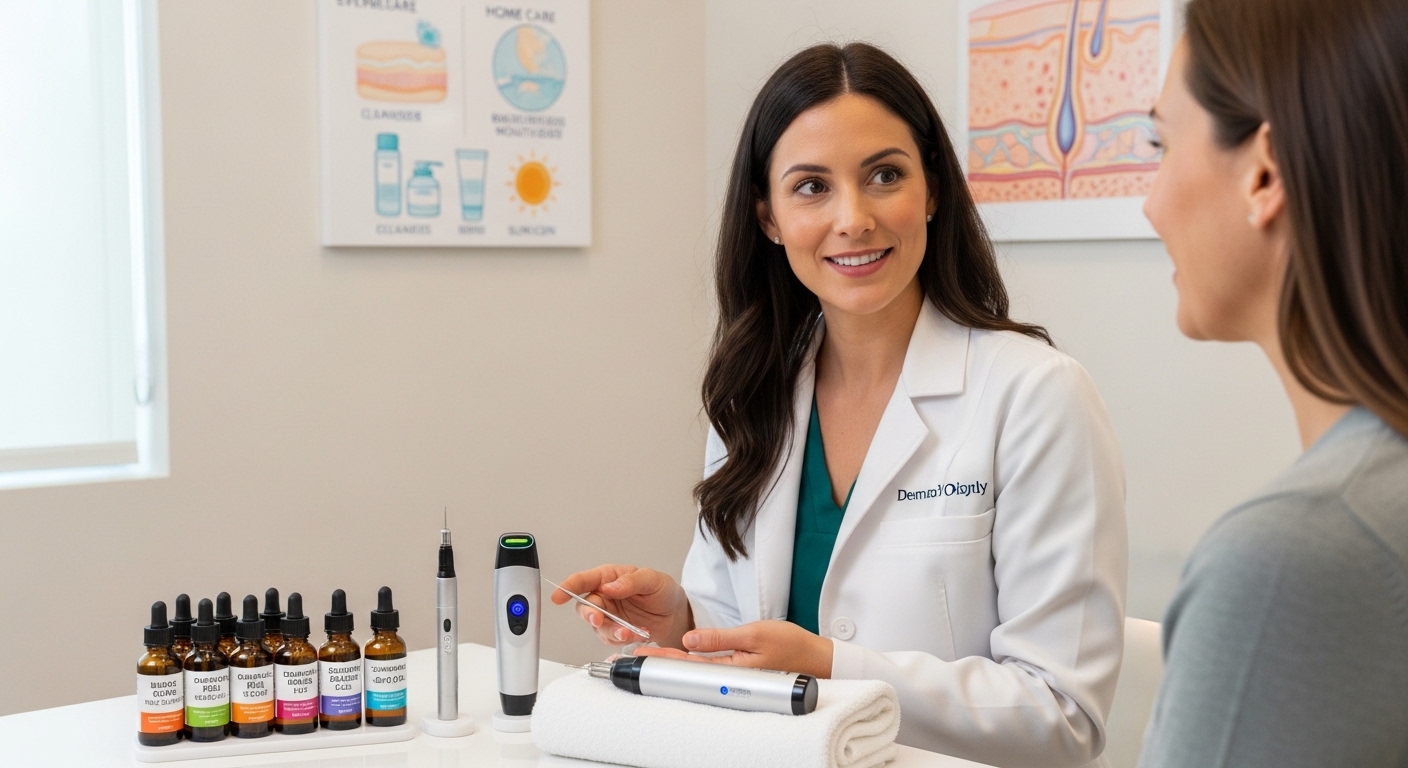
Natural and gentle techniques work well for most people, but there are situations where professional advice is needed. You may need a dermatologist if you have deep acne scars (ice-pick or boxcar scars), thickened skin with heavy sun damage, coarse patches that never improve, severe hyperpigmentation, or a chronic inflammatory skin condition.
Chemical peels, microneedling, laser therapy or prescription retinoids may be suggested depending on the concern. Microneedling can take up to 9 months to show changes (AAD), and scar treatment is matched to scar type — dark marks respond first to topicals, then peels or selected lasers. Even professional care works best with steady home care: barrier repair, hydration and sun protection are necessary both before and after treatment. Professional care is an enhancement of everyday skincare, not a substitute for it.
Realistic expectations
Improving texture naturally is not instant, and hasty fixes tend to harm the barrier. With steady care, smoother feel can come within a few weeks, visible improvement in tone and evenness usually takes longer, and structural change takes several months. Those are ranges, not promises — your timeline depends on the cause, your skin type and how consistently you keep the routine.
Patch test before you commit
The American Academy of Dermatology recommends testing a new product before using it on your face. Apply the product to a quarter-sized patch of skin where it will not be rubbed or washed away — the underside of your arm or the bend of your elbow — twice a day for 7 to 10 days. For a rinse-off product such as a cleanser, leave it on for about five minutes, or as long as the label says, then rinse it off. If the test area becomes red, itchy, swollen or painful, stop using the product. If the area stays clear for the full 7 to 10 days, the product is less likely to cause a reaction on your face — but a patch test cannot guarantee it.
A 24-hour test can miss an allergic reaction, which often takes several days to appear — that is why this guide uses the AAD 7–10 day patch-test method.
Frequently asked questions
Q1: How long does it take to improve skin texture naturally?
You may feel smoother skin within a few weeks, mostly from better hydration. Visible improvement in tone and evenness typically takes longer, and structural change takes months. There is no fixed week when results arrive.
Q2: Can I improve skin texture without using retinol?
Yes. Many people see real improvement through hydration, barrier repair, gentle exfoliation and sun protection without retinol. Retinoids are the strongest topical option if those steps are not enough — they are the honest comparison, not a requirement.
Q3: Is daily exfoliation necessary for smooth skin?
No. Most skin types only need exfoliation 1–3 times per week. Daily exfoliation can weaken the skin barrier and worsen uneven texture.
Q4: Does drinking water help improve skin texture?
Not directly. Drinking enough water supports your general health, but it does not hydrate the skin’s surface. Topical moisturisers are what change how skin feels and looks.
Q5: Can natural methods reduce enlarged pores?
Natural methods can minimise the appearance of pores by keeping them clear, protecting collagen and keeping oil balanced — but they cannot permanently shrink pore size. Pores have no muscles and cannot open or close.
Summary
Improving texture naturally means finding the cause first — dead cells, dehydration, over-exfoliation, sun damage or clogged pores — and then working gently: exfoliation once or twice a week, steady hydration, barrier repair with ceramides and niacinamide, and broad-spectrum SPF 30+ every morning. Drinking water does not directly hydrate skin, peptides have thin evidence, and no routine can promise results by a fixed week. Patch test any new product for 7 to 10 days. Deep scars and severe pigmentation need professional care, and that is an honest limit, not a failure of the routine.
Related reading: Eradikate acne treatment for cystic acne — a researched overview of a sulfur-based spot treatment, including what its brand claims do and do not prove.
Sources: American Academy of Dermatology, 7 Rosacea skin care tips (patch-test method: apply a new product to a quarter-sized patch of skin on the inside of the arm for 7–10 days); American Academy of Dermatology, How to select anti-aging skin care products (broad-spectrum sunscreen, SPF 30 or higher every morning). This is a researched overview, not a hands-on review.