Researched overview. This guide is based on published manufacturer guidance and general wound-care information, not on hands-on testing by BeautyKob. No product in this guide was tested by us.
Table Of Content
Quick answer
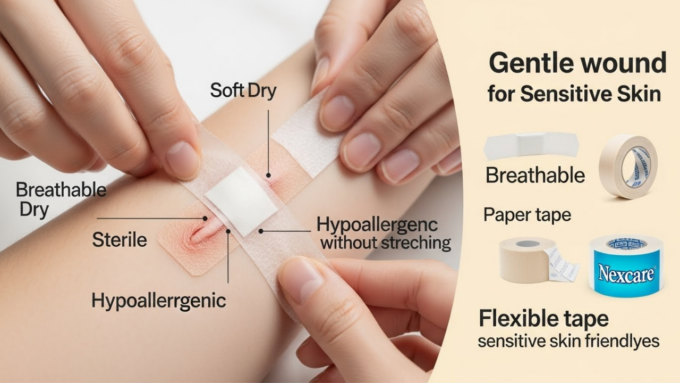
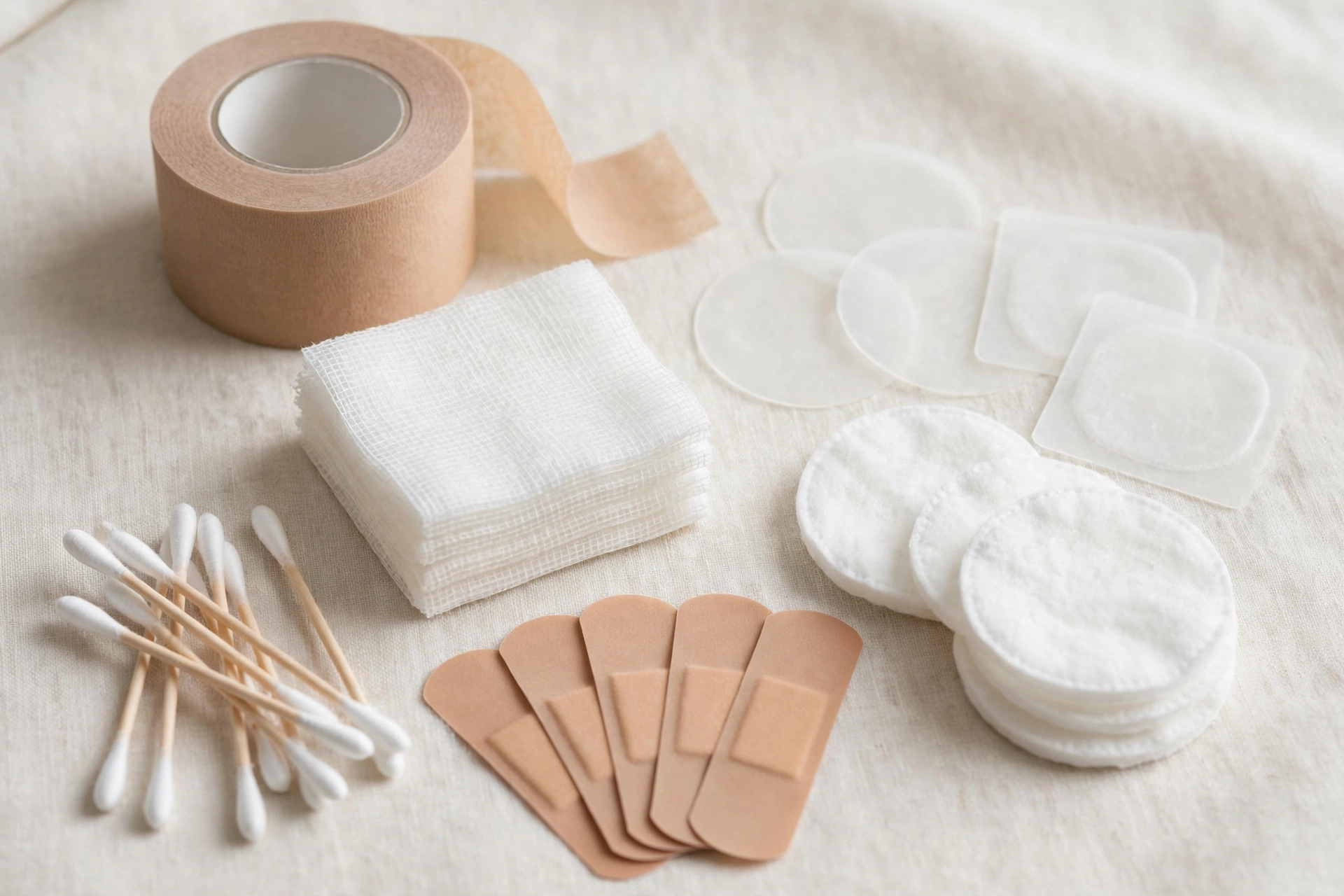
Sensitive skin reacts to ordinary medical tape: redness, itching, blisters or small tears when the tape comes off. The gentlest options are usually paper tapes (such as 3M Micropore), silicone-adhesive tapes (such as Nexcare Sensitive Skin Tape), and soft cloth tapes (such as 3M Medipore). What matters as much as the tape is how you take it off: slowly, at a low angle, in the direction of hair growth, while holding the skin down — never ripped off quickly.
If a wound shows signs of infection — pus, increasing pain, spreading redness, swelling or fever — or if it is not healing, seek medical advice. This guide is general information, not medical advice.
Contents: Why sensitive skin reacts to tape · Tape types · Choosing the right tape · How to apply it · How to remove it · Problems · When to seek help
Why sensitive skin reacts to tape
Medical tape sticks to the top layer of skin. On healthy skin that is usually fine. On sensitive, thin, dry or fragile skin — common in older people, children, and people on certain medications — the adhesive can strip skin cells when it is removed, causing redness, pain, blisters or small tears. Clinicians call this medical adhesive-related skin injury (MARSI). It can cause pain, increase the risk of infection, and delay healing.
The risk is highest when tape is pulled off quickly or straight up, when the same spot is taped again and again, and when a strong adhesive is used where a gentle one would do.
Tape types — what is actually on the market
| Tape type | What it is | Best for |
|---|---|---|
| Paper tape — e.g. 3M Micropore | Lightweight, breathable paper backing with a hypoallergenic adhesive; tears easily by hand | Daily dressing changes, light dressings, sensitive skin |
| Silicone-adhesive tape — e.g. Nexcare Sensitive Skin Tape, Hypafix Gentle Touch | Soft silicone adhesive designed to come off with less trauma; can often be repositioned | Very reactive or fragile skin, frequent changes, curved or moving areas |
| Soft cloth tape — e.g. 3M Medipore H | Non-woven polyester cloth, latex-free and hypoallergenic, breathable, stretches with swelling and movement | Larger dressings, areas that move a lot, longer wear, repeated taping |
| Retention tape — e.g. Hypafix | Wide, soft non-woven tape for holding a dressing in place over a larger area | Securing dressings on surgical or wound sites, where a wide area needs covering |
A few things to check on the pack before buying:
- “Hypoallergenic” means the maker considers it less likely to cause a reaction. It is not a guarantee — patch test a new tape on a small area first if your skin is very reactive.
- “Latex-free” matters if you have a latex allergy. Check the pack; not every tape is latex-free.
- Breathable tapes let air and moisture vapour through, which helps the skin underneath stay healthier.
- Silicone adhesives are generally gentlest on removal, but they may hold less strongly on very oily or hairy skin.
No tape in this guide is “the best” for everyone. The right tape depends on the wound, the site, how long it must stay on, and how sensitive the skin is.
Choosing the right tape
Ask four questions:
- How sensitive is the skin? Mildly reactive skin usually does fine with paper tape. Very reactive, thin or fragile skin needs a silicone-adhesive or soft cloth tape.
- Where is the wound? Joints and areas that move need a flexible tape that stretches — soft cloth or silicone tape. The face and neck need the gentlest adhesive available.
- How long must it stay on? A tape for a few hours can be the lightest option. A dressing that must stay on for days needs a tape that holds without irritating on removal — soft cloth or silicone.
- How often will the dressing change? Frequent changes mean the tape comes off often, so gentleness on removal matters most. Paper or silicone tape is usually the better choice.
For post-operative wounds, follow the surgeon or nurse’s instructions on which tape to use. Do not substitute a different tape without asking them.
How to apply tape
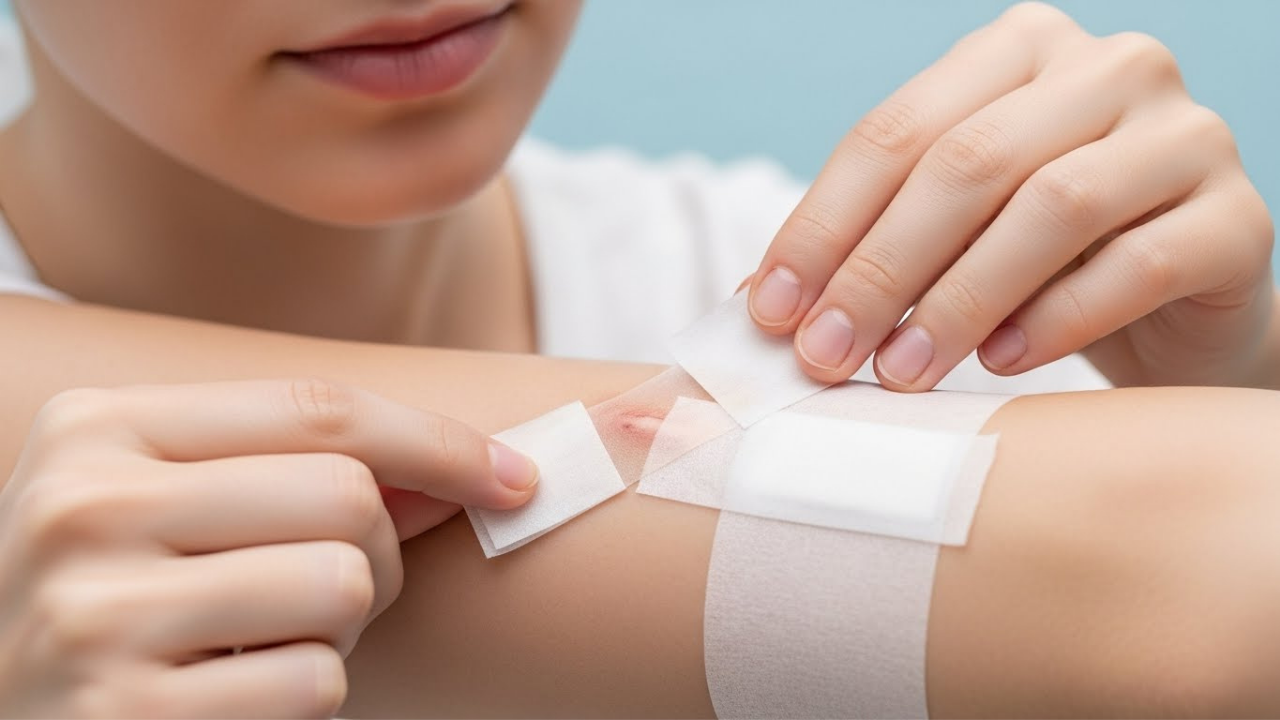
- Start with clean, dry skin. Wash the area gently and pat dry. Tape sticks poorly to damp or oily skin, and moisture under tape increases irritation.
- Use a skin barrier film first if the skin is very fragile. A barrier film (for example 3M Cavilon) is a thin protective layer applied to the skin before the tape. Ask a pharmacist which one suits you.
- Cut the right length. Too much tape means more adhesive on the skin than needed, and more to remove later.
- Do not stretch the tape. Apply it without pulling it tight. Stretched tape pulls on the skin and causes irritation and small tears.
- Press gently to activate the adhesive. Firm, gentle pressure is enough — do not rub hard.
- Do not layer tape on tape unnecessarily. One well-placed strip is better than several overlapping ones.
How to remove tape — low and slow
This is the part that matters most, and it is where the original article gave wrong advice. The manufacturer’s own guidance (Solventum, formerly 3M) is:
- Loosen one edge of the tape.
- Stabilise the skin with a finger of your other hand, right at the peel line, so the skin does not lift with the tape.
- Peel the tape back over itself, low and slow — keep it close to (parallel with) the skin surface, and move slowly, in the direction of hair growth.
- Do not pull the tape straight up. Pulling perpendicular to the skin puts the most force on it and is the main cause of skin stripping.
- If the tape resists, stop. Soften the adhesive along the peel line with warm water, a little oil, or a medical-grade adhesive remover, wait a moment, then continue slowly. Never force it.
- After removal, wash the area gently with lukewarm water and mild soap, pat dry, and check the skin. If there is redness, leave the area uncovered and do not re-tape the same spot until it has settled.
For hairy skin, trimming the hair beforehand (with scissors, not a razor) makes future removal easier. If the tape is stuck to hair, soften it first and peel in the direction the hair grows.
Common problems
- Redness or stinging after removal: take the tape off, wash gently with lukewarm water, and leave the skin alone. Do not re-tape the same spot. If redness spreads, blisters, or does not settle, seek medical advice.
- Tape peeling off too soon: the skin may have been damp or oily, or the tape may be too light for the site. Make sure the skin is clean and dry before applying, and consider a soft cloth tape for areas that move.
- Skin tearing: this usually means the tape was removed too fast or straight up, or the adhesive was too strong for the skin. Next time, use a gentler tape, a barrier film underneath, and the low-and-slow removal method.
- Itching under the tape: it may be a reaction to the adhesive. Remove the tape, let the skin rest, and try a different type — for example a silicone-adhesive tape — after the skin has settled. If itching is severe or spreading, seek medical advice.
When to seek medical advice
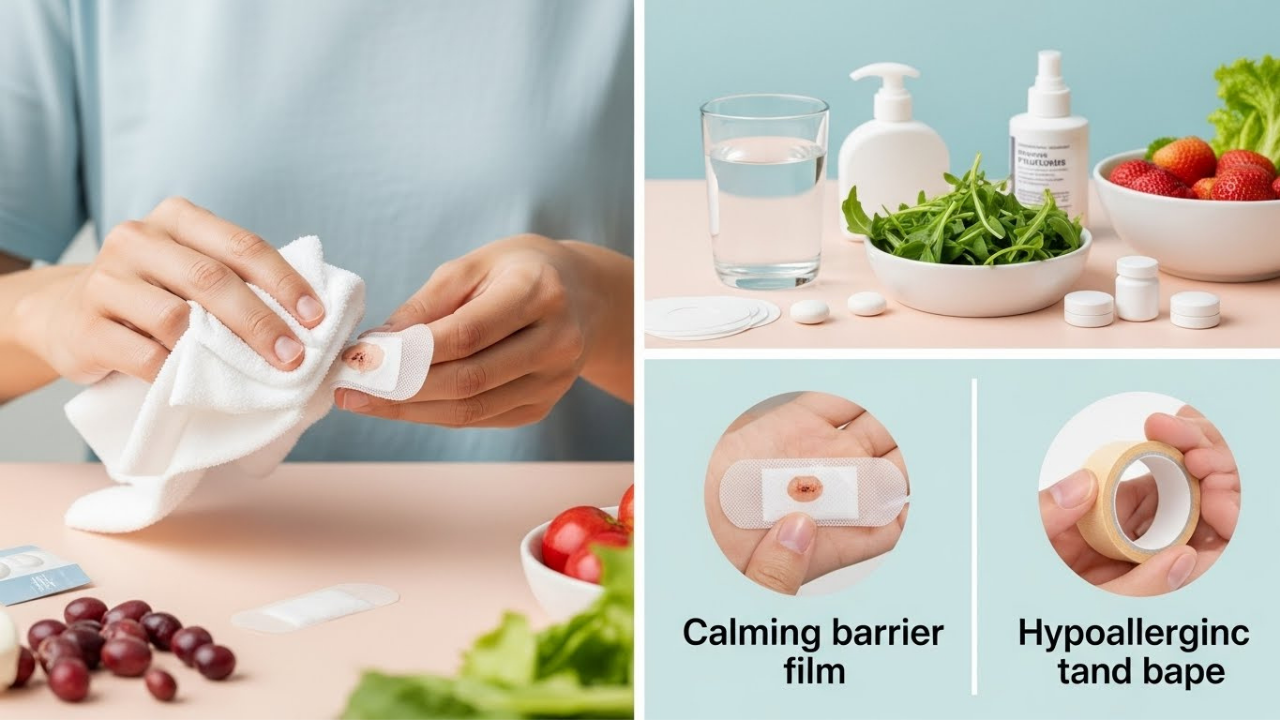
Seek care promptly if you notice:
- Signs of infection: pus, increasing pain, spreading redness, swelling, warmth, or fever.
- A wound that is not healing, or is getting larger.
- Skin tears, blistering or an allergic reaction that is getting worse.
- Bleeding that does not stop.
- Any wound on the face, near the eye, or on a person with diabetes, poor circulation, or a weakened immune system — these need professional assessment, not home taping.
Summary
For sensitive skin, choose a gentle tape — paper, silicone-adhesive or soft cloth — and check that it is hypoallergenic and, if relevant, latex-free. Apply it to clean, dry skin without stretching. Remove it low and slow, in the direction of hair growth, while holding the skin down. Never rip tape off quickly or straight up. If the skin reacts, leave it alone and seek advice rather than re-taping the same spot.
Sources: Solventum (formerly 3M) medical tape application and removal guide; 3M/Solventum product descriptions for Micropore, Nexcare Sensitive Skin Tape and Medipore H; BSN Medical/Essity descriptions for Hypafix Gentle Touch. This is a researched overview, not a hands-on review.