Researched overview. This guide is based on published dermatology guidance and published nutrition research, not on hands-on testing by BeautyKob. No food, supplement or brand is recommended, and no dose is given.
Table Of Content
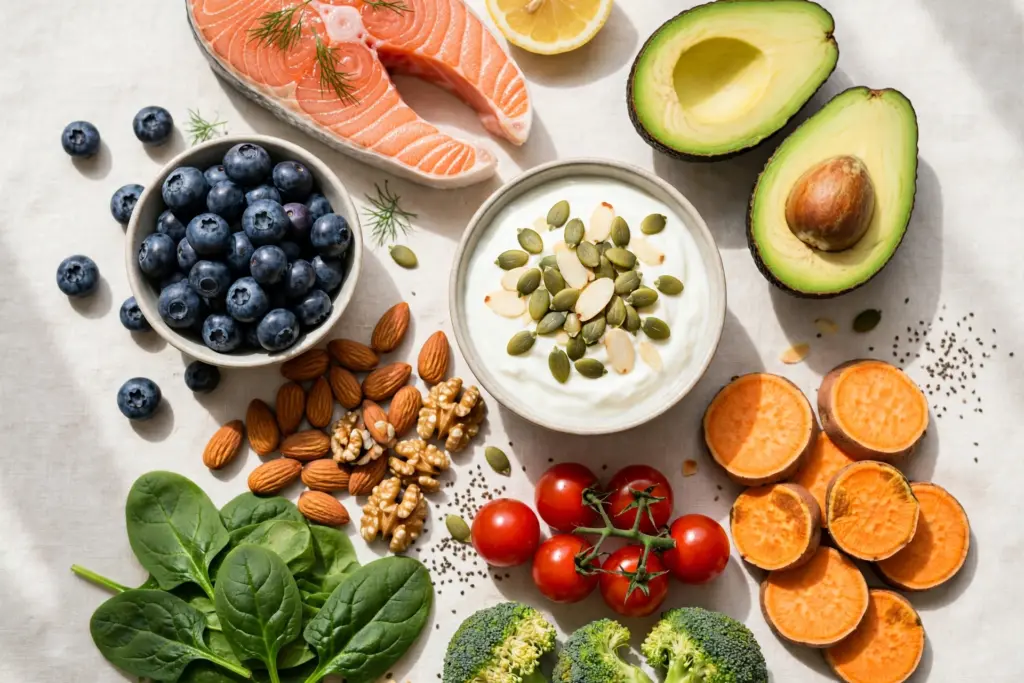
Quick answer
No food clears skin on its own. Food supports skin health: a balanced diet helps your body work well, and some foods are linked to fewer breakouts in some people. But acne and uneven tone are mainly treated with skincare — gentle cleansing, moisturiser, sunscreen, and, where needed, a treatment such as benzoyl peroxide or a retinoid. If food alone could clear skin, no one with a good diet would have acne, and that is not what happens. This guide says which foods have evidence behind them, which claims are overblown, and what food cannot do. It is general information, not medical advice.
Contents: What “clear skin” means · How food affects skin · Foods with evidence · Foods that are overclaimed · Foods that may make breakouts worse · Clear skin by skin type · A balanced plate · Skincare still matters most · When to get help · FAQ
What does “clear skin” actually mean?
Clear skin is not poreless or flawless skin, and it does not mean never having a pimple. Healthy clear skin is balanced and resilient: even tone, smooth texture, infrequent and mild breakouts, and blemishes that heal reasonably quickly. Perfect skin is a filtered image, not a real goal. Clear skin is possible and maintainable — but it depends on more than food, and no single food or diet delivers it.
How food affects skin
Food affects skin through several routes, and all of them are modest:
- Gut–skin connection. The gut and the skin are connected, and poor digestion or gut irritation is linked to inflammation in the body. That link is real biology — but probiotics are not an established acne treatment, and no gut product has been shown to clear skin.
- Blood sugar and breakouts. Simple carbohydrates and refined sugar spike blood sugar, which raises insulin. Higher insulin may increase oil production and clogged pores, which are causes of acne. The evidence: one small trial (Smith 2007, 43 men, 12 weeks) found a low-glycaemic diet improved acne, and the AAD’s 2024 review found 3 of 4 randomised trials showed some benefit — but the evidence was not strong enough for a recommendation. So a lower-sugar diet may help some people with acne; it is not a treatment.
- Inflammation and clogged pores. Chronic inflammation is linked to slower healing and more frequent breakouts. Some foods are associated with less inflammation, others with more — but no food has been shown to treat acne by reducing inflammation.
- Hormones through diet. Insulin and androgens are affected by food. Persistent acne around the chin and jawline is often hormonal. Food can influence hormones modestly; it does not control them.
- Nutrient deficiencies. A lack of essential nutrients can slow healing and weaken the barrier. But in people who are not deficient, extra vitamins and minerals have no good evidence as a skin treatment. A nutrient-depleted diet limits what skincare can do; a nutrient-rich diet does not replace skincare.
Foods with evidence
These foods are part of a balanced diet, and the evidence for each is stated honestly:
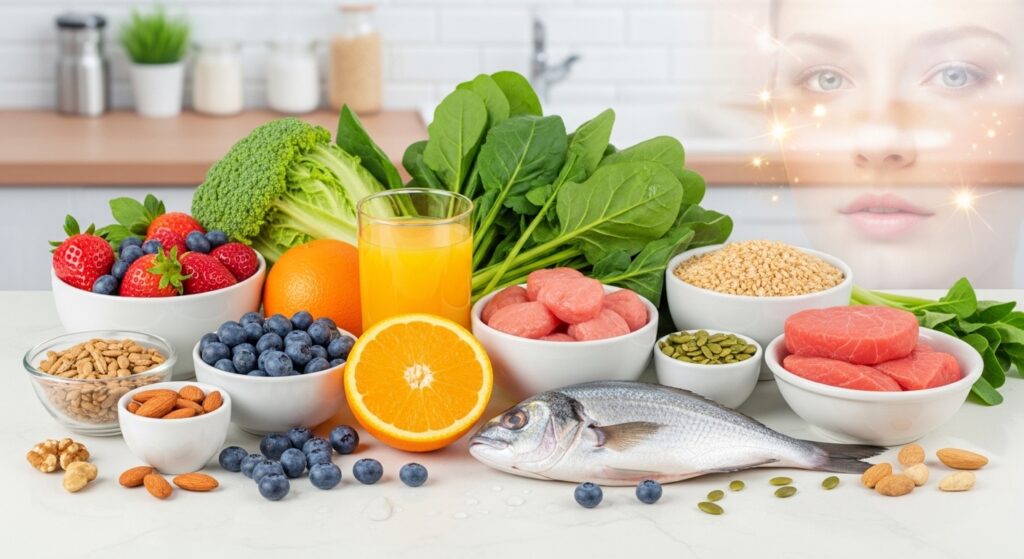
- Fruits. Berries and other fruits provide antioxidants and water as part of a balanced diet. They do not repair skin cells, and they do not detox anything — the liver and kidneys handle waste removal, and skin does not need detoxing. Eat fruit daily because it is good food, not because it clears skin.
- Vegetables. Leafy greens and other vegetables provide fibre, which supports normal digestion and steadier blood sugar. They do not cleanse the body or flush waste from the skin.
- Healthy fats. Fats are part of a balanced diet and support the skin barrier from the inside. Omega-3 fats from fish are often described as anti-inflammatory, but omega-3 has not been proven to stop breakouts or treat acne. Portion control matters, especially for oily skin — moderate amounts of healthy fats are better than none, and better than excess.
- Protein. Protein provides the building blocks of skin and helps stabilise blood sugar. Animal and plant sources can both work. The common mistake is overloading on protein and forgetting vegetables and fibre, which support digestion.
- Foods rich in zinc. Zinc is involved in oil regulation, inflammation and wound healing. Low zinc is associated with persistent acne in some studies — but association is not proof, and zinc from food is not a treatment. No zinc dose is recommended here; do not take zinc supplements for acne without medical advice.
- Foods high in antioxidants. Antioxidants from colourful foods help the body deal with oxidative stress from pollution and UV. They support health generally; they do not treat breakouts or uneven tone on their own.
Foods that are overclaimed
- “Detox” foods. No food detoxes the skin. The liver and kidneys remove waste; skin does not need detoxing, and no juice, tea or cleanse changes that.
- “Hydrating” foods and water. Foods with high water content and drinking water are good for your health, but drinking or eating water does not directly hydrate your skin. If your skin feels tight despite good topical care, the answer is a better moisturiser, not more water.
- Supplements. No supplement or dose is recommended here. Omega-3, antioxidant, vitamin and collagen supplements have no good evidence as a skin treatment in people who are not deficient. Whole foods are a better source of nutrients than supplements, but neither is a treatment.
- “Superfoods” for skin. No single food has been shown to clear skin. A varied, balanced diet beats any one “miracle” food.
Foods that may make breakouts worse
These foods do not cause a breakout overnight, but over time they are linked to more inflammation and more frequent breakouts in some people:
- High-sugar foods. Added sugar spikes blood sugar and insulin, which may increase oil production and inflammation. Hidden sugars in sauces, snacks and packaged foods are the hardest to spot. Eating less sugar helps stabilise blood sugar; it is not a cure for acne.
- Highly processed foods. Preservatives, artificial flavourings and refined oils add strain to digestion, which is linked to inflammation. Eating less processed food does not mean perfection — small steps make a difference.
- Dairy. Dairy affects people differently. For some it makes no difference; for others it is linked to breakouts, possibly because of its natural hormonal compounds. The evidence is mainly about milk, especially skim milk, and the AAD’s position is that there is not enough evidence to recommend avoiding dairy. If you suspect dairy affects your skin, try reducing it for several weeks and watch for changes — that is better than cutting it out entirely without a reason.
- Fried and fast foods. Low-quality oils are linked to inflammation. Occasional eating is not a problem; frequent eating is linked to more breakouts and dullness.
Clear skin by skin type
There is no single diet for all skin types:
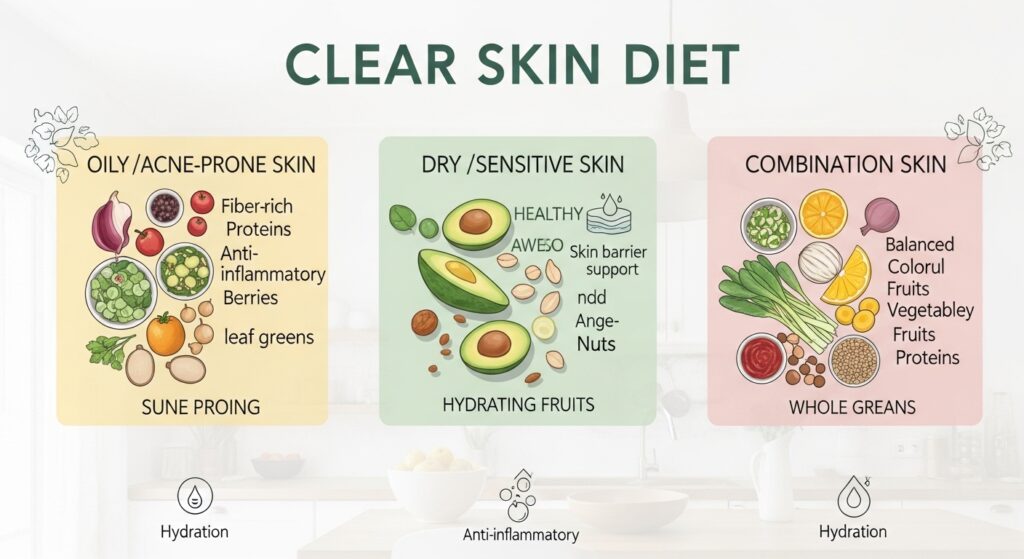
- Oily and acne-prone skin. Focus on fibre, protein and anti-inflammatory foods, and limit refined carbohydrates and added sugar. That helps steady blood sugar; it does not control oil production on its own.
- Dry and sensitive skin. Focus on healthy fats and a varied diet to support the barrier from the inside. Food supports resilience; it does not replace moisturiser.
- Combination skin. Balance is best. No food group needs to be cut out entirely. A varied, nutritious diet helps manage oil and hydration together.
A balanced plate
This is a guide to a balanced plate, not a prescription — no amounts, no strict rules:
- Breakfast: a meal with protein and fibre to steady blood sugar — for example, eggs or yoghurt with wholegrain bread and fruit.
- Lunch: a plate of vegetables, protein and healthy fats — for example, a salad or cooked vegetables with lentils, beans, fish or chicken and olive oil.
- Dinner: lighter, easy-to-digest foods with plenty of vegetables and protein.
- Snacks: simple choices that do not spike blood sugar — for example, nuts, fruit, or yoghurt.
Consistency matters more than perfection. Eating these foods occasionally will not change your skin; eating a balanced diet regularly supports the stable internal environment in which skin can stay clearer for longer. It does not prevent breakouts on its own.
Skincare still matters most
Food supports skin health; skincare treats skin. If you have acne, uneven tone or persistent breakouts, the routine matters more than the diet:
- Cleanse gently with lukewarm water and a gentle cleanser, twice a day.
- Moisturise with a fragrance-free moisturiser that suits your skin type.
- Sunscreen every morning — broad-spectrum SPF 30 or higher, reapplied every two hours when outdoors. Sunscreen is the most effective anti-ageing step (Hughes et al. 2013).
- One treatment at a time. For acne, benzoyl peroxide is the best-evidenced over-the-counter option (AAD 2024 guideline strongly recommends it); retinoids are the strongest topical for fine lines and uneven texture, used slowly (3–6 months, start 2–3 nights a week, pregnancy warning). Do not combine strong actives on the same night when starting out.
- Do not pop a pimple — the AAD advises against it (Dr. Jacqueline Watchmaker, MD, FAAD).
Patch test before you commit
The American Academy of Dermatology recommends testing a new product before using it on your face. Apply the product to a quarter-sized patch of skin where it will not be rubbed or washed away — the underside of your arm or the bend of your elbow — twice a day for 7 to 10 days. For a rinse-off product such as a cleanser, leave it on for about five minutes, or as long as the label says, then rinse it off. If the test area becomes red, itchy, swollen or painful, stop using the product. If the area stays clear for the full 7 to 10 days, the product is less likely to cause a reaction on your face — but a patch test cannot guarantee it.
A 24-hour test can miss an allergic reaction, which often takes several days to appear — that is why this guide uses the AAD 7–10 day patch-test method.
When to get help
Ask a dermatologist or pharmacist if: acne is painful, deep or scarring; it does not improve after 8 to 12 weeks of consistent over-the-counter care; your skin is persistently red, sore or swollen; or a product you have used for a long time suddenly starts to sting. Bring the products you use, or photos of their ingredient lists. A dermatologist can also check whether a nutrient deficiency is actually present before any supplement is considered.
FAQ
Can food really make your skin clear?
Food influences inflammation, hormones and digestion, which are linked to acne — but the influence is modest and varies by person. No food clears skin on its own. Skincare treats skin; food supports health.
How long does it take for diet changes to affect skin?
There is no fixed timeline. Skin changes slowly, and diet changes are only one factor. If diet helps at all, it takes weeks of consistent eating, not days — and the effect is small compared with skincare.
Is it necessary to completely avoid sugar or dairy?
Not always. Sensitivity varies by person — moderation and personal testing work better than strict elimination. For dairy, the AAD’s position is that there is not enough evidence to recommend avoiding it.
Are supplements better than food for clear skin?
No supplement is recommended here. Whole foods provide nutrients in balanced, natural forms, and supplements have no good evidence as a skin treatment in people who are not deficient.
Summary
Food supports skin health but no food clears skin on its own. A balanced diet — fruit, vegetables, healthy fats, protein, zinc-rich foods and antioxidants — helps your body work well. High-sugar and highly processed foods are linked to more frequent breakouts in some people; dairy affects people differently, and the AAD does not recommend avoiding it. Detox foods, “hydrating” foods and supplements are overclaimed: skin does not need detoxing, drinking water does not directly hydrate skin, and no supplement is a treatment. Skincare treats skin — gentle cleansing, moisturiser, SPF 30+ every morning, one treatment at a time, and a patch test for 7 to 10 days before any new product. If acne does not improve after 8 to 12 weeks of consistent care, ask a dermatologist.
Sources: American Academy of Dermatology, 7 Rosacea skin care tips (patch-test method: apply a new product to a quarter-sized patch of skin on the inside of the arm for 7–10 days); American Academy of Dermatology, How to select anti-aging skin care products (broad-spectrum sunscreen, SPF 30 or higher every morning, reapply every two hours outdoors). This is a researched overview, not a hands-on review.