Researched overview. This guide is based on published dermatology guidance, not on hands-on product testing by BeautyKob. No product in this guide was tested by us.
Table Of Content
Quick answer
A vitamin C serum with hyaluronic acid is a morning product for most people. Vitamin C is an antioxidant; hyaluronic acid is a humectant that draws water into the skin. Used together, they can help the skin look brighter and feel more hydrated over weeks of steady use. They do not lighten your natural skin colour, erase dark spots, or replace sunscreen.
Use it once a day, in the morning, after cleansing and before moisturiser and sunscreen. Start with a lower strength if your skin is sensitive. If it stings for more than a minute or two, or your skin turns red or flaky, stop and go back to a simple routine.
If your skin is red, sore, or has open sores or a rash, ask a dermatologist or pharmacist before using any active. This guide is general information, not medical advice.
Contents: What vitamin C does · What hyaluronic acid does · Why they are combined · Who it suits · Who should be careful · How to choose · How to use it · Layering · Mistakes · FAQ
What is vitamin C serum?
Vitamin C in skincare is usually L-ascorbic acid, or a gentler derivative such as sodium ascorbyl phosphate or magnesium ascorbyl phosphate. It is an antioxidant: it helps counter the free-radical damage caused by UV light and pollution. In the body, vitamin C is a cofactor for the enzymes that build collagen, and it can affect melanin production — which is why it is used for the look of uneven tone. (AAD cosmeceuticals review)
That biochemical role does not mean every serum will visibly change your skin. Whether a product helps depends on its formulation, its stability, and whether you use it regularly with sunscreen. No serum can promise to fade a specific dark spot by a specific date.
Vitamin C oxidises easily. Air, light and heat reduce its effectiveness, so a serum that has turned dark brown or orange has likely oxidised and should be replaced. Store it in a cool, dark place and close the cap properly.
What is hyaluronic acid?
Hyaluronic acid (HA) is a substance naturally present in the skin. In skincare it is a humectant: it draws water into the outer layer of the skin, which can make the skin feel plump and look smoother. It is not a moisturiser on its own — you still need a moisturiser to seal that water in.
HA suits most skin types, including oily skin, because it is lightweight. It does not make skin oily. The idea that it “penetrates deeply” depends on the formulation; most HA sits in the outer layers, which is where it does its hydrating work. Hyaluronic acid is a humectant that helps hydrate the skin’s outer layers. A moisturizer can help reduce water loss. A vitamin C product and a hyaluronic acid product can be used in the same routine depending on the formulations and skin tolerance; this combination does not automatically make vitamin C penetrate more deeply.
Why vitamin C and hyaluronic acid are combined
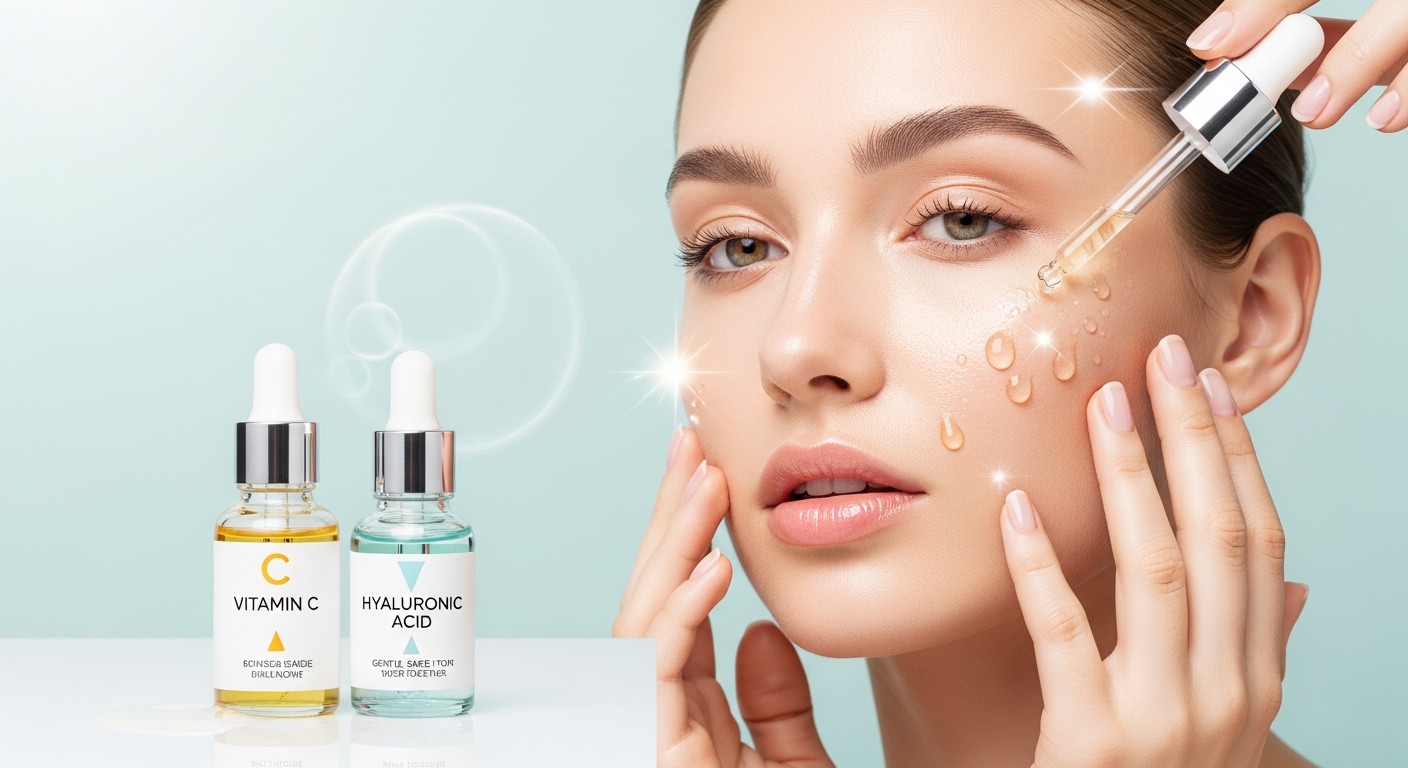
They do different jobs. Vitamin C is the active; HA is the hydrating support. Hydrated skin looks smoother and reflects light better, which can make the brightening effect of vitamin C more visible. HA can also make a vitamin C serum feel less drying, which helps beginners keep using it.
That is the whole of the combination’s advantage. It does not make vitamin C stronger, and it does not repair skin damage faster.
Who it suits
This combination is a reasonable starting point if you have:
- Dull or tired-looking skin and want a simple morning active.
- Dry or dehydrated skin that needs lightweight hydration under a moisturiser.
- Early fine lines or uneven tone and want an antioxidant in your routine, with realistic expectations.
- Oily skin that needs hydration without a heavy cream — a watery serum usually suits oily skin better than a thick cream.
Who should be careful
Be careful, and consider skipping vitamin C or asking a pharmacist first, if you have:
- Very sensitive or damaged skin. Strong vitamin C (especially pure L-ascorbic acid) can sting or irritate.
- Active breakouts or inflamed acne. An active can irritate inflamed areas.
- Recently exfoliated or sunburnt skin. Wait until the skin has settled.
Patch test: apply a small amount to a quarter-sized patch of skin on the inside of your arm or the bend of your elbow, twice a day for 7–10 days. If there is redness, itching or swelling, do not use it on your face. Patch testing is especially important the first time you use a product, or when you use a higher strength.
How to choose a serum
Check the label, not the marketing:
- Form of vitamin C. Pure L-ascorbic acid is the strongest form and the most likely to irritate. Derivatives (sodium ascorbyl phosphate, magnesium ascorbyl phosphate) are gentler and more stable, and are usually a better first choice for beginners or sensitive skin.
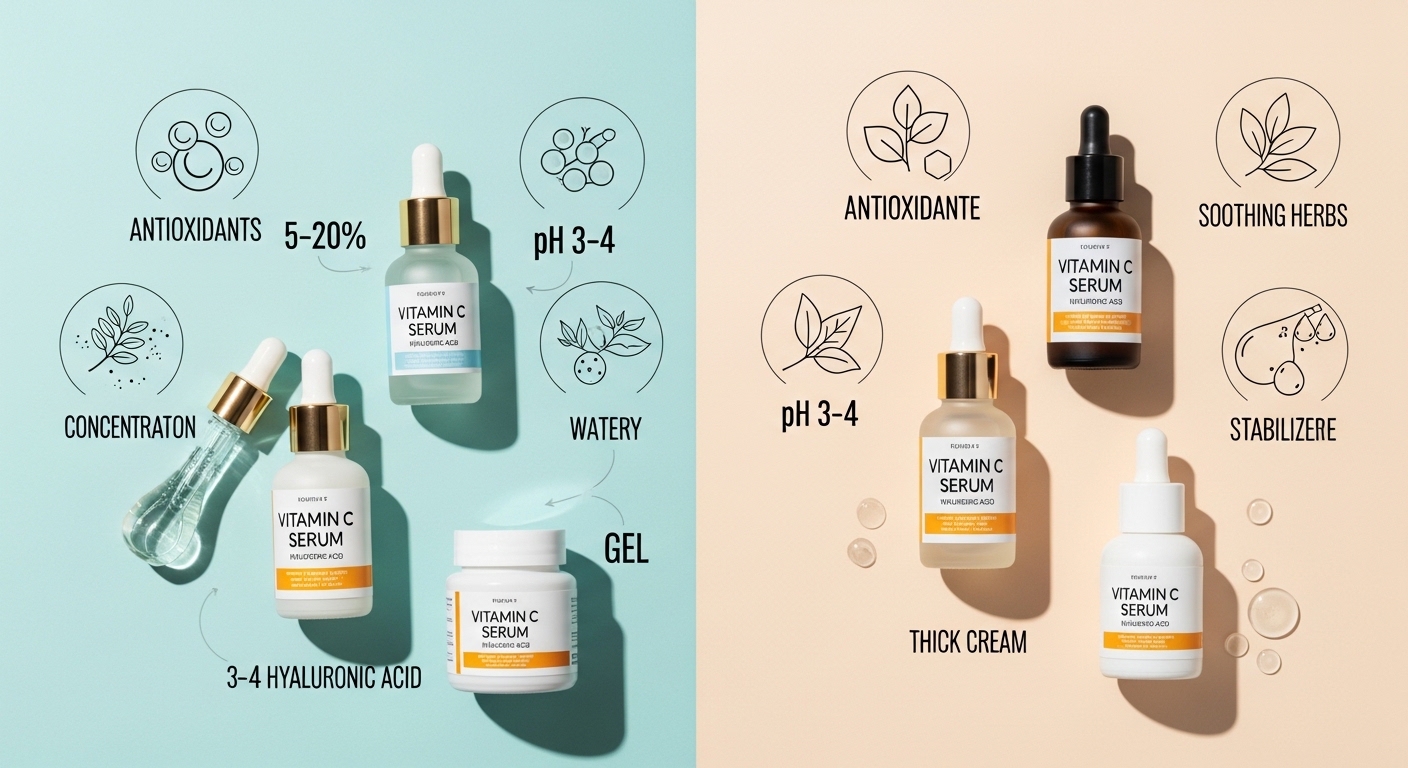
- Strength. Products commonly list 5–20%. A lower strength is a sensible start; a higher number is not automatically better, and it is more likely to irritate. There is no strength that suits everyone.
- Stability. Look for opaque or airless packaging, and for stabilising ingredients such as vitamin E or ferulic acid on the ingredient list. Avoid a product that is already dark brown on the shelf.
- Texture. Watery serums absorb quickly; gels suit combination skin; thicker serums suit dry skin.
- What to avoid. Strong fragrance and drying alcohols can irritate sensitive skin. Price alone does not tell you whether a serum is well formulated.
Do not buy a serum because of a percentage on the front of the bottle. Formulation and stability matter more than the number.
How to use it
Morning (the usual time):
- Cleanse gently with lukewarm water and a mild cleanser.
- Vitamin C serum. A few drops for the face and neck, on clean, slightly damp skin.
- Moisturise. Seal in the hydration.
- Sunscreen — always. Use a broad-spectrum sunscreen with SPF 30 or higher as the last step. The AAD recommends this daily, including on cloudy days, and reapplying every two hours when outdoors. (AAD sunscreen guidance) UV light can undo brightening work, so sunscreen is not optional with this routine.
Night: you can use the serum at night instead if you prefer, but do not use it on the same night as a strong exfoliant or a retinoid when you are starting out — that combination is a common cause of irritation.
How much and how often: a few drops is enough for the face and neck. Start once a day, or every other day if your skin is sensitive, and increase only if your skin stays comfortable. Signs you are overdoing it are redness, stinging, flaking or dryness — if you see them, use it less often or stop and go back to cleanser, moisturiser and sunscreen.
How to layer it
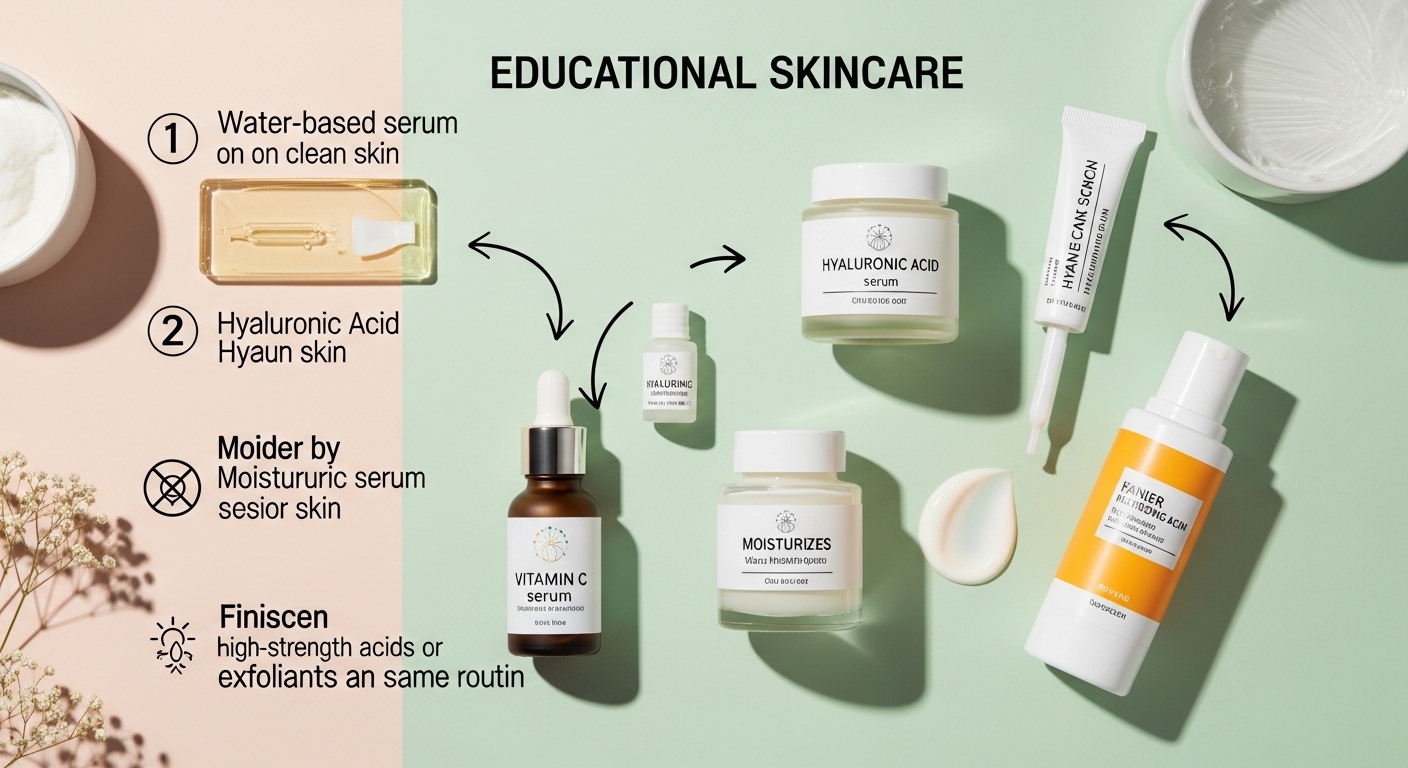
Apply products thinnest to thickest:
- Cleanser
- Vitamin C serum (water-based, so it goes on early)
- Hyaluronic acid serum, if it is a separate product — otherwise this step is already in your serum
- Moisturiser
- Sunscreen (morning, last)
Do not layer vitamin C with a strong acid exfoliant or a retinoid in the same routine when you are starting out. Wait, or use them on different days.
Mistakes to avoid
- Starting with the highest strength available.
- Skipping sunscreen.
- Using vitamin C, an exfoliant and a retinoid all at once.
- Expecting fast results and increasing the strength when nothing changes in a week. Changes in the look of tone take weeks of steady use, and the timing varies from person to person.
- Storing the serum in a bright, warm bathroom and using it after it has turned dark brown.
FAQ
Can beginners use vitamin C serum?
Yes — start with a lower strength or a gentler derivative, patch test first, and use it once a day or every other day.
Is tingling normal?
Mild, brief tingling can happen, especially with pure L-ascorbic acid. If tingling lasts more than a minute or two, or your skin turns red, wash it off and use a lower strength or a gentler form next time. Persistent stinging is a sign to stop, not to push through.
Can vitamin C cause breakouts?
It is not a common cause, but a heavy or oily formula can clog pores in some skin types. If breakouts start after a new serum, stop it and see whether they settle.
Should it be used daily?
For most skin types, daily morning use with sunscreen is the usual pattern — but only if your skin tolerates it. Every other day is fine to start.
Is a more expensive vitamin C serum better?
Not necessarily. Formulation, concentration, stability and packaging matter more than price.
Summary
A vitamin C and hyaluronic acid serum is a simple morning step: vitamin C as the antioxidant, hyaluronic acid as the hydration support, moisturiser to seal it in, and broad-spectrum SPF 30+ every morning. Start low, patch test, store it properly, and give it weeks of steady use before judging it.
Sources: AAD sunscreen guidance; AAD cosmeceuticals review on vitamin C; NHS guidance on topical retinoids in pregnancy (for the retinoid caution in related routines). This is a researched overview, not a hands-on review.