Researched overview. This guide is based on published dermatology guidance, not on hands-on product testing by BeautyKob. No product in this guide was tested by us, and no brand is recommended.
Table Of Content
Quick answer
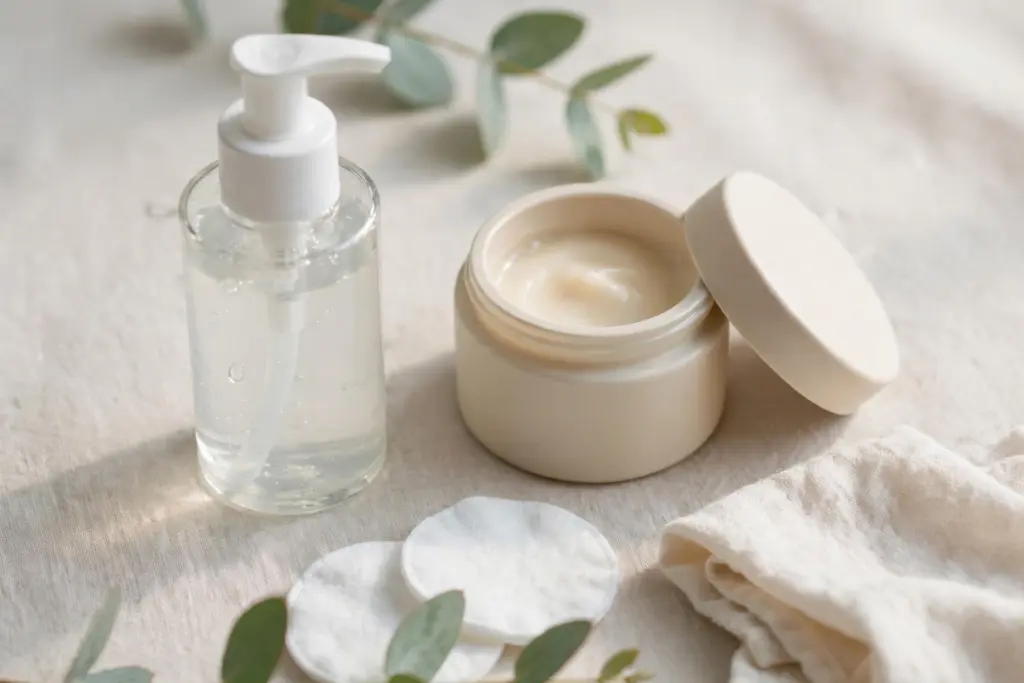
Sensitive skin is skin that reacts easily — it turns red, stings, itches or flakes when it meets harsh ingredients, weather or friction. The fix is not more products. It is a short, gentle routine: cleanse, hydrate, moisturise, protect — and introduce one new product at a time, with a patch test first.
If your skin is broken, blistering, very painful, or you have a rash that does not settle, skip the routine-building and see a dermatologist or pharmacist first. This guide is general information, not medical advice.
Contents: What sensitive skin is · The routine · Morning steps · Night steps · Choosing products · Patch testing · Ingredients that help · Gentle exfoliation · When skin flares up · Seasons · Mistakes · When to get help
What sensitive skin is
Sensitive skin is not a diagnosis. It is a description of skin whose barrier — the outer layer that keeps water in and irritants out — is easily disturbed. When the barrier is weak, even ordinary things can sting: a foaming cleanser, a fragranced cream, cold wind, a rough towel, a new laundry product.
Common signs are: redness, stinging or burning when you apply products, itching, dry patches, and flaking. These signs alone do not tell you the cause. Some people have sensitive skin with no underlying condition; others have eczema, rosacea or contact dermatitis, which need a doctor’s diagnosis and treatment. If your reactions are severe or keep coming back, get a diagnosis rather than trying more products.
The routine
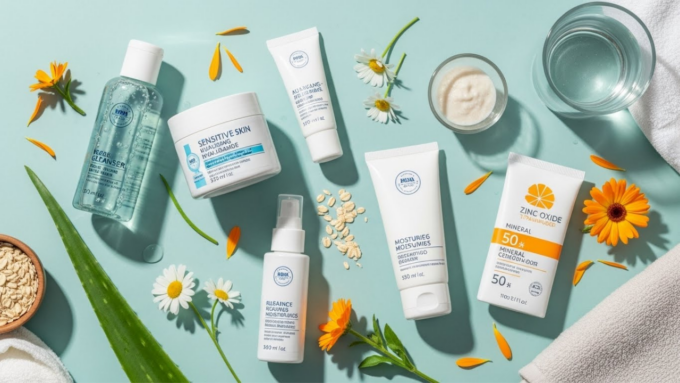
Four steps, in this order:
- Cleanse gently
- Hydrate (a hydrating serum or toner on damp skin)
- Moisturise (to protect the barrier)
- Sunscreen in the morning (mineral, if your skin reacts to chemical sunscreens)
That is the whole routine. A treatment — one serum, one active — is added only after the four steps are settled and your skin is calm.
Morning steps
- Cleanse gently. Lukewarm water and a mild, fragrance-free cleanser — a cream or gel, not a foaming wash that leaves skin tight. Avoid hot water and harsh scrubbing. If your skin feels tight after washing, your cleanser is too strong.
- Hydrate on damp skin. Apply a hydrating product with glycerin or hyaluronic acid while the skin is still slightly damp, then moisturise. Moisturisers work best when they combine a humectant (draws in water, e.g. glycerin, hyaluronic acid), an emollient (softens, e.g. ceramides, squalane) and, for dry skin, an occlusive (seals water in, e.g. petrolatum, shea butter).
- Moisturise. A light cream or gel for most skin; a richer cream if your skin is dry. Fragrance-free is the safer starting point.
- Sunscreen — every morning. A mineral sunscreen with zinc oxide or titanium dioxide is usually the gentlest option for reactive skin, because it sits on the surface and reflects UV rather than being absorbed. Use a broad-spectrum sunscreen with SPF 30 or higher as the last step. The American Academy of Dermatology recommends this daily, including on cloudy days, and reapplying every two hours when outdoors. (AAD sunscreen guidance)
Night steps
- Cleanse. Remove sunscreen and the day’s build-up with the same gentle cleanser. Double cleansing is only needed if you wear heavy makeup or water-resistant sunscreen — and if you do double cleanse, use two gentle products, not a harsh oil followed by a stripping wash.
- Hydrate and moisturise. The same hydrating step and moisturiser as in the morning. A slightly richer cream at night is fine if your skin is dry.
- Treatment — only one, and only when your skin is calm. If you want an active, niacinamide is a reasonable first choice for sensitive skin: it supports the barrier and can help the look of redness. Start with a low-strength product, a few nights a week, and only one active at a time.
Do not add a retinoid, a strong acid exfoliant or vitamin C on the same night you start something new. Strong actives need a settled barrier first.
Choosing products
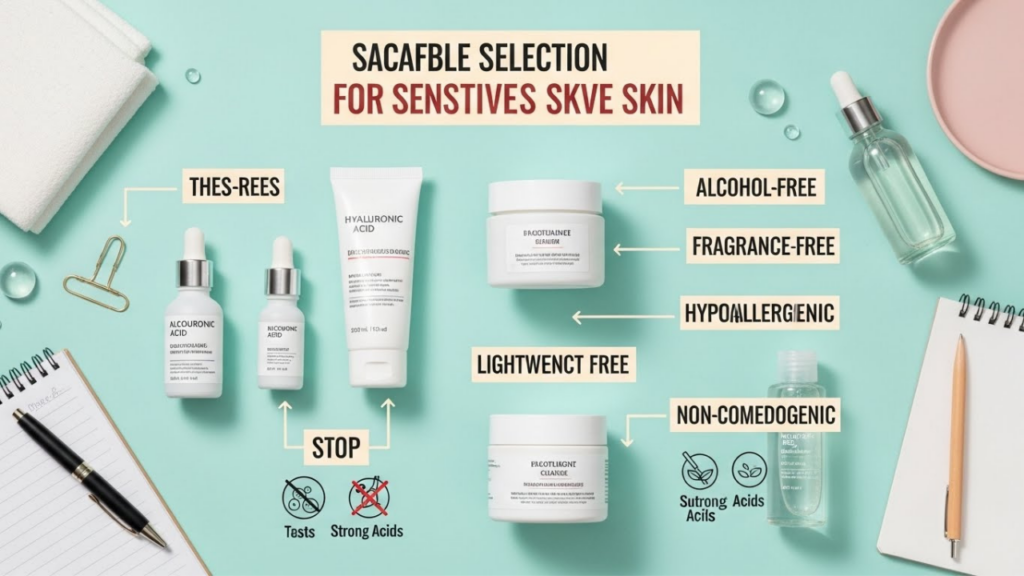
Check the label, not the marketing:
- Fragrance-free is the clearer choice. Fragrance is a common cause of irritation and allergic contact dermatitis. Note that “unscented” is not the same as “fragrance-free” — an unscented product can still contain fragrance ingredients added to mask the smell of other ingredients.
- Hypoallergenic is not a guarantee. The term has no single regulated definition. Read the ingredient list instead of trusting the word on the front.
- “Natural” does not mean gentle. Botanical ingredients — including essential oils, aloe and calendula — can irritate sensitive skin. A plant extract is still a chemical your skin can react to.
- Avoid drying alcohols (ethanol, isopropyl alcohol, methanol) and strong foaming agents (sodium lauryl sulfate) if they leave your skin tight or stinging.
- Avoid strong acids and retinoids until your barrier is settled. That does not mean all acids are banned — a low-strength lactic acid or PHA used once a week can suit some sensitive skin (see below). It means do not start with the strongest option.
- Fewer products is better. A product that does two jobs (a moisturiser with ceramides, for example) is better than two separate steps that add two more chances of a reaction.
Patch testing
Test every new product before you put it on your face. The American Academy of Dermatology’s guidance is to apply the product to a quarter-sized patch of skin — for example the inside of your arm or the bend of your elbow — twice a day for 7 to 10 days, using the same amount you would use on your face. If your skin stays clear after that time, you can start using it on your face.
- Test one product at a time. If you start two at once and react, you will not know which one caused it.
- Do not patch test on skin that is already broken, inflamed or irritated.
- If you get redness, itching, swelling or burning, wash the product off and do not use it. Note the product and the ingredient list, so you can compare it with products that do suit you.
- A home patch test is not the same as the diagnostic patch testing a dermatologist does for suspected allergy. If you keep reacting to many products and cannot find the cause, ask a dermatologist about formal patch testing.
Ingredients that help
| Ingredient | What it does | Notes |
|---|---|---|
| Ceramides | Restore the skin’s lipid barrier, which reduces water loss and irritation | Look for them in moisturisers; the single most useful ingredient group for sensitive skin |
| Hyaluronic acid | Humectant — draws water into the skin | Use on damp skin, under moisturiser; it is hydration, not a treatment on its own |
| Niacinamide | Supports the barrier and can help the look of redness | Usually well tolerated; a good first active for sensitive skin |
| Glycerin | Humectant; gentle and well tolerated | A good base ingredient in cleansers and moisturisers |
| Petrolatum | Occlusive — seals water in | Very effective for very dry or cracked skin; can feel heavy, so use a thin layer |
Ingredients to be careful with: strong fragrance and essential oils, drying alcohols, high-strength glycolic acid, high-strength retinol, and physical scrubs with rough particles. “Careful” does not mean “never” — it means start low, start slow, and stop if your skin objects.
Gentle exfoliation
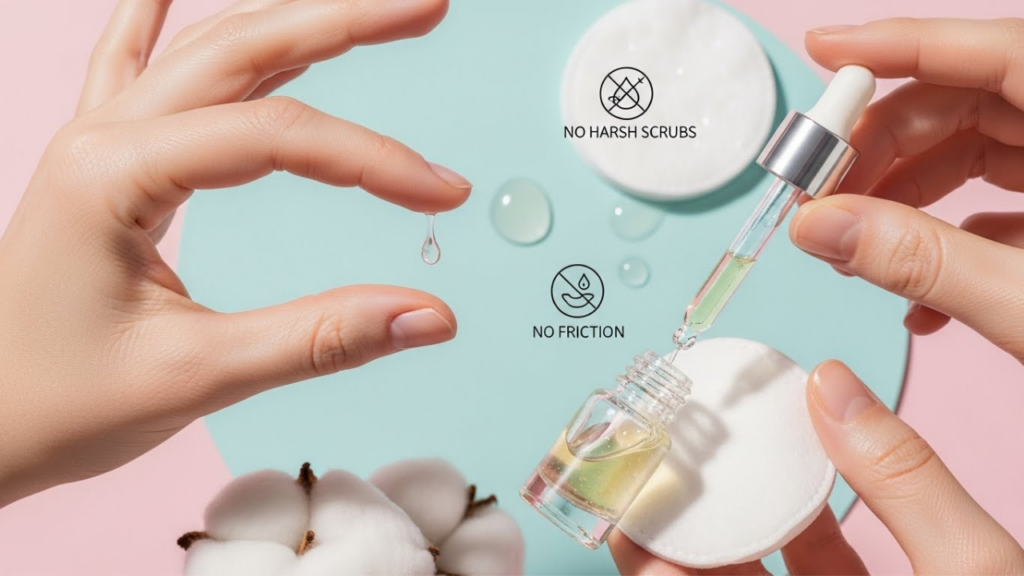
Exfoliation is the step most likely to go wrong on sensitive skin, so treat it as optional. If your skin is currently reactive, skip it entirely until it has been calm for at least two weeks.
- If you exfoliate, use a very mild chemical exfoliant — a low-concentration lactic acid or a PHA — once a week at most.
- Do not use rough brushes, harsh scrubs or strong peels. The AAD’s guidance is to choose a method that suits your skin type and to exfoliate gently, not aggressively. (AAD, How to safely exfoliate at home)
- Stop, and go back to cleanser, moisturiser and sunscreen, if you get redness, stinging, flaking or tightness.
- Do not exfoliate on broken, sunburnt or freshly irritated skin.
When skin flares up
Even a good routine can flare. A new product, a change in weather, illness or stress can set it off. When it happens:
- Simplify to three steps: gentle cleanser, moisturiser, mineral sunscreen. Stop everything else, including any active or exfoliant.
- Do not add a new “calming” product to fix it. A new product during a flare is another chance of a reaction. Soothing ingredients like oatmeal, aloe or chamomile help some people, but they can irritate others — do not try them for the first time on inflamed skin.
- Wait until the skin has been calm for at least a week before reintroducing anything, and reintroduce one product at a time.
- If the flare does not settle in a few days, or it keeps coming back, see a pharmacist or dermatologist.
Seasons
- Winter: cold air and indoor heating dry the skin. Use a richer moisturiser and exfoliate less often, or not at all.
- Summer: humidity can help hydration, but sun exposure is stronger. Keep hydration light and be strict about sunscreen and reapplication.
- Wind and pollution: cover up with a scarf in cold wind, and cleanse gently in the evening. You do not need a special “anti-pollution” product — a gentle cleanser and a good moisturiser do the job.
Lifestyle — a short note, not a treatment
Sleep, food and stress affect how skin looks, but they do not replace skincare, and no food or drink can be promised to calm sensitive skin. Aim for regular sleep and a varied diet. If your skin is always reactive despite good topical care, talk to a dermatologist rather than adding more products or changing your diet drastically.
Mistakes to avoid
- Using several new products at once, so you never learn what helps and what harms.
- Over-cleansing, or using hot water and harsh scrubs.
- Skipping moisturiser or sunscreen.
- Changing products every few days.
- Trusting “hypoallergenic”, “natural” or “unscented” on the label instead of reading the ingredients.
- Exfoliating to “fix” a flare-up. Exfoliation during a flare makes it worse, not better.
When to get help
See a dermatologist if: redness, burning or stinging does not settle; you have a rash, blisters or open sores; your skin is persistently dry and cracked despite moisturising; you react to many different products and cannot find the cause; or you have a skin condition such as eczema, rosacea or psoriasis that is getting worse. A dermatologist can diagnose the cause, arrange formal patch testing, and prescribe treatment that over-the-counter products cannot provide.
Summary
Keep it short: gentle cleanser, hydration on damp skin, moisturiser, mineral sunscreen every morning. Choose fragrance-free products, read the ingredient list, patch test for 7 to 10 days, and introduce one product at a time. Ceramides, hyaluronic acid and niacinamide are reasonable starting ingredients. When skin flares, simplify to three steps and wait. If reactions keep coming back, see a dermatologist.
Sources: AAD sunscreen guidance; AAD “How to safely exfoliate at home”; AAD guidance on testing skin care products (quarter-sized patch, twice daily, 7–10 days); NHS-referenced emollient guidance on humectants, emollients and ceramides. This is a researched overview, not a hands-on review.