Researched overview. This guide is based on published dermatology guidance, one published clinical study on niacinamide, and published ingredient lists, not on hands-on product testing by BeautyKob. No product in this guide was tested by us, and no brand paid to be mentioned.
Table Of Content
- Quick answer
- What oily sensitive skin is
- Label words: what they do and do not mean
- Ingredients, honestly
- Cleansers: gentle, not squeaky-clean
- Moisturisers: you still need one
- Sunscreen: daily, and check the actives
- A simple routine
- Patch test before you commit
- Mistakes to avoid
- Diet: what is and is not known
- When to get help
- Summary
Quick answer
Oily + sensitive skin is a difficult combination: products that control shine often sting, and products gentle enough not to sting often feel heavy. The workable approach is a short routine built on light, fragrance-free formulas — a gentle gel or foam cleanser, one active at a time, a light gel moisturiser, and a broad-spectrum sunscreen every morning. You still need moisturiser even though your skin is oily: skipping it can leave skin dehydrated and more reactive, and it does not make your skin produce less oil.
If your acne is painful, deep, scarring, or not improving after 8 to 12 weeks of consistent over-the-counter care, ask a dermatologist. This guide is general information, not medical advice.
Contents: What oily sensitive skin is · Label words · Ingredients, honestly · Cleansers · Moisturisers · Sunscreen · A simple routine · Patch test · Mistakes · Diet · When to get help
What oily sensitive skin is
Oily skin produces more sebum (skin oil) than average, so the forehead, nose and chin look shiny, and pores can clog more easily. Sensitive skin stings, burns or turns red easily after using products. Having both at once means you need products that are light enough not to add shine, and gentle enough not to sting — and most products are designed for one or the other.
Common signs are: shine within a few hours of washing, clogged pores or breakouts, redness or stinging after new products, and skin that feels tight after washing even though it is oily. Harsh cleansers, strong scrubs, perfumed products and strong chemical exfoliants tend to make this skin type worse, not better.
Label words: what they do and do not mean
- Oil-free means the formula contains no added oils. It is a useful filter, but an oil-free product can still irritate you, and it can still contain ingredients that clog pores.
- Non-comedogenic means the manufacturer intends the product not to clog pores. There is no regulatory standard or required test for this term, so treat it as the manufacturer’s intention, not a promise.
- Fragrance-free means the product is presented as having no added fragrance ingredients. This is the most useful single filter for sensitive skin. “Unscented” is not the same thing — an unscented product can contain masking fragrances.
- Hypoallergenic means almost nothing as a guarantee. The US Food and Drug Administration states there are no federal standards or definitions governing the term, and manufacturers are not required to submit proof to the FDA for using it.
Read the ingredient list, not the front of the bottle. If you know an ingredient has irritated you before, avoid it whatever the front of the bottle says.
Ingredients, honestly
| Ingredient | What it is | What the evidence actually says |
|---|---|---|
| Niacinamide (vitamin B3) | Used in moisturisers and serums, commonly at 2–10% | One small clinical study (Draelos et al. 2006) found that 2% niacinamide reduced sebum excretion in Japanese subjects after 2 and 4 weeks, but the effect was not significant in Caucasian subjects. So niacinamide may help with oiliness in some people — it is not proven to “control sebum” or “shrink pores” for everyone. Note the study used 2%; a 10% serum is five times that strength, and the study says nothing about 10%. |
| Salicylic acid (BHA) | An exfoliating acid that can get into pores; sold over the counter, commonly at 0.5–2% | It can help unclog pores and is a standard over-the-counter acne ingredient. Start at a low strength, use it a few times a week at most, and stop if your skin stings or peels. |
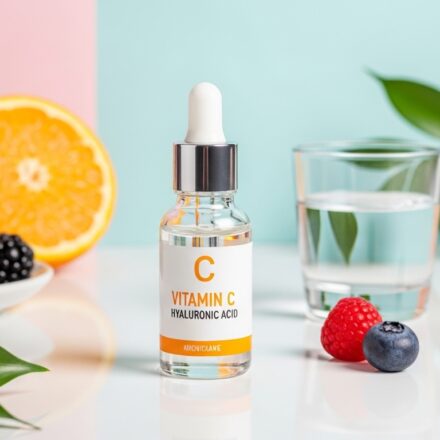
| Hyaluronic acid | A humectant that draws water into the skin | It hydrates. It does not control oil production, and it does not prevent your skin from producing more oil. |
| Zinc PCA | A zinc salt used in some serums for oily skin | It is commonly used to make skin look less shiny. There is no strong published evidence that it treats acne or prevents clogged pores. |
| Ceramides, glycerin | Fats and humectants that support the skin barrier | Well-established moisturiser ingredients. They help the skin hold water and feel comfortable; they are not oil-control treatments. |
| Aloe vera, green tea, chamomile | Botanical ingredients commonly described as soothing | They are widely used in products for sensitive skin, but the evidence that they calm skin or treat redness is limited. Treat them as a nice-to-have, not as the reason a product works. |
Cleansers: gentle, not squeaky-clean
Wash twice a day with lukewarm water and a gentle cleanser. The aim is to remove oil, sunscreen and dirt without leaving your skin feeling tight. If your skin feels tight after washing, the cleanser is too strong for you — switch to something gentler rather than washing more often.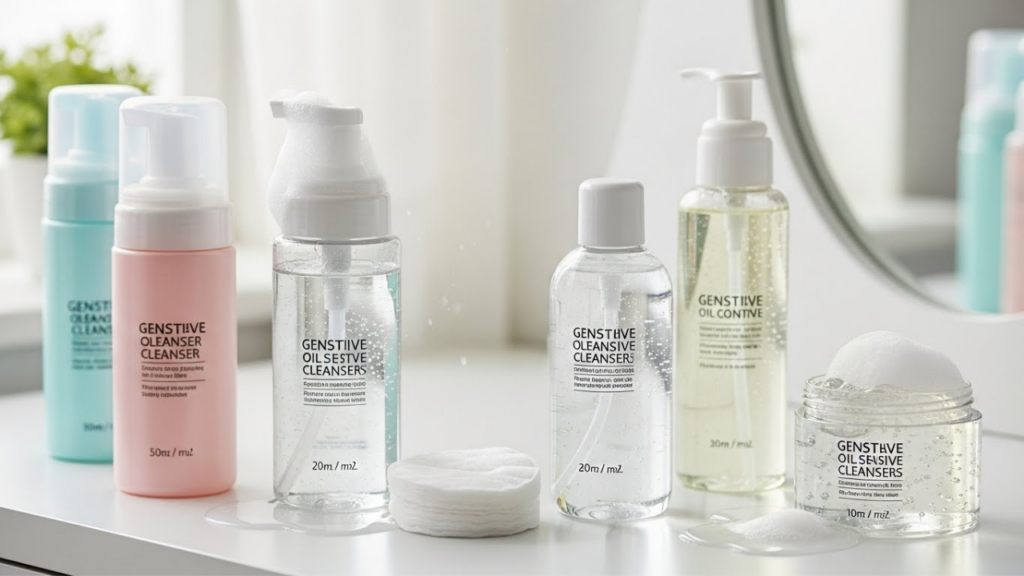
Two types suit oily sensitive skin:
- Gel or foaming cleansers. A light gel-to-foam wash removes oil without a heavy residue. One verified example: CeraVe Foaming Facial Cleanser lists three ceramides, niacinamide and hyaluronic acid, is made for normal to oily skin, and is non-comedogenic and fragrance-free.
- Micellar water. A no-rinse cleansing water on a cotton pad, useful on days when your skin is irritated or when you want to remove makeup gently. One verified example: Bioderma Sensibio H2O has ten listed ingredients, is fragrance-free, alcohol-free and non-comedogenic, and is made for sensitive skin.
Do not wash more than twice a day to “dry out” oil, and do not scrub. Over-washing irritates sensitive skin and dries it out; it has not been shown to make skin produce less oil.
Moisturisers: you still need one
Oily skin still needs moisturiser. The right one is a light gel or lotion, not a heavy cream. Look for oil-free, fragrance-free formulas with ceramides, glycerin or hyaluronic acid. Verified examples, with their published ingredient facts:
- CeraVe PM Facial Moisturizing Lotion — niacinamide, hyaluronic acid and three ceramides; oil-free, fragrance-free, non-comedogenic. A night lotion, despite the name it is a light moisturiser.
- La Roche-Posay Toleriane Double Repair Face Moisturizer — ceramide-3, niacinamide, glycerin and prebiotic thermal water; oil-free, fragrance-free, non-comedogenic.
- Neutrogena Hydro Boost Gel-Cream — a gel-cream with hyaluronic acid; oil-free, fragrance-free and non-comedogenic. Note that formulations vary by country, so check the label on the product you buy.
None of these is “the best” moisturiser. They are examples whose labels check out against the criteria above. Pick by texture and by how your skin reacts, and patch test first.
Sunscreen: daily, and check the actives
Use a broad-spectrum sunscreen with SPF 30 or higher every morning, as the last step of your routine, and reapply every two hours when outdoors. Sunscreen is especially important if you use salicylic acid or any exfoliant, because exfoliated skin is more sensitive to sun.
One correction to the original article: it called EltaMD UV Clear SPF 46 a “mineral” sunscreen. It is not mineral-only. Its active ingredients are octinoxate 7.5% and zinc oxide 9.0%, and it also contains 5% niacinamide. It is oil-free and is made for sensitive, acne-prone and rosacea-prone skin — those facts are verified on the manufacturer’s own product page. The point is not that it is a bad sunscreen; it is that you should check the active ingredients on the label rather than trusting a category word such as “mineral”.
If you want a sunscreen with only mineral actives, look for one whose Drug Facts panel lists only zinc oxide and/or titanium dioxide.
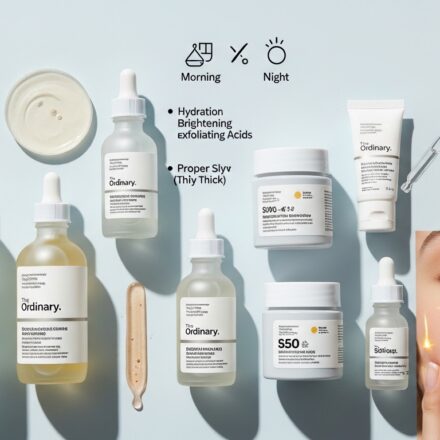
A simple routine
Morning:
1. Gentle cleanser (gel, foam or micellar water) with lukewarm water.
2. Niacinamide serum, if you use one — start with a lower strength, not 10%, if your skin is sensitive.
3. Light gel moisturiser.
4. Broad-spectrum sunscreen SPF 30 or higher.
Evening:
1. Cleanser (micellar water or a gentle foam wash).
2. Salicylic acid product a few times a week at most, if your skin tolerates it — not every night to start.
3. Light moisturiser.
Introduce one new product at a time, and wait at least a week before adding the next one. Do not combine salicylic acid with a retinoid or another strong exfoliant on the same night unless a dermatologist has advised it.
Patch test before you commit
The American Academy of Dermatology recommends testing a new product before using it on your face. Apply the product to a quarter-sized patch of skin where it will not be rubbed or washed away — the underside of your arm or the bend of your elbow — twice a day for 7 to 10 days. For a rinse-off product such as a cleanser, leave it on for about five minutes, or as long as the label says, then rinse it off. If the test area becomes red, itchy, swollen or painful, stop using the product. If the area stays clear for the full 7 to 10 days, the product is less likely to cause a reaction on your face — but a patch test cannot guarantee it.
A 24-hour test can miss an allergic reaction, which often takes several days to appear — that is why this guide uses the AAD 7–10 day patch-test method.
Mistakes to avoid
- Over-washing or scrubbing to “dry out” oil. It irritates sensitive skin and does not reliably reduce oil.
- Heavy creams that sit on the skin and clog pores.
- Starting several actives at once (for example niacinamide, salicylic acid and a retinoid in the same week). If your skin reacts, you will not know which one caused it.
- Skipping moisturiser because your skin is oily.
- Skipping sunscreen, especially when using exfoliants.
- Using a 10% niacinamide serum as your first niacinamide product on sensitive skin. Start lower, patch test, and increase only if your skin stays comfortable.
Diet: what is and is not known
No food has been shown to treat oily skin, redness or acne, and no diet has been shown to reduce oil production. The original article advised restricting dairy and sugar to reduce redness and oil production — that advice has been removed, because it is not supported. Eating a balanced diet is good for your health, but it is not a skin treatment, and restricting foods on the basis of a skincare article is not good advice.
When to get help
Ask a dermatologist or pharmacist if: your acne is painful, deep or scarring; it does not improve after 8 to 12 weeks of consistent over-the-counter care; your skin is persistently red, sore or swollen; or a product you have used for a long time suddenly starts to sting. Bring the product with you, or a photo of its ingredient list.
Summary
Oily + sensitive skin needs light, fragrance-free formulas: a gentle cleanser, one active at a time, a light gel moisturiser, and broad-spectrum SPF 30+ every morning. Niacinamide may help with oiliness in some people — the evidence is mixed and dose-specific. Salicylic acid can help unclog pores. Hyaluronic acid hydrates but does not control oil. Check the active ingredients on a sunscreen label rather than trusting the word “mineral”. Patch test every new product for 7 to 10 days, and keep the routine short.
Sources: Draelos et al. 2006 (niacinamide and sebum); US FDA, “Hypoallergenic” Cosmetics; American Academy of Dermatology guidance on patch testing and sunscreen; published ingredient lists for the products named (CeraVe, La Roche-Posay, Neutrogena, EltaMD, Bioderma). This is a researched overview, not a hands-on review.