Researched overview. This guide is based on the American Academy of Dermatology’s published guidance on microdermabrasion, not on hands-on testing by BeautyKob. No product or device in this guide was tested by us.
Table Of Content
Quick answer
“Diamond care” is a marketing phrase, not a medical term. It usually means one of two things: diamond-tip microdermabrasion (a device with a diamond-coated tip that exfoliates the top layer of skin) or creams, serums and masks that contain diamond particles. Microdermabrasion is a real treatment. Diamond particles in a cream have no published evidence behind them.
If your skin is sensitive, microdermabrasion needs care: it is an exfoliating treatment, and exfoliation is exactly what sensitive skin tolerates least well. Do not use it on inflamed skin, active breakouts, eczema or rosacea flare-ups, or open wounds. If you are unsure whether it suits you, ask a dermatologist first — the American Academy of Dermatology advises seeing a dermatologist before having microdermabrasion at a spa or using an at-home kit. This guide is general information, not medical advice.
Contents: What “diamond care” means · What microdermabrasion does · Diamond-particle creams · Who should not use it · Home devices · Aftercare · Gentler alternatives · If it goes wrong · When to get help
What “diamond care” means
The phrase covers two different things, and the original article mixed them up:
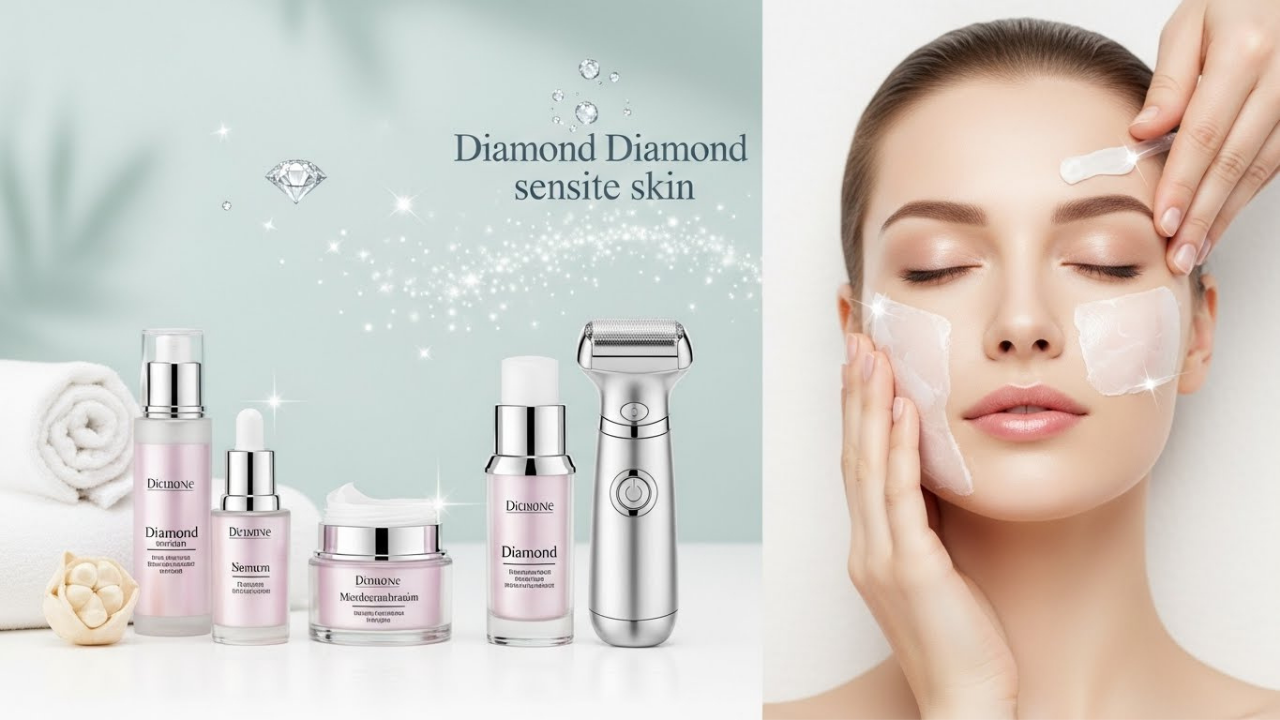
- Diamond-tip microdermabrasion. A handheld device with a diamond-coated tip, sometimes with suction, that removes the top layer of dead skin cells. This is the same treatment as ordinary microdermabrasion — the diamond is the material of the tip, not a separate treatment.
- Diamond-particle products. Serums, creams and masks that list diamond powder or diamond particles in their ingredients. These are sold as “polishing” products.
There is no recognised treatment category called “diamond care” in dermatology. If a product or a clinic uses the phrase, ask what it actually is: a device treatment, or a cream with particles in it. The answer changes everything about how safe it is for sensitive skin.
What microdermabrasion actually does
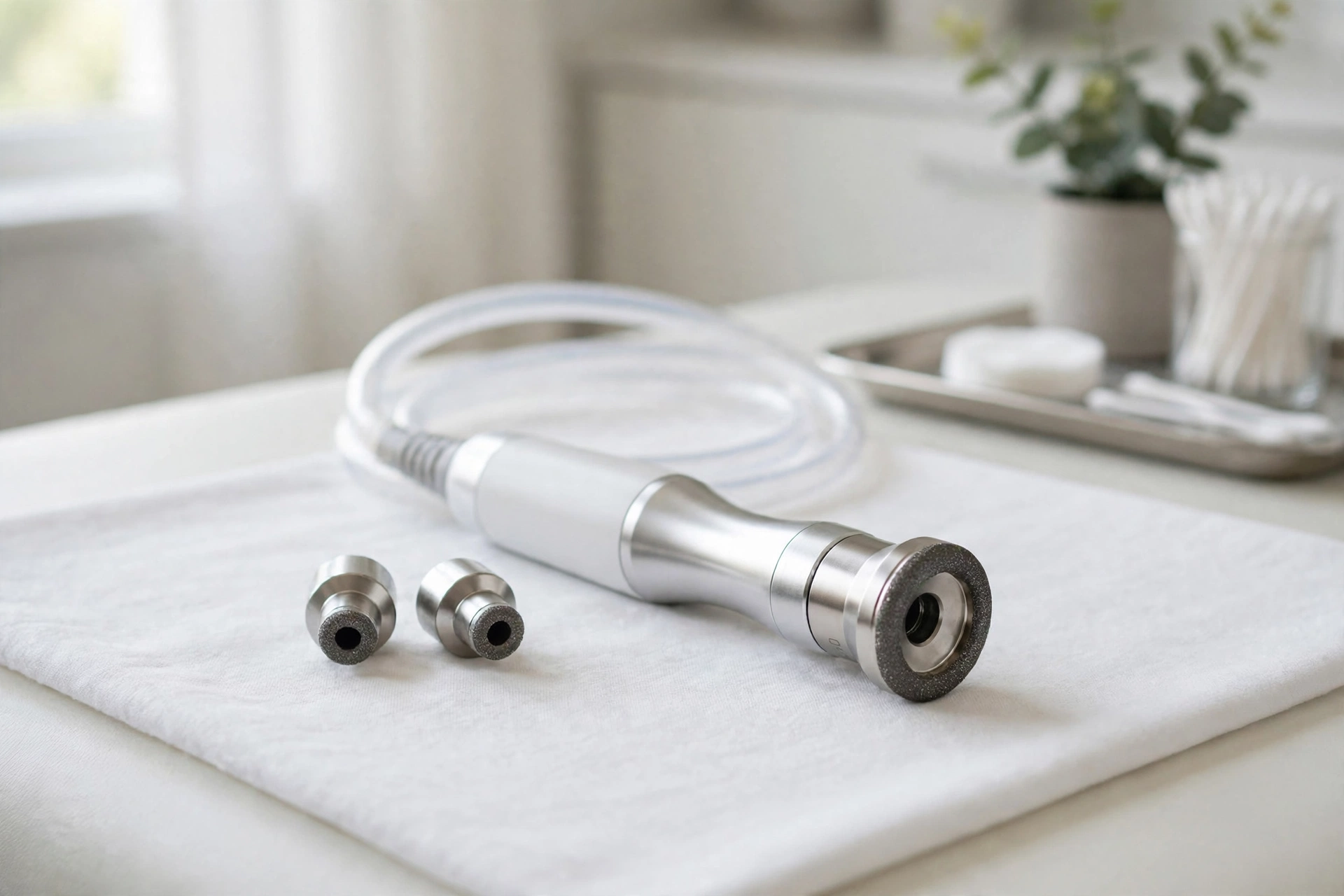
Microdermabrasion is a non-invasive treatment that gently exfoliates — it removes the top layer of skin. According to the American Academy of Dermatology, a dermatologist uses a handheld device for the treatment, which takes about 30 to 40 minutes for the face. After the treatment a moisturiser is applied. There is no downtime, but the skin may look pink or red and slightly swollen for a day or two, similar to mild sunburn.
Three facts from the AAD matter most for sensitive skin:
- Professional treatment goes deeper than at-home kits. A dermatologist’s device is more powerful than anything sold for home use, and is generally more effective. A home device is weaker — which is safer, but also means it does less.
- It takes a series of treatments to see results. Most patients need between 5 and 16 treatments, typically weekly, every two weeks or monthly. One session does not transform skin, and no honest schedule promises a fixed result by a fixed date.
- Sun protection afterwards is part of the treatment. The AAD’s aftercare includes a skin-care plan with sun protection, because freshly exfoliated skin is more sensitive to sun.
What microdermabrasion does not do: it does not treat acne, it does not remove scars on its own, and it does not “increase circulation” or improve the uptake of other products — there is no published evidence for those claims, and the original article’s version of them has been removed.
Diamond-particle creams, serums and masks
There is no published evidence that diamond particles in a cream, serum or mask improve skin. Diamond is a hard, inert mineral; in a cream it can only act as a physical exfoliant — tiny hard particles that polish the surface as you rub the product in. That is the same kind of exfoliation as any scrub, with the same risks for sensitive skin: redness, stinging and a damaged barrier if you press too hard or use it too often.
Treat any diamond-particle product as an exfoliant, not as a treatment. If your skin is sensitive, you probably do not need it at all — and if you do try one, use it the way you would use any gentle exfoliant: infrequently, with light pressure, and never on irritated or broken skin.
Who should not use it
Do not use diamond microdermabrasion — professional or at-home — and do not use diamond-particle exfoliants if any of the following applies, without first asking a dermatologist:
- Active acne breakouts, inflamed or infected skin
- Eczema or rosacea that is currently flaring up
- Open wounds, sores or sunburned skin
- Skin that is already red, stinging or peeling from another treatment
- You are using a prescription retinoid or other strong topical treatment (ask the prescriber first)
The AAD advises seeing a dermatologist before microdermabrasion at a spa or with an at-home kit if you have a skin condition or are unsure whether the treatment suits you. That advice applies doubly to sensitive skin.
Using a home device carefully
If a dermatologist has said a home device is acceptable for you, use it this way:
- Read the device’s own instructions first and follow them. Different devices have different tips, suction levels and recommended frequencies. This guide does not invent a schedule — the original article gave three contradictory ones (every day, once a week, every 2–4 weeks), and none of them had a source.
- Patch test on a small area first. Try the device on a small patch of skin, on the lowest setting, and wait a day or two to see how your skin reacts before using it on your face.
- Start on the lowest intensity setting. Increase it only if your skin stays comfortable. Never start on a high setting.
- Use light, slow strokes and do not press hard. Let the tip do the work. Do not hold the device in one spot, and do not go over the same area repeatedly.
- Do not use it daily. Give your skin days to recover between sessions. If your skin is red, tight or stinging the next day, you used it too much or too hard — wait until it has fully settled before trying again, at a lower setting.
- Do not use it on irritated, broken or sunburned skin, or around the eyes.
Stop using the device and ask a dermatologist if you get persistent redness, swelling, bruising, small cuts, or a flare-up that does not settle within a couple of days.
Aftercare
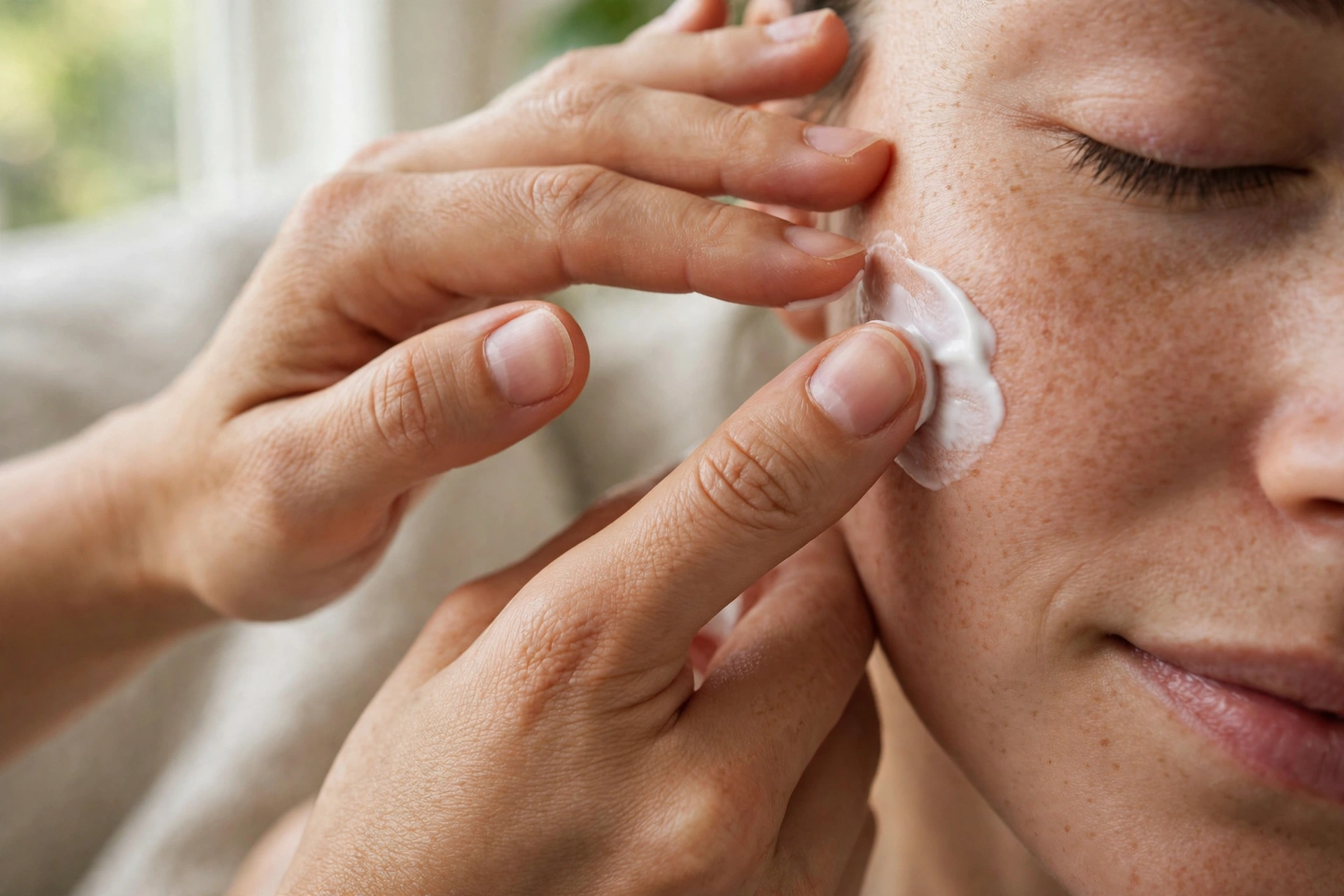
After any microdermabrasion session, professional or at home:
- Moisturise gently. A plain, fragrance-free moisturiser with ceramides, glycerin or hyaluronic acid helps the barrier recover.
- Wear sunscreen every day. Use a broad-spectrum sunscreen with SPF 30 or higher, and reapply every two hours when outdoors. Freshly exfoliated skin is more sensitive to sun, and sun protection is part of the AAD’s aftercare for microdermabrasion. Sunscreen reduces the risk of sun damage; it does not by itself “prevent skin cancer”.
- Pause strong actives for a few days. Do not use retinoids, high-strength vitamin C, or chemical exfoliants (AHAs, BHAs) on the treated skin until it feels completely normal again — usually a few days. Reintroduce them one at a time.
- Keep it simple. Do not add new products in the days after a treatment. If your skin reacts, you will not know whether the device or the new product caused it.
Gentler alternatives for sensitive skin
If microdermabrasion is too much for your skin, these are gentler ways to exfoliate or to improve the look of dull, rough skin:
- Enzyme exfoliants. Products that use enzymes to loosen dead skin cells without scrubbing. They are generally gentler than physical exfoliants, but they can still irritate — patch test first.
- Low-strength chemical exfoliants. A low-concentration lactic acid or mandelic acid product, used once a week to start, can smooth the skin’s surface with less friction than a device. Stop if your skin stings, turns red or flakes.
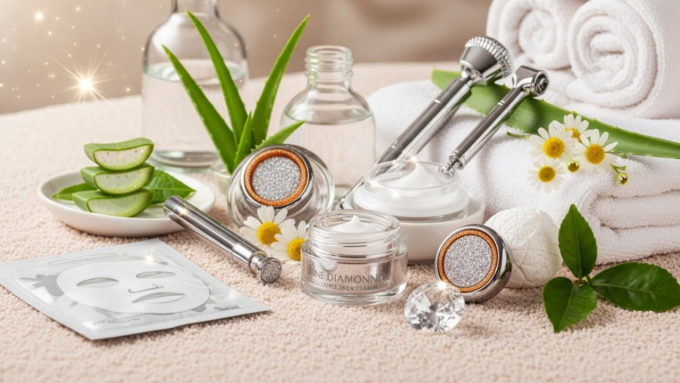
- Calming masks. Masks with oatmeal, aloe vera or chamomile are commonly used to soothe skin. The evidence that they calm skin is limited — treat them as comfort care, not treatment.
- The basics. Often the best alternative is no exfoliation at all for a while: a gentle cleanser, a moisturiser with ceramides and glycerin, and daily sunscreen. Many people with sensitive skin do better with less exfoliation, not more.
If it goes wrong
- Redness or stinging: Stop the treatment. Go back to a gentle cleanser, moisturiser and sunscreen only. Do not apply active serums, acids or retinoids until the skin feels normal again — usually a few days.
- Breakouts after treatment: Microdermabrasion does not cause “purging” — that idea has no basis for this treatment. If you break out after a session, stop using the device, keep the routine simple, and do not pick at the spots. If breakouts persist, ask a dermatologist.
- Dry or flaky patches: Moisturise more, exfoliate less — or not at all — until the skin has recovered. Do not try to exfoliate the flakes away.
- Skin that stays red, swollen or painful for more than a couple of days: Ask a dermatologist or pharmacist, and bring the device or product with you if you can.
When to get help
Ask a dermatologist before starting microdermabrasion if you have any skin condition, take any prescription skin treatment, or have had a bad reaction to exfoliation before. Ask a dermatologist promptly if a treatment leaves your skin persistently red, swollen, blistered or painful, or if a flare-up does not settle.
Summary
“Diamond care” is a marketing phrase. What it usually means is diamond-tip microdermabrasion — a real exfoliating treatment — or creams containing diamond particles, for which there is no published evidence. Microdermabrasion removes the top layer of skin; professional treatment goes deeper than home devices; a series of treatments is needed for visible results; and sun protection afterwards is essential. Sensitive skin should approach it with caution: patch test, lowest setting, light pressure, no daily use, and no use on inflamed or broken skin. For many people with sensitive skin, gentler exfoliation — or none at all — is the better choice.
Sources: American Academy of Dermatology, microdermabrasion FAQs and preparation guidance; American Academy of Dermatology sunscreen guidance. This is a researched overview, not a hands-on review.