Researched overview. This guide is based on published dermatology guidance, not on hands-on product testing by BeautyKob. No product in this guide was tested by us, and no product is recommended.
Table Of Content
- Quick answer
- How skin changes after 40
- What actually works — and what does not
- Morning routine — protection and hydration
- Night routine — renewal
- Starting retinol safely
- Weekly treatments
- By skin type
- First four weeks — a realistic plan
- Habits that help
- What to skip
- When to see a dermatologist
- Summary
Quick answer
After 40, the three steps with the best evidence are daily broad-spectrum sunscreen (SPF 30 or higher), a retinoid at night, and a plain moisturiser. Sunscreen is the single most effective step: in a 4.5-year randomised trial, people who used broad-spectrum sunscreen daily had 24% less skin ageing than people who used it only when they chose. Retinoids have the strongest evidence of any topical for improving fine lines and texture, but they take months, not weeks, to show a difference. Nothing — no cream, serum or device — reverses ageing or removes deep wrinkles and sagging. Any routine that promises that is not telling the truth.
If your skin is red, painful, flaking badly, or has a rash, blisters or open sores, skip the actives and ask a dermatologist or pharmacist first. This guide is general information, not medical advice.
Contents: How skin changes after 40 · What actually works · Morning routine · Night routine · Starting retinol safely · Weekly treatments · By skin type · First four weeks · Habits · What to skip · When to see a dermatologist
How skin changes after 40
After 40, skin gradually becomes thinner and drier. Collagen production slows, so skin loses some firmness over time, and cell turnover slows, so dead skin stays on the surface longer and skin can look dull or rough. Years of sun exposure show up as dark spots and uneven tone. Skin also tends to become more reactive: products that used to feel fine can suddenly sting or dry the skin out.
None of this is a problem to be fixed in a week. It is a slow change, and the routine that helps is a slow, steady one. The goal is not to look younger. It is to protect the skin you have, keep it comfortable, and make the most of the few steps that have real evidence behind them.
What actually works — and what does not
| Step or ingredient | Evidence | What it can do |
|---|---|---|
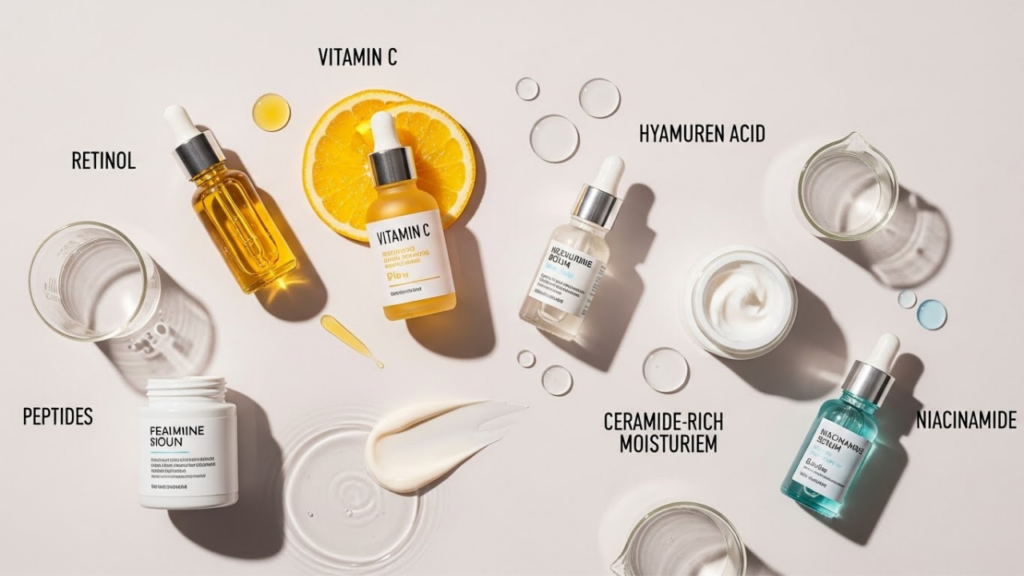
| Daily broad-spectrum sunscreen, SPF 30+ | Strong | The best-proven way to slow new lines, spots and roughness from sun exposure. In the Hughes trial (2013), daily use meant 24% less skin ageing over 4.5 years. |
| Retinoids (prescription tretinoin; over-the-counter retinol) | Strong for tretinoin, moderate for retinol | Improve fine lines and texture over months. The most-studied topical for photoageing. |
| Plain moisturiser (ceramides, glycerin, hyaluronic acid) | Good for comfort and barrier | Makes dehydration lines look softer within days; supports the barrier so you can tolerate retinoids. The AAD names sunscreen and moisturiser the two most effective anti-ageing products most people can use. |
| Vitamin C | Supporting | Antioxidant; a cofactor for collagen synthesis in the body. Can help the look of uneven tone over time. |
| Niacinamide | Supporting | Supports the barrier and can help the look of redness and uneven texture. Usually well tolerated. |
| Ceramides | Supporting | Help rebuild the skin barrier and seal in moisture. |
| Peptides | Thin | Popular, and a reasonable addition, but the evidence is thin. No published evidence that they lift or firm skin. |
| Hyaluronic acid | Good for hydration | A humectant that draws water into the upper layer of skin. It is hydration, not a treatment on its own. |
| At-home devices (LED masks, gua sha) | No good evidence | No good evidence they lift, firm or boost circulation in a meaningful way. Enjoy them if you like them, but do not buy them expecting visible anti-ageing results. |
| Collagen supplements, “firming” masks, diet-as-treatment | No good evidence | No clinical evidence that collagen supplements improve skin ageing. Food supports general health but does not directly produce collagen in the skin. |
Morning routine — protection and hydration
- Cleanse gently. Lukewarm water and a mild cleanser. Your skin should feel soft, not tight, afterwards. You do not need a strong cleanser in the morning.
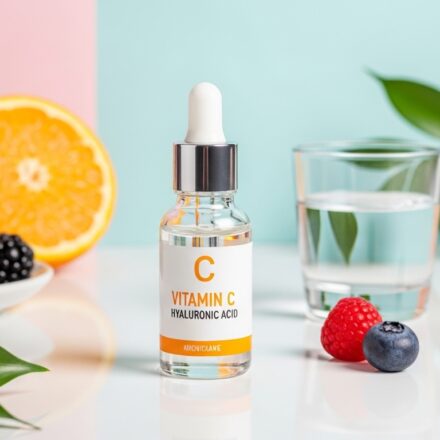
- Antioxidant serum. Vitamin C in the morning is a common choice; niacinamide is a gentler option. Apply to clean, slightly damp skin.
- Moisturiser. A light lotion for oily skin, a richer cream for dry skin. Look for ceramides, glycerin or hyaluronic acid on the label.
- Eye area (optional). The skin around the eyes is thin and shows ageing early. A plain moisturiser is usually enough; a separate eye cream is optional, not essential. There is no good evidence that caffeine or peptide eye creams smooth fine lines.
- Sunscreen — every morning, last step. Broad-spectrum SPF 30 or higher, applied generously. The American Academy of Dermatology recommends this daily, including on cloudy days, and reapplying every two hours when outdoors, or after swimming or sweating. Sunscreen is your strongest anti-ageing tool, and no serum can make up for skipping it. Do not forget your neck and chest — these areas show ageing quickly and are often left out.
Night routine — renewal
- Cleanse. A creamy or balm cleanser that removes makeup, sunscreen and the day’s build-up without stripping moisture.
- Retinoid — the centre of the night routine. See “Starting retinol safely” below. A pea-sized amount for the whole face is enough.
- Moisturiser. A richer night cream helps rehydrate and support the barrier while the retinoid does its work. A cream with ceramides or peptides is a reasonable choice; it does not need to be expensive.
Do not exfoliate on the same night as retinol when you are starting out. Do not use a scrub immediately before retinol — it increases irritation.
Starting retinol safely
Retinol is the most effective over-the-counter anti-ageing ingredient, and also the one most likely to irritate. Start slowly:
- Patch test first. Apply a quarter-sized amount to the underside of your arm or the bend of your elbow, twice a day, for 7–10 days. Stop if you get redness, itching or swelling.
- Start with two or three nights a week. Use a pea-sized amount for the whole face. Increase only if your skin stays comfortable after a few weeks.
- Moisturise before and after if your skin is sensitive. This “sandwich” method can make retinol easier to tolerate. It may reduce irritation; it is not guaranteed to keep results the same.
- Expect some tightness or light peeling in the first weeks. That is common. If irritation is persistent, red or painful, stop and go back to cleanser, moisturiser and sunscreen until the skin settles.
- Do not start retinol and a chemical exfoliant in the same week. Introduce one active at a time so you know which one is causing a problem.
- Give it three to six months before judging fine lines. Retinoids work slowly. Hydration improves within days; changes in fine lines take months.
- Pregnancy and breastfeeding: Topical retinoids are not suitable during pregnancy, because there is a risk they may cause birth defects, according to NHS guidance. If you are pregnant, planning pregnancy or breastfeeding, avoid retinoids and ask a healthcare professional before starting any new active.
Weekly treatments
- Gentle exfoliation, once a week to start. A low-strength chemical exfoliant (for example a lactic acid product) can help remove the dead skin that makes the surface look rough. Start once a week and increase only if your skin stays comfortable. Stop if you get redness, stinging, flaking or tightness.
- Masks are optional. A hydrating mask can make skin feel softer for a day. A “firming” mask has no published evidence of firming skin. Use one if you enjoy it, not because it changes ageing.
- At-home devices. LED masks and gua sha stones are pleasant for some people, but there is no good evidence they lift skin, boost circulation or improve firmness. They do not replace sunscreen, a retinoid or a moisturiser.
By skin type
- Dry skin: Heavier creams and hydrating serums. Look for hyaluronic acid, ceramides and glycerin. Exfoliate less often.
- Oily skin: Light, gel or lotion textures. Retinol can help with oiliness as well as ageing, but start slowly. Do not skip moisturiser — dehydrated skin can look older, not younger.
- Combination skin: Lighter products on oily areas, richer creams on dry areas. Keep the routine the same otherwise.
- Sensitive skin: Keep the routine shorter, not longer. Use fragrance-free products, choose a weaker retinol or skip it in favour of peptides and ceramides, and patch test every new product.
First four weeks — a realistic plan
- Week 1: Gentle cleanser, moisturiser and sunscreen every day. Nothing else new. This is your baseline.
- Week 2: Add a vitamin C or niacinamide serum in the morning, if you want one. Keep everything else the same.
- Week 3: Start retinol two nights a week, a pea-sized amount, with moisturiser before and after if your skin is sensitive.
- Week 4: Add gentle exfoliation once a week, on a night you do not use retinol. Assess how your skin feels before adding anything else.
There is no seven-day transformation. The point of the first month is to build a routine your skin tolerates, not to see a visible change. Visible changes in fine lines take months of steady use.
Habits that help

- Sun protection beyond sunscreen: A hat and shade on bright days. Sunscreen is the main step, but the small choices add up.
- Sleep and stress: Poor sleep and ongoing stress are not good for skin, and they make it harder to stick to a routine. Keep evenings calm — reading, stretching, screens off — but do not expect sleep alone to change pigmentation or texture.
- Food: A balanced diet with enough protein, healthy fats and a variety of fruit and vegetables supports general health. It does not directly produce collagen in the skin, and no food can be presented as an anti-ageing treatment.
- Do not smoke. Smoking speeds skin ageing, according to the American Academy of Dermatology.
What to skip
- Starting several strong actives in the same week.
- Scrubbing before retinol.
- Buying a product because it promises to “lift”, “firm” or “reverse” ageing in a set number of weeks.
- Skipping sunscreen because a moisturiser or serum claims to contain SPF — unless it is a broad-spectrum sunscreen with SPF 30 or higher, it is not a substitute.
- Changing products every few days, so you never learn what helps.
When to see a dermatologist
Ask a dermatologist or pharmacist if: dark spots or wrinkles do not improve after several months of a steady routine; your skin is persistently red, sore, swollen or blistering; you have a rash that does not settle; or you have a skin condition such as eczema, rosacea or acne that is getting worse.
Professional treatments: Chemical peels, laser treatments and fillers are medical procedures with real risks and costs. They can help some people, but they are not a shortcut and they are not a way to “speed up results”. Discuss them with a dermatologist first, and be wary of anyone who promises a specific outcome.
Summary
After 40, the routine that has real evidence behind it is short: gentle cleanser, antioxidant serum, moisturiser, and broad-spectrum SPF 30+ every morning; a retinoid at night, started slowly. Peptides, vitamin C and hyaluronic acid are supporting players, not replacements for those three steps. At-home devices and “firming” products have no good evidence behind them. Give a retinoid three to six months before judging it, patch test new products, and ask a dermatologist if things do not improve or if you are considering a procedure.
Sources: AAD sunscreen guidance and AAD guidance on reducing premature skin ageing; Hughes et al. 2013 (daily sunscreen and skin ageing, Annals of Internal Medicine); AAD cosmeceuticals review on vitamin C; NHS 111 Wales guidance on topical retinoids in pregnancy; AAD patch-test method. This is a researched overview, not a hands-on review.