Researched overview. This guide is based on published dermatology guidance and general sleep and wellbeing guidance, not on hands-on testing by BeautyKob. No product, supplement or brand is recommended, and no dose is given.
Table Of Content
- Quick answer
- What real relaxation means
- Why weekends feel unrestful
- Principles of a truly relaxing weekend
- Slow mornings over packed plans
- Choosing intention instead of productivity
- Creating boundaries without guilt
- One main activity per day
- Flexibility over perfection
- Gentle Saturday reset
- Morning
- Afternoon
- Evening
- Sunday: prevent Monday stress
- At-home relaxation ideas
- Relaxation by energy level
- Self-care activities that actually feel relaxing
- Relaxation for busy women
- Outdoor and nature-based relaxation
- Creative and soul-nourishing weekend ideas
- Relaxation by life stage
- What to avoid if you want a relaxing weekend
- How to create your own relaxing weekend
- FAQ
- Summary
Quick answer
Weekends are supposed to restore you, but for many women they do the opposite: the week ends exhausted, and Saturday and Sunday fill up with chores, errands, social duties and catching up on work — so Monday starts in the same tired state. Real relaxation is not distraction. Hours of scrolling or binge-watching keep the brain going; genuine rest lowers stimulation, lets muscles soften, breathing slow, and thoughts become less urgent. This guide is about building a weekend that actually restores you: slow mornings, one main activity a day, boundaries without guilt, and small rituals that fit your energy. It does not treat anxiety, burnout or any medical condition. It is general information, not medical advice.
Contents: What real relaxation means · Why weekends feel unrestful · Principles · Gentle Saturday reset · Sunday: prevent Monday stress · At home · By energy level · Activities that feel relaxing · For busy women · Outdoors and nature · Creative ideas · By life stage · What to avoid · Build your own weekend · FAQ
What real relaxation means
Relaxation is not the same as distraction. Watching shows for hours or scrolling through social media feels like resting, but the brain stays busy — comparing, reacting, taking in more input. True rest is different in the body: muscles soften, breathing slows, thoughts become less urgent, and you feel safe enough to stop doing and solving.
Relaxation has three parts, and they do not all need the same thing:
- Physical relaxation: slower movement, softer muscles, less tension.
- Mental relaxation: less input, fewer decisions, less urgency.
- Emotional relaxation: feeling safe enough to stop performing and pleasing.
What feels relaxing is personal. Some women unwind with silence; others need gentle company. What calms you does not have to look good in a photo. Listen to your own energy, not to what other people do on their weekends.
Why weekends feel unrestful
A large number of women carry what psychologists call the mental load: remembering appointments, household details, and other people’s needs, and planning ahead at all times. The work of tending, comforting, planning and predicting is sometimes called emotional labour. It takes real energy, and much of it goes unnoticed. By Friday evening the nervous system can be overstimulated even when nothing dramatic happened.
The main barriers to weekend rest:
- Guilt. Many women feel they must be productive. Rest can feel unearned, because productivity has been valued over rest for years.
- Over-scheduling. When weekends are packed with back-to-back plans, the body never fully relaxes. Even fun plans are tiring when there is no space between them.
- Household and family expectations. Women often keep doing chores and care work on weekends, leaving little time to recover. Constant busyness keeps the stress cycle going.
- Rest feeling uncomfortable. When you are used to constant stimulation, stillness can feel strange at first. That uneasiness usually fades with practice.
Principles of a truly relaxing weekend
Slow mornings over packed plans
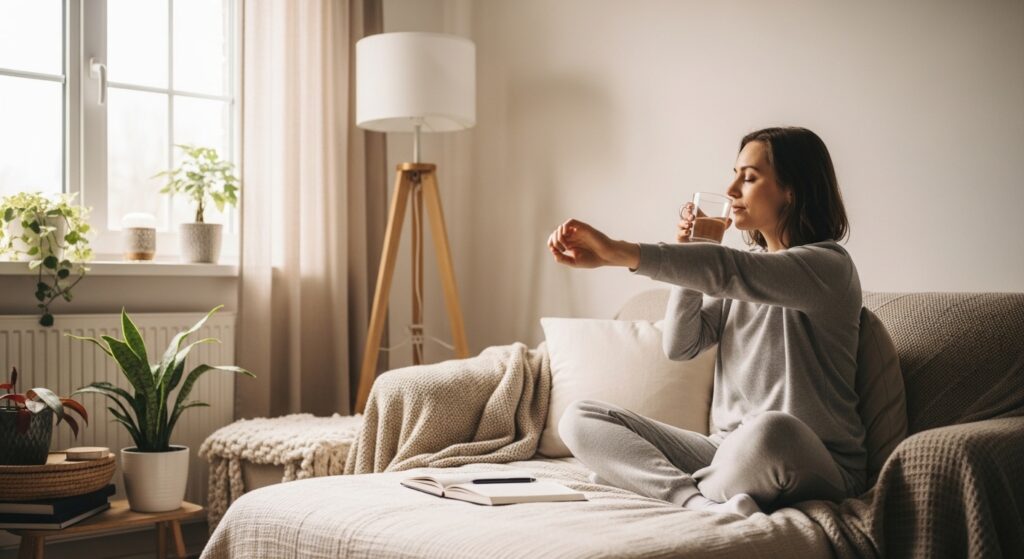
The morning sets the tone for the day. Rushing straight into tasks puts you back in weekday mode. A slow morning does not need hours of free time — a few extra minutes in bed, stretching, drinking water before checking your phone, eating breakfast without screens. Mornings that start calmly help the body stay steady, and plans later in the day feel less overwhelming.
Choosing intention instead of productivity
Weekends can turn into invisible productivity contests: tidying the whole house, attending several events, catching up on work. But restoration is not output. Intention means asking a different question: what would feel nourishing today? The answer might be reading quietly, a long walk, a slow conversation — or finishing a task, but without urgency or pressure. When your choices support the feeling you want — calm, grounded, restored — the weekend helps instead of exhausting you.
Creating boundaries without guilt
Guilt is one of the biggest barriers to relaxation. Saying yes to every invitation, family demand or extra duty slowly breaks rest apart. Boundaries are not rejection; they are protection. Saying no to something that drains you saves energy for what matters. It can sound like:
- “I can’t make it this weekend.”
- “I need a quiet day to recharge.”
- “Let’s plan for another time.”
Boundary-setting feels uncomfortable at first. Discomfort is not a sign you are doing something wrong — it is just unfamiliar. A day off without interruptions lets the body relax more deeply, and emotional tension falls when you stop playing the availability game.
One main activity per day
Over-scheduling causes much weekend stress. Even enjoyable activities become too much when they pile up. The one-main-activity rule is simple: pick one main commitment per day and leave the rest optional — a brunch with a friend, a short hike, a creative project at home. One anchor leaves breathing room before and after it, so the nervous system can settle. Fewer promises do not make the weekend smaller; they make it more enjoyable, because there is no rush to the next obligation.
Flexibility over perfection
A relaxing weekend is not a strict timetable. Some weekends you feel lively and sociable; others you are emotionally exhausted and quiet. Forcing yourself into a fixed plan ignores what your body needs. Perfectionism creeps into self-care too — trying to create the perfect weekend routine, then feeling disappointed when it turns out differently. Real relaxation allows change: if you planned to tidy and wake up tired, choose rest; if you planned solitude and need connection, reach out to someone gently.
Gentle Saturday reset
Morning
Wake slowly. Do not reach for your phone first. Stretch lightly in bed. Drink water, then check notifications. Eat breakfast with attention and without screens. A one-hour break from social media protects your mood.
Afternoon
Low-energy self-care: reading, light journaling, a bath, or gently tidying one small space. Simple creative activities — painting, knitting, gardening — can lift the mood because they are about enjoyment, not excellence. Light movement such as a slow walk or gentle yoga eases stiffness without tiring you out.
Evening
Relaxing rituals help you sleep more deeply: dim lighting, a warm shower, comfortable clothing, a few minutes to write down unfinished tasks, and a bedroom set up for rest. (The companion guide on bedtime wind-downs covers this in detail.)
Sunday: prevent Monday stress
Sunday works best as a gentle reset and light preparation. A short reflection on how you feel, a brief gratitude note, or writing down worries releases mental tension. For the week ahead, keep it light: begin the week by writing only three priorities. A soft reset of the house — clearing surfaces, Monday laundry — is enough; do not deep clean. Anticipatory stress can be eased by comforting Sunday-night habits: herbal tea, soft music, reading something light.
At-home relaxation ideas
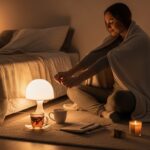
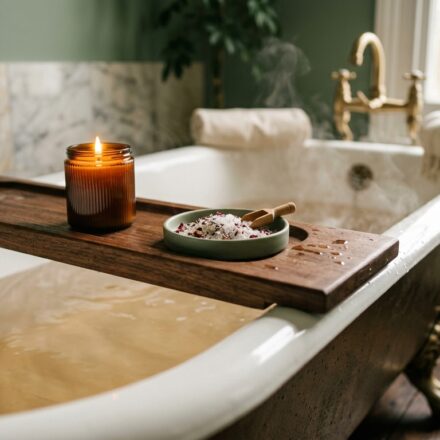
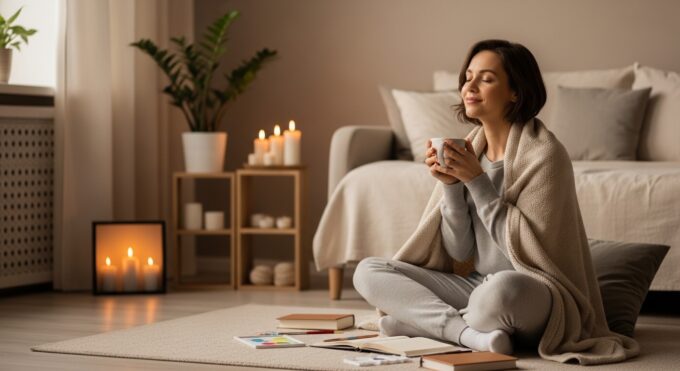
Comfort-based rituals work well at home: candles, soft blankets, a relaxing scent. Reading, stretching, slow breathing, quiet creativity — or gentle company if that is what restores you. When children are at home, choose shared calming activities: drawing together, slow baking, a gentle film. You do not need to leave the house, or spend social energy, to rest.
If you try a new bath oil, scented lotion or skincare product as part of a home ritual, patch test it first. The American Academy of Dermatology recommends testing a new product before using it on your face or body. Apply the product to a quarter-sized patch of skin where it will not be rubbed or washed away — the underside of your arm or the bend of your elbow — twice a day for 7 to 10 days. If the test area becomes red, itchy, swollen or painful, stop using the product. If the area stays clear for the full 7 to 10 days, the product is less likely to cause a reaction — but a patch test cannot guarantee it. A 24-hour test can miss an allergic reaction, which often takes several days to appear — that is why this guide uses the AAD 7–10 day patch-test method.
Relaxation by energy level
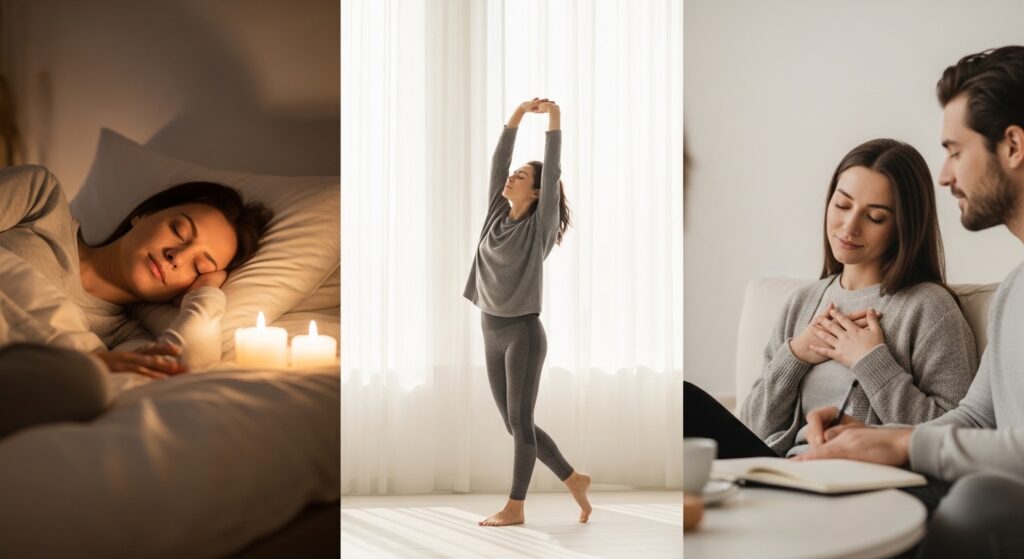
- Completely exhausted. Restorative activities only: sleep, a warm bath, soft music. Avoid vigorous exercise and social commitments when you are burnt out.
- Mentally tired but physically okay. Light movement pairs well with mental rest: a leisurely walk or gentle stretching, then time off.
- Emotionally drained. Emotional release can mean talking with a close friend, writing freely in a journal, or letting tears come without judging them. Slow breathing and grounding help manage the intensity of feelings.
Self-care activities that actually feel relaxing
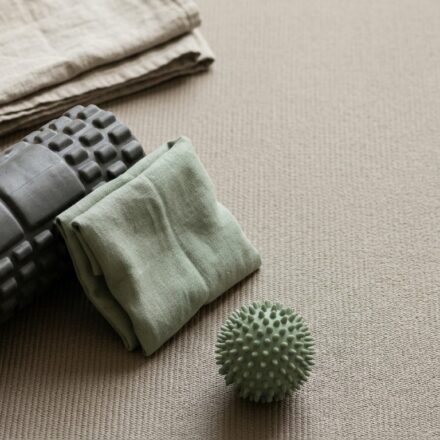
Self-care is not one-size-fits-all. Some women are restored by socialising; others by solitude. Quiet self-care can be meditation, reading, or a long bath. Social self-care can be visiting a close friend somewhere calm. Body-focused relaxation includes massage, stretching or warm showers. Mind-focused relaxation includes guided imagery, gentle journaling, or listening to a relaxation recording. The goal is alignment with what you need — not imitation of what others do.
Relaxation for busy women
Half-hour blocks of rest work well. Set a time and do nothing but rest during it. Micro-rest can be a short walk outside, a few deep breaths, or five minutes lying down. You do not need to reorganise your whole schedule: even mothers and working women can fit short breaks between duties, and regular breaks add up to real stress reduction over time.
Outdoor and nature-based relaxation
Time in nature can help you feel calmer — a slow walk, sitting on a balcony, a nearby park. Gentle outdoor time with others builds soft connection; time alone outdoors gives space to think. In bad weather, bring nature indoors: a plant, an open window, fresh air. If you spend time outdoors, wear broad-spectrum sunscreen with SPF 30 or higher and reapply every two hours — sun protection is part of looking after your skin, not an extra.
Creative and soul-nourishing weekend ideas
Creative leisure can help you unwind because the focus is not on improving — painting, writing, crafting, cooking for pleasure. It is worth doing something unproductive simply because it brings joy, and reconnecting with your own interests without measuring the result. Drop perfection in creativity: it is expression, not output. Rediscovering joy without judging the result is deeply restorative.
Relaxation by life stage

- Working professionals. Mental boundaries make the separation from work possible. Stop checking email repeatedly. Create a small end-of-week ritual that marks the week as done.
- Mothers and caregivers. Children can be part of relaxation — choose low-pressure activities together. Asking for help without guilt is itself self-care.
- Women living alone. Design comforting routines that anchor time: a slow morning, a regular walk, a weekly call with a friend. Solitude can be restorative when it is chosen, not imposed.
What to avoid if you want a relaxing weekend
Over-planning hour by hour creates pressure. Emotional obligations drain energy. Unwilling social duties cut recovery time short. Doomscrolling traps you in comparison and mild anxiety. Protecting your peace means being selective — not about people, but about how much you take on.
How to create your own relaxing weekend
Pick two or three calming anchors — slow mornings, an evening ritual, time to create — and shape the weekend around them, not around other people’s expectations. Change the plan with your energy. A natural routine is better than a forced one. A weekend that feels supportive, not restrictive, is the one you will actually repeat.
FAQ
Is it okay to do nothing on weekends?
Yes. Doing nothing is sometimes the most restorative choice.
How can I relax with family responsibilities?
Build calming practices into shared routines, and ask for support when you can.
What if rest makes me feel anxious?
This is common when you are used to constant stimulation. Begin with short periods of rest and increase gradually.
How do I stop feeling guilty about relaxing?
Rest improves patience, mood and health — which benefits everyone around you. Guilt fades as the benefits become obvious.
Can weekends really improve mental health?
Consistent weekend rest reduces burnout risk and helps you feel steadier over time. It does not treat any mental health condition — if low mood or anxiety persist, ask a clinician.
See also: Calming Rituals Before Bedtime and Stress Relief Routines After Long Days.
Summary
Weekend restoration is not selfish — it is care for your emotional and physical wellbeing. Slow mornings, one main activity a day, boundaries without guilt and flexibility over perfection turn the weekend into real recovery. Outdoors, wear SPF 30+ and reapply every two hours. When you plan the weekend as recovery time, you start the new week calmer, clearer and steadier. Small changes to how Saturdays and Sundays are organised can make a real difference to stress, mood and long-term wellbeing.
Sources: American Academy of Dermatology, 7 Rosacea skin care tips (patch-test method: apply a new product to a quarter-sized patch of skin on the inside of the arm for 7–10 days); American Academy of Dermatology, How to select anti-aging skin care products (broad-spectrum sunscreen, SPF 30 or higher, reapply every two hours outdoors). This is a researched overview, not a hands-on review.