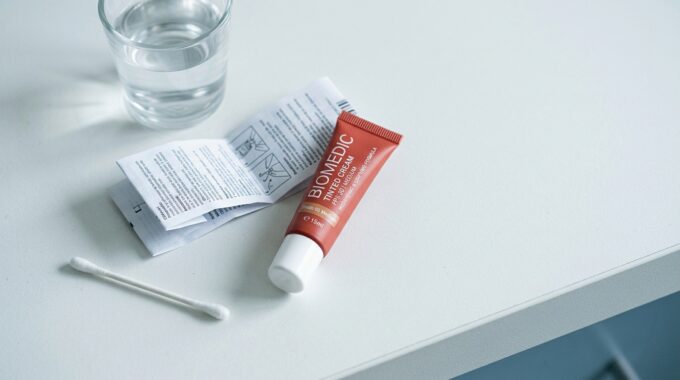
Researched overview. This guide is based on published dermatology guidance and the product’s drug label, not on hands-on product testing by BeautyKob. No product in this guide was tested by us.
Table Of Content
Quick answer
Walgreens Tinted Acne Treatment Cream is a maximum-strength acne cream: its only active ingredient is benzoyl peroxide 10%, and it has a cosmetic tint for light coverage. Ten percent is the highest benzoyl peroxide concentration sold over the counter.
That does not make it the best starting point. Lower strengths work about as well as 10% for many people, with less dryness and irritation. If you have never used benzoyl peroxide before, or your skin is sensitive or dry, start with a 2.5% product instead. If you have already used benzoyl peroxide and your acne has not responded to lower strengths, this cream is a reasonable option to consider — with a patch test first, once-daily use to start, moisturiser, and sunscreen every morning.
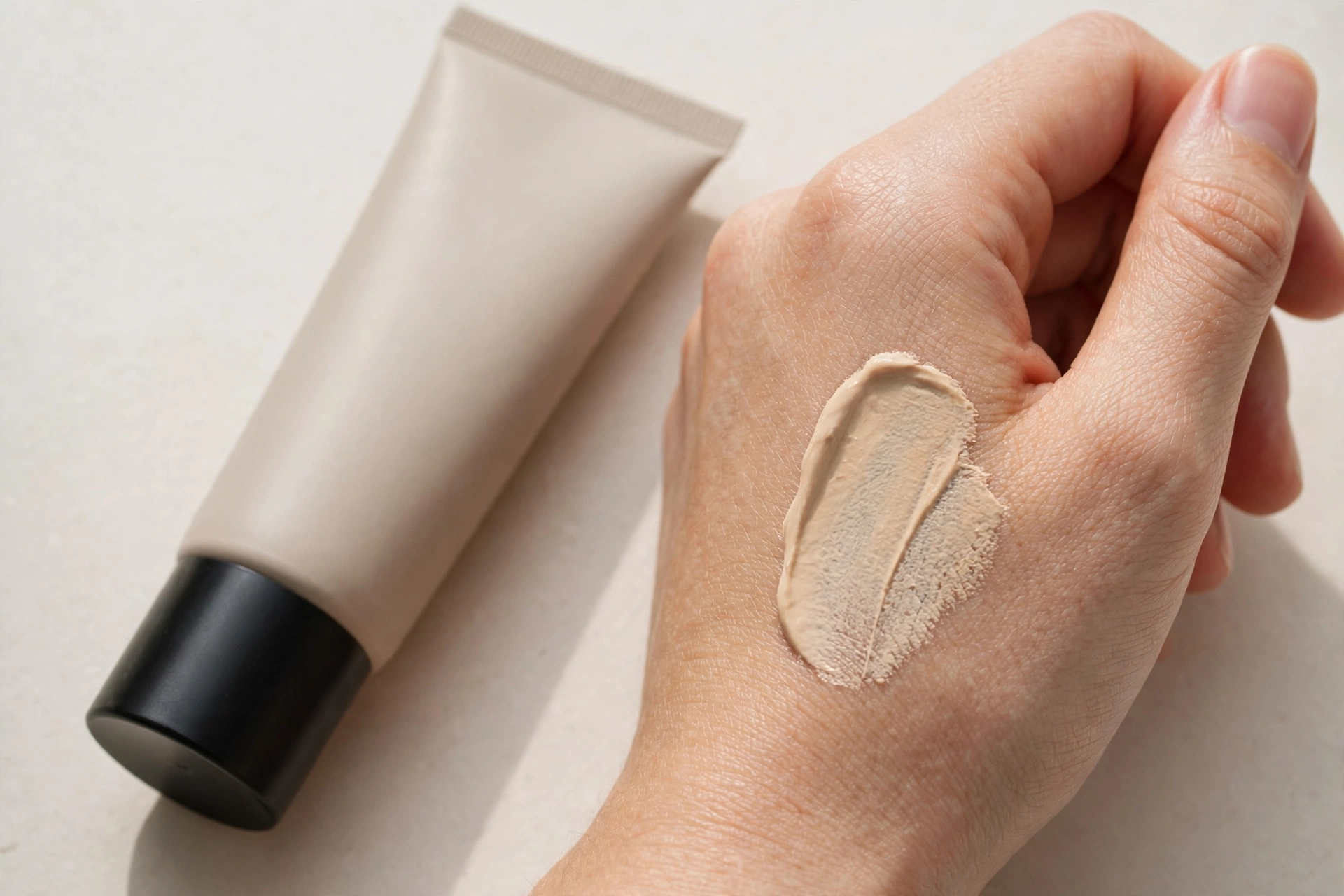
The tint gives light, cosmetic coverage only. It does not match every skin tone, and it is not a substitute for full-coverage makeup on more visible redness or scarring.
If your skin is red, sore, or has open sores or a rash, ask a dermatologist or pharmacist before using any acne treatment. This guide is general information, not medical advice.
Contents: What is in it · What 10% means · Who it suits · Who should start lower · How to use it · A note on the March 2025 recall · Sunscreen · Mistakes · When to change approach · FAQ
What is in it
The drug label for Walgreens Maximum Strength Tinted Acne Spot Treatment Cream lists one active ingredient: benzoyl peroxide 10%. Its purpose is listed as “acne medication”, and its use is “for the treatment of acne”. The inactive ingredients include water, bentonite, isopropyl myristate, propylene glycol, titanium dioxide and iron oxides — the iron oxides and titanium dioxide are what give the cream its tint. (DailyMed, Walgreens Maximum Strength Tinted Acne Spot Treatment Cream label)
Some retailer descriptions mention salicylic acid, aloe vera or chamomile. None of those appear as active ingredients on the official drug facts label. If you want to know what is in the product you are buying, read the drug facts label on its own packaging — formulations and retailer descriptions can vary or be reported inconsistently.
What 10% means
Benzoyl peroxide is an over-the-counter acne medicine that kills acne-causing bacteria (Cutibacterium acnes) and helps unclog pores. The FDA allows it at 2.5% to 10%. The American Academy of Dermatology (AAD) strongly recommends benzoyl peroxide for acne, and recommends using it alongside any topical antibiotic to reduce the risk of antibiotic resistance. (2024 AAD acne guideline summary)
Higher is not better. In three double-blind studies with 153 patients, 2.5% benzoyl peroxide reduced inflammatory acne as well as 5% and 10%, with less peeling, redness and burning than 10%. The main thing a higher concentration adds for most people is irritation, not proportionally more benefit.
| Concentration | Usual starting point | Irritation risk |
|---|---|---|
| 2.5% | First-time users, sensitive skin | Lower |
| 5% | Moderate acne, some prior tolerance | Moderate |
| 10% (this product) | Established acne, prior benzoyl peroxide tolerance | Higher |
Who it suits
This cream is generally better suited to people whose acne has not responded to lower-strength benzoyl peroxide, and who have already tolerated benzoyl peroxide before. Oily, non-sensitive skin tends to tolerate the higher concentration better than dry or reactive skin.
It is also a reasonable option if you want light tinted coverage during the day while treating acne — as long as you understand the tint is cosmetic and light, and the shade range is narrow.
Who should start lower
Consider a 2.5% or 5% benzoyl peroxide product first if you have:
- Sensitive, dry, or easily irritated skin. Ten percent is the maximum over-the-counter strength, and the irritation risk is higher than at lower strengths.
- Never used benzoyl peroxide before. Starting low lets you learn how your skin reacts before using the strongest option.
- Reacted badly to benzoyl peroxide in the past. If a lower strength irritated you, this maximum-strength version is not the place to try it again.
The drug label says: do not use benzoyl peroxide if you have very sensitive skin, or if you are sensitive to benzoyl peroxide.
If you are pregnant or breastfeeding, ask your doctor before starting any new acne treatment.
Stop and ask a doctor if: you get severe redness, swelling, blistering, or a spreading rash; your skin becomes very painful; or you have trouble breathing or swelling of the face or lips after using it. These are rare, but they are reasons to stop and get medical help. The drug label also warns that skin irritation may occur, with redness, burning, itching, peeling or swelling, and that irritation may be reduced by using the product less often or at a lower concentration.
How to use it
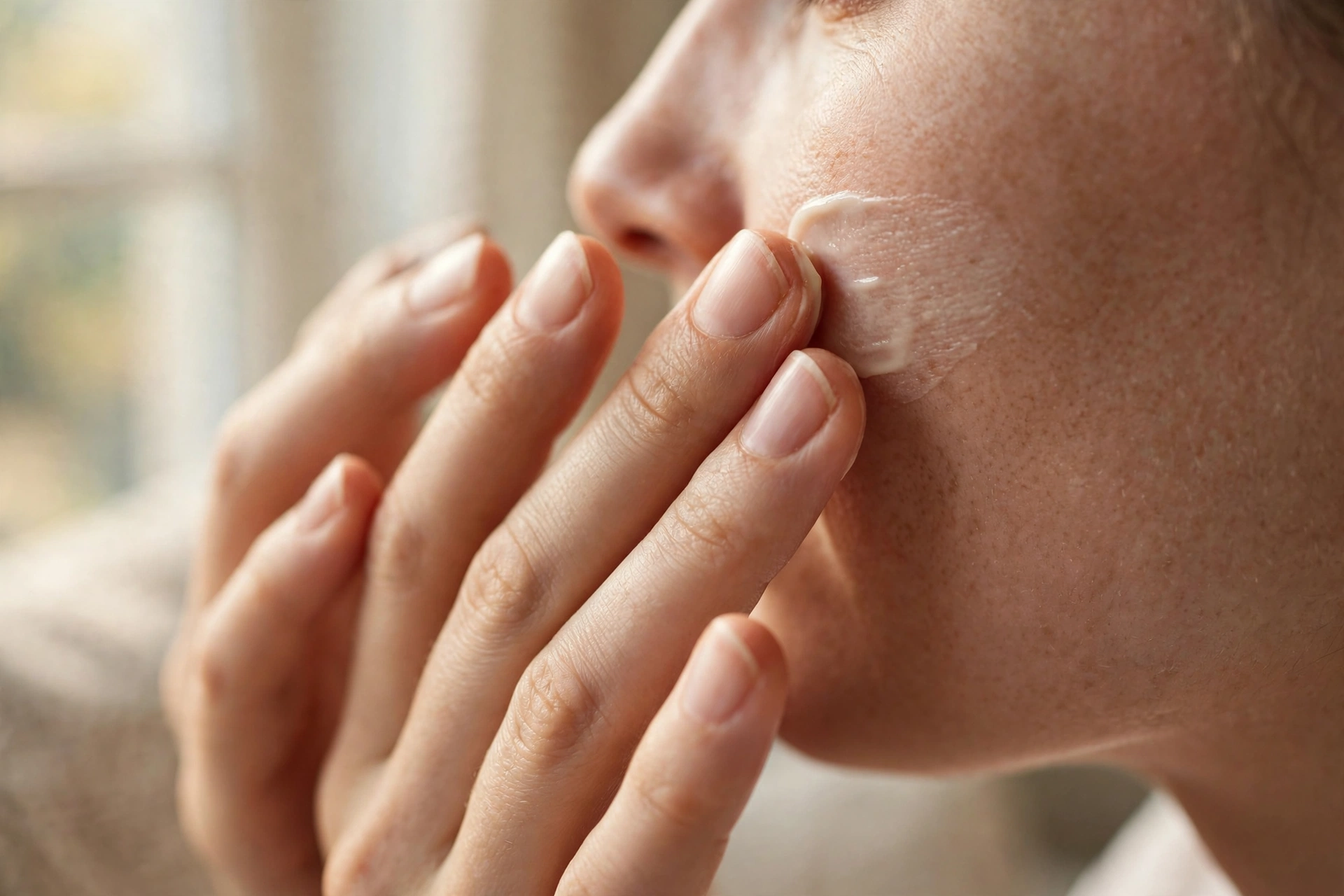
Patch test first: Apply a small amount to a quarter-sized spot on the underside of your arm or the bend of your elbow, twice a day for 7 to 10 days. The AAD recommends this length because allergic reactions can take several days to appear, and a 24-hour test can miss them. If the spot becomes red, itchy, swollen or blistered, stop and do not use the product on your face.
Application:
- Cleanse gently. Lukewarm water and a mild cleanser. Do not scrub.
- Apply a thin layer to the whole affected area. The drug label says: cover the entire affected area with a thin layer, one to three times daily. Start once a day, or every other day at first, and increase only if your skin stays comfortable. Treating the whole breakout area works better than dotting single pimples, because acne forms under the surface before it appears.
- Moisturise. Use a light, non-comedogenic moisturiser. It helps with the dryness benzoyl peroxide causes.
- Sunscreen in the morning. Broad-spectrum SPF 30 or higher, every day. (AAD sunscreen guidance)
Do not combine it with another benzoyl peroxide product, a retinoid, or a strong acid exfoliant in the same routine when you are starting out. The drug label warns that skin irritation and dryness are more likely if you use another topical acne medication at the same time, and that if irritation occurs, you should use only one topical acne medication at a time.
Fabric warning: Benzoyl peroxide can bleach hair and dyed fabric. The drug label warns to avoid contact with hair and dyed fabrics, which may be bleached by this product. Let it dry fully before your face touches bedding, and use white towels and pillowcases while you use it.
How long to judge it: The AAD advises giving an acne treatment 6 to 8 weeks before judging it, and says complete clearing generally takes 3 to 4 months. Do not switch products before that window passes — you will never find out whether the one you stopped would have worked. (AAD acne timeline summary)
A note on the March 2025 recall
In March 2025, the FDA tested 95 benzoyl peroxide acne products for benzene and found elevated levels in six of them, including one lot of this cream (lot 49707430, expiry March 2026). The recall was at the retail level — shops were told to pull the affected lot from their shelves; people were not told to throw away products they already had, except expired ones. The FDA said the cancer risk from the levels found is very low, even with decades of daily use. The practical lesson is the same for any benzoyl peroxide product: buy a fresh tube, store it at room temperature or cooler, replace it every 10 to 12 weeks, and throw it away if it has expired or been left in heat.
Sunscreen
Benzoyl peroxide increases the skin’s sensitivity to sun, so daily sunscreen is a requirement while you use this product, not a suggestion. Apply sunscreen over the treated area each morning and reapply through the day if you are outdoors. The tint in this cream provides visual coverage only — it is not sun protection.
Mistakes with this type of product
- Starting at 10%, every day, from day one. Ease in: once a day or every other day at first, then increase only if your skin tolerates it.
- Using too much. A thin layer is enough. More product does not clear acne faster; it usually just adds peeling and redness.
- Skipping sunscreen. The tint does not protect you from the sun.
- Combining it with other strong actives. Retinoids, additional benzoyl peroxide products, and strong exfoliants in the same routine compound irritation.
- Expecting the tint to match every skin tone. Tinted treatments usually come in a narrow shade range. Test it on your jawline before full-face use.
- Expecting it to cure acne. Benzoyl peroxide controls acne while you use it. If you stop, breakouts can return.
When to change approach
If this cream causes significant dryness, peeling or irritation that does not improve when you use it less often, step down to a lower concentration rather than pushing through. If your acne does not respond to consistent benzoyl peroxide use after 8 to 12 weeks, or if your breakouts are painful, deep or cystic, see a dermatologist rather than continuing with maximum-strength over-the-counter options. A dermatologist can check whether what you have is acne at all, and can discuss prescription options.
FAQ
Does this cream contain salicylic acid?
No. The official drug facts label lists benzoyl peroxide 10% as the sole active ingredient, not salicylic acid. Some retailer descriptions say otherwise, so check the packaging label on the product you buy.
Is 10% benzoyl peroxide too strong for sensitive skin?
For many people with sensitive or dry skin, yes. Ten percent is the maximum over-the-counter strength and carries a higher irritation risk than 2.5% or 5%. Starting lower and increasing only if needed is the more cautious approach.
Can this tinted cream replace makeup for covering redness?
Not fully. It provides light, cosmetic-level coverage. For significant redness, scarring or uneven tone, a dedicated colour-correcting product layered separately will generally give more complete coverage.
How long before benzoyl peroxide clears acne?
The AAD advises giving an acne treatment 6 to 8 weeks, with complete clearing often taking 3 to 4 months. Switching products before that window usually means never finding out whether the first one would have worked.
Does benzoyl peroxide really bleach fabric?
Yes. The drug label warns that it may bleach hair and dyed fabrics. White pillowcases and towels are the safer choice while you use it, and letting the product dry fully before contact with fabric helps.
Summary
Walgreens Tinted Acne Treatment Cream is a maximum-strength 10% benzoyl peroxide cream with a light cosmetic tint — not a gentle or botanical formula. Lower strengths work about as well as 10% for many people, with less irritation, so this cream is best suited to people who have already tolerated benzoyl peroxide and whose acne has not responded to lower strengths. Patch test for 7 to 10 days, start once a day, moisturise, wear sunscreen every morning, and give it 6 to 8 weeks. Check the drug facts label on your own packaging before buying, and see a dermatologist if acne does not respond after 8 to 12 weeks, or if breakouts are deep, painful or cystic.
Sources: DailyMed Walgreens Maximum Strength Tinted Acne Spot Treatment Cream drug label (benzoyl peroxide 10%); AAD acne guidance and 2024 acne guideline; AAD sunscreen guidance; AAD guidance on testing skin care products (7–10 day patch test). This is a researched overview, not a hands-on review.