Researched overview. This guide is based on published dermatology guidance, not on hands-on product testing by BeautyKob. No product in this guide was tested by us, and no product or brand is recommended.
Table Of Content
- Quick answer
- What blackheads are (and why they are dark)
- Why they keep coming back
- Why harsh routines make them worse
- The basic concept
- Morning routine
- Evening routine
- Weekly habits
- What to stop
- Ingredients that work
- Customise by skin type
- Stubborn nose blackheads
- How often to exfoliate
- Hydration and pore health
- How long it takes
- When skin care is not enough
- Patch testing
- When to see a dermatologist
- FAQ
- Summary
Quick answer
Blackheads are open clogged pores. The dark colour is not dirt — it is the material inside the pore darkening when it meets air. They keep coming back because pores fill up naturally every day, and because most people treat them the wrong way: scrubbing harder, washing more often, using pore strips and strong products. That damages the skin barrier, and a damaged barrier makes congestion worse.
The routine that works is the opposite: gentle cleansing, hydration, moisturiser, sunscreen every morning, and one pore-clearing treatment used steadily — not aggressively. Blackheads can be made better, but only when the habits are kept up. Improvement is gradual: texture can feel better within weeks, but visible reduction in blackheads usually takes months of consistent care, and the timing varies from person to person. This guide is general information, not medical advice.
Contents: What blackheads are · Why they keep coming back · Why harsh routines make them worse · The basic concept · Morning routine · Evening routine · Weekly habits · What to stop · Ingredients that work · Customise by skin type · Stubborn nose blackheads · How often to exfoliate · Hydration and pore health · How long it takes · When skin care is not enough · Patch testing · When to see a dermatologist · FAQ
What blackheads are (and why they are dark)
Blackheads are congested pores that stay open at the surface. Skin produces oil, and sheds dead cells daily. A clog forms when oil and dead skin are not cleared effectively and accumulate inside a pore. Because the pore is still open, the material inside meets air and becomes dark. It is not dirt — it is oxidation.
That is why rough scrubs do not fix blackheads. Scrubbing only irritates the surface, while the clog sits further inside the pore. Real improvement comes from regulating oil flow and keeping dead cells shedding evenly.
Why they keep coming back
Blackheads return when habits focus on removing rather than preventing. Washing does not stop oil production — pores fill up naturally during the day. Congestion gets worse when the barrier is damaged or the skin is dehydrated, because both make oil flow uneven and shedding irregular.
Many people fall into a cycle without realising it: over-clean the skin, dry it out, produce more oil, block pores again, and blackheads return. The cycle repeats until the routine becomes more balanced. Hormones, genetics and pore size also play a part. You cannot change those causes entirely, but you can control how visible blackheads are with a regular pore-care routine.
Why harsh routines make them worse
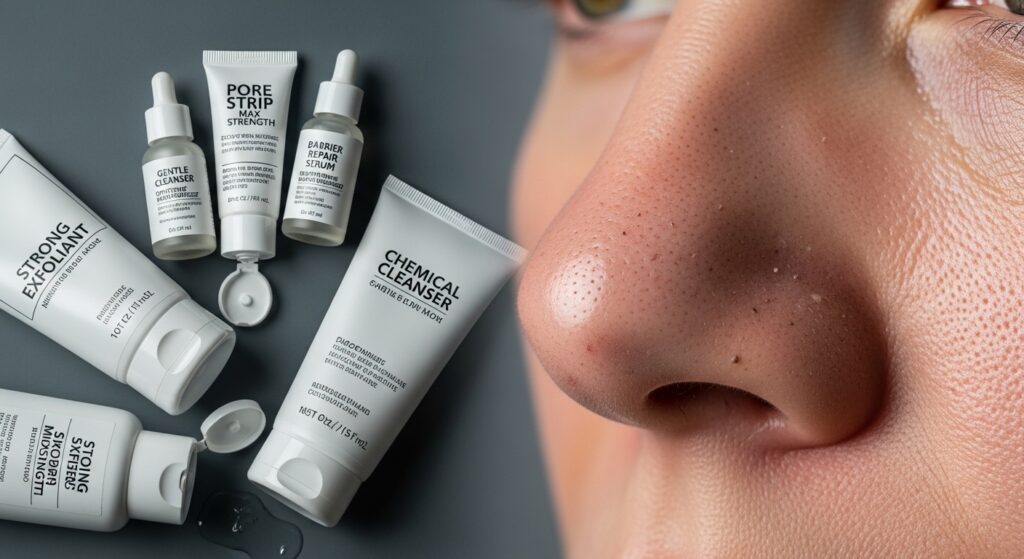
Treating blackheads as untouchable dirt is one of the biggest mistakes people make. Powerful detergents, frequent exfoliation and pore strips can temporarily make skin feel smooth, but over time they erode the barrier. A damaged barrier causes inflammation, and inflammation makes the skin secrete more oil as a defence.
Pores also look bigger when the skin is inflamed, which makes blackheads look worse even when the amount of clog has not changed much. Light routines work better, because they let the skin self-regulate instead of constantly reacting.
The basic concept
This routine is not about getting rid of oil. Oil protects the skin. It is about keeping pores clear and skin hydrated. When skin is moist and relaxed, oil moves evenly and is less likely to get trapped.
It is all about consistency and low intensity. A gentle routine done daily will always beat a harsh routine done occasionally. Blackheads can be improved, but only when prevention habits are kept up.
Morning routine
Morning care should refresh the skin without stripping it.
- Cleanse gently. Lukewarm water and a mild cleanser remove overnight oil and sweat. Skin must not be left tight — tightness is a sign the barrier has been disrupted.
- Hydrate. Even oily skin needs hydration. Without it, skin compensates by producing more oil. A lightweight moisturiser regulates this and curbs midday shine, which helps keep pores from filling too fast.
- Sunscreen — every morning. Use a broad-spectrum sunscreen with SPF 30 or higher as the last step, and reapply every two hours when outdoors, or after swimming or sweating. Sun damage thickens the outer layer of skin and slows cell shedding, which intensifies congestion. A non-greasy sunscreen protects without blocking pores.
Evening routine
Evening care is about removing build-up and letting treatments work — not because the skin has a special repair stage at night, but because the evening is the practical time for it, and because pore-clearing treatments that increase sun sensitivity belong at night.
- Cleanse gently. Take off sunscreen, pollution and excess oil completely but without scrubbing. Light cleansing maintains the barrier and keeps oil production balanced.
- Pore-clearing treatment. Apply your treatment to the areas that need it, following the product label. Introduce it gradually and use it regularly — too much too often causes irritation, which slows progress.
- Moisturise. Moisturise at night as much as in the morning. Hydrated skin heals faster and controls oil more effectively.
Weekly habits
Blackhead care is not about daily exfoliation. Over-exfoliation only worsens congestion.
- Light exfoliation — once or twice a week at most. Gentle shedding helps remove the dead cells that block pores. Excessive shedding causes irritation and eventually more oil. Start once a week; increase only if skin stays comfortable.
- Oil-absorbing masks (occasionally). A clay or charcoal mask can help absorb surface oil, but used regularly it dries the skin and makes it produce more oil. Once a week at most.
- Rest days. Days with no actives — only cleansing, moisturising and sun protection — let the barrier rebuild. Rest days directly improve how pores behave.
What to stop
- Squeezing. Squeezing stretches pores and damages the tissue around them. It also pushes material deeper and can make blackheads look bigger.
- Relying on pore strips. Pore strips remove surface clogs only and do nothing about oil control. Repeated use can stretch pores and make them sensitive.
- Skipping moisturiser. Skin without moisturiser tends to produce more oil, not less.
- Changing products all the time. The skin never acclimatises, so progress never accumulates.
Good blackhead care leaves skin calm, not tight and irritated.
Ingredients that work
Many products promise to eliminate blackheads in a single wash. In reality, very few ingredient types consistently help. What matters is knowing how they work and how to use them correctly.
| Ingredient | What it does | What to know |
|---|---|---|
| Salicylic acid | Oil-soluble, so it can get into the pore lining and dissolve the mix of oil and dead skin forming clogs | The most useful ingredient for blackheads. More is not better — a low to moderate strength formula several times a week is usually enough. Improvement comes over a few weeks, not days |
| Retinoids (retinol over the counter; stronger retinoids by prescription) | Normalise how skin cells shed, so pores are less likely to clog; improve general texture and reduce blackheads and whiteheads over time | Very strong — introduce gradually, one night in every other at first, so skin gets used to it without becoming very dry. A long-term solution, not a quick one; do not use during pregnancy |
| Niacinamide | Does not dissolve blackheads directly, but helps regulate oil production and maintain the barrier | Mostly well tolerated and compatible with other treatments; also improves the look of large pores, which makes blackheads less conspicuous |
| Clay and charcoal | Absorb excess surface oil and clean up pores right after use | They do not substitute for exfoliating treatments that work inside the pore. Once a week at most — excessive use dries the skin and increases oil production |
Do not use several strong actives at once. Pick one, use it as directed for six to eight weeks, and only then decide whether to change anything.
Customise by skin type
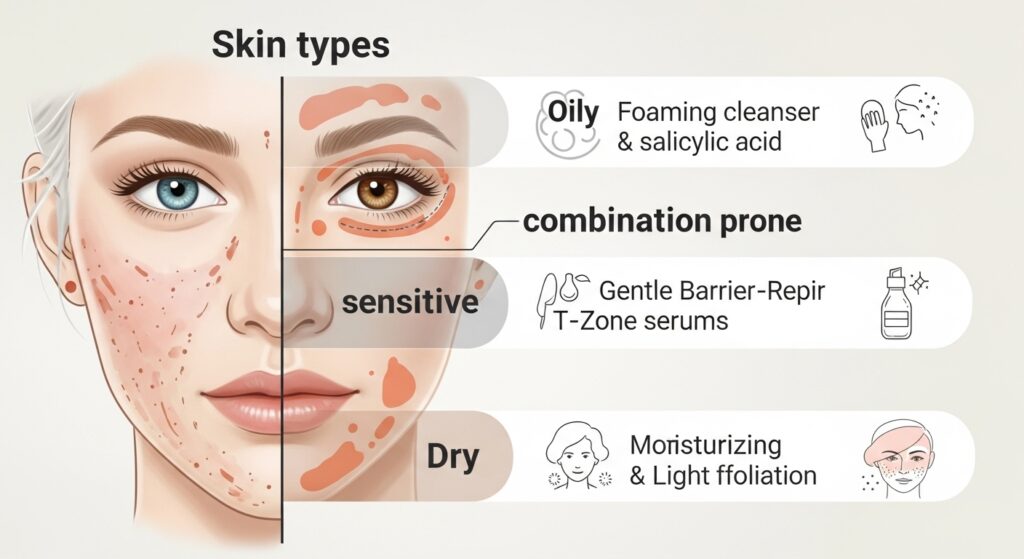
Blackheads do not form for the same reason in everyone. Skin type decides how the routine should look.
- Oily skin. Focus on oil regulation without stripping. A mild foaming cleanser morning and evening is usually enough. Salicylic acid several times a week keeps pores clean. Lightweight hydration is essential — oily skin left without moisturiser tends to become oilier. Consistent care matters most; frequent product changes destabilise oil balance and halt progress.
- Combination skin. Blackheads usually sit in the T-zone while cheeks are normal or dry. Use stronger treatments only where they are needed — salicylic acid on the nose and forehead, hydration elsewhere. This focused approach avoids over-treatment and moisture loss.
- Sensitive skin. Handle with care. Harsh exfoliation causes irritation, inflammation and more congestion. Begin with very mild exfoliation once or twice a week, prioritise barrier-repair ingredients, and use one active at a time so you can tell what works. Sensitive skin needs patience — long-term benefits are more sustainable, and changes are gradual.
- Dry skin. Even dry skin can have blackheads, particularly when dead skin collects because turnover is slow. The biggest mistake is skipping exfoliation — gentle movement of the skin is needed to avoid clogging, but it must come with plenty of moisture. Once skin is properly hydrated, it sheds cells in a balanced way and congestion clears.
Stubborn nose blackheads
Persistent blackheads are mostly found on the nose, because it has a higher concentration of oil glands.
Many people use pore strips for immediate results. They remove surface plugs, but they do not tackle the underlying reason clogs form. Repeated use may stretch pores and make them sensitive.
Long-term, consistent chemical exfoliation and oil control work better. Applying a salicylic acid product directly on the nose a few times a week progressively reduces congestion. Squeezing should be avoided — manual extraction without care can damage the pore wall and make blackheads appear bigger. The AAD’s guidance is not to pop a pimple (Dr. Jacqueline Watchmaker, MD, FAAD).
How often to exfoliate
Over-exfoliation is one of the most widespread errors in blackhead care. More exfoliation does not mean faster results.
Once or twice a week is sufficient for most skin types. Sensitive skin is usually satisfied with once a week. It is about gradual shedding, not fast peeling. Signs of over-exfoliation include redness, stinging, oily skin and breakouts. If you see them, stop or reduce the frequency.
Hydration and pore health
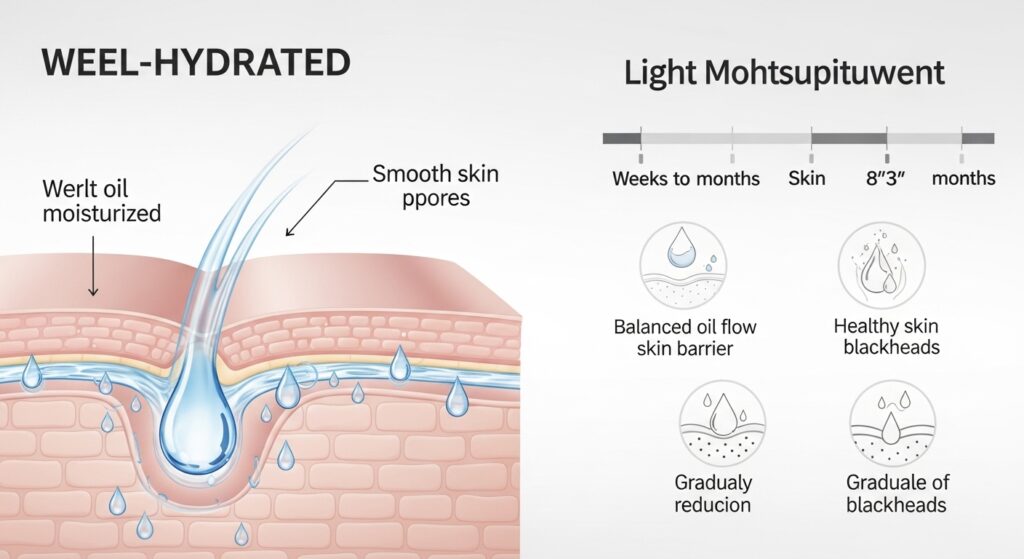
Hydration is often misunderstood in blackhead care. Many people believe dryness will remove oil. In reality, skin produces more oil when it gets dehydrated.
When the barrier is well hydrated, oil moves more evenly and is less likely to get trapped. A light, non-comedogenic moisturiser helps. Think of hydration as control, not oiliness.
How long it takes
There is no fixed schedule, and anyone who gives one is guessing. As a rough guide, with a steady routine:
- First weeks: less oiliness and better texture.
- Months: fewer new blackheads forming, and existing ones looking less visible. The timing varies from person to person.
- Several months: the clearest change, as turnover steadies and pores stay clearer.
When you switch products regularly or stop early, you start all over again.
When skin care is not enough
Blackheads are sometimes deep-rooted and difficult to treat topically. When that happens, professional interventions such as chemical exfoliation or clinical extractions can help.
Professional treatment still needs a proper routine alongside it to sustain the results — without regular maintenance, congestion returns. A dermatologist can discuss options matched to your skin, including prescription treatments that are not available over the counter.
Patch testing
Patch test any new product before using it on your face. The AAD’s method is: apply the product to a quarter-sized patch of skin on the inside of your arm or the bend of your elbow, twice a day for 7 to 10 days. The AAD recommends this length because allergic reactions can take several days to appear, and a 24-hour test can miss them. If the patch becomes red, itchy, swollen or blistered, do not use the product on your face.
When to see a dermatologist
See a dermatologist if: blackheads do not improve after eight to twelve weeks of consistent care; breakouts are deep, painful or cystic; skin keeps reacting to treatments; or you are considering professional extraction or any in-clinic treatment. A dermatologist can check whether what you have is blackheads at all, and can discuss prescription options.
FAQ
Are blackheads dirt?
No. Blackheads are open clogged pores, and the dark colour comes from the material inside darkening when it meets air. Washing harder does not remove them — it irritates the skin and can make congestion worse.
Can pore strips get rid of blackheads?
Only the surface plug, temporarily. They do not control oil or change how pores fill, and repeated use can stretch pores. Consistent exfoliation and oil control work better over time.
Is salicylic acid the best ingredient for blackheads?
It is the most useful over-the-counter ingredient for blackheads, because it is oil-soluble and can get inside the pore. It still needs weeks of regular use, and more is not better — a low to moderate strength formula several times a week is usually enough.
How long before blackheads improve?
Texture and oiliness can improve within weeks, but visible reduction in blackheads usually takes months of steady care. There is no fixed date by which any skin will be clear.
Should I squeeze blackheads?
No. Squeezing stretches the pore, damages the tissue around it, and can push material deeper. It makes blackheads look bigger and raises the risk of marks and scarring.
Summary
A blackhead routine is not about scrubbing harder or removing oil. Blackheads are open clogged pores that darken through oxidation, not dirt. Keep pores clear with gentle cleansing, one pore-clearing treatment used steadily, hydration and moisturiser, and broad-spectrum SPF 30+ every morning. Exfoliate once or twice a week at most, stop squeezing and relying on pore strips, and give it months — not days. Patch test new products for 7 to 10 days. If blackheads do not improve after eight to twelve weeks, or breakouts are deep and painful, see a dermatologist.
Sources: American Academy of Dermatology, 7 Rosacea skin care tips (patch-test method: apply a new product to a quarter-sized patch of skin on the inside of the arm for 7–10 days); American Academy of Dermatology, How to select anti-aging skin care products (broad-spectrum sunscreen, SPF 30 or higher, reapply every two hours outdoors). This is a researched overview, not a hands-on review.