
Researched overview. This guide is based on published dermatology guidance, not on hands-on product testing by BeautyKob. No product in this guide was tested by us, and no product or brand is recommended.
Table Of Content
- Quick answer
- What sensitive skin really is
- Common signs
- Why skin becomes sensitive
- Know your skin first
- Gentle care over ingredients
- Stability vs experimentation
- Protection first
- Morning routine
- Evening routine
- Weekly care
- Mistakes to avoid
- Ingredients that calm
- Ingredients that strengthen the barrier
- What to avoid or limit
- Adjusting by sensitivity type
- Lifestyle — what actually helps
- How long it takes
- When to get help
- Tracking progress
- Patch testing
- FAQ
- Summary
Quick answer
Sensitive skin is not only redness or dryness. It is skin that reacts more strongly than other skin — it stings, burns, flushes or breaks out from products that most people use without trouble. The cause is usually two things together: a weak skin barrier and heightened reactivity.
The right routine is short, gentle and stable. The mistake most people make is the opposite: more serums, stronger actives, a new routine every few weeks. Sensitive skin is healed by light, small, frequent care — not by powerful treatments. Strengthen the barrier first, protect it every day, and only then consider one active at a time. Changes take weeks to months, not days, and the timing varies from person to person. This guide is general information, not medical advice.
Contents: What sensitive skin really is · Common signs · Why skin becomes sensitive · Know your skin first · Gentle care over ingredients · Stability vs experimentation · Protection first · Morning routine · Evening routine · Weekly care · Ingredients that calm · Ingredients that strengthen the barrier · What to avoid or limit · Adjusting by sensitivity type · Lifestyle · How long it takes · When to get help · Tracking progress · Patch testing · FAQ
What sensitive skin really is
Sensitive skin is a combination of a broken barrier and exaggerated sensitivity. The barrier is the outer layer that holds moisture in and keeps irritants out. When it is damaged, moisture escapes, irritants get in, and the skin reacts to things it would normally tolerate.
Sensitivity is not one fixed state. It can be transient — after sun exposure, stress, or a new product — or persistent, a long-term state in which the skin reacts to a series of triggers. Knowing which kind you have matters before you build a routine, because transient sensitivity often settles once the trigger is removed, while persistent sensitivity needs a longer, steadier approach.
Common signs
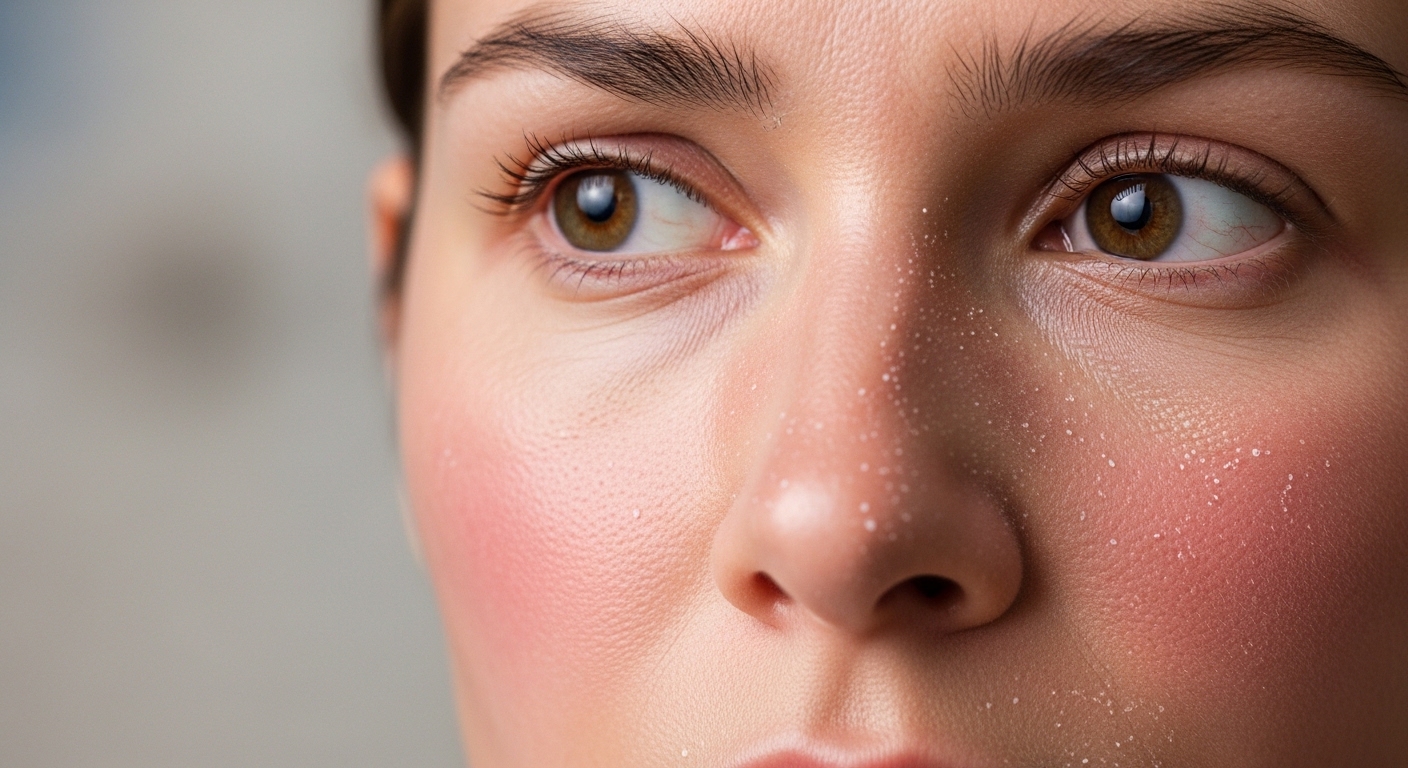
Sensitive skin can show up in several ways:
- Flushing or redness that appears easily.
- Stinging or burning after applying products.
- Pain or discomfort after cleansing.
- Breakouts from even mild products.
- Flaking or dryness that looks like nothing more than dry skin.
The knowledge of which signs you have will help you avoid the habits that make skin worse. Sensitive skin responds to peaceful, sparse and stable treatment — not to more products.
Why skin becomes sensitive
Knowing what your skin is reacting to helps you avoid flare-ups. Common causes include:
- A weak skin barrier. When the barrier is damaged, skin loses moisture and becomes vulnerable to redness, itching and sensitivity.
- Too many active ingredients. Strong treatments, exfoliants and abrasive products irritate instead of improving. Even products that promise results can be irritating when used too often or layered together.
- Environmental damage. Sun, wind, pollution and extreme temperatures all make reactive skin worse.
- Past acne or treatments. Previous breakouts, chemical peels or laser procedures can leave skin temporarily sensitive. Time and gentle care are what settle it.
- Stress and hormones. Stress and hormonal fluctuation cause flare-ups, and sensitive skin reacts more strongly to both.
Know your skin first
Before choosing products, ask yourself:
- Does my skin feel tight or dry?
- Does it burn or sting when I use new products?
- Does it get red easily?
- Do breakouts have only minimal triggers?
These questions shape the routine. Sensitive skin must be moisturised, protected and barrier-supported first — and only then are active treatments considered, one at a time, if they are needed at all.
Gentle care over ingredients
The common assumption is that the best routine for sensitive skin is the one with several serums or potent actives. That is a mistake. Sensitive skin is calmed and improved with tender treatment. Harsh treatment increases inflammation, slows healing and worsens texture.
Gentle care means routine washing, protection and hydration. Active treatments are used only once the barrier is stronger, and only when they are necessary. Less is more: a short list of products used regularly will succeed where a long list changed every few weeks fails.
Stability vs experimentation
Changing products frequently keeps sensitive skin reactive. The skin needs products it is used to. Repetition helps the barrier grow stronger and the texture improve, because the skin is not constantly adjusting to something new.
A short routine done regularly is better than a long routine updated every few weeks. If a product works, keep it. If you want to try something new, introduce one product at a time, and wait — a reaction can take days to appear.
Protection first
Protection comes before treatment. Sun exposure, pollution and friction all increase sensitivity. Sunscreen is necessary every day, even without any anti-ageing aim — it protects the barrier and keeps triggers from reaching the skin. A protected barrier is what lets skin become smoother and calmer over time.
Morning routine
Morning care should be cool, calm and protective — never irritating.
- Cleanse gently. A light wash in the morning clears sweat, oil and dirt. Use a mild, fragrance-free cleanser that does not leave skin tight or dry. Over-cleansing often causes redness and stinging.
- Hydrate first. Hydration after cleansing prepares the skin for other products. Light, hydrating products with barrier support leave skin smooth.
- Moisturise. Moisturiser captures moisture and provides protection. Even oily sensitive skin needs a light, non-comedogenic moisturiser — skipping it leaves skin dehydrated and more reactive.
- Sun protection. Sensitive skin needs sunscreen. UV exposure aggravates redness and sensitivity and causes long-term damage. Use a broad-spectrum sunscreen with SPF 30 or higher every morning, and reapply every two hours when outdoors, or after swimming or sweating. A mineral sunscreen is often the least irritating option for reactive skin.
Evening routine
Evening care is about removing contamination and helping repair overnight — not because the skin has a special repair window at night, but because the evening is the practical time for it.
- Cleanse gently. Remove make-up and the day’s build-up. Never use hard scrubs or harsh cleansers.
- Repair and hydration. Apply gentle, hydrating products that reduce irritation, hydrate and strengthen the barrier. Do not introduce potent treatments at night before the skin is ready for them.
Weekly care
Sensitive skin needs special care once a week as well as daily care:
- Gentle exfoliation — once a week at most. Mild chemical exfoliation, such as polyhydroxy acids (PHAs), sheds dead cells without hurting the skin. Normal sensitivity returns after about a week. Do not exfoliate more often, and never exfoliate broken or inflamed skin.
- Soothing masks (optional). A hydrating or calming mask can re-hydrate and calm the skin. Avoid masks made of strong clays or astringents, which strip the barrier.
- Recovery days. Stop active treatments one or two times a week. Focus on hydration and barrier support so the skin can recover.
Mistakes to avoid
- Over-cleansing or scrubbing.
- Changing products very often.
- Skipping sunscreen.
- Ignoring signs of irritation and pushing through them.
Avoiding these mistakes protects the barrier — and a protected barrier is what makes skin less sensitive over time.
Ingredients that calm
Sensitive skin needs ingredients that soothe rather than attack. The commonly used calming ingredients are:
- Aloe vera. Lessens irritation and assists hydration.
- Chamomile extract. Decreases redness and the look of inflammation.
- Centella asiatica (cica). Commonly used for skin protection and repair; the evidence for it is limited, so treat it as a gentle extra, not a treatment.
- Panthenol (pro-vitamin B5). Hydrating and barrier-supporting.
- Colloidal oatmeal. Calms swollen or reddened skin.
These ingredients are found in moisturisers, masks or serums. None is a treatment for a skin condition on its own — they support a gentle routine. Patch test any new product first (see below).
Ingredients that strengthen the barrier
Barrier-repair ingredients improve the skin’s strength over time, which makes it more receptive to other treatments and less sensitive:
- Ceramides. Reduce water loss and help restore the natural lipid layer.
- Fatty acids. Support the skin’s defence layer.
- Cholesterol. Works with ceramides to keep the barrier functioning.
- Squalane. A moisturiser that does not block pores and supports elasticity.
When these are used regularly, skin becomes less reactive and more tolerant of the rest of the routine.
What to avoid or limit
Common skincare products can irritate sensitive skin badly when used wrongly. Avoid or limit:
- Strong acids (glycolic, salicylic or lactic acids) in high amounts or used too often.
- Fragrance and essential oils, which commonly irritate reactive skin.
- Alcohol-heavy products and harsh astringents.
- Retinoids or vitamin C while the barrier is weak — a weak barrier makes them far more irritating. Introduce them only after the skin has calmed, one at a time, and stop if stinging or redness appears. Do not use retinoids during pregnancy.
As far as possible, choose gentle products over harsh ones.
Adjusting by sensitivity type
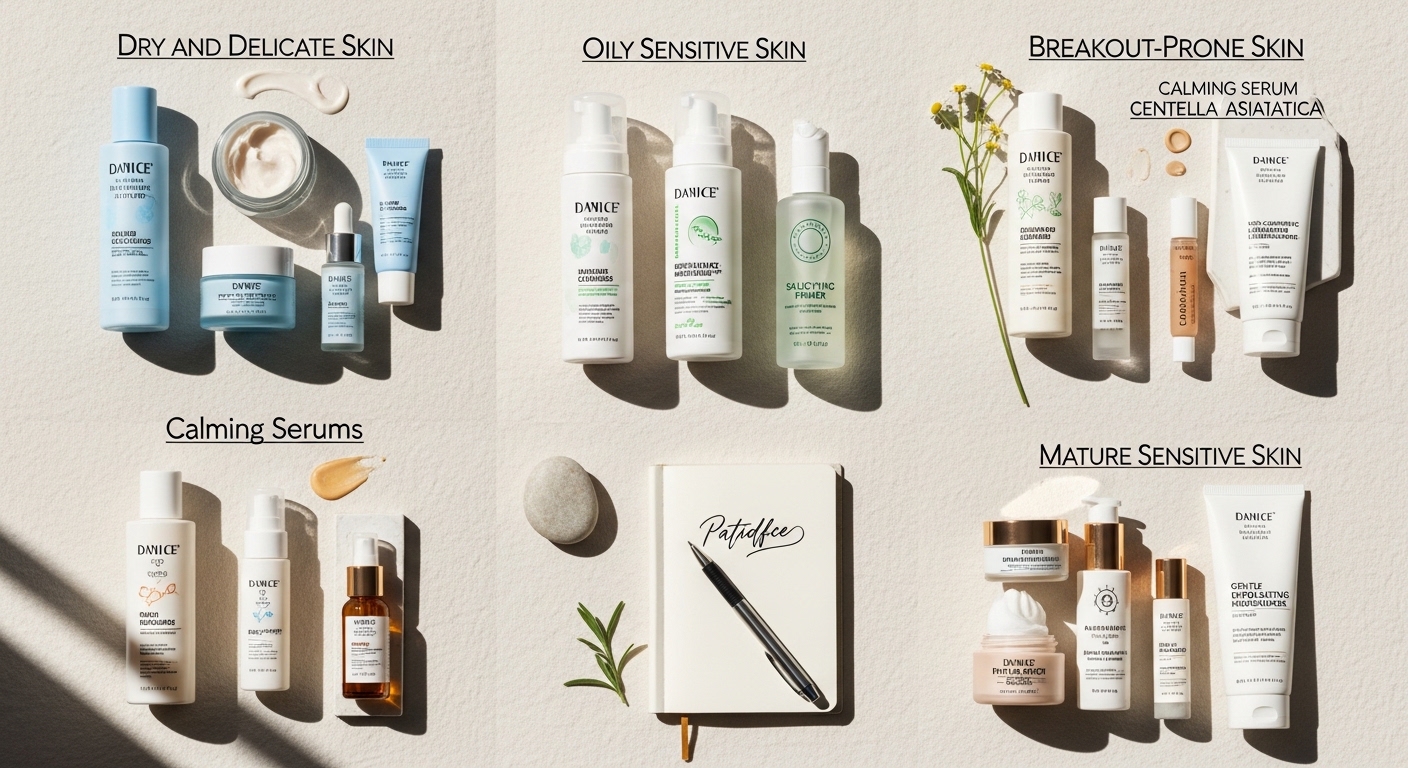
Sensitive skin is not uniform. Adjust the routine to your type:
- Dry and delicate skin. Focus on hydration, barrier repair, and avoiding over-exfoliation.
- Sensitive and oily skin. Light hydrators, soft cleansers and non-comedogenic products.
- Sensitive and acne-prone skin. Do not use harsh acne treatments. Use the ingredients with the least irritation potential, and address breakouts gradually — one gentle step at a time.
- Sensitive and older skin. Include gentle, supportive products and keep moisture and protection in place. Peptides are sometimes suggested for older skin, but the evidence for peptide products improving skin is limited — they are not a proven substitute for sunscreen, moisturiser or retinoids.
Lifestyle — what actually helps
- Sleep. Rest matters for healing and for calming inflammation. Adults need 7 or more hours a night (CDC).
- Stress management. Stress can cause redness and flare-ups. Deep breathing, meditation or light exercise can help keep skin in check.
- Hydration and diet. Water contributes to skin elasticity. A balanced diet provides antioxidants and healthy fats that support skin health — but no specific food has been shown to calm sensitive skin, and no food or supplement is a treatment for it.
- Environmental protection. Limit contact with wind, drastic weather changes and pollution. Use gentle sunscreen daily.
How long it takes
There is no fixed schedule, and anyone who gives one is guessing. As a rough guide, with a steady routine:
- First weeks: skin feels less uncomfortable; tightness and stinging reduce.
- Months: redness decreases, the barrier improves, and flare-ups become less frequent.
- Several months and beyond: skin becomes much more tolerant and texture smoother, and gentle actives can be introduced if wanted.
It takes constancy and patience. Simplistic quick fixes make skin more sensitive, not less.
When to get help
Some sensitivities need specialist help:
- Redness, burning or rashes from even mild treatment.
- Severe allergy to different products.
- Chronic conditions such as rosacea, eczema or allergic dermatitis.
A dermatologist can prescribe medication, test for triggers, and provide expert care alongside home care. If you have a skin condition that is getting worse, ask a dermatologist before adding any active product.
Tracking progress
Tracking helps you see what works and what triggers reactions:
- Take monthly photos in the same light.
- Keep a journal of how skin responds to new products.
- Focus on feeling comfortable, staying hydrated and having fewer flare-ups — not on perfect skin.
Even minimal improvements matter, and noticing them keeps the routine going.
Patch testing
Patch test any new product before using it on your face. The AAD’s method is: apply the product to a quarter-sized patch of skin on the inside of your arm or the bend of your elbow, twice a day for 7 to 10 days. The AAD recommends this length because allergic reactions can take several days to appear, and a 24-hour test can miss them. If the patch becomes red, itchy, swollen or blistered, do not use the product on your face. Sensitive skin is often more reactive than other skin, so this step matters more here, not less.
FAQ
What is the best routine for sensitive skin?
The shortest one that works: gentle cleanser, hydrating product, moisturiser, and broad-spectrum SPF 30+ every morning. Add one thing at a time only when the barrier is calm, and patch test it first.
Can sensitive skin ever use active ingredients?
Sometimes, once the barrier is stronger. Start with the gentlest option, once a week at most, and stop if stinging or redness appears. Many people with sensitive skin never need a strong active — barrier care and sun protection do most of the work.
Why does my skin sting from products that are meant for sensitive skin?
“For sensitive skin” on a label is not a guarantee. Fragrance, essential oils, alcohol and strong acids can still be present. Read the ingredient list, and patch test before full-face use.
How long before sensitive skin calms down?
There is no fixed date. Tightness and stinging often ease within weeks; redness and flare-ups usually take months to reduce. Consistency matters more than any single product.
Should I exfoliate sensitive skin?
Only gently and rarely — a mild chemical exfoliant such as a polyhydroxy acid, once a week at most, and never on broken or inflamed skin. If exfoliation causes stinging or redness, stop.
Summary
Sensitive skin needs a short, gentle, stable routine: cleanse softly, hydrate, moisturise, and wear broad-spectrum SPF 30+ every morning. Strengthen the barrier with ceramides and other barrier ingredients, calm it with gentle soothing ingredients, and avoid strong acids, fragrance and alcohol-heavy products while the barrier is weak. Introduce one product at a time, patch test it for 7 to 10 days, and adjust the routine to your sensitivity type. Do not expect a fixed date for improvement — weeks for comfort, months for fewer flare-ups. If redness, burning or rashes persist, or you have rosacea or eczema, see a dermatologist.
Sources: American Academy of Dermatology, 7 Rosacea skin care tips (patch-test method: apply a new product to a quarter-sized patch of skin on the inside of the arm for 7–10 days); American Academy of Dermatology, How to select anti-aging skin care products (broad-spectrum sunscreen, SPF 30 or higher every morning, reapply every two hours outdoors). This is a researched overview, not a hands-on review.