Researched overview. This guide is based on published dermatology guidance, not on hands-on testing by BeautyKob. No product, supplement or brand is recommended, and no dose is given.
Table Of Content
Quick answer
“Plumping” has two meanings, and most articles mix them up. The first is hydration: well-hydrated skin looks fuller, smoother and less lined for a while, because water in the top layer of skin softens its appearance. That is real, and it is what home care can do. The second is volume: the fullness that comes from collagen, fat and structure under the skin. That is lost gradually with age and sun damage, and no cream, serum, massage or tool at home restores it. This guide covers the first honestly and does not pretend to do the second. This guide is general information, not medical advice.
Contents: What plumping means · Why skin loses fullness · Hydration first · Barrier support · Massage and tools, honestly · Masks · Natural methods, honestly · Food, water and sleep, honestly · What does not work · Mistakes · How often · Patch test · When to get help · FAQ
What plumping means
Plump skin is skin that looks full, smooth and hydrated rather than dry, flat or lined. Most of what people call plumping at home is hydration: humectants such as hyaluronic acid and glycerin draw water into the top layer of skin, and a moisturiser seals it in. The effect is visible — skin looks softer and fine lines look less obvious — and it is temporary. It fades as the water evaporates, which is why the routine has to be repeated daily.
Real volume is different. It comes from collagen and elastin in the deeper skin, and from fat under the skin. Both decline with age, and sun damage speeds the decline. Nothing you apply at home rebuilds collagen or replaces lost fat. Treatments that add volume — such as fillers — are medical procedures, not home care. A guide that promises to “restore volume” at home is not telling the truth.
Why skin loses fullness
Three things make skin look less full over time:
- Less collagen and elastin. The body makes less collagen with age, and the collagen that remains is damaged by sun and pollution. This is the main reason skin sags and loses firmness. Sunscreen is the single most effective step against it: in a 4.5-year randomised trial, people who used broad-spectrum sunscreen daily had 24% less skin ageing than people who used it only when they chose.
- Less hyaluronic acid in the skin. The skin’s own hyaluronic acid declines with age and dehydration, so the top layer holds less water and looks flatter.
- A weaker barrier. When the barrier is damaged, water escapes faster and the skin looks dry and tired. Barrier support — ceramides, fatty acids, squalane — helps the skin hold the water it has.
None of these is fixed by a single product. Hydration helps the appearance; sunscreen slows further damage; the rest is time and genetics.
Hydration first
Hydration is the only plumping that home care reliably delivers:
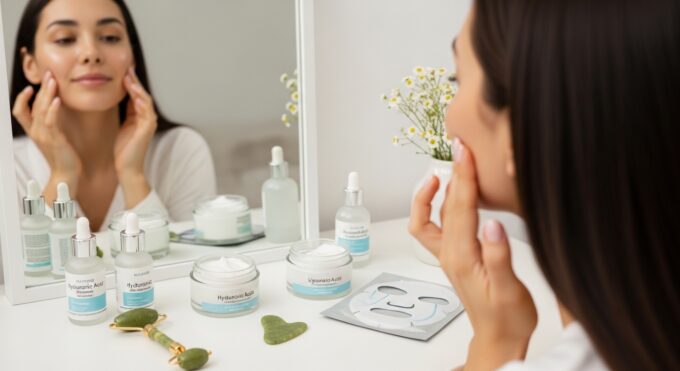
- Apply a hyaluronic acid or glycerin serum on damp skin, straight after cleansing. A humectant on dry skin in dry air has little water to draw in.
- Seal it in with a moisturiser. Without that step, the water evaporates and the effect is gone within hours.
- Use light, fragrance-free products. Heavy creams on oily skin can feel uncomfortable and clog pores; lightweight gels and water-based moisturisers work well for oily skin, while richer creams suit dry skin.
- Do not expect a serum to “penetrate deeply”. Products sit on the skin’s surface and work from there. No serum, tool or massage makes them absorb more.
Barrier support
A healthy barrier holds water in, which is what keeps skin looking full:
- Ceramides, squalane and fatty acids in a moisturiser help replace the skin’s barrier fats. Applied over a serum, a barrier-repair moisturiser gives skin a boost of hydration and helps it look less flat.
- Stop stripping the barrier. Harsh cleansers, over-exfoliation and strong acids all weaken it. If your skin feels tight after washing, your cleanser is too strong.
- Peptides are often sold as plumping or firming ingredients. The evidence for peptides in skincare is thin, and no peptide product has been shown to restore firmness or volume. Treat them as an optional extra, not a reason to buy a product.
Massage and tools, honestly
Facial massage feels pleasant, and that is the whole claim:
- Light upward strokes on the cheeks, jaw and forehead, slow circles at the temples, and very gentle tapping around the eyes can ease tension and feel calming.
- What massage does not do: it does not improve blood circulation, drain lymph, stimulate collagen, reduce puffiness in any lasting way, or help products absorb better. There is no good evidence for any of those claims. Massage is a comfort aid.
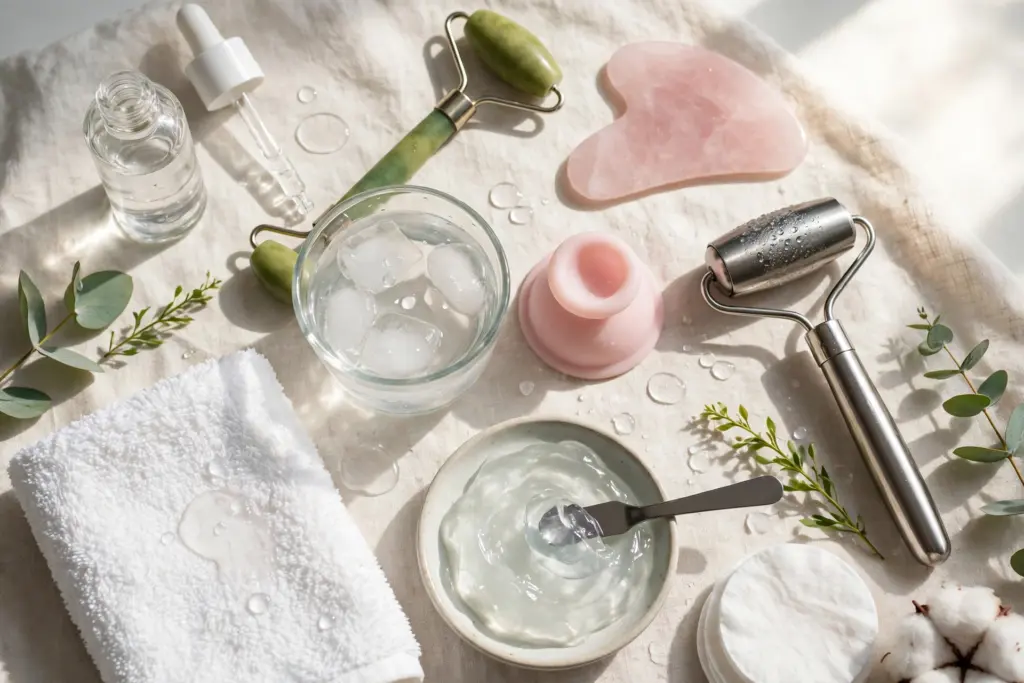
- Jade rollers and gua sha stones are comfort aids too. They do not boost circulation, drain lymph, lift skin, or make serums absorb. Clean them before and after use and dry them fully.
- Home microcurrent devices are sometimes sold as plumping or firming tools. The studies are small, the effects are modest and temporary, and the evidence is not strong enough to present microcurrent as a treatment. If you use one, follow the instructions, use light pressure, and do not expect lasting firmness. Devices that break the skin — microneedling, including radiofrequency microneedling — are medical procedures, not cosmetic tools, and should only be done by a qualified professional.
- Too much pressure is the main risk. Excessive massage can irritate skin and, rarely, break tiny blood vessels near the surface. If your skin stays red after massage, you pressed too hard.
Masks
- Hydrating sheet masks give a short-term moisture boost: skin looks fuller and softer for a few hours. The effect is temporary. Use them once or twice a week if you enjoy them — they are a comfort step, not a treatment.
- Overnight hydrating masks work the same way: they seal in moisture while you sleep. They do not repair skin overnight; night is a practical time to moisturise, not a biological repair window.
- Clay masks help with excess oil and congestion. They do not plump skin, and overusing them dries the barrier out.
Natural methods, honestly
- Aloe vera gel. Soothes and hydrates, with limited evidence for calming redness. Choose fragrance-free and alcohol-free.
- Honey masks. Honey is a humectant and can feel soothing. There is no good evidence it restores volume or firms skin.
- Oatmeal packs. Colloidal oatmeal can calm itching and dryness. A comfort measure, not a treatment.
- Cold-pressed oils. Jojoba or rosehip oil can seal in moisture and support the barrier as an occlusive step. They do not hydrate on their own, and they do not plump skin.
- Cucumber, papaya and avocado masks. Feel cooling and hydrating. There is no good evidence they volumise skin or replace a moisturiser.
These are gentle, pleasant additions. None of them restores volume, and none of them is a substitute for sunscreen and a plain moisturiser.
Food, water and sleep, honestly
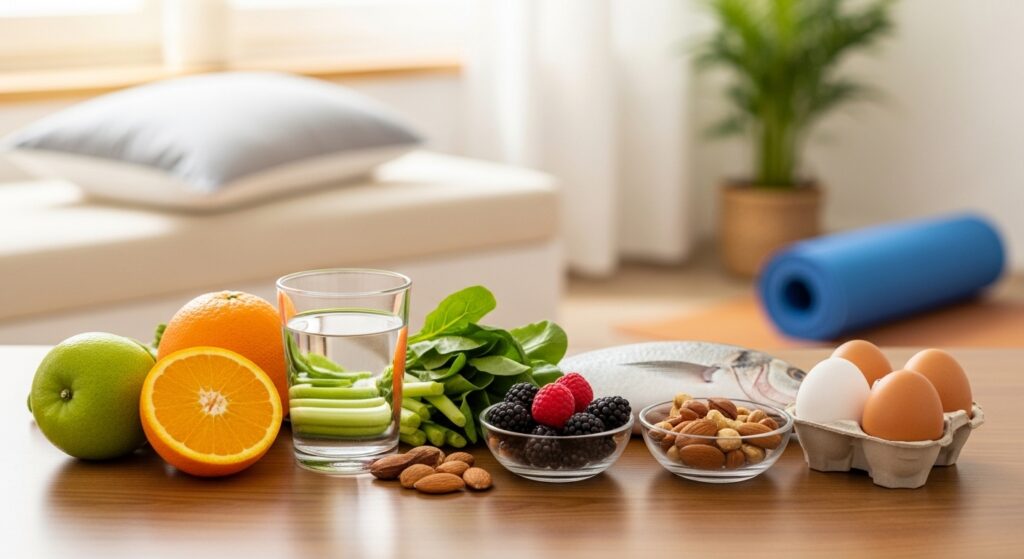
- Food. A balanced diet with enough protein, fruit and vegetables supports general health. Eating collagen — bone broth, fish, egg whites — does not directly maintain skin collagen; the body breaks collagen down into amino acids like any other protein. No food has been shown to plump skin.
- Water. Drinking water is good for your general health, but it does not directly hydrate skin, and it does not make serums or moisturisers work better. Topical moisture is what hydrates skin.
- Sleep. Adults need 7 or more hours of sleep a night. Poor sleep makes skin look tired, and good sleep supports general wellbeing. Sleep does not repair skin or rebuild collagen overnight.
- Stress. Stress can make skin feel worse. Relaxation supports wellbeing, but it does not restore volume or firmness.
What does not work
- “Plumping” serums that promise volume. Hydration is real; volume restoration is not. A serum cannot replace lost fat or collagen.
- Facial exercises. There is no good evidence that facial exercises firm skin or restore volume.
- Lymphatic drainage massage. Rollers and gua sha do not drain lymph. The claim has no good evidence behind it.
- Layering more products. More steps do not mean more plumping. A short routine — cleanse, hydrate on damp skin, moisturise, sunscreen — does the work.
Common mistakes to avoid
- Over-exfoliating. Too much exfoliation weakens the barrier, which makes skin look flatter and more irritated, not plumper.
- Skipping moisturiser or serum. Without sealing moisture in, hydration evaporates.
- Heavy oils or creams on oily skin. They can clog pores and cause breakouts. Use light, non-comedogenic products on oily areas.
- Skipping sunscreen. Sun is the main driver of collagen loss. A broad-spectrum sunscreen with SPF 30 or higher, reapplied every two hours when outdoors, is the single most effective anti-ageing step.
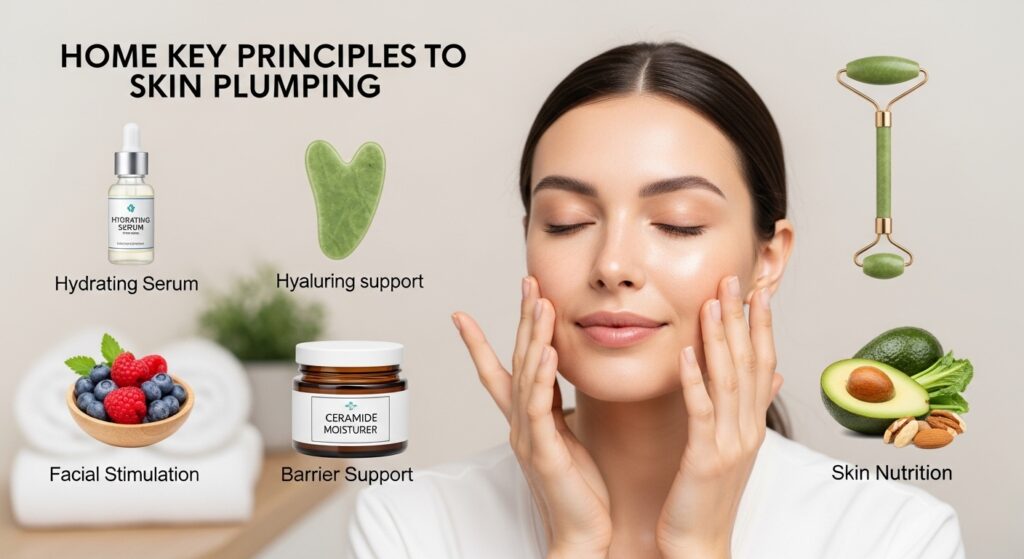
- Chasing one method instead of the combination. Hydration, barrier support and sunscreen together do more than any single product.
How often
- Daily: hydrating serum on damp skin, moisturiser, gentle massage if you enjoy it, sunscreen in the morning.
- Weekly: sheet masks or overnight hydrating masks once or twice a week.
- Adjust by skin type: sensitive skin needs fewer intensive sessions and the mildest products; dry skin needs more barrier support and more frequent moisturising.
Consistency matters more than intensity. A short routine used every day beats a long routine used for a week and abandoned.
Patch test
Test any new product before using it on your face. The American Academy of Dermatology recommends testing a new product before using it on your face: apply a small amount to a quarter-sized patch of skin on the inside of your arm or the bend of your elbow, twice a day for 7 to 10 days. If there is redness, itching or swelling, do not use it on your face. A 24-hour test can miss an allergic reaction, which often takes several days to appear — that is why this guide uses the AAD 7–10 day patch-test method.
When to get help
See a dermatologist if: volume loss or sagging is sudden or severe; dryness, redness or thinning does not improve with regular gentle care; or you are considering a professional treatment such as fillers, microneedling or laser. A professional can assess the skin properly and advise on treatments — which are medical procedures, not things to try at home.
Frequently asked questions
Q1: What are the best at-home methods for skin plumping?
Hydrating serums with hyaluronic acid on damp skin, sealed in with a barrier-repair moisturiser, plus daily sunscreen. That is the honest list. Massage and masks are comfort steps, not treatments.
Q2: How often should I do a plumping routine?
Daily hydration and moisturising, with weekly sheet masks or overnight masks if you enjoy them. Adjust for your skin type and sensitivity.
Q3: Can oily or sensitive skin benefit from home plumping?
Yes. Lightweight, non-comedogenic serums and moisturisers work well for oily skin, while fragrance-free and soothing ingredients suit sensitive skin.
Q4: How long does it take to see results?
Hydration can make skin look fuller within hours. Real changes in texture take weeks of consistent care, and no home method restores lost volume or firmness.
Q5: Do natural remedies plump skin?
No. Aloe, honey, oatmeal and cold-pressed oils can hydrate and soothe, but none of them restores volume or firms skin.
Summary
Plumping at home means hydration, not volume. Hyaluronic acid and glycerin on damp skin, sealed in with a moisturiser, make skin look fuller and smoother for a while. The barrier — ceramides, squalane, fatty acids — helps it hold that water. Massage, rollers and gua sha are comfort aids: they do not improve circulation, drain lymph, or help products absorb. No cream, serum or tool restores lost volume or firmness; that needs a medical procedure. Daily SPF 30+ is the single most effective step against further collagen loss. Patch test every new product for 7 to 10 days.
Sources: American Academy of Dermatology, 7 Rosacea skin care tips (patch-test method: apply a new product to a quarter-sized patch of skin on the inside of the arm for 7–10 days); American Academy of Dermatology, How to select anti-aging skin care products (broad-spectrum sunscreen, SPF 30 or higher, reapply every two hours outdoors). This is a researched overview, not a hands-on review.