Researched overview. This guide is based on published dermatology guidance, not on hands-on testing by BeautyKob. No product, supplement or brand is recommended, and no dose is given.
Table Of Content
Quick answer
Stressed skin is skin whose barrier is struggling: it feels tight, dry, red or stingy, and products that used to be fine start to irritate it. The cause is usually a mix of weather, pollution, too many actives, harsh cleansers, poor sleep and stress. Moisture therapy means stepping back to the basics — a gentle cleanse, hydration on damp skin, a plain moisturiser, and sunscreen in the morning — and stopping the things that are stripping the barrier. It does not reverse stress or repair skin overnight. It gives the barrier a chance to settle, which usually takes weeks, not days. This guide is general information, not medical advice.
Contents: What stressed skin is · What causes it · How moisture helps · The three layers · The short routine · What to stop using · Ingredients, honestly · Skin types · Natural options, honestly · Mistakes · How long it takes · Patch test · When to get help · FAQ
What stressed skin is
Stressed skin is not a diagnosis. It is a description of skin that is reacting more than usual: tightness after washing, dryness that will not settle, redness, stinging when you apply products, or breakouts alongside dryness. The common thread is a weakened barrier — the outer layer that keeps water in and irritants out. When the barrier is weakened, water escapes faster, irritants get in more easily, and the skin feels uncomfortable.
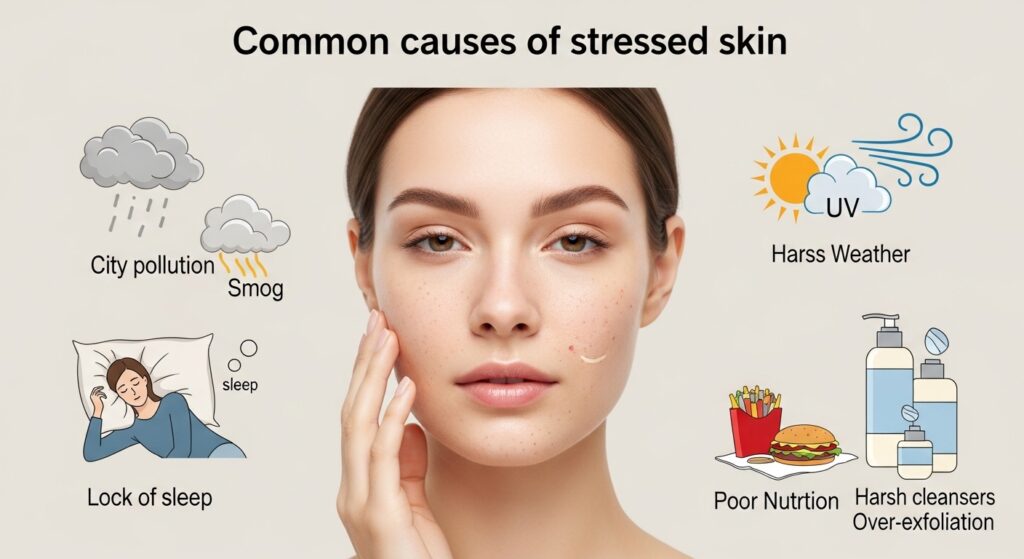
Stress, poor sleep, cold wind, dry air, pollution, sun, harsh cleansers, too many actives and over-exfoliation can all weaken the barrier. The relationship between stress and skin is real — stress can make skin feel worse and can aggravate conditions such as eczema — but the mechanism is complicated, and no moisturiser fixes stress itself. What moisture therapy can do is support the barrier while you remove the things that are stripping it.
If your skin is persistently red, sore, swollen or blistering, or you have a rash that does not settle, that is not ordinary stressed skin. Skip the extras and ask a dermatologist or pharmacist first.
How moisture helps
Moisture therapy works on three things, and only three:
- Hydration. Getting water into the top layer of skin so it feels less tight and looks less dull. Hyaluronic acid and glycerin are humectants: they draw water into the skin. They work best on damp skin, sealed in with a moisturiser.
- Barrier support. Replacing the fats the barrier needs — ceramides, fatty acids, squalane — so it can hold water and keep irritants out. A healthy barrier does not need to be “repaired” by a product; it needs to be left alone to recover while you stop stripping it.
- Calm. Using fewer, milder products so the skin is not irritated further. Calming ingredients such as aloe vera, colloidal oatmeal and niacinamide can feel soothing, but none of them is a treatment, and none of them replaces a proper routine.
What moisture therapy does not do: it does not reverse stress, heal the skin, or restore lost firmness. It supports the barrier. That is a modest claim, and it is the honest one.
The three layers
Think of moisture in three layers, applied in this order:
- Humectant. Draws water into the skin. Hyaluronic acid and glycerin are the usual ones. Apply on damp skin — a humectant on dry skin in dry air has little water to draw in.
- Emollient. Softens and smooths the surface. Squalane and fatty acids are light emollients. They fill the gaps between skin cells so the surface feels smoother.
- Occlusive. Seals water in. Rich creams, balms and plant oils sit on the surface and slow water loss. A few drops of a plain oil such as jojoba or rosehip can work as an occlusive step after moisturiser, especially on dry patches. Oils do not hydrate on their own — water moisturises, oil seals.
You do not need three separate products to get all three layers. Many moisturisers contain a humectant, an emollient and an occlusive in one jar. The point is the combination, not the number of bottles.
The short routine
Keep it to four steps. Add nothing else until your skin has been calm for at least two weeks.
Morning:
1. Gentle cleanser with lukewarm water, or just lukewarm water if your skin feels very dry.
2. Hydrating step on damp skin — a glycerin or hyaluronic acid serum, or a light hydrating toner.
3. Plain moisturiser, fragrance-free, while the skin is still slightly damp.
4. Broad-spectrum sunscreen, SPF 30 or higher. Sun makes stressed skin worse: it dries the surface, damages the barrier further, and slows recovery. Reapply every two hours when outdoors.
Evening:
1. Gentle cleanser to remove sunscreen, dirt and pollution.
2. Hydrating step on damp skin.
3. A slightly richer moisturiser if your skin is dry.
That is the whole routine. A soothing serum is optional, and only one new product should be added at a time.
What to stop using
Stopping things matters more than adding things. While your skin is stressed, stop:
- Strong acids and retinoids. Put them aside until the skin has been calm for at least two weeks. Then reintroduce one at a time, slowly.
- Harsh cleansers. Foaming cleansers with a high alcohol content, strong soaps, and anything that leaves your skin feeling tight after washing. If your skin feels tight after washing, your cleanser is too strong.
- Physical scrubs and over-exfoliation. No coarse scrubs, no daily exfoliation. Exfoliation is optional at the best of times; on stressed skin it is a mistake.
- Fragrance and essential oils. Fragrance is one of the most common irritants, and essential oils are common irritants too, especially on sensitive skin. Prefer fragrance-free products.
- Too many products at once. If you are using six actives, you cannot tell which one is causing the problem. Go back to three steps and rebuild slowly.
Ingredients, honestly
- Hyaluronic acid. A humectant that draws water into the skin. It hydrates; it does not plump skin permanently or repair the barrier.
- Glycerin. A humectant that also supports the barrier. One of the most reliable ingredients in skincare.
- Ceramides. Fats that help replace the skin’s barrier and keep irritants out. Useful in a moisturiser; they do not “repair” the barrier on their own.
- Squalane. A light emollient that softens without feeling heavy. Good for most skin types, including oily skin.
- Niacinamide. Supports the barrier and can calm redness. The evidence is modest — it is a useful ingredient, not a treatment.
- Aloe vera. Commonly used to soothe, with limited evidence for calming redness. Choose a fragrance-free, alcohol-free gel.
- Peptides. Often described as promoting healing or firmness. The evidence for peptides in skincare is thin, and no peptide product has been shown to heal stressed skin. Treat them as an optional extra, not a reason to buy a product.
- Colloidal oatmeal. Finely milled oats. The US FDA lists colloidal oatmeal as a skin protectant, and dermatology guidance recommends colloidal oatmeal baths as one option for relieving dry, itchy skin. It can help with comfort — it does not cure redness, dryness or eczema.
Moisture therapy by skin type
- Sensitive skin. Fragrance-free and soothing products with ceramides and aloe vera. No strong exfoliants, no alcohol-based formulas. Keep the routine at three steps.
- Oily skin. Lightweight gels and water-based moisturisers. Moisture does not make skin oilier — dehydrated skin can feel tight and look shiny at the same time. Use non-comedogenic products and skip heavy creams on the oily areas. A clay mask once in a while can help with congestion, but it is not a moisture treatment.
- Dry skin. Richer creams, occlusive balms and overnight hydrating masks give longer-lasting moisture. Use humectants on damp skin and seal them in well. Exfoliate rarely, to preserve the barrier.
- Combination skin. Use a zone approach: richer cream on the dry areas, lighter hydrator on the oily parts. One routine does not fit the whole face.
Natural options, honestly
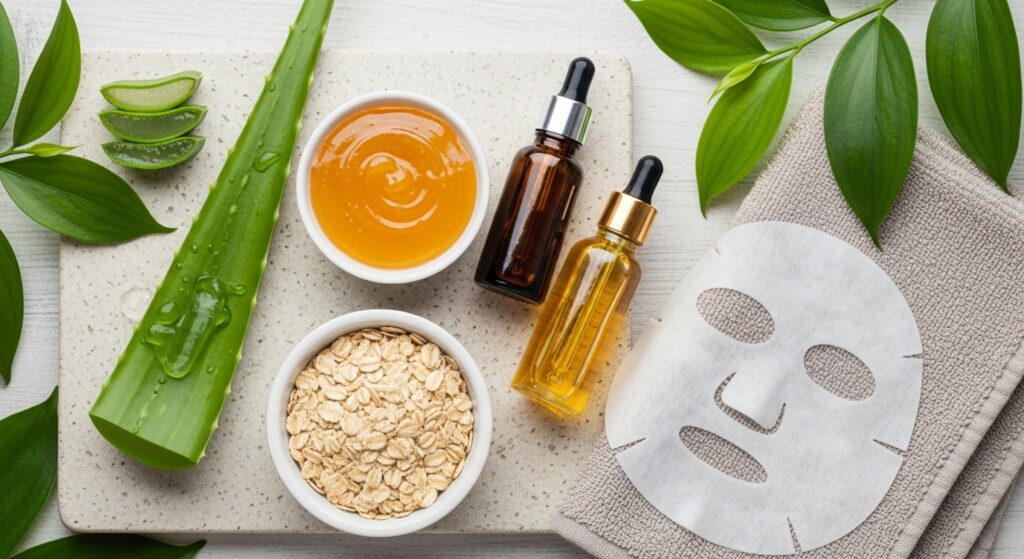
- Aloe vera gel. Cools and soothes irritated skin and hydrates. Limited evidence for calming redness; choose fragrance-free and alcohol-free.
- Honey masks. Honey is a humectant and can feel soothing on the skin. There is no good evidence it repairs the barrier or treats stressed skin. If you use one, patch test first — honey is not suitable for everyone.
- Oatmeal packs. Colloidal oatmeal can calm itching and dryness. A plain oatmeal mask is a comfort measure, not a treatment.
- Cold-pressed oils. Jojoba or rosehip oil can seal in moisture and support the barrier as an occlusive step. They do not hydrate on their own, and they do not repair the barrier.
- Hydrating sheet masks. Give a short-term moisture boost, especially to tired skin. The effect is temporary — a sheet mask does not change the barrier.
Natural options are a complement to a short routine, not a replacement for it. They give short-term comfort, not long-term repair.
Common mistakes to avoid
- Washing too much or with harsh products. Over-washing strips the barrier. Twice a day with a gentle cleanser is enough.
- Skipping moisturiser or serum. Stressed skin needs moisture sealed in, not left to dry out.
- Using many actives at once. More ingredients means more chances of a reaction, and you cannot tell which one caused it.
- Skipping sunscreen in the daytime. Sun worsens stressed skin and slows recovery.
- Ignoring sleep, stress and diet. Poor sleep and stress make skin feel worse, and a balanced diet supports general health. But drinking water does not directly hydrate skin, and no food treats stressed skin. Restricting foods on the basis of a skincare article is not good advice.
How long it takes
Be honest about timelines — there is no fixed schedule:
- Days: skin can feel softer and less tight once it is properly hydrated.
- Weeks: dryness and redness usually settle gradually if the routine stays short and gentle. Give each change at least two to four weeks before judging it.
- Longer: the barrier recovers slowly. If the skin is still red, sore or flaking after several weeks of gentle care, see a dermatologist — the cause may be a condition that needs treatment, not a better moisturiser.
Regularity matters more than intensity. A short routine used every day beats a long routine used for a week and abandoned.
Patch test
Test any new product before using it on your face. The American Academy of Dermatology recommends testing a new product before using it on your face: apply a small amount to a quarter-sized patch of skin on the inside of your arm or the bend of your elbow, twice a day for 7 to 10 days. If there is redness, itching or swelling, do not use it on your face. A 24-hour test can miss an allergic reaction, which often takes several days to appear — that is why this guide uses the AAD 7–10 day patch-test method.
When to get help
Ask a dermatologist or pharmacist if: your skin is persistently red, sore, swollen or blistering; you have a rash that does not settle; you have a skin condition such as eczema, rosacea or dermatitis that is getting worse; or you are unsure whether a product is safe for you. Bring the products you use, or photos of their ingredient lists.
Frequently asked questions
Q1: What is stressed skin?
Skin whose barrier is struggling — tight, dry, red or stingy, and easily irritated by products that used to be fine. It is a description, not a diagnosis.
Q2: Can moisture therapy fix stressed skin?
It supports the barrier while you stop the things stripping it. It does not reverse stress or repair skin overnight. Recovery takes weeks.
Q3: Should I stop using retinol and acids while my skin is stressed?
Yes — put them aside until the skin has been calm for at least two weeks, then reintroduce one at a time, slowly.
Q4: Does drinking more water hydrate my skin?
No. Drinking water is good for your general health, but it does not directly hydrate skin. Topical moisture — humectants on damp skin, sealed in with moisturiser — is what hydrates skin.
Q5: Do I need a separate product for each of the three moisture layers?
No. Many moisturisers contain a humectant, an emollient and an occlusive in one jar. The combination matters, not the number of bottles.
Summary
Stressed skin means a struggling barrier: tight, dry, red or stingy. The fix is a short routine — gentle cleanse, hydration on damp skin, plain moisturiser, SPF 30+ in the morning — and stopping the things that strip the barrier: strong acids, retinoids, harsh cleansers, scrubs and fragrance. Humectants draw water in, emollients soften, occlusives seal it in. Patch test every new product for 7 to 10 days. Give the routine two to four weeks before judging it, and see a dermatologist if the skin stays red, sore or swollen.
Sources: American Academy of Dermatology, 7 Rosacea skin care tips (patch-test method: apply a new product to a quarter-sized patch of skin on the inside of the arm for 7–10 days); American Academy of Dermatology, How to select anti-aging skin care products (broad-spectrum sunscreen, SPF 30 or higher). This is a researched overview, not a hands-on review.