Table Of Content
- Quick answer
- Why night works
- What stressed skin needs at night
- The night routine
- Overnight masks and sleeping packs
- Oils and balms for extra comfort
- Natural remedies, honestly
- Massage and tools at night, honestly
- Lifestyle habits that support overnight comfort
- Common mistakes to avoid
- Overnight comfort by skin type
- How long to see results
- Morning after
- Patch test
- When to get help
- Frequently asked questions
- Summary
Researched overview. This guide is based on published dermatology guidance, not on hands-on testing by BeautyKob. No product, supplement or brand is recommended, and no dose is given.
Quick answer
Night is a good time for comfort care, for a practical reason: you are not wearing sunscreen or makeup, the air is still, and you have time. A gentle night routine — cleanse, hydrate on damp skin, moisturise, and optionally an overnight mask — can leave skin feeling softer and less tight by morning. It does not repair skin overnight, rebuild collagen, or transform your face while you sleep. Night is a practical time to moisturise, not a biological repair window. This guide is general information, not medical advice.
Contents: Why night works · What stressed skin needs at night · The night routine · Overnight masks and sleeping packs · Oils and balms · Natural remedies, honestly · Massage and tools at night, honestly · Lifestyle · Mistakes · Skin types · How long it takes · Morning after · Patch test · When to get help · FAQ
Why night works
Night works for comfort care because of what is absent, not because of what happens while you sleep:
- No sun, so no sunscreen to reapply and no UV drying the surface.
- No makeup, pollution or wind to wash off during the night.
- Time. A night routine can be slow and unhurried, which makes it easier to do properly.
What night does not do is repair skin. The skin does not have a night shift that fixes damage, and sleep does not rebuild collagen. Sleep matters for general wellbeing — adults need 7 or more hours a night — and poor sleep makes skin look tired. But a night cream does not work harder because it is night. It works the same as a day cream: it hydrates and seals in moisture.
What stressed skin needs at night
Stressed skin at night needs the same three things it needs in the day, minus sunscreen:
- Hydration. Hyaluronic acid and glycerin draw water into the top layer of skin. Apply on damp skin, straight after cleansing.
- Barrier support. Ceramides, squalane and fatty acids help the barrier hold water and keep irritants out.
- Calm. Fewer, milder products. No strong acids, no high-strength retinoid, no harsh exfoliant at night while the skin is stressed. Nighttime routines should be restorative in the sense of gentle — not in the sense of repairing damage.
The night routine
Keep it to three steps. Add nothing else until your skin has been calm for at least two weeks.
- Gentle cleanser. Wash with lukewarm water and a mild, fragrance-free cleanser to remove sunscreen, dirt and pollution. Pat dry with a soft towel. Do not scrub.
- Hydrating serum on damp skin. A hyaluronic acid or glycerin serum, patted on gently. Patting does not make it absorb more — products sit on the skin’s surface and work from there — but it is a comfortable way to apply it without rubbing.
- Night cream or moisturiser. Choose by skin type: a light cream for oily skin, a richer cream or balm for dry skin. Getting this the right way round matters — rich balms on oily skin can clog pores and cause breakouts, while light creams on very dry skin may not seal in enough moisture.
That is the whole routine. An overnight mask or a few drops of oil are optional extras, not essentials.
Overnight masks and sleeping packs
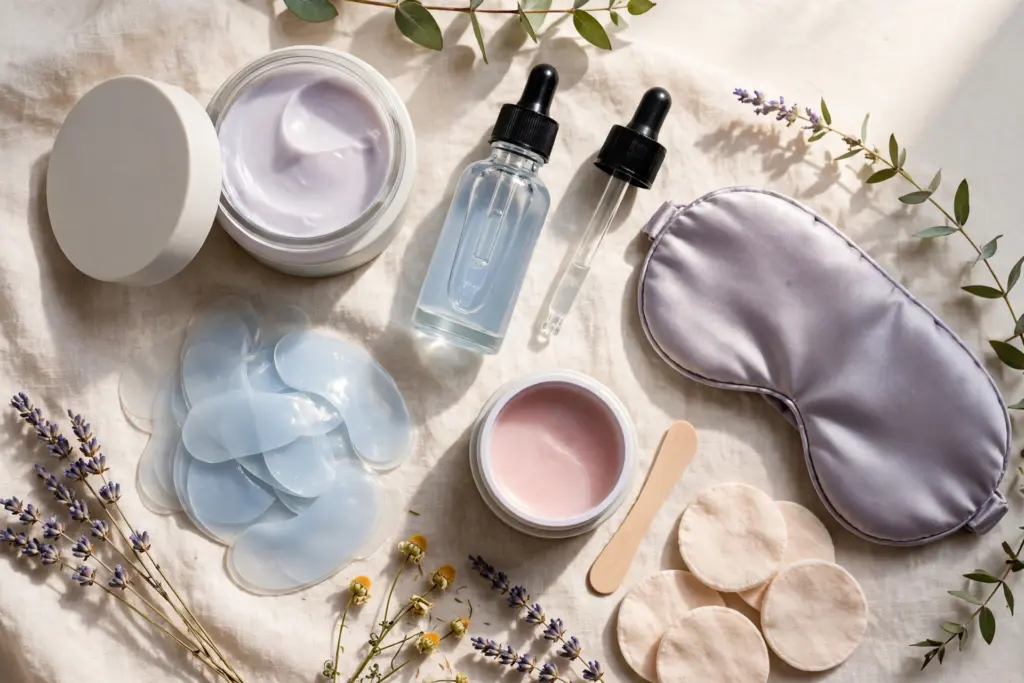
Overnight masks and sleeping packs are thicker moisturisers left on while you sleep. They give a high level of hydration and help the skin feel softer by morning. Sheet masks and cream-based sleeping packs with humectants and calming ingredients can restore moisture and reduce the look of redness.
- Use them 1–2 times per week. Daily use is not necessary, and more often does not give better results.
- They do not repair skin overnight. They hydrate and seal in moisture, which is what makes skin feel more comfortable in the morning.
- If a mask stings, itches or leaves your skin red, stop using it. Do not push through a reaction.
Oils and balms for extra comfort
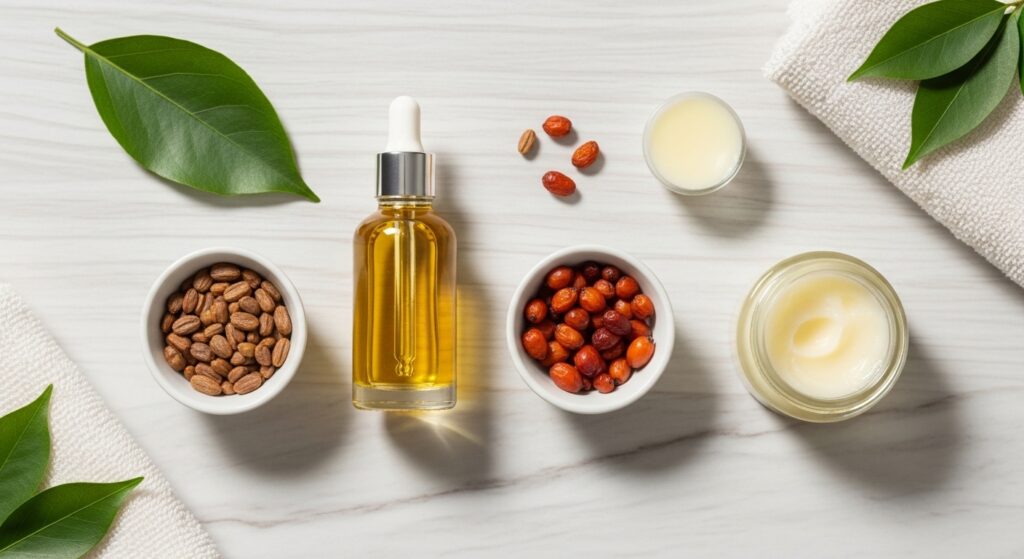
On very dry or very sensitive skin, a drop or two of a non-comedogenic oil such as jojoba or rosehip can seal in moisture and support the barrier. Apply it after moisturiser, so you are locking moisture in rather than locking it out. Do not use heavy oils on oily or acne-prone skin — they can cause breakouts. Oils do not hydrate on their own: water moisturises, oil seals.
Natural remedies, honestly
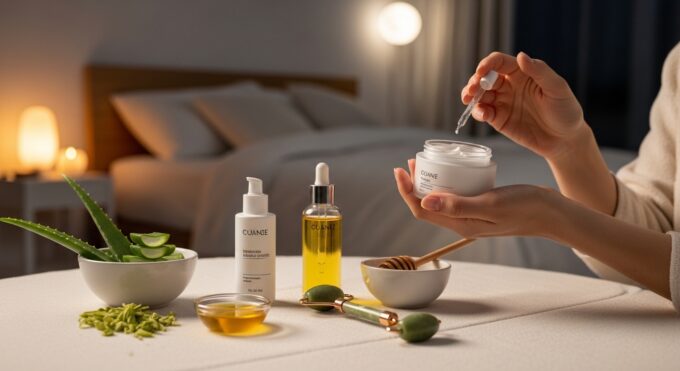
- Aloe vera gel. Moisturises and soothes sore skin, with limited evidence for calming redness. Choose fragrance-free and alcohol-free.
- Honey masks. Honey is a humectant with antioxidant compounds. There is no good evidence it repairs skin overnight or treats stressed skin.
- Oatmeal packs. Colloidal oatmeal can soothe irritation and retain moisture. A comfort measure, not a treatment.
- Cucumber, avocado or papaya masks. Feel cooling and hydrating. There is no good evidence they repair the barrier or change skin overnight. Papaya contains enzymes that can irritate sensitive skin — patch test first.
These are gentle, pleasant additions. None of them transforms skin overnight, and none of them is a substitute for a plain moisturiser.
Massage and tools at night, honestly
Facial massage at night feels relaxing, and that is the whole claim:
- Light upward strokes can ease tension and feel calming before sleep.
- What massage does not do: it does not improve product uptake, improve circulation, drain lymph, or make skin plump. There is no good evidence for any of those claims. Massage is a comfort aid.
- Lymphatic drainage massage is often described as reducing puffiness and purifying the skin. Rollers and gua sha do not drain lymph, and skin does not need purifying — the liver and kidneys handle waste removal. Puffiness in the morning is usually fluid and sleep position, not lymph.
- Gua sha stones, jade rollers and home microcurrent devices do not stimulate product uptake or promote circulation. They are comfort aids. Use light pressure, and clean tools before and after use so bacteria do not build up. No home method sterilises a tool — cleaning removes dirt and most microbes, but only an autoclave sterilises, and that is not a home process.
Lifestyle habits that support overnight comfort
- Sleep quality. Adults need 7 or more hours of sleep a night. Good sleep supports general wellbeing and makes skin look less tired. It does not repair skin or make collagen.
- Hydration. Drinking water is good for your general health, but it does not directly hydrate skin. Topical moisture is what hydrates skin.
- Nutrition. A balanced diet with enough protein, fruit and vegetables supports general health. Eating collagen-rich foods does not directly maintain skin collagen, and no food repairs skin overnight.
- Stress management. Meditation, yoga or relaxing can help you feel calmer, which supports wellbeing. Stress can make skin feel worse, but relaxation does not undo skin damage.
Healthy habits make the night routine work better in the sense that you feel better and sleep better — not because they change what the products do.
Common mistakes to avoid
- Using harsh acids or strong retinoids at night without preparation. While skin is stressed, put them aside until it has been calm for at least two weeks.
- Skipping moisturiser or serum. Without sealing moisture in, skin dries out overnight.
- Overloading the skin with many products. More products mean more chances of a reaction, and you cannot tell which one caused it.
- Dirty pillowcases. Change them regularly — a dirty pillowcase can carry bacteria and oil onto the skin.
- Expecting an overnight transformation. Night care builds up gradually. Waiting for a transformation leads to pushing harder and hurting the skin.
Overnight comfort by skin type
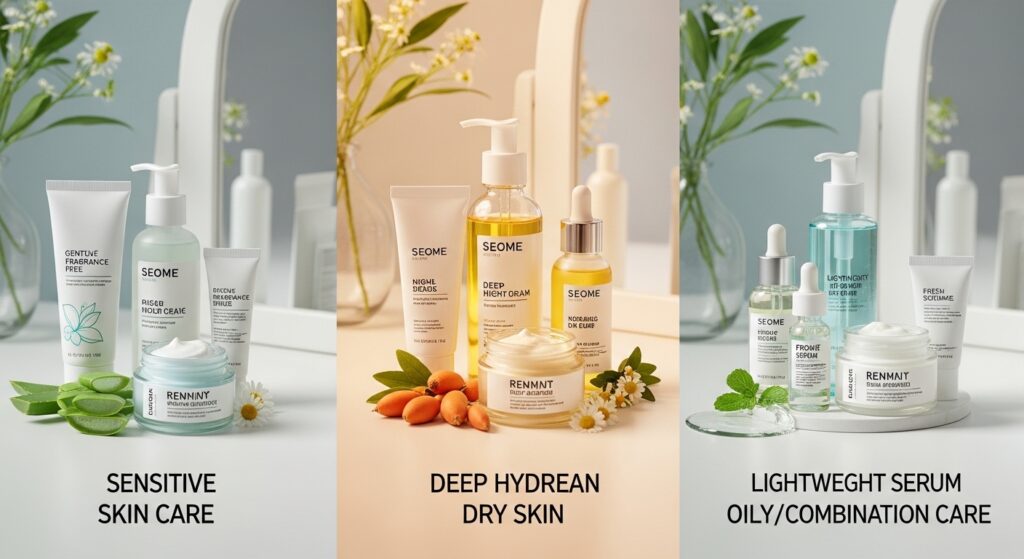
- Sensitive skin. Fragrance-free, soothing ingredients — ceramides, aloe vera, niacinamide. No strong actives, no essential oils.
- Dry skin. Richer creams, oils and night masks are highly hydrating. Seal humectants in well.
- Oily or combination skin. Light serums and moisturisers hydrate without causing breakouts. Put extra hydration on the drier areas, and keep heavy products off the oily areas.
How long to see results
- By morning: skin can feel less dry and more hydrated.
- Short-term (1–2 weeks): redness usually settles gradually and texture feels more even, if the routine stays short and gentle.
- Long-term (4+ weeks): a stronger barrier, smoother skin and a more comfortable feel — if the routine is kept up. There is no fixed schedule; give each change at least two to four weeks before judging it.
Consistency matters more than intensity. Night care builds up gradually and gives its best results over weeks, not in a single night.
Morning after
In the morning, wash gently with lukewarm water and a mild cleanser, apply a light moisturiser, and finish with a broad-spectrum sunscreen with SPF 30 or higher. Sun is the main driver of collagen loss, and sunscreen is the single most effective step against premature ageing. Reapply every two hours when outdoors. Ordinary indoor lighting does not meaningfully affect skin, and glass blocks UVB but not all UVA — so sunscreen matters near windows too.
Patch test
Test any new product before using it on your face. The American Academy of Dermatology recommends testing a new product before using it on your face: apply a small amount to a quarter-sized patch of skin on the inside of your arm or the bend of your elbow, twice a day for 7 to 10 days. If there is redness, itching or swelling, do not use it on your face. A 24-hour test can miss an allergic reaction, which often takes several days to appear — that is why this guide uses the AAD 7–10 day patch-test method.
When to get help
See a dermatologist if: irritation or redness persists despite regular gentle care; you have chronic dryness, eczema or dermatitis; or you want to combine overnight care with professional treatments such as peels, microneedling or clinical masks. A professional can assess the skin properly — peels, laser and microneedling are medical procedures, not things to try at home.
Frequently asked questions
Q1: What are the most effective overnight skin comfort solutions?
A gentle cleanser, a hydrating serum on damp skin, and a moisturiser suited to your skin type. Overnight masks once or twice a week are an optional extra. Massage is a comfort step, not a treatment.
Q2: Can sensitive skin benefit from overnight solutions?
Yes. Fragrance-free, soothing ingredients such as aloe vera, chamomile and niacinamide are a good fit — patch test anything new first.
Q3: How often should I use overnight masks?
1–2 times per week is enough. Daily hydration and moisturiser are enough for regular nights.
Q4: Do natural remedies really help overnight?
They can hydrate and soothe, but none of them repairs the barrier or transforms skin overnight. Aloe, honey, oatmeal and fruit-based masks are comfort measures, not treatments.
Q5: When should I see a dermatologist?
Persistent redness, dryness or irritation, or a chronic condition such as eczema or dermatitis, needs professional evaluation.
Summary
Night is a practical time for comfort care: cleanse gently, hydrate on damp skin, moisturise, and optionally an overnight mask 1–2 times a week. Massage, rollers and gua sha are comfort aids — they do not improve product uptake, circulation or lymph drainage. Night does not repair skin or rebuild collagen; it is a good time to moisturise because there is no sun, makeup or pollution to deal with. In the morning, cleanse gently and use SPF 30+. Patch test every new product for 7 to 10 days, and see a dermatologist if redness or irritation persists.
Sources: American Academy of Dermatology, 7 Rosacea skin care tips (patch-test method: apply a new product to a quarter-sized patch of skin on the inside of the arm for 7–10 days); American Academy of Dermatology, How to select anti-aging skin care products (broad-spectrum sunscreen, SPF 30 or higher). This is a researched overview, not a hands-on review.