Researched overview. This guide is based on published dermatology guidance, not on hands-on product testing by BeautyKob. No product in this guide was tested by us.
Table Of Content
Quick answer
Managing oily skin comes down to a few consistent habits: gentle twice-daily cleansing, one or two targeted actives (salicylic acid first, niacinamide if you like it), a light moisturiser you never skip, and daily sunscreen. The goal is not to eliminate oil — your skin type does not change. It is to keep shine and breakouts under control without irritating your skin.
If your skin is painful, swollen, blistering, or you have deep, painful spots that do not settle, skip the actives and ask a dermatologist or pharmacist first. This guide is general information, not medical advice.
Contents: Why skin becomes oily · Skin types · Ingredients · Morning · Evening · Weekly extras · Mistakes · Seasons · Professional options · When to get help
Why skin becomes oily
Oily skin results from oil glands producing more oil than the surface needs. The main drivers are mostly outside a person’s direct control: genetics, hormonal shifts (puberty, menstrual cycles, pregnancy), and heat and humidity. Oily skin is not a hygiene issue, and it is not caused by using too little product.
A note on “rebound oil”: you may have read that stripping the skin makes it produce more oil to compensate. That claim is disputed, not proven. The American Academy of Dermatology’s own guidance says a harsh face wash can irritate skin and trigger increased oil production, while other sources note there is no good evidence that skin compensates this way. This guide does not present either direction as proven fact. The reason to wash gently is simpler: over-washing irritates and dries the skin, and that is reason enough to avoid it.
Oily, combination, or dehydrated-oily?
A simple check: wash with a mild cleanser, pat dry, and wait about an hour without applying anything.
- Shine across the forehead, nose, chin and cheeks: genuinely oily skin.
- Shine only in the T-zone, with normal or dry cheeks: combination skin.
- Shiny on the surface but tight or flaky in patches: dehydrated-oily skin. This pattern responds better to added hydration than to stronger oil control.
This is a practical guide, not a diagnosis. If you are unsure, a dermatologist can advise.
Ingredients worth building a routine around
| Ingredient | What it does | What it does not do |
|---|---|---|
| Salicylic acid (0.5–2%) | Exfoliates inside the pore; the usual first choice for blackheads and breakouts | Does not shrink pores; can irritate if used too often |
| Niacinamide | Supports the skin barrier | The only good sebum study is 2% in Japanese subjects only (Draelos et al. 2006); 5–10% is not the studied range for oil, and no ingredient shrinks pores |
| Hyaluronic acid | Draws water into the skin without adding oil | Does not control oil production |
| Centella asiatica (CICA) | Limited evidence for soothing irritated skin | No good evidence for oil control |
| Benzoyl peroxide | Kills acne-causing bacteria; useful as a spot treatment | Does not reduce oil production; bleaches fabric |
| Clay (kaolin, bentonite) | Temporarily absorbs surface oil | Limited evidence; effect is temporary |
| Retinol | Supports cell turnover; can help breakouts over time | Takes months; can irritate; not for use in pregnancy |
Ingredients worth being careful with: heavy, greasy formulas can feel uncomfortable on oily skin, but petrolatum itself is generally considered non-comedogenic — the problem with heavy occlusive layers is texture and trapped sweat, not blackheads. Denatured alcohol strips the barrier and irritates. Fragrance is a frequent irritant for acne-prone skin. Physical scrubs with large abrasive particles can irritate and spread breakouts; the “micro-tears” claim often made about them has not been verified, so this guide does not repeat it. Vitamin C and niacinamide can be used together — modern formulas are generally compatible, and no special order is needed.
Patch test: before using a new product, apply a quarter-sized amount to the underside of your arm or the bend of your elbow, twice a day, for 7–10 days. If there is no reaction, it is usually safe to use on your face. Stop and wash off if you get redness, stinging, flaking or itching.
Morning routine
- Cleanse gently. A gentle, sulfate-free cleanser. Twice a day is enough — washing more often strips the barrier and irritates the skin.
- Treatment serum (optional). Niacinamide, or vitamin C if you use it. One serum at a time, not three.
- Moisturise lightly. A lightweight, oil-free moisturiser applied while skin is still slightly damp. Skipping moisturiser does not reduce oiliness — it leaves skin dehydrated and uncomfortable.
- Sunscreen — every morning. A fluid or gel-based SPF 30+ formulation. This is the step people with oily skin skip most often, usually because they worry it will add shine. A fluid or gel formula avoids most of that problem. The American Academy of Dermatology recommends daily sunscreen, including on cloudy days, and reapplying every two hours when outdoors, or after swimming or sweating. UV exposure worsens post-acne marks and accelerates collagen breakdown regardless of oil production.
Evening routine
- Double cleanse. A light oil or micellar water first, followed by your regular gel cleanser, to remove sunscreen and makeup residue that would otherwise sit in pores overnight.
- Exfoliate — two or three times a week. Salicylic acid for acne-prone skin, glycolic acid for texture. Keep exfoliation nights separate from retinol nights to avoid compounding irritation.
- Retinol (optional). Introduced gradually, starting a couple of nights a week at a low strength, on dry skin. It supports cell turnover and can help breakouts over time, but it takes months and can irritate. Do not use retinoids if you are pregnant or planning pregnancy — see the warning below.
- Moisturise. The same light moisturiser as in the morning.
Do not stack exfoliation and retinol on the same night. Both are effective on their own; combining them mainly increases irritation.
Weekly extras
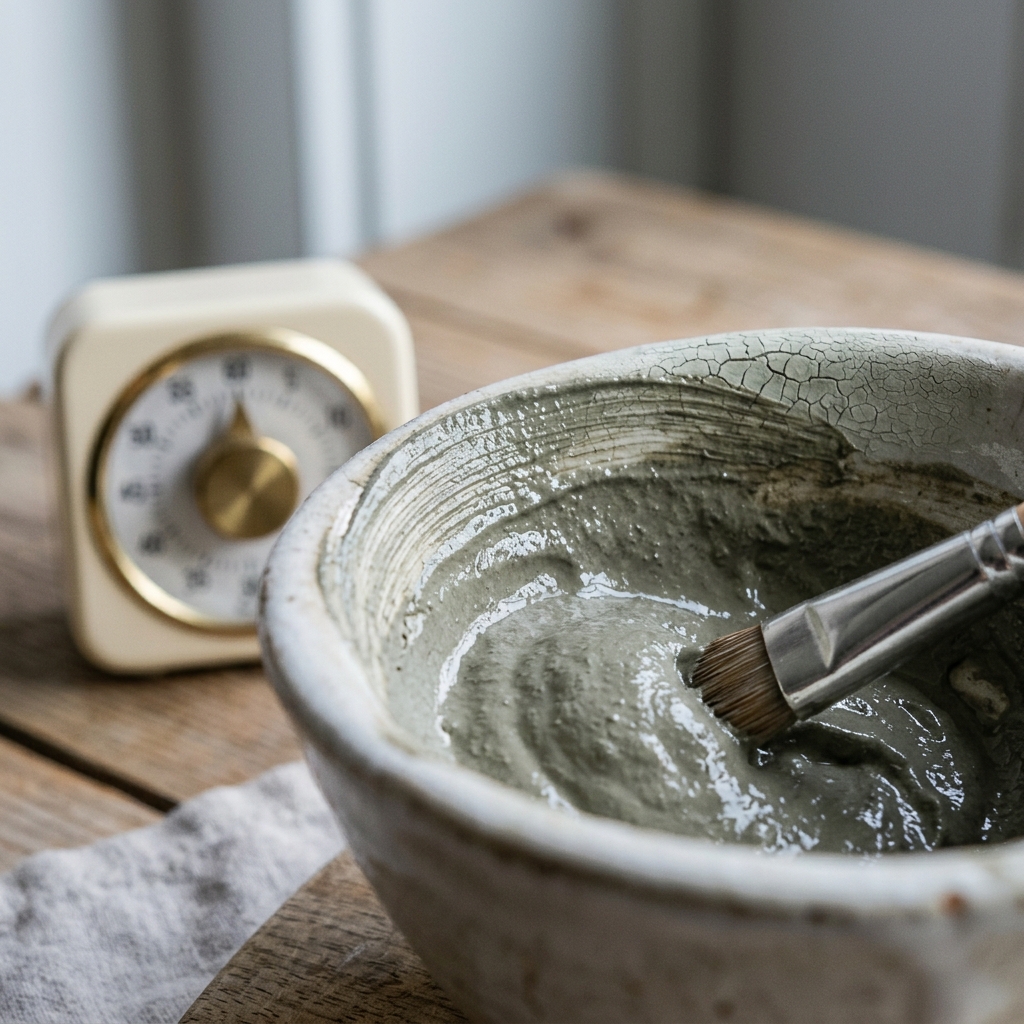
- Clay mask, once a week. Leave it on for 10–15 minutes to avoid over-drying. The oil-absorbing effect is temporary and the evidence is limited.
- A slightly stronger exfoliation once a week (for example 2% salicylic acid), separate from your twice-weekly routine exfoliation, can further improve texture over several weeks. Stop if your skin becomes irritated.
Mistakes that undo progress
- Over-washing or over-exfoliating. It strips the barrier and irritates the skin.
- Skipping moisturiser. It does not reduce oil — it leaves skin dehydrated.
- Touching your face through the day. Keep your hands off your face as a hygiene habit; it is not established that touching causes new breakouts.
- Going to bed with makeup or sunscreen still on.
- Choosing products with heavy silicones, alcohol or fragrance, even when they are marketed for oily skin.
- Changing products every few days, so you never learn what helps.
- Expecting a fixed result by a fixed date. Skin changes take weeks of steady use, and the timing varies from person to person.
Adjusting for the season
| Season | Adjustment | Reason |
|---|---|---|
| Summer | Reapply SPF every 2 hours; add blotting papers midday | Higher heat and humidity increase shine |
| Hot, humid climates | Keep exfoliation at two to three times a week; do not add extra clay masks | More frequent masking mainly adds irritation |
| Winter | Slightly richer gel moisturiser; add a hyaluronic acid serum | Less oil plus more dehydration risk |
Professional options — clinician first
Chemical peels, microneedling and some laser treatments are sometimes offered for pore appearance and oiliness. The evidence for them reducing oil production is limited, and they are not a substitute for a consistent home routine. A dermatologist should evaluate whether any of them fits your skin. Prescription-strength retinoids are generally more effective than over-the-counter retinol and are typically reserved for persistent cases that have not responded to a consistent home routine.
When to see a dermatologist
Painful nodular acne; breakouts that persist despite three or more months of consistent home care; post-inflammatory marks lasting several months, especially on deeper skin tones; or oiliness accompanied by other symptoms suggesting a hormonal or thyroid-related cause. Prescription options such as topical retinoids or azelaic acid are not available over the counter and require professional guidance.
Pregnancy and breastfeeding: Topical retinoids are not suitable during pregnancy, because there is a risk they may cause birth defects, according to NHS guidance. If you are pregnant, planning pregnancy or breastfeeding, avoid retinoids and ask a healthcare professional before starting any new active.
Summary
Gentle twice-daily cleansing, salicylic acid two or three times a week, a light moisturiser you never skip, and daily SPF 30+. Add retinol slowly if you want it, on separate nights from exfoliation. Keep the routine the same for a few weeks before judging it. If your skin becomes irritated, simplify back to cleanser, moisturiser and sunscreen.
Sources: AAD sunscreen guidance; AAD oily-skin guidance; Draelos et al. 2006 (niacinamide and sebum); NHS guidance on topical retinoids in pregnancy. This is a researched overview, not a hands-on review.