Researched overview. This guide is based on published dermatology guidance, not on hands-on product testing by BeautyKob. No product in this guide was tested by us, and no product is recommended.
Table Of Content
- Quick answer
- The evidence hierarchy
- Sunscreen — the most effective step
- Retinoids — the strongest topical for fine lines
- Vitamin C — antioxidant, not a miracle
- Alpha hydroxy acids — glycolic and lactic acid
- Barrier support — ceramides, hyaluronic acid, glycerin
- Peptides — thin evidence
- Bakuchiol — one small trial, not a retinol equal
- Niacinamide — barrier support, not a brightener
- Tranexamic acid — clinician-led for melasma
- Building a routine — one active at a time
- When to get help
- Summary
Quick answer
Most anti-ageing ingredients have thin evidence. The honest ranking is short:
- Sunscreen — the single most effective anti-ageing step. Daily use slowed skin ageing by 24% over 4.5 years in a randomised trial (Hughes et al. 2013).
- Retinoids — the strongest topical ingredient for fine lines, but they take 3–6 months and can irritate.
- Everything else — vitamin C, ceramides, hyaluronic acid, peptides, bakuchiol, niacinamide and tranexamic acid each have some role, but none of them reverses ageing, and none works without sunscreen.
If your skin is red, painful, flaking badly, or has a rash, blisters or open sores, skip the actives and ask a dermatologist or pharmacist first. This guide is general information, not medical advice.
Contents: The evidence hierarchy · Sunscreen · Retinoids · Vitamin C · Acids · Barrier support · Peptides · Bakuchiol · Niacinamide · Tranexamic acid · Building a routine · When to get help
The evidence hierarchy
Not all ingredients are equal, and the order matters more than the number of products you use:
- Strong evidence: daily broad-spectrum sunscreen; retinoids for fine lines and texture.
- Some evidence: vitamin C as an antioxidant; ceramides and moisturisers for barrier support; gentle chemical exfoliants for surface texture.
- Thin evidence: peptides, bakuchiol, and most botanical extracts for anti-ageing specifically.
- No good evidence: at-home devices and “firming” masks for lifting or firming skin.
No ingredient reverses dermal thinning or restores lost volume. Any product that promises that is overstating what topical skincare can do.
Sunscreen — the most effective step
Sun exposure is the largest avoidable cause of visible skin ageing. In a randomised trial, people who used sunscreen daily showed 24% less skin ageing over 4.5 years than people who used it only when they chose to (Hughes et al. 2013).
- Use a broad-spectrum sunscreen with SPF 30 or higher every morning, as the last step of your routine.
- The American Academy of Dermatology recommends daily use, including on cloudy days, because UV rays pass through cloud and windows, and reapplying every two hours when outdoors, or after swimming or sweating.
- UVA rays pass through glass, so indoor daylight still reaches your skin.
- Mineral filters (zinc oxide, titanium dioxide) sit on the skin surface; chemical filters absorb UV energy. Either type works if it is broad-spectrum SPF 30+ and you actually use enough of it. Choose the one you will wear every day.
Skipping sunscreen does not make your other products “entirely useless”, but it does undo much of their work: UV damage is the main thing they are trying to protect against.
Retinoids — the strongest topical for fine lines
Retinoids are vitamin A derivatives. Prescription tretinoin is the best studied; over-the-counter retinol is weaker and must be converted by the skin before it can act.
- What they do: speed up cell turnover and support collagen over time. Visible change in fine lines and texture usually takes 3–6 months of steady use.
- How to start: two nights a week, a pea-sized amount for the whole face, on dry skin. Build up slowly only if your skin stays comfortable. Expect some dryness or peeling at first — that is common, not a sign the product is working better.
- What they do not do: treat sagging skin, or remove deep wrinkles.
- Do not use retinoids and a strong exfoliant on the same night. Do not scrub before applying retinol — it increases irritation.
- Benzoyl peroxide and prescription retinoids: benzoyl peroxide can reduce tretinoin’s effectiveness if applied at the same time, so use them at different times of day.
- Pregnancy warning: topical retinoids are not suitable during pregnancy, because there is a risk they may cause birth defects, according to NHS guidance. If you are pregnant, planning pregnancy or breastfeeding, avoid retinoids and ask a healthcare professional first.
Vitamin C — antioxidant, not a miracle
Vitamin C (usually L-ascorbic acid) is an antioxidant and a cofactor for collagen synthesis in the body. That biochemical role is well established; it does not mean a vitamin C serum rebuilds collagen in your skin.
- What it does: helps protect against the oxidative damage that contributes to uneven tone and early ageing. It can help the look of dark spots over time.
- What it does not do: fade deep pigmentation quickly, or tighten skin.
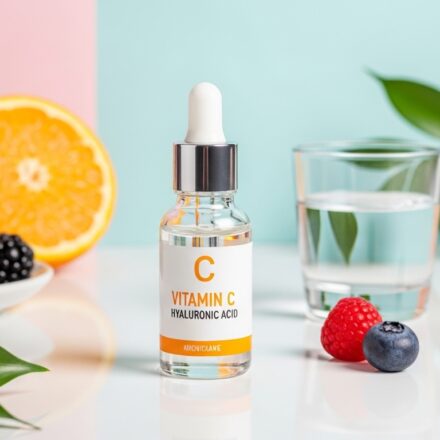
- Stability matters: L-ascorbic acid breaks down when exposed to light, heat and air. Look for opaque, air-restricted packaging, store it away from heat and light, and replace it when it turns dark orange or brown.
- Strength: products commonly list 5–20%. Start low. Formulation matters more than the number, and higher strengths mainly add irritation.
- Ferulic acid: in one study, adding 0.5% ferulic acid to 15% vitamin C + 1% vitamin E doubled the formula’s photoprotection (Lin et al. 2005, J Invest Dermatol). A combined C + E + ferulic acid serum is a reasonable choice, but it is still an antioxidant — not a substitute for sunscreen.
- Do not expect a fixed timeline. Tone changes take weeks of steady use and vary from person to person — no fixed timeline is promised here.
Alpha hydroxy acids — glycolic and lactic acid
AHAs dissolve the bonds between dead skin cells on the surface, which can make the surface look smoother and brighter.
- Glycolic acid has the smallest molecules of the common AHAs. It exfoliates the surface; it is not established that cosmetic-strength glycolic acid stimulates new collagen in the dermis.
- Lactic acid is gentler, with larger molecules and some hydrating properties. It is usually the better first choice for older or drier skin.
- How to start: once a week, a low concentration. Increase only if your skin stays comfortable. Stop if you get redness, stinging or flaking.
- Do not combine a strong AHA with a retinoid on the same night, and be careful around the eyes.
Barrier support — ceramides, hyaluronic acid, glycerin
Ageing skin loses lipids and water-holding capacity. Barrier support does not reverse ageing, but it keeps skin comfortable and makes everything else work better.
- Ceramides, cholesterol and fatty acids are the skin’s own barrier lipids. Moisturisers containing them help support the barrier. They do not “patch microscopic cracks immediately” or restore the barrier in days.
- Hyaluronic acid draws water into the outer skin layer. Apply it to damp skin and seal it with moisturiser. It is hydration, not a treatment on its own.
- Glycerin is a well-established humectant (Fluhr et al. 2008). It draws water into the outer skin layer and works alongside hyaluronic acid — it is not better than it, and it does not pull water up from the deep layers of the skin.
- Occlusives (petrolatum, rich balms) seal moisture in. They are useful for dry skin, especially in cold, dry weather. Heavy occlusive layers feel greasy on oily skin and can trap sweat in hot, humid weather, so they are a poor fit there.
Peptides — thin evidence
Peptides are short chains of amino acids. In theory they signal skin cells to build supportive proteins. In practice the evidence for anti-ageing is thin: mostly laboratory and small studies, with no good evidence that a peptide cream increases collagen in human skin or prevents sagging.
- Peptides are low-irritation, so they are a reasonable addition if you like the product — but do not pay a premium for them expecting firming results.
- Argireline (a neuropeptide) is sometimes sold as a topical alternative to injectables. It cannot replicate injections, and any softening of expression lines is modest at best.
Bakuchiol — one small trial, not a retinol equal
Bakuchiol is a plant-derived compound often sold as a “retinol alternative”. The evidence is one small 12-week trial in 44 patients (Dhaliwal et al. 2019), which found similar improvement in fine lines to retinol 0.5% with less irritation. That is promising, not proven — one small trial does not make it equal to retinol.
- Bakuchiol safety in pregnancy is not established. Do not use it as a “safe in pregnancy” substitute for retinol. If you are pregnant, ask a healthcare professional before using any active.
Niacinamide — barrier support, not a brightener
Niacinamide (vitamin B3) supports the skin barrier and can help the look of redness and uneven texture. The evidence for it fading dark spots is limited, and there is no good evidence that concentrations above 10% add benefit — they mainly add irritation risk. The one good study on niacinamide and oil found 2% reduced sebum in Japanese subjects only (Draelos et al. 2006).
Tranexamic acid — clinician-led for melasma
Tranexamic acid is sometimes used for melasma (dark patches, often linked to hormones or sun). Topical tranexamic acid has limited evidence. Melasma treatment is clinician-led: if dark patches bother you, a dermatologist can advise on options, which may include prescription treatments and strict sun protection. Do not expect a cosmetic product to treat melasma on its own.
Building a routine — one active at a time
A workable routine is short:
Morning: gentle cleanser → moisturiser → broad-spectrum SPF 30+ (last step). Vitamin C, if you use it, goes before moisturiser.
Night: gentle cleanser → one active (retinoid, or an AHA on a different night) → moisturiser.
Rules that keep it safe:
- Start one new active at a time, and give it a few weeks before adding another.
- Do not mix strong actives on the same night.
- Keep the routine the same for a few weeks before judging it. No ingredient gives a fixed result by a fixed date.
Patch test: before using a new product, apply a quarter-sized amount to the underside of your arm or the bend of your elbow, twice a day, for 7–10 days. If there is no reaction, it is usually safe to use on your face. Stop and wash off if you get redness, stinging, flaking or itching.
When to get help
Ask a dermatologist or pharmacist if: your skin is persistently red, sore, swollen or blistering; you have a rash that does not settle; you have a skin condition such as eczema, rosacea or acne that is getting worse; or you are unsure whether an active is safe for you. For procedures, devices or prescription treatments, a clinician should advise first — this guide does not recommend any of them.
Summary
Sunscreen every morning is the single most effective anti-ageing step. Retinoids are the strongest topical for fine lines, starting slowly at two nights a week, and they take 3–6 months. Vitamin C, ceramides, hyaluronic acid and glycerin support the skin; peptides and bakuchiol have thin evidence. No ingredient reverses ageing, and no product works without sun protection.
Sources: Hughes et al. 2013 (daily sunscreen and skin ageing); Lin et al. 2005 (ferulic acid, vitamin C and vitamin E); Dhaliwal et al. 2019 (bakuchiol); Draelos et al. 2006 (niacinamide and sebum); Fluhr et al. 2008 (glycerin as a humectant); AAD sunscreen guidance; NHS guidance on topical retinoids in pregnancy. This is a researched overview, not a hands-on review.