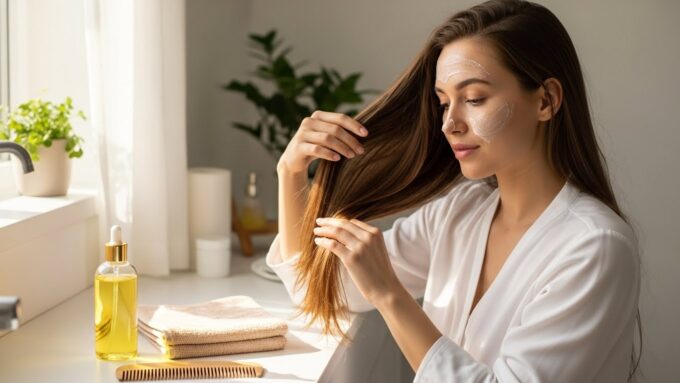
This article is a researched overview. It is based on published guidance from dermatology and health organisations, not on personal testing. It does not replace advice from a dermatologist or a doctor.
Table Of Content
A good hair-care routine does not need many products. It needs a few habits, done regularly: wash the scalp, condition the lengths, dry gently, detangle carefully, and protect the hair from heat and pulling. That is most of it. The rest — oils, masks, special treatments — is optional, and none of it replaces the basics.
What a routine actually needs to do
Hair is not alive. The part you can see — the hair shaft — is made of keratin, and once it is damaged it cannot be repaired. It can only be protected, or trimmed. The scalp, on the other hand, is living skin, and it is where new hair grows. So a routine has two jobs: keep the scalp clean and healthy, and stop the lengths from breaking.
That is why most of the advice in this article is about being gentle, not about buying more products.
Step 1: Washing
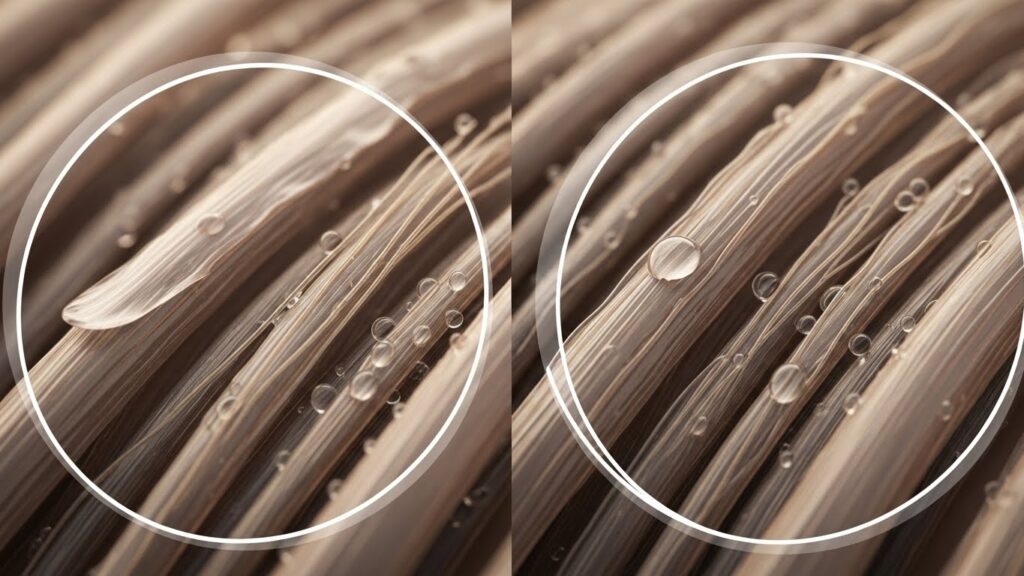
How often? There is no single right answer. It depends on how oily your scalp gets, your hair type, how much you exercise, and how much styling product you use. Some people need to wash daily; others are comfortable washing two or three times a week. Wash when your scalp feels oily or dirty, not on a fixed schedule someone else set for you.
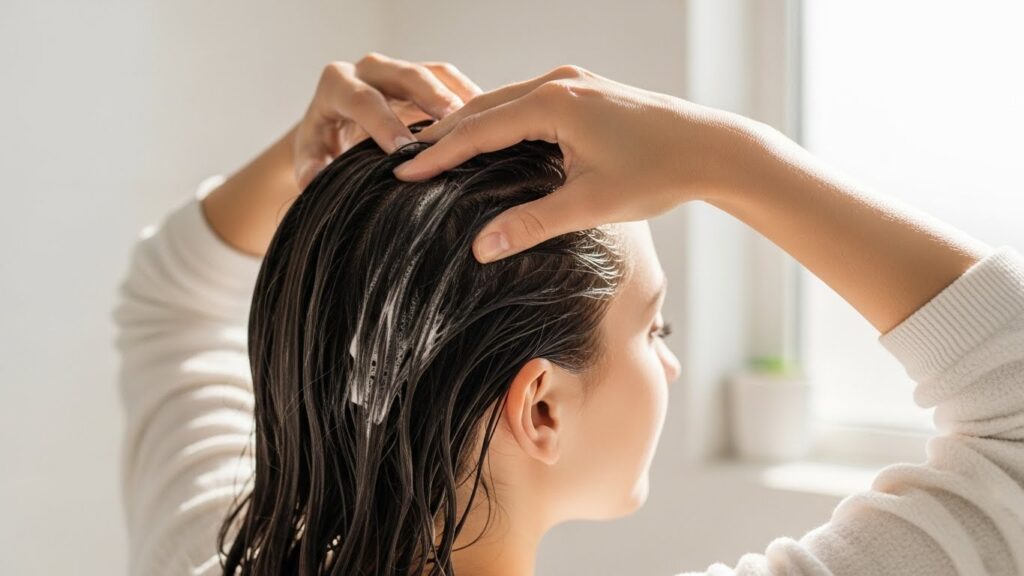
How to wash. Shampoo is for the scalp, not the lengths. Work it into the scalp with your fingertips — not your nails — and let the lather run down the lengths as you rinse. You do not need to scrub the lengths; that roughs up the hair and causes tangles.
A note on over-washing. Washing too often, or with a very harsh shampoo, can leave the scalp dry and irritated and the hair feeling stripped. Some people say this makes the scalp produce more oil to compensate, but that claim is disputed — there is no good evidence that the scalp “compensates” by making more oil. The real reason to avoid over-washing is simpler: it dries and irritates the scalp, and it damages the hair. If your scalp feels dry or tight after washing, try washing less often or switching to a gentler shampoo.
What about a cold-water rinse? You may have heard that rinsing with cold water flattens the hair and removes frizz. There is no good evidence for that. Use water at a comfortable temperature. Very hot water is not helpful — it can dry the scalp and the hair — but lukewarm water is fine.
Step 2: Conditioning
Conditioner is for the lengths, not the roots. Apply it from about mid-length to the ends, leave it for a minute or two, and rinse it out. Putting conditioner on the scalp can leave it feeling greasy and weighed down.
If your hair is very dry or damaged, a leave-in conditioner or a small amount of hair oil on the ends can help it feel smoother. Before using a new leave-in product or hair oil, patch test it: put a small amount on the inside of your arm or the bend of your elbow, twice a day for 7 to 10 days. If the skin turns red or itchy, do not use it. (This is the American Academy of Dermatology patch-test method.) Neither of these repairs damage — they coat the hair and reduce friction, which is what stops further breakage.
Step 3: Drying
Wet hair is fragile. When hair is wet it stretches more easily and breaks more easily, so this is the step where most damage happens.
- Pat, don’t rub. Press the water out gently with a towel. Rubbing hard with a towel roughs up the hair and causes tangles and breakage.
- Air-dry where you can. Letting hair dry on its own is the gentlest option.
- If you use a hair dryer, use the lowest heat setting that gets the job done, and keep the dryer moving. Heat damage builds up over time, so lower heat and shorter drying are both worth it.
- Heat protectant products reduce some of the damage from hot tools, but they do not make unlimited heat safe. The safest approach is still less heat, less often.
Step 4: Detangling
Detangle gently, starting from the ends and working your way up. This matters most when hair is wet, because wet hair is at its most fragile. A wide-tooth comb is a good tool for wet hair. A brush pulled hard through wet hair will snap strands.
If your hair tangles easily, a little leave-in conditioner or detangling spray before you comb can help. Brushing dry hair is fine for most people, but yanking through knots is not — work through them slowly.
Step 5: Styling and protection
Tight hairstyles. Hairstyles that pull the hair tightly — tight ponytails, braids, buns, extensions — can damage the hair at the root. Over time, constant pulling can cause a type of hair loss called traction alopecia. In the early stages it can reverse if the pulling stops, but if it goes on for a long time the damage can become permanent. Wear looser styles, vary where you tie your hair, and give your scalp a break.
Sleep. A silk or satin pillowcase may reduce friction on the hair overnight, which can mean less tangling and breakage. The evidence for this is weak, but it is a harmless thing to try if your hair tangles a lot at night.
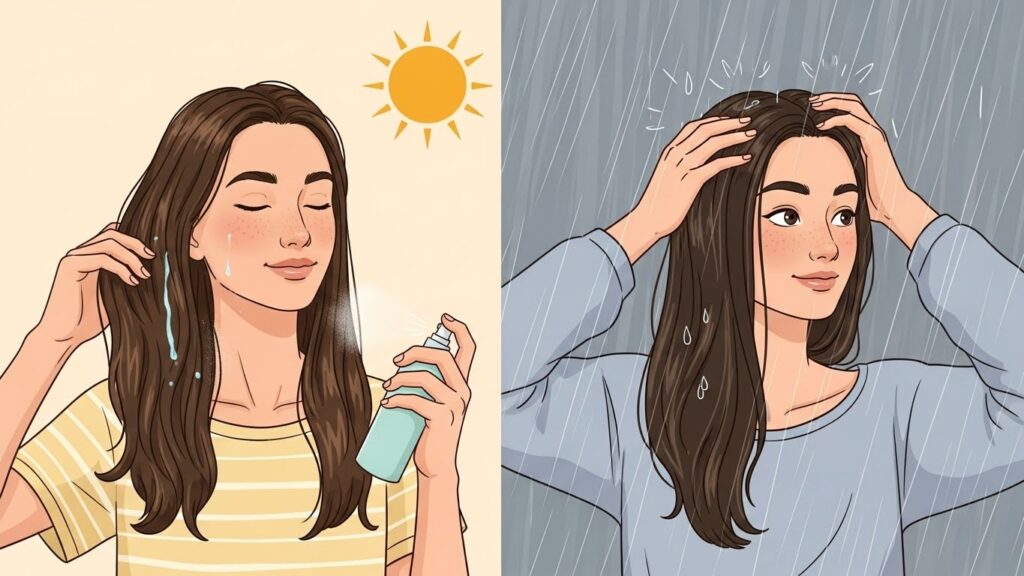
Sun and swimming. Sun and chlorinated water dry the hair out. A hat in strong sun and a rinse with fresh water after swimming are simple, sensible habits. The scalp is skin too — an exposed parting can sunburn, so use broad-spectrum SPF 30+ sunscreen on it, or cover it with a hat.

What will not work
A few things that are often promised in hair-care articles do not have good evidence behind them:
- “Hair training” — the idea that washing less will teach your scalp to make less oil. There is no good evidence for this.
- Cold-water rinses for shine or frizz, as above.
- Expensive shampoos that promise to “repair” hair. A damaged hair shaft cannot be repaired by any shampoo. Products can make it feel smoother and stop further damage, but they cannot undo damage that is already there. The only real fix for split ends is a trim.
- Any routine that promises visible results in two or three weeks. Hair grows about 1 cm a month. A new routine needs months before you can fairly judge whether it is helping, and even then the change is usually that the hair breaks less — not that it grows faster.
A simple weekly routine
This is a starting point, not a rule. Adjust it to your hair:
- Wash two or three times a week, or as often as your scalp needs it. Shampoo the scalp, conditioner on the lengths.
- Detangle gently after washing, from the ends up.
- Air-dry where you can; use the lowest heat setting when you cannot.
- Once a week, if your hair is dry, use a conditioning mask or a small amount of oil on the ends — not as a treatment, but as extra conditioning.
- Every day, avoid tight hairstyles and rough brushing.
When to see a doctor
A routine cannot fix hair loss that has a medical cause. If you notice sudden hair loss, patchy bald spots, a rapidly widening part, scalp pain, itching, scaling or redness, or hair loss together with other symptoms such as fatigue or weight changes, see a doctor. This is covered in more detail in our article on hair fall.
The short version
Wash the scalp, condition the lengths, dry gently, detangle from the ends up, keep heat low, and avoid tight hairstyles. Do that consistently for a few months and you will know more about your own hair than any product label can tell you.
Sources: American Academy of Dermatology (hair loss and shedding); Indian Association of Dermatologists, Venereologists and Leprologists (hair care basics); NHS 111 Wales (hair loss).