Researched overview. This guide is based on published dermatology guidance, not on hands-on testing by BeautyKob. No product, supplement or brand is recommended, and no dose is given.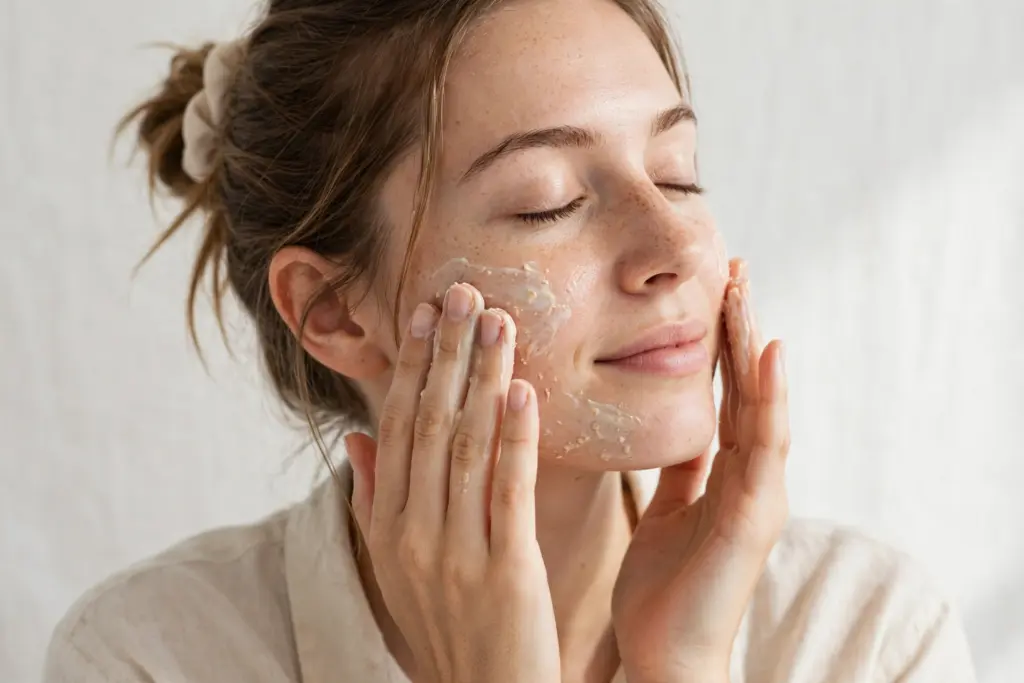
Table Of Content
Quick answer
“Refining” skin appearance means three modest things: a smoother surface, a more even tone, and skin that reflects light evenly so it looks brighter. That is what a good routine can do. It cannot shrink pores, rebuild collagen, erase lines, or change the structure of your skin — and no cream, mask or home remedy does those things either. The routine that helps is short: gentle cleansing, hydration on damp skin, a plain moisturiser, and broad-spectrum sunscreen SPF 30 or higher every morning, with gentle exfoliation once or twice a week. Home remedies can be pleasant and soothing, but they are comfort measures, not treatments. This guide is general information, not medical advice.
Contents: What “refining” means · What it cannot do · The routine that matters · Ingredients, honestly · Natural options, honestly · What does not work · Food, water and sleep, honestly · Habits that help · When to get help · Patch test · FAQ
What “refining” means
Skin looks refined when three things line up:
- A smooth surface. Dead cells sit on the surface and scatter light unevenly, which reads as dullness and roughness. Gentle exfoliation and hydration make the surface smoother, so light reflects more evenly.
- An even tone. Dark spots and uneven colour come mostly from sun exposure and from inflammation after spots. Tone changes slowly, over weeks and months, and only with sun protection in place.
- Hydration. Dehydrated skin looks flat and tired. Hydrated skin looks softer and brighter, because water in the upper layer of the skin smooths the surface.
That is the honest scope of “refining”. It is about the surface of the skin, not the structure underneath it.
What it cannot do
Be wary of any product or routine that promises these things:
- Shrink pores. Pores have no muscles and cannot open, close, tighten or shrink. A pore can look less obvious when the skin around it is clean and hydrated, but its size does not change.
- Rebuild collagen. Collagen sits in the deeper layer of the skin. No cream, serum or home remedy reaches it in a meaningful amount. Vitamin C and retinoids support the skin’s own processes, but they do not rebuild collagen on a schedule.
- Erase lines or firm skin. Fine lines soften with hydration and with retinoids used slowly over months. No home remedy, mask or device firms skin or removes lines.
- “Detox” the skin. Skin does not need detoxing. The liver and kidneys handle waste removal; a mask or a juice does not draw toxins out of the skin.
- Permanent results. There is no permanent change from a routine. Skin keeps changing with age, sun and weather, and the routine has to be kept up.
The routine that matters
Everything in this guide comes back to four steps, plus gentle exfoliation:
- Cleanse gently. Lukewarm water and a mild cleanser, twice a day. Skin should feel soft afterwards, not tight. For oily skin, a foaming or gel cleanser; for dry skin, a cream cleanser; for sensitive skin, a low-pH gentle cleanser.
- Hydrate on damp skin. A humectant — hyaluronic acid or glycerin — applied while the skin is still slightly damp, so it has water to draw in.
- Moisturise. A plain moisturiser seals the hydration in and supports the barrier. Ceramides, glycerin and hyaluronic acid are the ingredients that matter most. A light gel for oily skin, a richer cream for dry skin.
- Protect in the morning. Broad-spectrum sunscreen, SPF 30 or higher, every morning, reapplied every two hours when outdoors, or after swimming or sweating. Sunscreen is the single most effective step against premature ageing: in a 4.5-year randomised trial, people who used broad-spectrum sunscreen daily had 24% less skin ageing than people who used it only when they chose.
- Exfoliate gently, once or twice a week at most. A low-strength chemical exfoliant or an enzyme mask is enough. Stop if skin feels tight, stings, flakes or looks red. Exfoliation removes surface cells; it does not “deep clean” the skin and it does not make products absorb better.
Double cleansing — an oil-based cleanser followed by a water-based one — is useful at night if you wear makeup or sunscreen, and unnecessary in the morning.
Ingredients, honestly
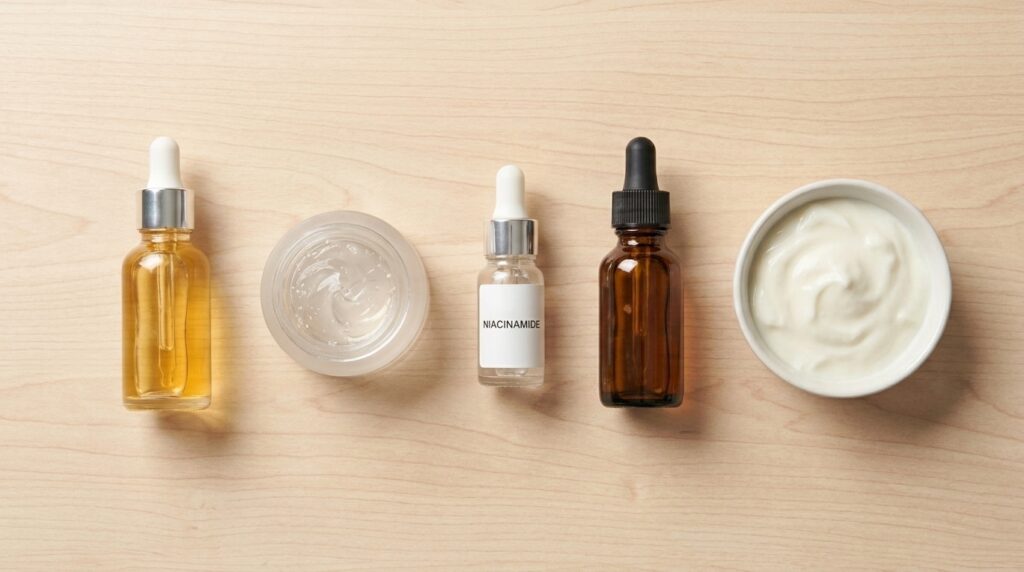
| Ingredient | What it can do | What it cannot do |
|---|---|---|
| Vitamin C | Antioxidant; a cofactor for collagen synthesis in the body; can help the look of uneven tone over time | Firm skin, fade spots on a fixed timeline, or “lighten” skin |
| Retinoids (retinol; prescription tretinoin) | Strongest evidence of any topical for fine lines and texture, over months | Work in weeks; safe in pregnancy (they are not — avoid retinoids if pregnant, planning pregnancy or breastfeeding, and ask a healthcare professional) |
| Hyaluronic acid | A humectant that draws water into the upper layer of skin | Treat skin on its own; it is hydration, not a treatment |
| Niacinamide | Supports the barrier and can help the look of redness and uneven texture; usually well tolerated | Tighten pores or reduce oil production on a schedule |
| Ceramides | Help rebuild the skin barrier and seal in moisture | Repair a damaged barrier on their own |
| Peptides | Popular and a reasonable addition | The evidence is thin; no published evidence that they lift or firm skin |
| Collagen (in a cream) | Feels moisturising on the surface | Reach the deeper layer of skin; topical collagen cannot get to that level |
| Probiotics (in skincare) | A growing area of research | No established evidence that probiotic skincare treats skin |
Start one active at a time, slowly. Retinol: two or three nights a week, a pea-sized amount for the whole face, increasing only if skin stays comfortable after a few weeks. Give it three to six months before judging fine lines.
Natural options, honestly
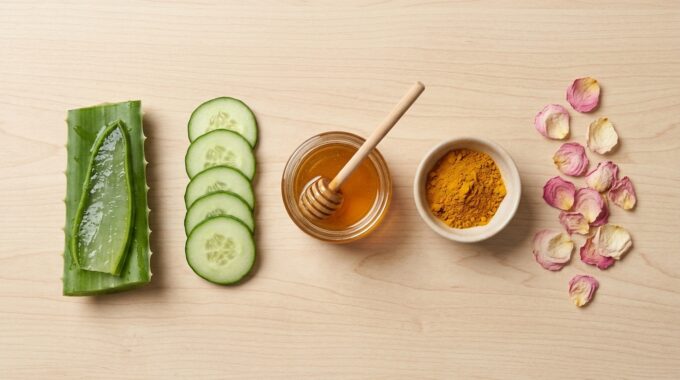
- Aloe vera gel. Cools and soothes, and hydrates lightly. Limited evidence for calming redness; choose fragrance-free and alcohol-free.
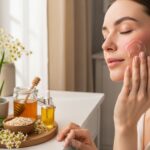
- Honey masks. Honey is a humectant and can feel soothing. There is no good evidence it repairs the barrier or refines skin long term. Patch test first.
- Turmeric. Used traditionally for brightness; it can stain skin and clothing. There is no good evidence it lightens skin tone. Use a small amount in a mask, and stop if it irritates.
- Coconut oil. The fatty acids soften dry skin and it works well on the body. It can clog pores on the face, especially oily or acne-prone skin, so it is not a good face moisturiser for most people.
- Cucumber. High in water; cool slices feel soothing and can make the eye area look less puffy for a short time. That is a comfort effect, not a treatment.
- Yogurt. Contains lactic acid, which exfoliates gently, and feels soothing. A plain yogurt mask is a mild, short-term step, not a treatment.
- Papaya. Contains papain, an enzyme that sheds dead surface cells. It can make texture feel smoother briefly; it does not change skin structure.
- Oats. Colloidal oatmeal can calm itching and dryness; the US FDA lists colloidal oatmeal as a skin protectant. Ground oats and water make a gentle scrub for sensitive skin, used rarely.
- Rose water. Feels refreshing and hydrating. It does not brighten or calm skin in any proven way.
- Gram flour (besan). Absorbs excess oil and exfoliates gently. A traditional base for face packs; it does not balance oil production or brighten skin on a schedule.
- Orange peel. Dried and ground peel contains vitamin C and natural oils. It is a mild exfoliant at most; it does not make skin more beautiful on a schedule.
- Saffron. Used traditionally for even tone. There is no good evidence it brightens skin or evens tone.
- Neem. Used traditionally for spots. There is no good evidence neem paste or neem water treats acne, and it can irritate. Do not use it on active acne.

Lemon juice — do not put it on your skin
Lemon juice is often recommended for dark spots, and it is dangerous advice. Lemon and lime juice contain furanocoumarins, which react with sunlight and can cause phytophotodermatitis — a painful rash with redness, blistering and dark marks that can last for weeks. Diluting the juice does not make it safe. Do not put lemon or lime juice on your skin, and do not use any product that tells you to.
What does not work
Some home remedies are worse than useless:
- Sugar scrubs. Sugar crystals are sharp and coarse; they can scratch the surface and irritate the skin. A gentle chemical exfoliant or enzyme mask is safer.
- Toothpaste. Menthol and other ingredients in toothpaste damage the skin barrier and strip moisture. Never use it as a spot treatment.
- Baking soda. It disrupts the skin’s pH and removes its protective layer. Repeated use irritates more than it helps.
- Soap on the face. Bar soap is alkaline and upsets the skin’s acid mantle, leaving skin dry and irritated over time. Use a gentle cleanser made for the face.
- Hot water. Hot water strips natural oils and dries the skin out. Lukewarm water cleans just as well and does not damage the barrier.
- Body lotion on the face. Body lotions are thicker and often heavily fragranced; they can clog facial pores. Use a moisturiser made for the face.
- Facial massage and facial exercises for firming. Massage feels pleasant and can temporarily reduce puffiness, but it does not increase circulation in a meaningful way, does not drain lymph, and does not firm skin or reduce lines. Keep it as a comfort step only.
- Skin-plumping masks. A hydrating mask can make skin look fuller for a few hours because the surface is hydrated. That is a temporary effect, not a change in the skin.
Food, water and sleep, honestly
- Food. A balanced diet with enough protein, healthy fats and a variety of fruit and vegetables supports general health. It does not directly refine skin. Foods that contain collagen, such as fish, eggs or bone broth, do not directly maintain collagen in the skin — the body breaks collagen down during digestion. Omega-3 fatty acids, vitamin C, vitamin E, lycopene and polyphenols are useful nutrients in food, but eating them does not treat skin.
- Water. Drinking water is good for your general health, but it does not directly hydrate skin. Topical moisture — humectants on damp skin, sealed in with moisturiser — is what hydrates skin.
- Sleep. Adults need 7 or more hours of sleep a night. Poor sleep makes skin look tired and makes it harder to stick to a routine. Sleep is not a skin treatment: it does not repair skin cells on a schedule, and no growth-hormone claim should be made for it.
- Stress. Ongoing stress can make skin feel worse and flare-ups more likely. Calmer routines — short walks, breathing exercises, regular sleep — can help you feel better, but they are not a skin treatment and they do not produce measurable skin changes on a fixed schedule.
- Smoking. Smoking speeds skin ageing. It constricts blood vessels, which reduces blood flow to the skin — not the pores, which cannot open or close. Quitting is the single most useful habit change for skin appearance after sunscreen.
- Alcohol. Alcohol dries the skin and disturbs sleep. Drinking less helps general health; it does not directly improve skin on a schedule.
When to get help
Ask a dermatologist or pharmacist if: dark spots, texture changes or acne do not improve after 8 to 12 weeks of a steady routine; your skin is persistently red, sore, swollen or blistering; you have a rash that does not settle; or you have a skin condition such as eczema, rosacea or acne that is getting worse.
Professional treatments: chemical peels, microneedling and laser resurfacing are medical procedures with real risks, costs and recovery times that vary widely. They can help some people, but they are not a shortcut and they are not a way to “speed up results”. Discuss them with a dermatologist first, and be wary of anyone who promises a specific outcome.
Patch test
Test any new product before using it on your face. The American Academy of Dermatology recommends testing a new product before using it on your face: apply a small amount to a quarter-sized patch of skin on the inside of your arm or the bend of your elbow, twice a day for 7 to 10 days. If there is redness, itching or swelling, do not use it on your face. A 24-hour test can miss an allergic reaction, which often takes several days to appear — that is why this guide uses the AAD 7–10 day patch-test method.
Frequently asked questions
Q1: How long do home remedies take to show results?
There is no fixed schedule. Hydration can feel better within days; changes in tone and texture, if they happen at all, take weeks and vary from person to person. No home remedy can promise a result by a date.
Q2: Are home remedies safe for sensitive skin?
Some are, some are not. Lemon juice, baking soda, toothpaste and undiluted essential oils are not safe for sensitive skin. Patch test anything new, and stop if it stings, burns or turns skin red.
Q3: Can glowing skin be achieved naturally?
Glow is light reflecting off a hydrated, smooth surface. A short routine — gentle cleansing, hydration, moisturiser and sunscreen — is what produces it. No food or remedy creates glow on its own.
Q4: How often should face packs be used?
Once or twice a week at most. Overuse strips natural oils and irritates the skin barrier.
Q5: When should a dermatologist be consulted?
If skin concerns persist after 8 to 12 weeks of a consistent routine, or if symptoms include pain, spreading redness or severe breakouts.
Summary
Refining skin appearance means a smoother surface, a more even tone and better light reflection — not smaller pores, rebuilt collagen or erased lines. The routine is short: gentle cleanser, hydration on damp skin, plain moisturiser, and broad-spectrum SPF 30+ every morning, with gentle exfoliation once or twice a week. Home remedies are comfort measures with honest limits, and lemon juice should never go on skin. Food, water and sleep support general health but do not directly refine skin. Patch test every new product for 7 to 10 days, give the routine weeks before judging it, and see a dermatologist if things do not improve or if you are considering a procedure.
Sources: American Academy of Dermatology, 7 Rosacea skin care tips (patch-test method: apply a new product to a quarter-sized patch of skin on the inside of the arm for 7–10 days); American Academy of Dermatology, How to select anti-aging skin care products (broad-spectrum sunscreen, SPF 30 or higher every morning, reapply every two hours outdoors). This is a researched overview, not a hands-on review.