Researched overview. This guide is based on published dermatology guidance, not on hands-on product testing by BeautyKob. No product in this guide was tested by us, and no brand is recommended.
Table Of Content
- Quick answer
- Choose a nude lip by contrast, then undertone
- Lip care before liner
- 12 nude lip combos to try
- 1. Rose-brown liner + sheer rosy balm
- 2. Taupe-brown liner + pink-beige lipstick
- 3. Caramel liner + peachy nude lipstick
- 4. Chocolate liner + rose nude lipstick
- 5. Espresso liner + caramel gloss
- 6. Neutral brown liner + mauve nude lipstick
- 7. Cinnamon liner + warm rose lipstick
- 8. Cocoa liner + sheer berry-brown balm
- 9. Toffee liner + muted apricot lipstick
- 10. Plum-brown liner + rosy nude gloss
- 11. Brown liner + your everyday lipstick, blotted
- 12. Soft brown liner + tinted lip oil
- How to blend brown lip liner without a harsh ring
- If the nude lip looks wrong, change one thing
- Sun protection for lips
- Patch test
- Summary
- FAQ
- Q1: What if my lips are naturally dark or pigmented — can I still wear a nude lip?
- Q2: Does a nude lip work on deep skin?
- Q3: Can I wear a nude lip with a bold eye?
- Q4: How do I stop my lipstick from feathering into lines around my mouth?
- Q5: Do I need a new lipstick for every combination?
- Choose your next makeup guide
Quick answer
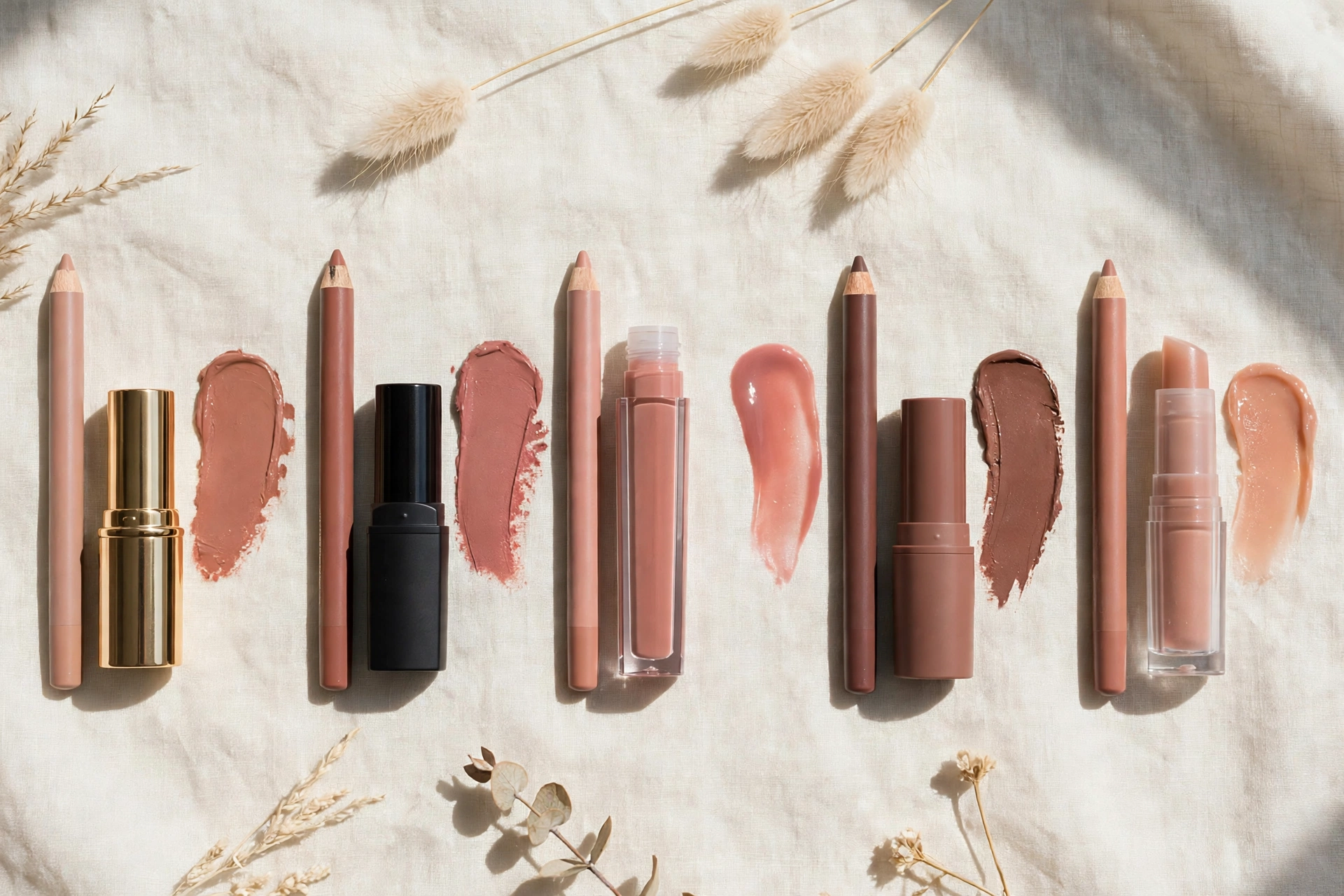
A nude lip should bring your makeup together without making your lips disappear. The easiest starting point is a liner close to your natural lip depth, a lipstick that still has some pink, peach, rose or brown in it, and a finish you enjoy wearing. Beige is one option, rather than the definition of nude.
The 12 combinations below are shade recipes you can recreate with products you already own. They are not exact product swatches or promises that a shade will look identical on every face. Your natural lip pigment, the opacity of your lipstick and the lighting all change the result.
If your lips are sore, cracked, or have open sores, skip lip products on the affected area until they heal, and stop using any product that stings or burns. This guide is general information, not medical advice.
Contents: Choose a nude lip by contrast, then undertone · Lip care before liner · 12 nude lip combos to try · How to blend brown lip liner without a harsh ring · If the nude lip looks wrong, change one thing · Sun protection for lips · Patch test · FAQ
Choose a nude lip by contrast, then undertone
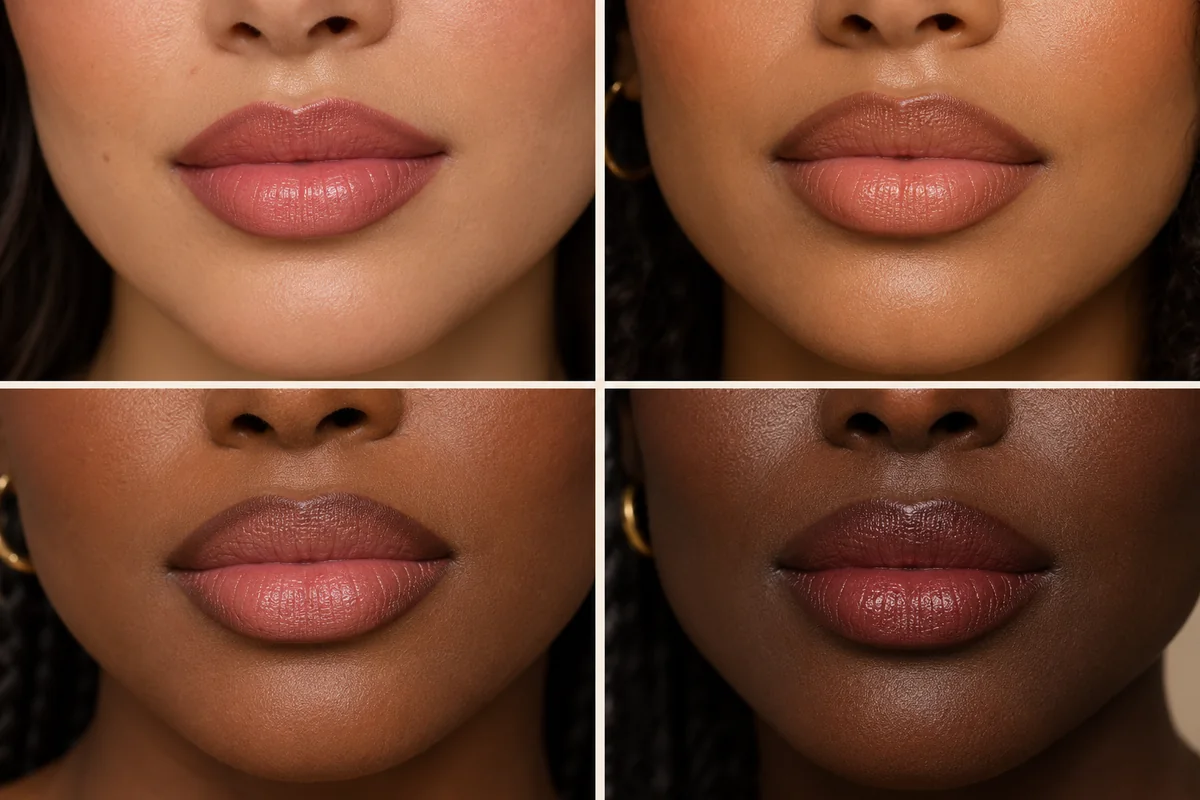
First decide how visible you want the lip border to be. A liner close to your lip colour gives soft definition; a deeper liner creates a more deliberate framed effect. Neither choice belongs to a particular skin tone. Adjust the distance between the two colours until the contrast feels right on you.
Next, check temperature. If an orange-brown liner looks disconnected from your face, try a rose-brown or a more neutral brown. If a cool mauve turns grey, add a warmer lipstick underneath or try a less grey rose.
Undertone tests — wrist veins, jewellery, the white-cloth test — are rough guides only, not reliable tests. The vein test in particular is the least reliable of the four. The way to decide is to swatch the liner and lipstick on your jawline in daylight and look at the result on your own face. A shade that looks right on someone else’s lips may look different on yours, because natural lip pigment changes everything.
Quick choice: For a subtle lip, start with rose-brown liner and a rosy lipstick near your own lip colour. For a stronger outline, choose a deeper brown liner and keep a visible rosy or peachy tone through the centre.
Lip care before liner
Liner and lipstick sit better on smooth, comfortable lips than on dry ones — but lip care is simple, and it does not need scrubs or treatments:
- Apply a plain, non-irritating lip balm during the day and before bed. If a lip product burns, stings or irritates, stop using it.
- For very dry lips, plain white petroleum jelly is a simple option that many dermatologists recommend.
- Blot away excess balm before applying liner, so the liner has something to grip. Too much slip underneath makes the liner slide.
- Do not use a lip scrub on sore, cracked or bleeding lips. If chapped lips do not improve with simple balm within two to three weeks, see a dermatologist.
12 nude lip combos to try
1. Rose-brown liner + sheer rosy balm
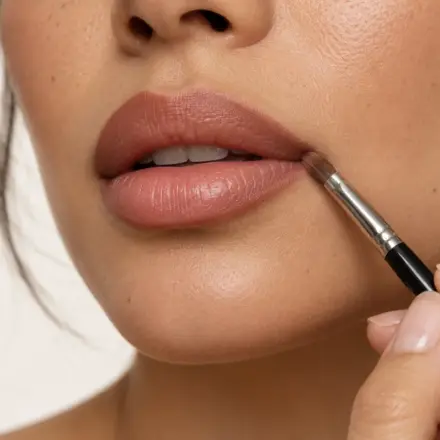
Finish: Soft and low contrast. Trace the lip border lightly, shade just inside it and press a sheer rosy balm over the entire lip. Choose a liner near your natural lip depth so there is no obvious stripe. This is a useful first combination if opaque nude lipstick tends to feel too heavy.
2. Taupe-brown liner + pink-beige lipstick
Finish: Muted and softly defined. Sketch the border with taupe-brown, blend it inward, then tap pink-beige lipstick through the centre. Keep enough pink in the middle to avoid a chalky result. If the liner looks grey, switch to a neutral rose-brown instead.
3. Caramel liner + peachy nude lipstick
Finish: Warm satin. Apply caramel liner, soften the edge with a small lip brush and add peach lipstick in thin layers. Start with a muted peach rather than an opaque pastel. This pairing works especially well when you want warmth without a bright orange lip.
4. Chocolate liner + rose nude lipstick
Finish: Defined but balanced. Use chocolate around the perimeter and a rose shade through most of the lip. Tap where the colours meet until the transition looks gradual. The rose centre keeps the look from becoming an all-brown lip unless that is your preference.
5. Espresso liner + caramel gloss
Finish: Deep outline with a glossy centre. Blend espresso inward before adding a sheer caramel gloss. Keep gloss slightly inside the outline so the edge stays readable. If the centre seems too pale, add a little rose-brown lipstick beneath the gloss.
6. Neutral brown liner + mauve nude lipstick
Finish: Soft and cool leaning. Pair a neutral brown border with a muted mauve centre. Avoid adding more grey if the first layer already looks ashy. A small amount of pink lipstick blended into the mauve can restore colour without replacing the whole combination.
7. Cinnamon liner + warm rose lipstick
Finish: Warm and colourful enough for an understated full face. Blend cinnamon over the outer third of the lips, then add warm rose across the centre. Keep the cinnamon layer light if you want the rose to remain the main colour.
8. Cocoa liner + sheer berry-brown balm
Finish: Rich and softly glossy. Use cocoa to even the outline and layer berry-brown balm over it. The berry component offers an alternative when beige formulas erase your natural lip colour. Build one thin layer at a time to keep some lip texture visible.
9. Toffee liner + muted apricot lipstick
Finish: Peachy satin with a deeper edge. Apply toffee lightly, blur it inward and tap muted apricot over the centre. If the apricot becomes much lighter than expected, blend in a little of the liner rather than adding a thicker lipstick coat.
10. Plum-brown liner + rosy nude gloss
Finish: Rosy with understated depth. Use plum-brown sparingly at the border and add a sheer rosy gloss. This is an option for naturally pigmented lips when a pale pink gloss does not show the way you want. Check the result in daylight before deepening the edge.
11. Brown liner + your everyday lipstick, blotted
Finish: Soft matte or satin. You do not need a new nude lipstick: line lightly, apply a thin coat of a familiar rose or brown lipstick, then blot once. Add colour only where needed. The reduced opacity often creates a more natural effect than a pale opaque formula.
12. Soft brown liner + tinted lip oil
Finish: Light, shiny and easy to refresh. Blend liner before applying a small amount of tinted oil. Choose a tint that complements your lip pigment instead of expecting clear oil to change its colour. Carry the liner for touch-ups if the edge fades before the shine.
How to blend brown lip liner without a harsh ring
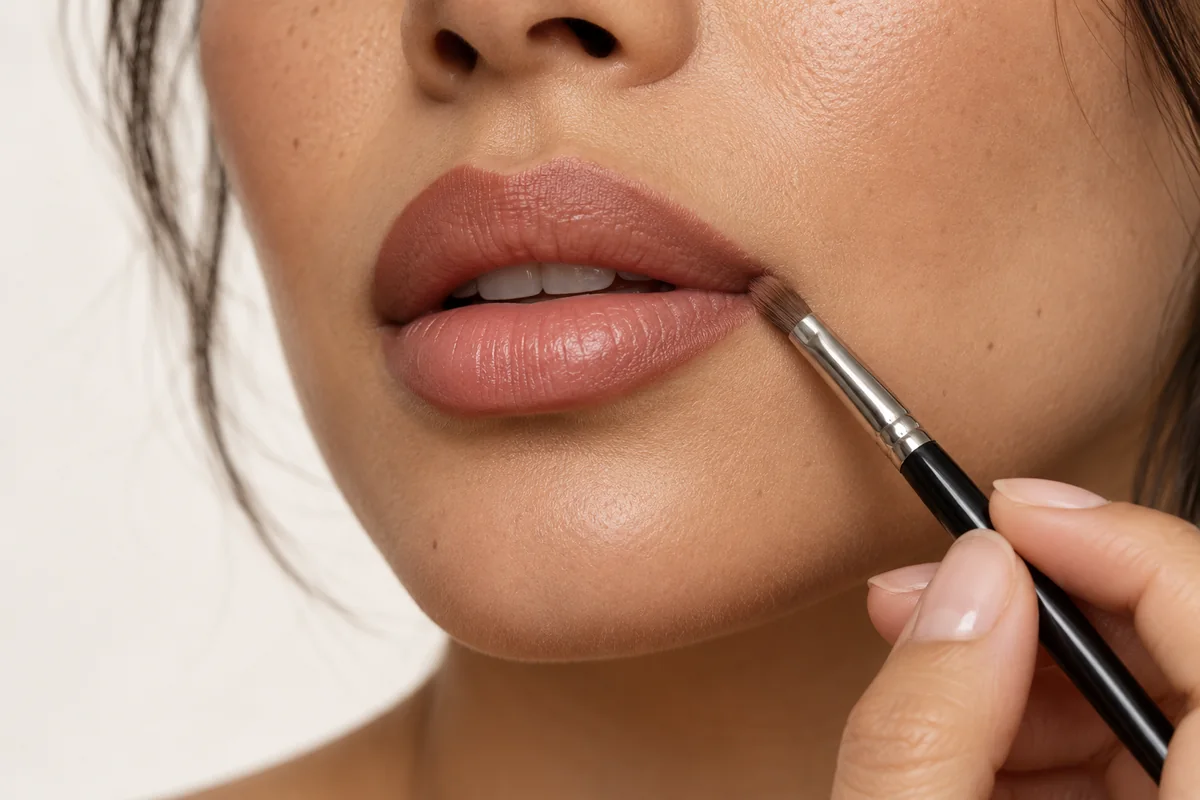
- Start with clean lips. If you used balm, blot away excess slip.
- Trace your natural border using short strokes rather than one heavy line.
- Shade just inside the border, especially the corners, with a light hand.
- Use a small lip brush or clean fingertip to blur the inner edge.
- Tap lipstick into the centre, then blend toward the liner. Press the lips together gently.
- Check both corners and add gloss last if you want shine.
If the nude lip looks wrong, change one thing
- Too pale: Add a rosier or deeper lipstick, rather than more pale gloss.
- Too orange: Replace the liner with a neutral or rose-brown shade.
- Too grey: Add a little pink, berry or peach; choose the family that looks natural on your lips.
- Too sharp: Blur the liner inward before reapplying the centre colour.
- Uneven: Use thin layers. A sheer lipstick will allow natural pigmentation to show; that can be part of the look.
Sun protection for lips
Lips are easy to miss in sun protection, and they have very little melanin of their own. The American Academy of Dermatology recommends a lip balm with SPF 30 or higher before going outdoors, and reapplying every two hours and after eating or drinking.
A lipstick or gloss only protects your lips if its label says it contains SPF and states the level — do not assume that wearing any lip colour means your lips are protected. For daytime wear, apply an SPF 30+ lip balm first and let it set, then layer your liner and lipstick over it. A lip balm with zinc oxide or titanium dioxide is a gentle choice for sensitive lips.
Patch test
Before using a new lip product more widely, patch test it: apply a small amount to the underside of your arm or the bend of your elbow, twice a day, for 7 to 10 days. If you get redness, itching, swelling or a rash, stop using it. A 24-hour test can miss an allergic reaction, which often takes several days to appear — that is why this guide uses the AAD 7–10 day patch-test method. This is the American Academy of Dermatology’s patch-test method. Lips are sensitive skin, so stop using any lip product that stings or burns, even if the patch test on your arm was fine.
Summary
A nude lip is a balance of contrast and temperature, not a single beige shade. Start with a liner near your natural lip depth, keep some pink, peach, rose or brown in the centre, and blend the edge until there is no harsh ring. Look after your lips first — plain balm, SPF 30+ outdoors — and check every combination in daylight on your own lips before deciding it works. No product in this guide was tested by us, and no brand is recommended.
FAQ
Q1: What if my lips are naturally dark or pigmented — can I still wear a nude lip?
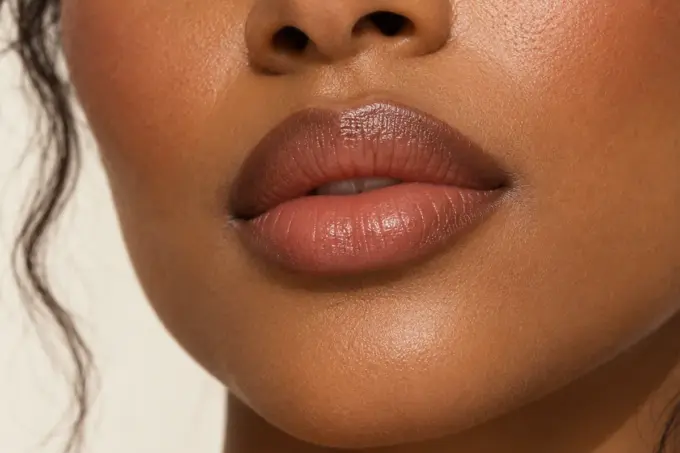
Yes. Nude means close to your own lip colour with a little definition, not beige. For naturally pigmented lips, a deeper brown liner with a rosy or berry centre usually works better than a pale pink gloss, which can disappear or look ashy. Combination 10 (plum-brown liner + rosy nude gloss) is a good starting point.
Q2: Does a nude lip work on deep skin?
Yes, but the contrast needs to be right. A liner only one shade deeper than your lips gives soft definition; a much deeper liner creates a framed effect. Avoid pale, opaque beige formulas, which tend to erase lip colour on deep skin — combinations 4, 5 and 8 are better starting points.
Q3: Can I wear a nude lip with a bold eye?
Yes. A nude lip is the usual partner for a stronger eye, because it keeps the face balanced. Keep the lip as the low-contrast part of the face and let the eye carry the definition.
Q4: How do I stop my lipstick from feathering into lines around my mouth?
Line the outer border of your lips with a liner that matches your natural lip colour, and fill in the whole lip with the liner before applying lipstick. Avoid very creamy or glossy formulas if feathering is a problem, and blot once after applying.
Q5: Do I need a new lipstick for every combination?
No. Most of these combinations work with a liner and a lipstick you already own. Combination 11 is built on exactly that idea: a brown liner plus a familiar lipstick, blotted once.
Choose your next makeup guide
- How to Create a Natural Makeup Look for Everyday Wear
- How to Choose the Right Foundation for Your Skin Tone
- Makeup for Beginners: A Step-by-Step Guide to Applying Makeup
Sources: AAD sunscreen guidance (lip balm with SPF 30 or higher before going outdoors, reapply every two hours and after eating or drinking); AAD chapped-lip guidance (plain non-irritating lip balm; plain white petroleum jelly for very dry lips; stop products that burn, sting or irritate; see a dermatologist if chapped lips do not improve within two to three weeks); AAD patch-test method. This is a researched overview, not a hands-on review.