Researched overview. This guide is based on published safety guidance and makeup technique, not on hands-on product testing by BeautyKob. No product in this guide was tested by us, and no brand is recommended.
Table Of Content
- Quick answer
- Choose the liner you can control
- Winged eyeliner for hooded eyes in five steps
- 1. Find the space visible with your eye open
- 2. Mark the tip without stretching the skin
- 3. Draw the lower edge in a short stroke
- 4. Connect the wing while the eye stays open
- 5. Fill the gap and keep the lash line narrow
- Four wing styles to choose from
- The compact mini wing
- The soft shadow wing
- The fold-aware batwing
- The outer-corner accent
- Fix the specific problem
- Eye safety
- Sunscreen under makeup
- Patch test
- FAQ
- Summary
Quick answer
The most useful change when applying winged eyeliner for hooded eyes is to map the wing while looking straight ahead with your eye open. A line drawn only with your eye closed can disappear into a fold or change direction when you relax your face. The goal is a shape that works with your open eye, even if the closed-eye line looks less conventional.
Start small: a short mini wing is a complete look, not a practice version you have to make longer. There is no single correct wing angle for all hooded eyes, and your two eyes may need slightly different shapes to look balanced.
If your eyes sting, water or redden after using a liner, stop using it. This guide is general information, not medical advice.
Contents: Choose the liner you can control · Five steps · Four wing styles · Fix the specific problem · Eye safety · Patch test · FAQ
Choose the liner you can control
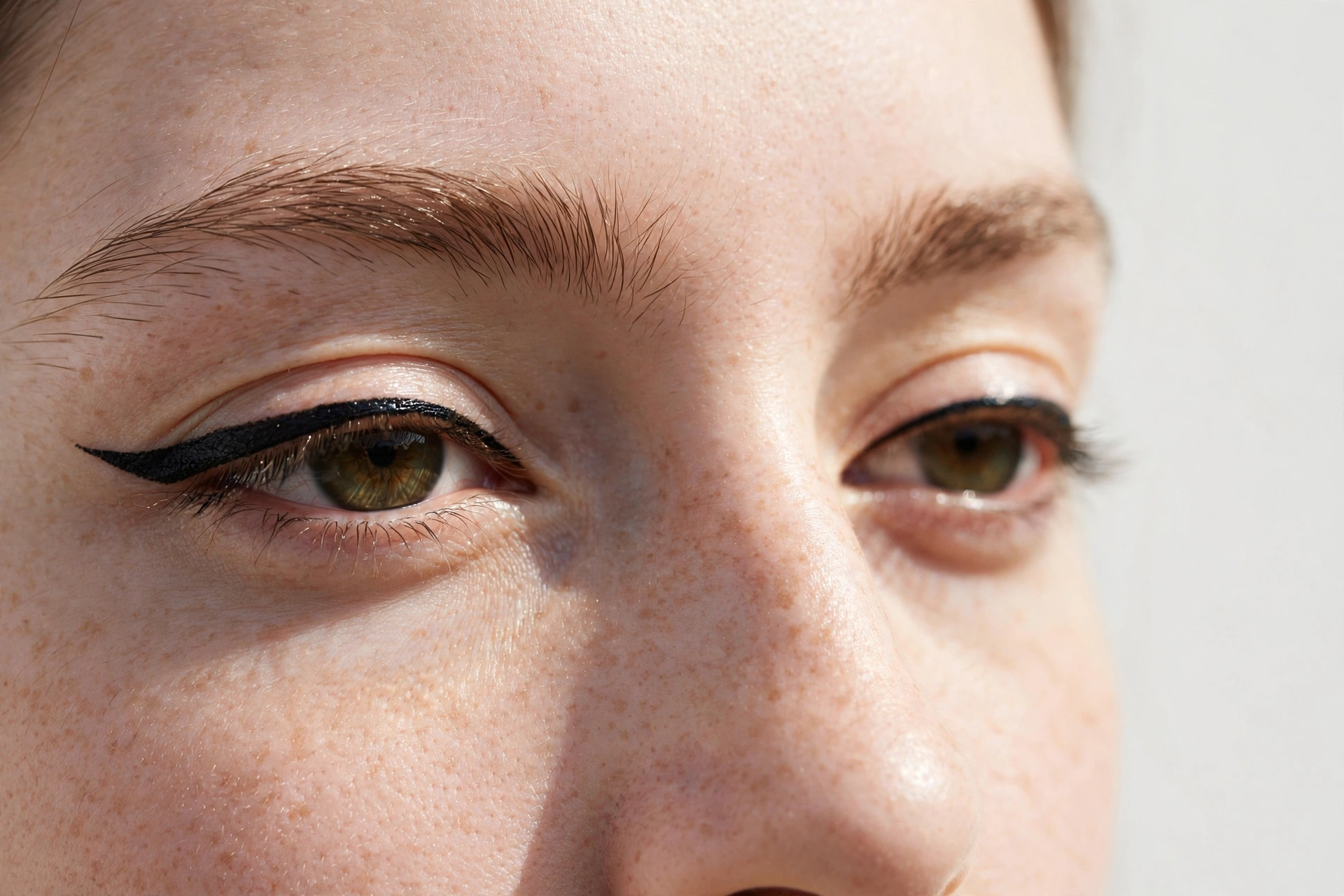
A fine-tip liquid liner can make a crisp, narrow edge. A gel pencil can make a softer wing that is easier to blur. Brown eyeshadow on an angled brush lets you test placement before committing to a stronger line. You do not need to buy every type; begin with the product you find easiest to place in short strokes.
Use a mirror at a comfortable height and keep your brows relaxed. Raising your brows to stretch the lid can hide the very fold you need to plan around. Looking slightly down can help with the lash line, but check the wing straight ahead before filling it in.
Winged eyeliner for hooded eyes in five steps
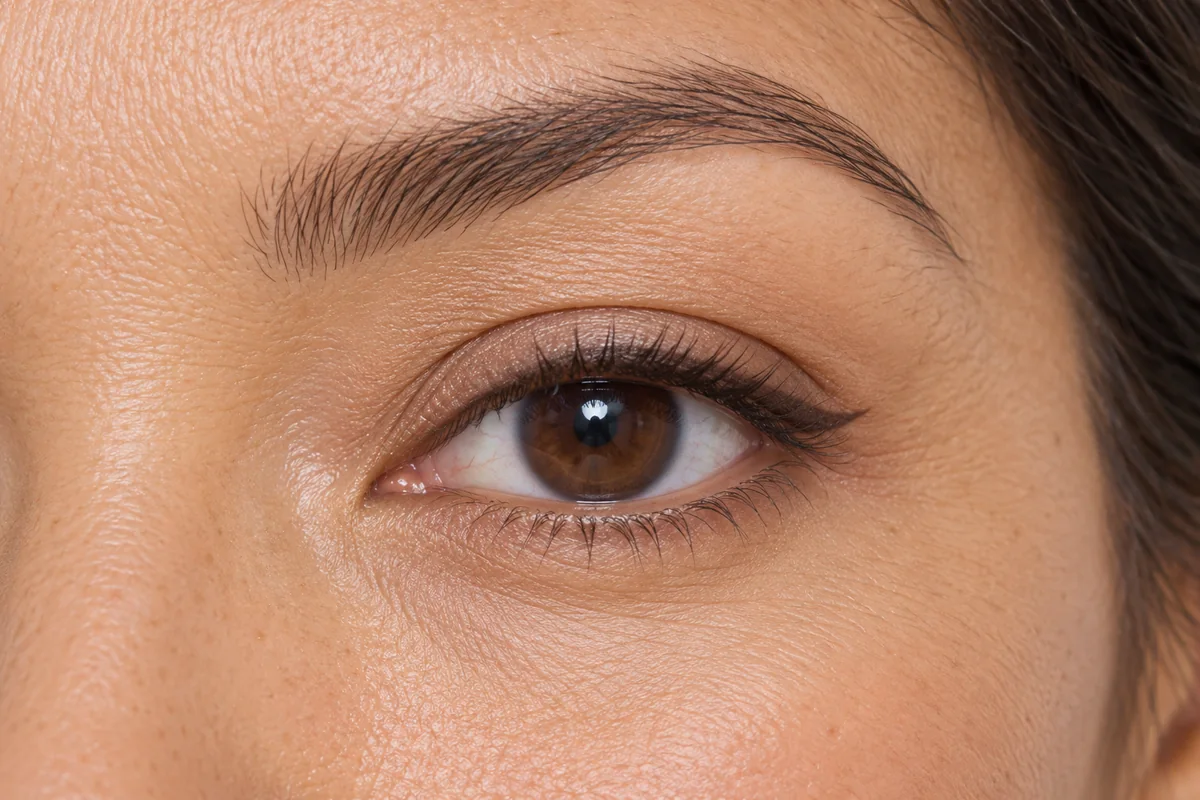
1. Find the space visible with your eye open
Look forward and identify where the outer fold meets the area beside your eye. Decide whether a wing can stay below that fold or needs to cross it. Start with a short shape near the outer corner.
2. Mark the tip without stretching the skin
Place a tiny dot where you want the wing to finish. Check the other eye and compare the overall direction rather than measuring both sides against an imaginary perfect line. Your natural outer corners may sit differently, so each wing may need a slightly different shape to look balanced.
3. Draw the lower edge in a short stroke
Connect the outer lash line to your dot. Use a light sketch first, particularly if the product dries quickly. Keep the endpoint short enough that it is easy to refine. If the stroke lands in the fold, pause and decide whether a lower mini wing or a fold-crossing shape is more practical.
4. Connect the wing while the eye stays open
Draw the top edge back toward the outer lashes, keeping the triangle small. If your fold interrupts the line, sketch the shape that looks connected from the front. When you close the eye, it may have a small step or notch. That is the idea behind a batwing shape: it prioritizes the visible open-eye result.
5. Fill the gap and keep the lash line narrow
Fill the small wing, then add a thin line along the outer upper lashes. Extend toward the inner lid only as far as you want. A thick line across the whole lid can use up the space you wanted to leave visible. Let the liner set according to its directions before checking for transfer.
Four wing styles to choose from
The compact mini wing
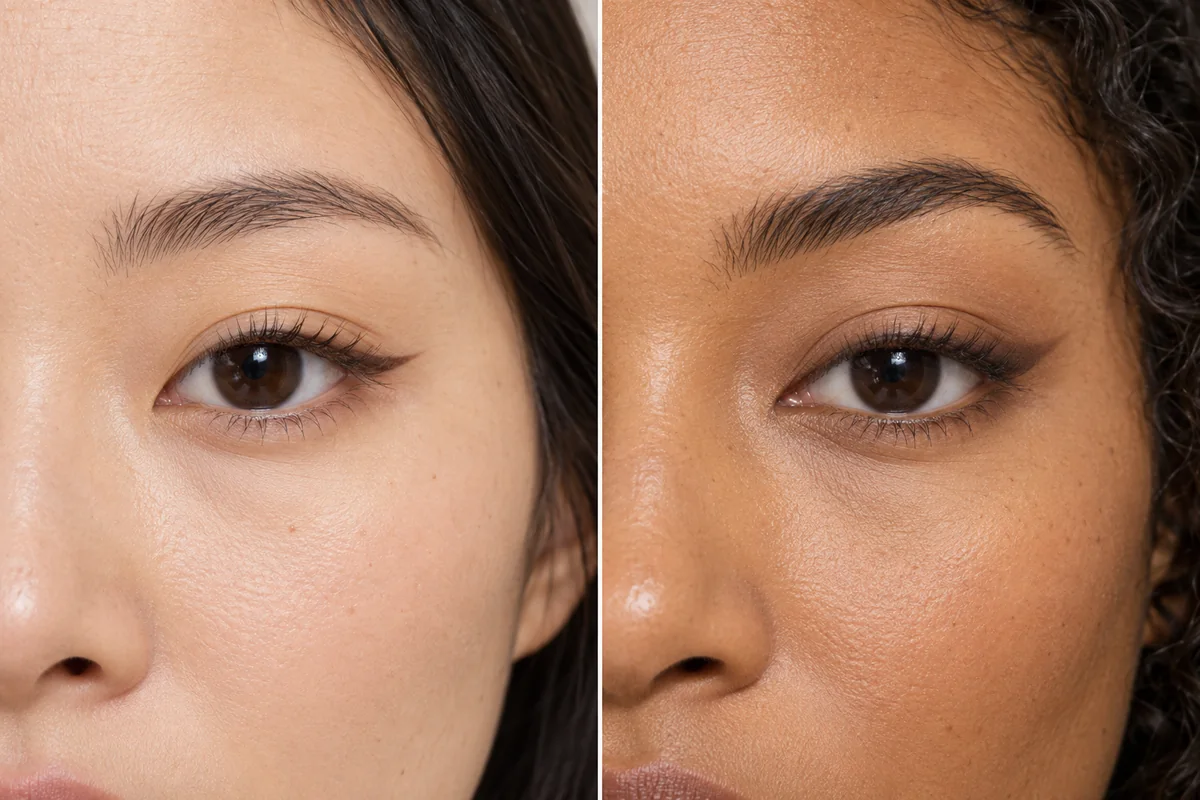
Choose it for: A quick, lightly defined eye. Keep the tip close to the outer corner and connect it only to the outer third of the lashes. This often avoids the need to cross a fold and is a useful first shape to practice.
The soft shadow wing
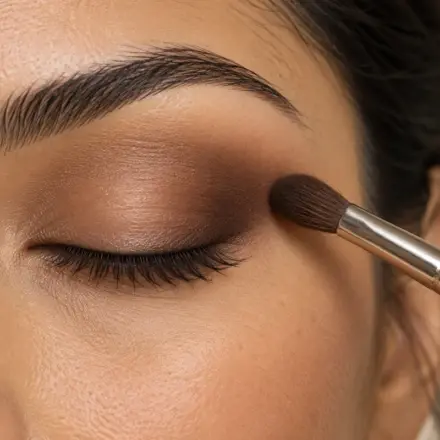
Choose it for: A blurred edge rather than a sharp flick. Press brown eyeshadow along the outer lash line using an angled brush, then extend the remaining pigment a short distance outward. Soften the top edge with a small clean brush without widening the whole shape.
The fold-aware batwing
Choose it for: A fold that cuts through the position where you want a stronger wing. Map the visible triangle with eyes open and allow a step where the fold changes direction. Fill the shape carefully. Do not keep smoothing the closed-eye notch if doing so makes the open-eye line too thick.
The outer-corner accent
Choose it for: Very little visible lid space or days when a full wing feels unnecessary. Use liner only along the outer lashes and add a tiny outward taper. Pair with mascara and a sheer lid shade. A wing does not have to extend far to create definition.
Fix the specific problem
Small adjustments before starting over
| Problem | Try this |
|---|---|
| The tip disappears | Remap it with eyes open and try a shorter or slightly lower position outside the fold. |
| The wing becomes thick | Remove a little from the top boundary. Keep the lower edge and redraw a narrower top edge. |
| Liner transfers onto the fold | Check that skincare has settled, use less liner and allow the product its stated setting time. |
| The two sides look different | Compare with brows relaxed. Adjust the shorter or lighter side in small increments. |
| The edge looks jagged | Try short strokes or a soft shadow wing. More liquid liner can make a small jagged area larger. |
Use a small amount of remover on a cotton bud, kept away from the eye itself. Do not scrape at the skin to sharpen a line.
Eye safety
Use products intended for the eye area only — do not use a lip liner as an eyeliner, because colour additives approved for lips are not always approved for use around the eyes. Keep your hands and tools clean, and wash your hands before applying eye makeup. Never share eye makeup with anyone, not even a close friend, and do not use testers at a shop unless they are applied with a single-use applicator.
Stop using a product straight away if it irritates your eyes, and see a doctor if the irritation persists. Do not use eye makeup while you have an eye infection or the skin around the eye is inflamed — wait until the area has healed, and discard any eye cosmetics you were using when the infection started. Manufacturers usually recommend discarding mascara two to four months after purchase. Discard dried-up mascara; do not add water or saliva to moisten it. Never apply or remove eye makeup in a moving vehicle. (FDA eye cosmetic safety guidance.)
Sunscreen under makeup
Wear broad-spectrum sunscreen SPF 30 or higher every morning, as the last skincare step before makeup. Let it set for a few minutes before applying liner, so the liner has a dry surface to sit on. Reapply every two hours when outdoors. Sunscreen does not change how a wing looks, and it does not make eyeliner transfer — a greasy or unset base does, so let each layer settle before the next.
Patch test
Before using a new liner or eye product more widely, patch test it: apply a small amount to the underside of your arm or the bend of your elbow, twice a day, for 7 to 10 days. If you get redness, itching, swelling or a rash, stop using it. A 24-hour test can miss an allergic reaction, which often takes several days to appear — that is why this guide uses the AAD 7–10 day patch-test method. This is the American Academy of Dermatology’s patch-test method. Patch testing on your arm does not guarantee a product will suit the skin around your eyes, which is thinner and more sensitive — if the eye area stings or waters, stop using the product even if the arm test was fine.
FAQ
Should I draw the wing with my eye open or closed?
With your eye open, looking straight ahead. A closed-eye line can disappear into the fold or change direction when your face relaxes.
My two eyes need different wings. Is that normal?
Yes. Natural outer corners often sit differently, so each wing may need a slightly different shape to look balanced. Compare the overall direction with brows relaxed, not a single line.
What if the wing crosses my fold?
That is what the batwing shape is for: map the visible triangle with eyes open and allow a small step where the fold changes direction. Do not keep smoothing the closed-eye notch if it makes the open-eye line too thick.
How do I fix a wing that transferred onto the fold?
Check that skincare has settled before you start, use less liner, and allow the product its stated setting time. If transfer keeps happening, a shorter mini wing or a soft shadow wing usually avoids the fold altogether.
Can I use the same liner on my lips?
No. Use products only where they are intended to be used. Colour additives approved for lips are not always approved for the eye area, and the reverse is also true.
Summary
Map the wing with your eye open, mark the tip without stretching the skin, draw the lower edge in a short stroke, connect it while the eye stays open, and fill the gap with a narrow lash line. Start with a mini wing, choose the style that fits your fold, and fix problems in small steps rather than starting over. Keep eye makeup clean, never share it, and discard mascara two to four months after purchase. No product in this guide was tested by us, and no brand is recommended.
Sources: FDA eye cosmetic safety guidance (https://www.fda.gov/cosmetics/cosmetic-products/eye-cosmetic-safety); AAD sunscreen guidance; AAD patch-test method. This is a researched overview, not a hands-on review.