Researched overview. This guide is based on published dermatology guidance, not on hands-on testing by BeautyKob. No product, supplement or brand is recommended, and no dose is given.
Table Of Content
- Quick answer
- What a dry day is
- Why it happens
- The first hour — stop and simplify
- The first day
- Overnight
- Natural options, honestly
- Food and water, honestly
- What to stop
- Common mistakes during dry days
- Preventing the next one
- How long it takes
- Patch test
- When to get help
- Frequently asked questions
- Summary
Quick answer
When skin suddenly feels tight, flaky or irritated, the fix is short and boring: stop everything strong, wash gently with lukewarm water, apply a humectant on damp skin, seal it in with a plain moisturiser, and add an occlusive on the worst patches. Skip acids, retinoids and exfoliation until the skin has been calm for at least two weeks. Most dry days settle in days to a few weeks with gentle care. If the skin is cracked, bleeding, blistering, or the dryness does not settle after several weeks, that is not an ordinary dry day — see a dermatologist. This guide is general information, not medical advice.
Contents: What a dry day is · Why it happens · The first hour · The first day · Overnight · Natural options, honestly · Food and water, honestly · What to stop · Mistakes · Preventing the next one · How long it takes · Patch test · When to get help · FAQ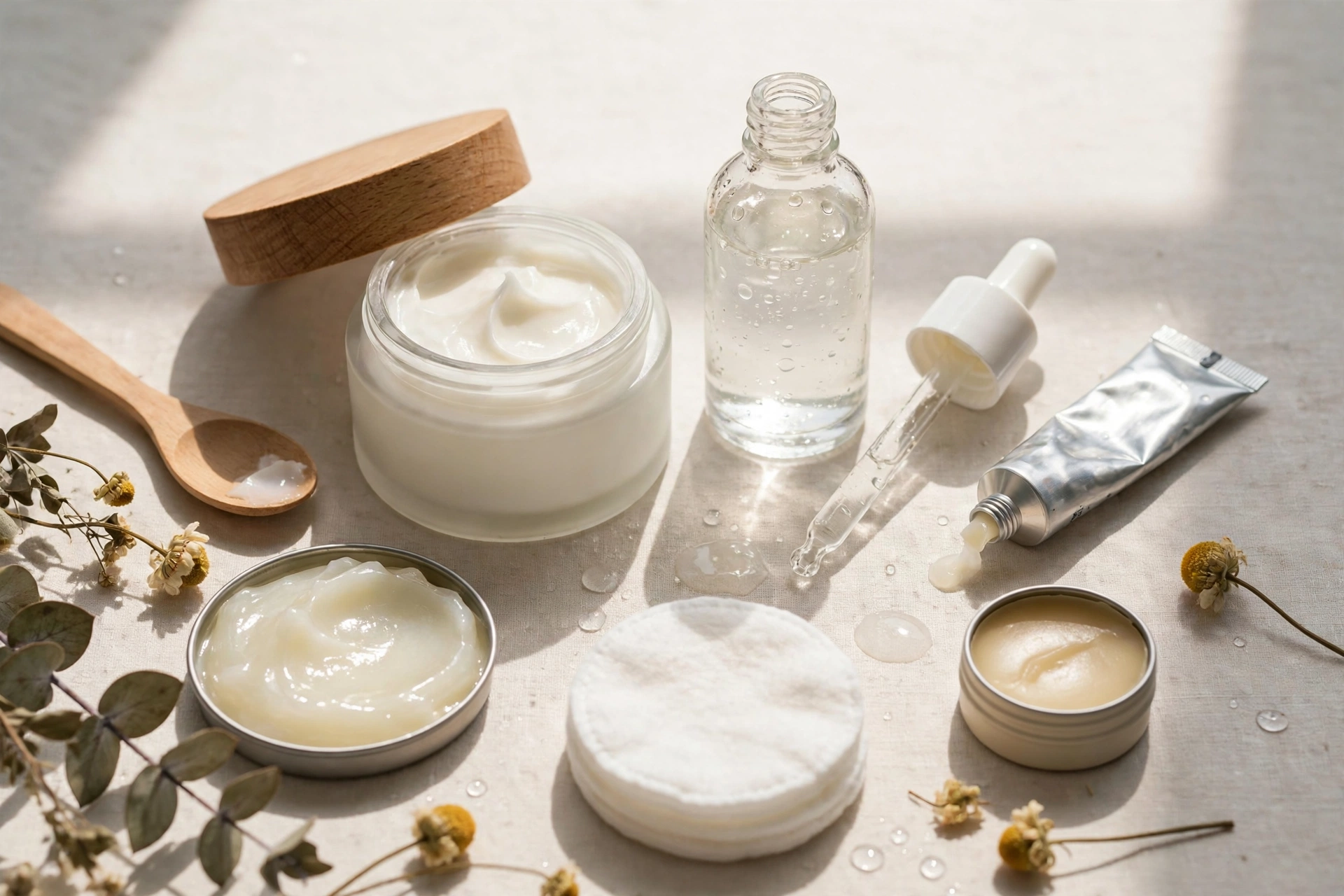
What a dry day is
A dry day is when skin that was fine yesterday suddenly feels tight, rough or flaky, or stings when you apply products. The usual cause is a weakened barrier — the outer layer that keeps water in and irritants out. When it is weakened, water escapes faster and the surface dries out.
Dry days are common and usually harmless. They are not a diagnosis, and they are not a sign that your skin is permanently damaged. They are a sign to simplify the routine and give the barrier a chance to settle.
Why it happens
- Weather. Cold air, strong wind, low humidity, indoor heating and air conditioning all dry the surface.
- Washing. Hot water, strong soaps and foaming cleansers strip the skin’s natural oils.
- Too many actives. Acids, retinoids and exfoliants used too often or started too fast leave the barrier unhappy.
- Skipping moisturiser. Without a moisturiser to seal water in, hydration evaporates quickly.
- Sleep and stress. Poor sleep and ongoing stress make skin feel worse and make it harder to stick to a routine. They do not cause a dry day on their own, and fixing them does not fix the skin by itself.
The first hour — stop and simplify
- Stop the strong products. Put aside acids, retinoids, exfoliants and any product that stings. Do not add anything new.
- Wash gently, once. Lukewarm water and a mild, non-stripping cleanser. Pat dry with a soft towel — do not rub.
- Hydrate on damp skin. While the skin is still slightly damp, apply a humectant — a glycerin or hyaluronic acid serum. Pat it on gently.
- Moisturise. A plain, fragrance-free moisturiser with ceramides or glycerin, applied while the skin is still slightly damp.
- Seal the worst patches. On the driest or flakiest areas, add a thin occlusive layer over the moisturiser — a balm, or a few drops of a plain oil such as jojoba or rosehip. Oils do not hydrate on their own — water moisturises, oil seals.
That is the whole emergency routine. Do not add a mask, a scrub or a new active to “fix it faster”. Faster is not an option here.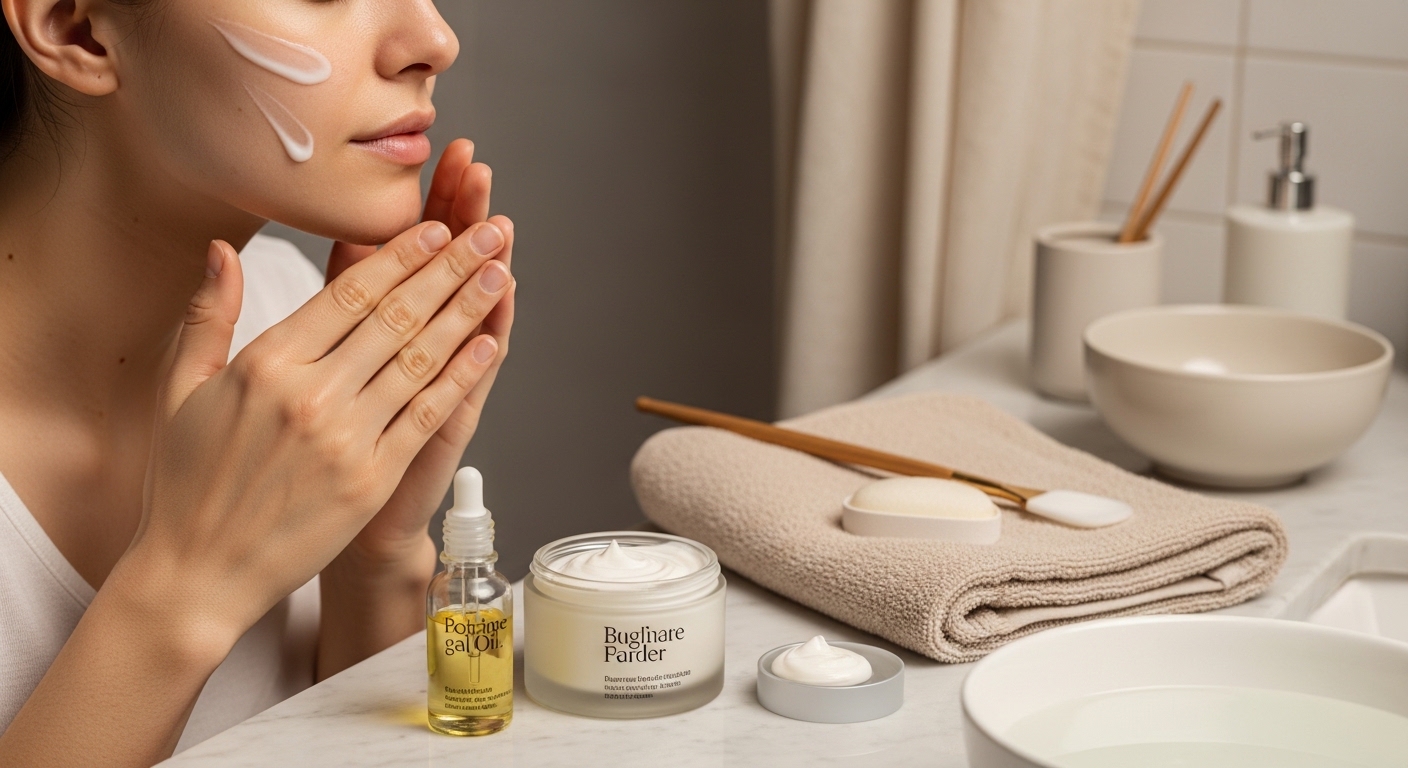
The first day
Keep the routine short for the whole day:
- Morning: gentle cleanse, hydrating step on damp skin, moisturiser, then broad-spectrum sunscreen SPF 30 or higher. Sun weakens the barrier further and slows recovery, so sunscreen matters even on a dry day. Reapply every two hours when outdoors.
- Evening: gentle cleanse, hydrating step on damp skin, a slightly richer moisturiser. That is enough.
- Do not exfoliate. Even gentle exfoliation is a mistake on a dry day — the barrier is already struggling.
- Do not try several new products. One new product at a time, so you know what helps and what irritates.
Skin can start feeling more comfortable within hours of proper hydration, and texture usually improves over days. That is a normal range, not a promise — some dry days take a week or two to settle.
Overnight
Night is a practical time to care for dry skin, not a biological repair window. The skin does not do most of its repair at night, and no cream works harder while you sleep. What night gives you is time: a richer moisturiser or an occlusive layer can sit undisturbed for hours.
- Apply a richer moisturiser than in the morning, or the same moisturiser with an occlusive layer on the driest patches.
- A hydrating overnight mask is a comfort step, not a treatment. It feels good and keeps moisture in; it does not repair the barrier.
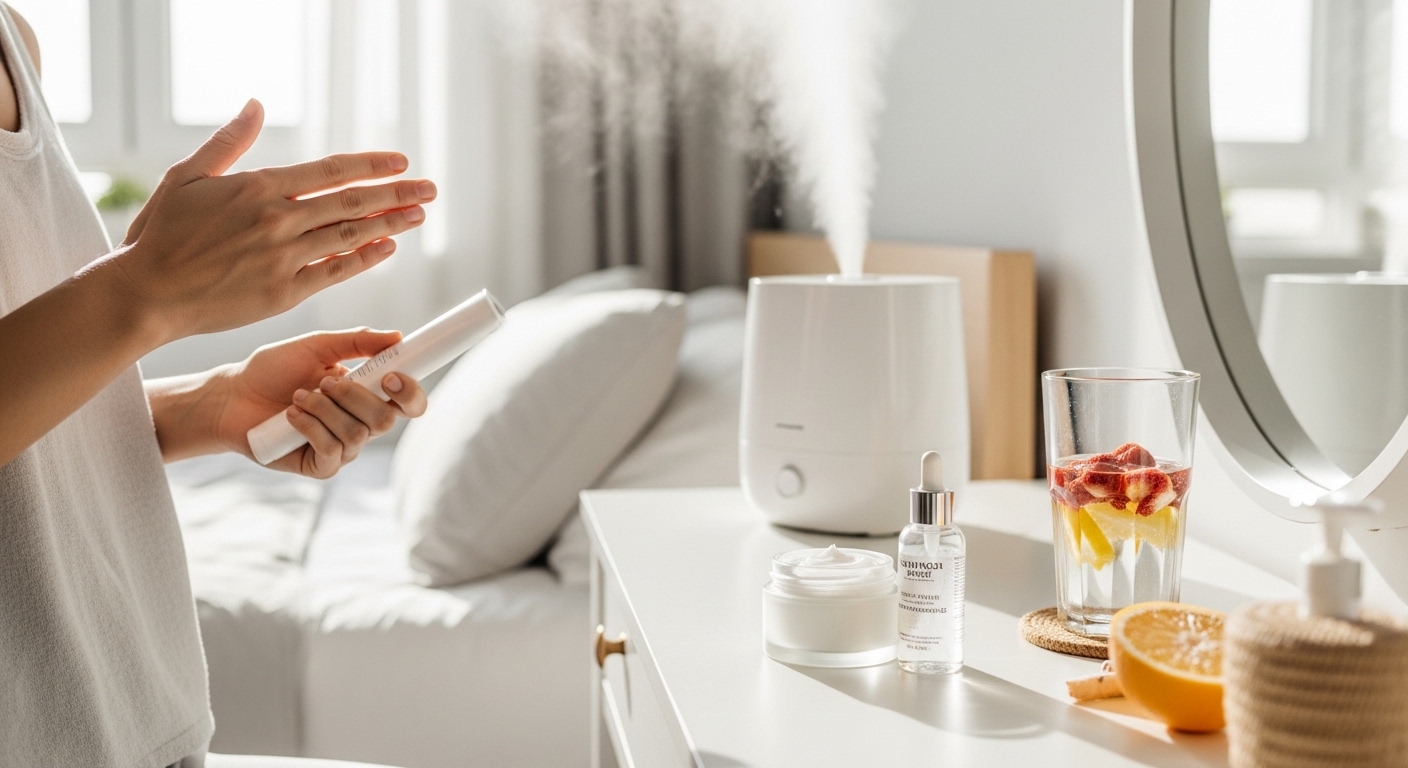
- Keep the room comfortable. Very dry indoor air makes dry skin worse — a humidifier can help in a dry climate, but it is not a skin treatment.
Natural options, honestly
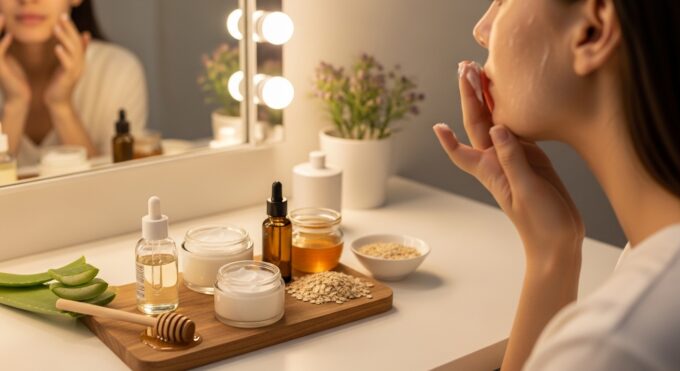
- Aloe vera gel. Cools and soothes, and hydrates lightly. Limited evidence for calming redness; choose fragrance-free and alcohol-free.
- Honey. A humectant that can feel soothing on the skin. There is no good evidence it repairs the barrier. Patch test first.
- Oatmeal packs. Colloidal oatmeal can calm itching and dryness. The US FDA lists colloidal oatmeal as a skin protectant. A plain oatmeal mask is a comfort measure, not a treatment.
- Avocado or yogurt masks. Contain fats and vitamins and can feel nourishing. They are a pleasant short-term step, not a treatment, and they do not feed the skin from the outside.
- Cold-pressed oils. Jojoba or rosehip oil can seal in moisture as an occlusive step after moisturiser. They do not hydrate on their own.
Natural options are a complement to a short routine, not a replacement for it.
Food and water, honestly
- Water. Drinking water is good for your general health, but it does not directly hydrate skin. Topical moisture — humectants on damp skin, sealed in with moisturiser — is what hydrates skin. Being dehydrated does not make topical care useless, and drinking more water does not fix a dry day.
- Food. A balanced diet with enough protein, healthy fats and a variety of fruit and vegetables supports general health. No food treats dry skin, and no food needs to be added or avoided because of a dry day. Omega-3 fats, vitamins and antioxidants are nutrients, not skin treatments.
What to stop
While the skin is dry and irritated, stop:
- Acids and retinoids. Put them aside until the skin has been calm for at least two weeks, then reintroduce one at a time, slowly.
- Exfoliation. All of it, including gentle scrubs and enzyme masks, until the skin settles.
- Harsh cleansers. Foaming cleansers with a high alcohol content, strong soaps, and anything that leaves skin feeling tight after washing.
- Fragrance and essential oils. Fragrance is one of the most common irritants, and essential oils are common irritants too, especially on sensitive skin.
- Hot water and long hot showers. Hot water strips the skin’s natural oils. Lukewarm water, short showers.
Common mistakes during dry days
- Exfoliating the flakes away. Scrubbing flaky skin feels productive and makes it worse. The flakes are a sign the barrier is struggling, not a sign it needs scrubbing.
- Adding several new products at once. If the skin reacts, you cannot tell which one caused it.
- Skipping moisturiser because the skin feels greasy. Greasy feeling after products is not the same as hydrated skin. Moisturiser is what keeps water in.
- Skipping sunscreen. Sun weakens the barrier and slows recovery.
- Treating a dry day as a detox. Skin does not need “detoxing” — the liver and kidneys handle waste removal. A dry day needs moisture and rest, not a cleanse.
Preventing the next one
- Keep the routine short every day, not just on dry days. Gentle cleanse, hydration on damp skin, moisturiser, sunscreen in the morning.
- Use products that suit your skin type. The wrong cleanser or a too-strong active is the commonest cause of a dry day.
- Short, lukewarm showers. Long hot showers strip the skin’s natural oils.
- Moisturise after washing. Apply moisturiser while the skin is still slightly damp, every time.
- Sunscreen daily. Sun exposure weakens the barrier and helps cause dryness and irritation.
How long it takes
Be honest about timelines — there is no fixed schedule:
- Hours: skin can feel more comfortable once it is properly hydrated.
- Days to a few weeks: texture and flaking usually settle gradually if the routine stays short and gentle. Give each change at least two to four weeks before judging it.
- Longer: if the dryness does not settle after several weeks of gentle care, or it keeps coming back, see a dermatologist — the cause may be a condition that needs treatment, not a better moisturiser.
Regularity matters more than intensity. A short routine used every day beats a long routine used for a week and abandoned.
Patch test
Test any new product before using it on your face — especially on a dry day, when the skin is already irritated. The American Academy of Dermatology recommends testing a new product before using it on your face: apply a small amount to a quarter-sized patch of skin on the inside of your arm or the bend of your elbow, twice a day for 7 to 10 days. If there is redness, itching or swelling, do not use it on your face. A 24-hour test can miss an allergic reaction, which often takes several days to appear — that is why this guide uses the AAD 7–10 day patch-test method. On a dry day, patch test on a calm area of skin, not on the driest patch.
When to get help
Ask a dermatologist or pharmacist if: the dryness is persistent, painful, or accompanied by strong redness, cracking, bleeding or itching that does not settle; you have a skin condition such as eczema or dermatitis; or you are unsure whether a product is safe for you. Bring the products you use, or photos of their ingredient lists.
Frequently asked questions
Q1: What is the best routine for a dry day?
Gentle cleansing with lukewarm water, a hydrating serum on damp skin, a rich moisturiser, and an occlusive on the worst patches. Stop acids, retinoids and exfoliation until the skin is calm.
Q2: How quickly can dry skin recover?
Skin can feel more comfortable within hours of proper hydration. Texture usually improves over days to a few weeks. There is no fixed schedule — some dry days take longer.
Q3: Can natural remedies help during a dry day?
Aloe vera, honey, oatmeal and plant oils can give soothing hydration and comfort alongside a short routine. They are comfort measures, not treatments.
Q4: Should I exfoliate when my skin is extremely dry?
No. Avoid exfoliation during severe dryness because it weakens the barrier further. Focus on hydration and soothing care first, and reintroduce gentle exfoliation only after the skin has been calm for at least two weeks.
Q5: When should I see a dermatologist for dry skin?
If dryness is persistent, painful, or accompanied by redness, cracking, bleeding or itching, it may indicate a skin condition such as eczema or dermatitis and should be evaluated by a dermatologist.
Summary
A dry day means a struggling barrier: tight, flaky or irritated skin. The fix is short — stop the strong products, wash gently with lukewarm water, apply a humectant on damp skin, seal it in with a plain moisturiser, add an occlusive on the worst patches, and use SPF 30+ in the morning. Skip acids, retinoids and exfoliation until the skin has been calm for at least two weeks. Drinking water does not directly hydrate skin, and skin does not need detoxing. Patch test every new product for 7 to 10 days, and see a dermatologist if the dryness is cracked, bleeding, painful, or does not settle after several weeks.
Sources: American Academy of Dermatology, 7 Rosacea skin care tips (patch-test method: apply a new product to a quarter-sized patch of skin on the inside of the arm for 7–10 days); American Academy of Dermatology, How to select anti-aging skin care products (broad-spectrum sunscreen, SPF 30 or higher). This is a researched overview, not a hands-on review.