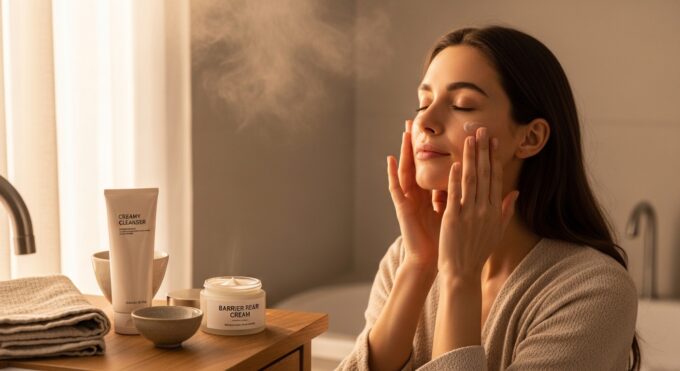
Researched overview. This guide is based on published dermatology guidance and general sleep and wellbeing guidance, not on hands-on testing by BeautyKob. No product, supplement or brand is recommended, and no dose is given.
Table Of Content
Quick answer
A comfort-focused routine is organised around one question: does this feel kind to my skin and to me? Warm water instead of hot, a soft cream instead of a strong active, a few slow minutes instead of ten hurried steps. It is for days when skin feels reactive, or life feels heavy, or both. It is not a treatment — it does not cure eczema, rosacea or acne, and it does not “repair” skin overnight. What it does is keep the routine gentle enough that you can keep it, and pleasant enough that you want to. This guide is general information, not medical advice.
Contents: What comfort means in beauty · Why gentle routines · The morning routine · The nighttime routine · Hydration · Texture and the senses · Environment · Seasons · Comfort by lifestyle · Choosing products · What comfort is not · Patch test · When to get help · FAQ
What comfort means in beauty
Comfort in beauty is simplicity and softness. Beauty care should not feel stressful or exhausting. It should support the skin while helping the mind feel calm. That means soothing products, slow application, warm surroundings and gentle practices — not a long list of steps or a promise of transformation.
More people are choosing this approach because modern routines got complicated: too many products, too many actives, too much pressure to achieve a particular look. A comfort routine steps back from that. It asks less of your skin and less of your time, and it is easier to keep because it feels relaxing rather than demanding.
Why gentle routines
Harsh treatments and overly complicated routines can damage the skin barrier over time — the outer layer that keeps water in and irritants out. A gentler approach avoids that damage: fewer strong actives, no harsh scrubs, no hot water, no fragrance where it can be avoided. That is a modest claim, and it is the honest one. Gentle routines do not “strengthen” the barrier as a treatment would; they support it by not stripping it.
People also find comfort-based routines easier to maintain, because a routine that feels good gets repeated. Consistency is what actually helps skin — not intensity, and not the number of products.
The morning routine
Morning comfort is about starting the day calmly, not rushing into it.
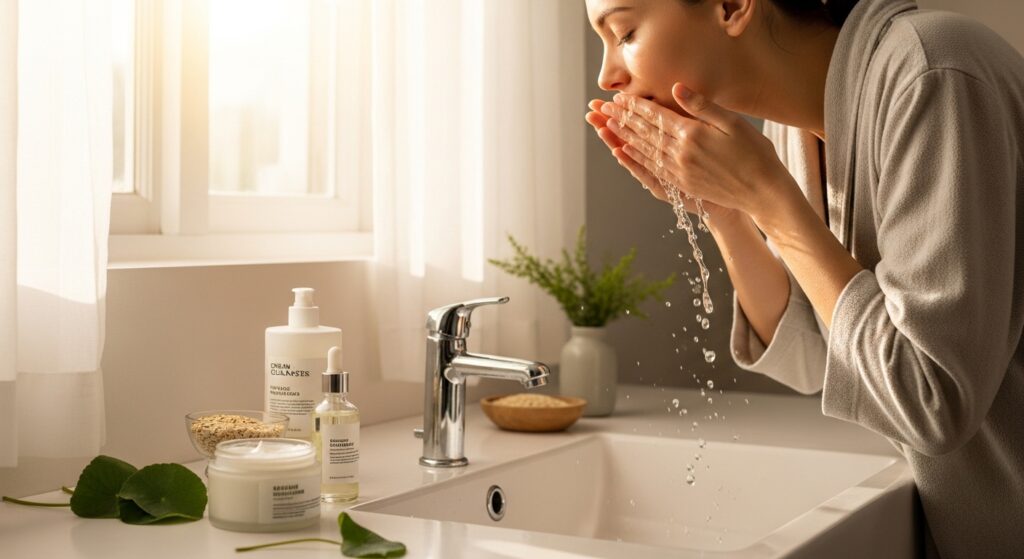
- Gentle cleanser. A cream or milk cleanser removes overnight oil without stripping moisture. Wash with lukewarm water, using your fingertips, and pat dry — do not rub.
- Hydration. A hydrating toner or a light moisturiser with glycerin, ceramides or hyaluronic acid keeps skin soft through the day. A facial mist can feel refreshing, and that sensory comfort is a fair reason to use one.
- Sunscreen. Sun protection stays essential even in a comfort routine. Use a broad-spectrum sunscreen with SPF 30 or higher, as the last step of your morning routine, and reapply every two hours when outdoors. Sunscreen is the most effective anti-ageing step (Hughes et al. 2013). A lightweight, moisturising formula protects without feeling heavy.
- Small comforts. A soft lip balm and a light body lotion prevent dryness during the day. They are small, but they are part of the same idea: nothing harsh, nothing rushed.
The nighttime routine
Evening is when comfort matters most, because the day’s stress is still sitting in your shoulders and on your skin. Cleanse away sunscreen, dirt and pollution gently — a mild cleanser, lukewarm water, fingertips, pat dry.
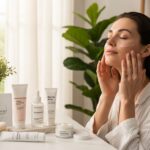
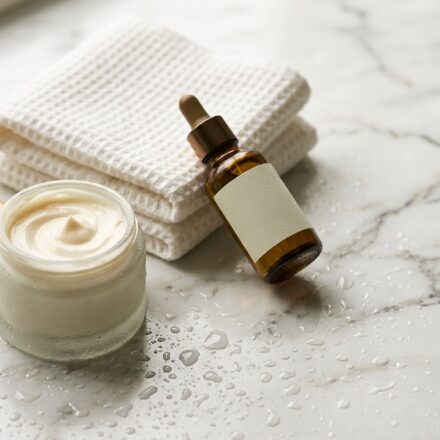
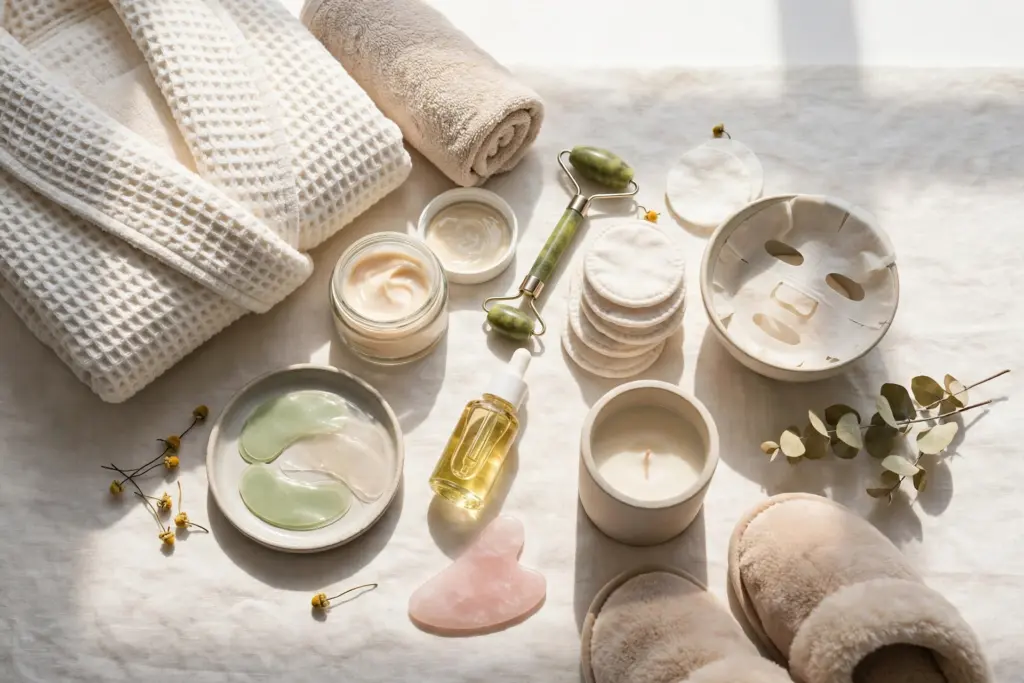
Then moisturise slowly. A soothing mask, a nourishing cream or a light facial oil can all work; the point is the slowness, not the product. Applying products with gentle massage movements can feel relaxing, and that feeling is the benefit — massage does not drain lymph, firm skin or improve circulation in any meaningful way.
Night is a practical time to rest and to use treatments that make skin sun-sensitive, such as a retinoid — but only if your skin already tolerates them. Retinoids are the strongest topical for fine lines, used slowly (start 2–3 nights a week, pea-sized, 3–6 months to judge), with a pregnancy warning. Night is not a biological repair window; the body does not “repair itself” on a schedule your routine can control. A calm evening simply makes rest easier, and rest is when the skin is left alone to do its ordinary work.
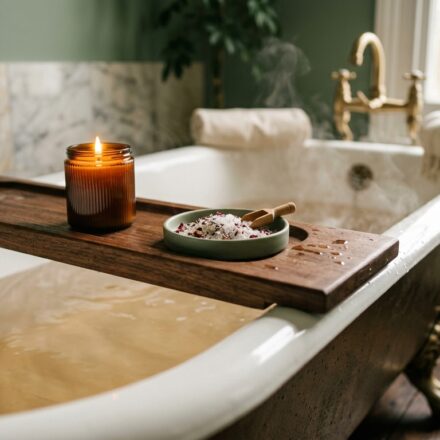
Soft lighting, warm towels, a calming scent and quiet surroundings make the nighttime ritual feel more restorative. The environment is part of the routine, not decoration around it.
Hydration: the foundation
Hydration is the key foundation of comfort-based beauty. Skin that lacks moisture often feels irritated, rough or sensitive, and hydrating products help it stay soft. The ingredients that matter are simple and well established:
- Glycerin and hyaluronic acid — humectants that draw water into the skin.
- Ceramides — fats that help hold water in and keep irritants out.
- Squalane — a light emollient that softens without feeling heavy.
Water moisturises and oil seals — they do different jobs, and a good moisturiser usually does both. Drinking water does not directly hydrate skin, and no food or drink is a treatment for dryness; the moisturiser on the skin is what keeps it soft. Weather, air conditioning and pollution can all dry skin out, so body creams, facial mists and hydrating masks are useful additions in colder or drier seasons.
Texture and the senses
Texture affects how skincare feels emotionally. Rich creams, silky serums and soft body lotions create a soothing sensory experience, and many people naturally prefer products that absorb smoothly and leave skin feeling soft rather than sticky or heavy. That preference is a fair reason to choose one product over another — comfort is a real criterion, not a frivolous one.
The same applies to the small details: soft towels, warm water, breathable fabrics, a clean and organised space. These details improve relaxation and make the routine more enjoyable, which is what makes you return to it.
Environment
The space around a routine affects how it feels. A clean, organised shelf helps skincare feel calm rather than stressful. Warm lighting creates a relaxing mood. Calm music helps some people unwind. Lukewarm water prevents dryness and irritation where hot water would not. None of this needs to be elaborate — a tidy corner and a soft towel are enough.
Seasons
Comfort routines change naturally with the seasons. In winter, cold weather often causes dryness and irritation, and a richer moisturiser, a hydrating mask and a nourishing body cream help maintain softness. Cold weather needs a richer moisturiser, not a lighter one. In summer, lightweight hydration and cooling products feel better — gel moisturisers and refreshing face sprays reduce the discomfort of heat and humidity. Sunscreen SPF 30+ stays in the routine all year.
Comfort by lifestyle
- Busy schedules. Short, hydration-focused care with lightweight products is enough. Even a brief ritual can improve how the day feels.
- Parents and caregivers. Simplified routines with fewer products but consistent hydration and nourishment work best. Comfort-based beauty is about sustainability, not perfection.
- Students and professionals. Long study sessions and office work increase stress and tiredness, and that tiredness often shows on skin. Gentle rituals and a short pause help maintain freshness. Portable products such as lip balm and facial mists are useful during busy days.
Choosing products
Comfort-focused skincare usually includes gentle ingredients that support the skin barrier without causing irritation: oat extract, ceramides and glycerin are common choices. Aloe vera feels cooling on irritated skin, though the evidence that it calms redness is limited — choose a fragrance-free, alcohol-free gel if you use it.
Using too many products creates unnecessary stress for both skin and mind. Choose products carefully instead of following every trend, and add only one new product at a time so you can tell what helps and what irritates.
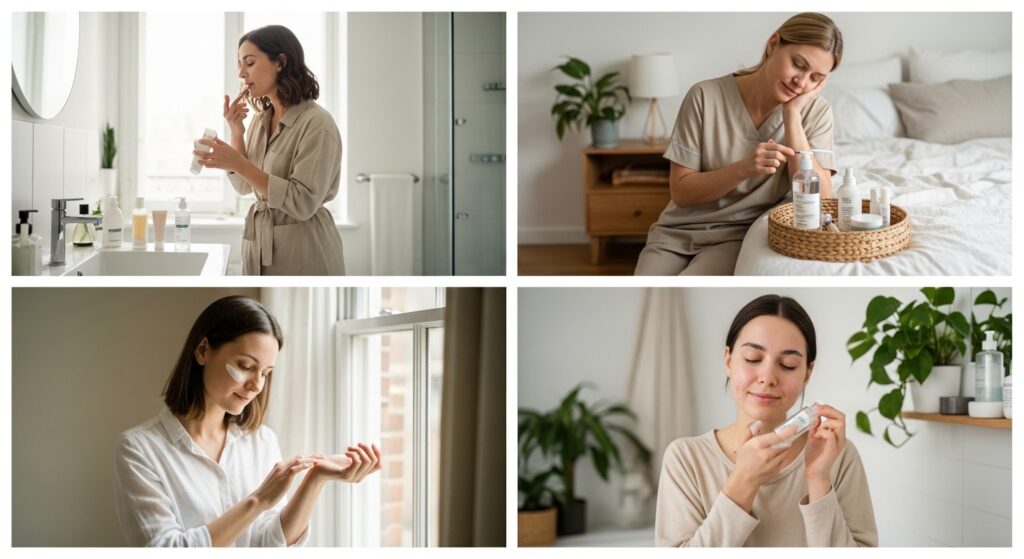
Patch test before you commit. The American Academy of Dermatology recommends testing a new product before using it on your face. Apply the product to a quarter-sized patch of skin where it will not be rubbed or washed away — the underside of your arm or the bend of your elbow — twice a day for 7 to 10 days. For a rinse-off product such as a cleanser, leave it on for about five minutes, or as long as the label says, then rinse it off. If the test area becomes red, itchy, swollen or painful, stop using the product. If the area stays clear for the full 7 to 10 days, the product is less likely to cause a reaction on your face — but a patch test cannot guarantee it.
A 24-hour test can miss an allergic reaction, which often takes several days to appear — that is why this guide uses the AAD 7–10 day patch-test method.
What comfort is not
Comfort is not a treatment. A gentle routine does not cure eczema, rosacea or acne, and it does not replace care a clinician has prescribed. It is also not about “fixing imperfections” — that framing is part of what makes beauty stressful in the first place. The point is to support skin gently and consistently, and to let the routine be a calm part of the day rather than another demand.
Beauty routines can become emotional support during stressful periods: taking time for skincare lets you pause, slow down and focus on yourself. That connection is real, and it is enough of a reason to keep a routine — without claiming it reduces stress levels as a measured outcome, or that it improves confidence as a guaranteed result. It helps you feel calmer in the moment. That is the honest claim.
When to get help
If your skin is persistently red, sore, swollen or blistering, or you have a rash that does not settle, ask a dermatologist or pharmacist — a gentle routine cannot fix that. If low mood, anxiety or numbness persist for weeks, ask a professional: routines support wellbeing, they do not replace care.
FAQ
Is a comfort routine enough for my skin?
For most people, a short gentle routine — cleanser, moisturiser, sunscreen — covers the essentials. Anything beyond that is optional, not required.
Can comfort routines help sensitive skin?
They can help by avoiding the things that irritate it: strong actives, harsh scrubs, fragrance, hot water. They do not treat a skin condition.
Do I need expensive products for a comfort routine?
No. Comfort comes from gentleness and slowness, not price. A plain, fragrance-free moisturiser is enough.
How do I start if my current routine is complicated?
Strip it back to three steps — cleanser, moisturiser, sunscreen — and add one thing at a time, patch testing each new product for 7 to 10 days.
Is it okay to skip days?
Yes. A routine that bends to your life is one you will keep. Missing a day does not undo anything.
Summary
Comfort-focused beauty is a gentler approach: a short routine built on warmth, softness and hydration, with sunscreen SPF 30+ every morning and a patch test of 7 to 10 days for anything new. It does not treat skin conditions or repair skin overnight — it keeps the barrier undisturbed, keeps the routine easy to keep, and makes a few minutes of the day feel calm. That is the whole promise, and it is enough.
Sources: American Academy of Dermatology, 7 Rosacea skin care tips (patch-test method: apply a new product to a quarter-sized patch of skin on the inside of the arm for 7–10 days); American Academy of Dermatology, How to select anti-aging skin care products (broad-spectrum sunscreen, SPF 30 or higher, reapply every two hours outdoors). This is a researched overview, not a hands-on review.