Researched overview. This guide is based on published dermatology guidance, not on hands-on product testing by BeautyKob. No product in this guide was tested by us.
Table Of Content
- Quick answer
- Understanding what glow actually is
- Why product choice and amount matter more on light skin
- Barriers to a consistent glow
- Oils worth using, and why
- What to avoid
- How to apply body oil for the best result
- Patch test first
- Adjusting for season and time of day
- Supporting habits that help between applications
- What a realistic timeline looks like
- Frequently asked questions
- When to get help
- The bottom line
Quick answer
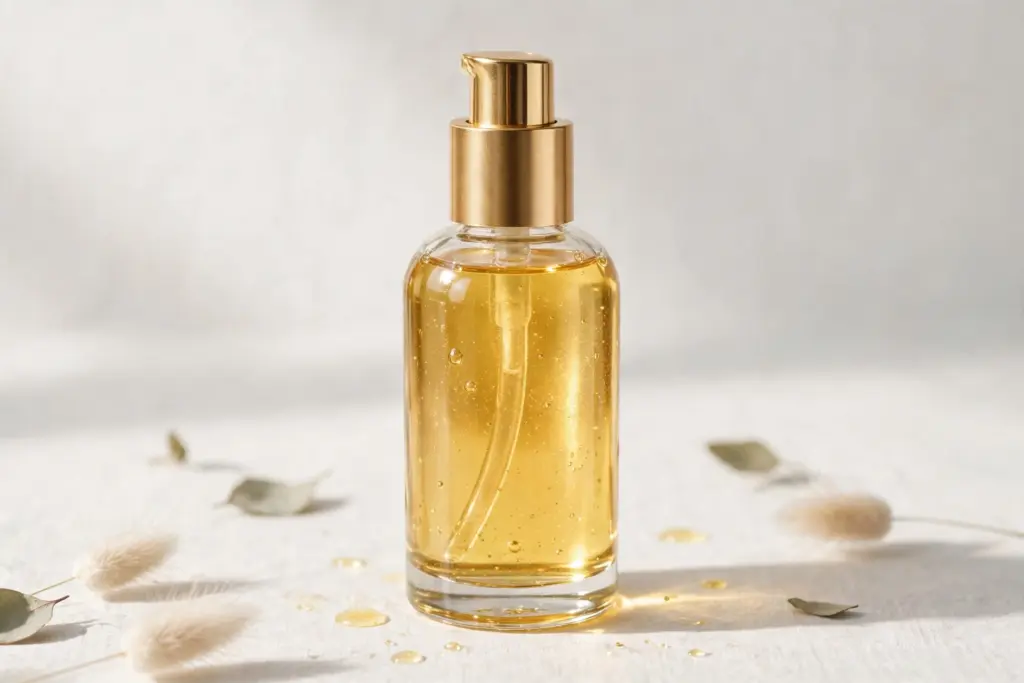
The same oil that looks like a lovely light glow on one person can look like a grease spot on another — not because of a difference in skin, but because of how much oil was applied and whether it absorbed. The secret to a natural look rather than a shiny mess is in the type of oil, the amount, and the timing.
Glow is even light reflection off smooth, hydrated skin. Shine is light scattering off a layer of unabsorbed product sitting on the surface. The two can look similar in a photograph but feel very different in real life: shine tends to leave a sticky or tacky feel, while a genuine glow feels soft and dry within a few minutes.
These effects are more noticeable on lighter skin tones simply because more light is reflected off the skin. This is a difference in appearance, not a difference in how the skin functions — the mechanics of hydration and barrier repair work the same way regardless of skin tone.
Understanding what glow actually is
Glow vs. shine. Even light reflection off smooth, hydrated skin is what is known as glow. Shine is light scattering irregularly off a layer of unabsorbed product sitting on the surface. A genuine glow feels soft and dry within a few minutes of application; shine stays tacky.
Three conditions for a genuine glow. A few factors matter more than the specific product used:
- Smooth surface texture — rough or flaky patches scatter light unevenly, which reads as dullness even on well-moisturised skin.
- Adequate hydration — skin that is genuinely hydrated (not just moistened) looks fuller and more evenly toned.
- A healthy skin barrier — a damaged barrier loses moisture faster, making it harder to hydrate even with more product, which is why persistent dryness sometimes does not improve no matter how much is applied.
Why product choice and amount matter more on light skin
It is about visibility, not reactivity. The issue with lighter skin tones and body oil is not that the skin is more sensitive — it is that unabsorbed product, texture and shimmer particles are simply easier to see. A heavy oil that might go unnoticed on another skin tone can appear greasy on lighter skin within 30 to 60 minutes if it has not absorbed.
This comes down to the product and the amount, not a need for a fundamentally “gentler” category of ingredient. The same lightweight, fast-absorbing oils that work well on light skin work well on any skin tone.
The most common mistake is overapplying. People consistently use more oil than their skin can absorb while chasing a stronger glow, and end up with the opposite result. A little goes further than most people think — starting with less and adding more only if needed avoids the glazed look entirely. If you are unsure how much to use, start with half of what feels intuitive. You can always add a drop or two; you cannot take oil back off already-applied skin.
Barriers to a consistent glow
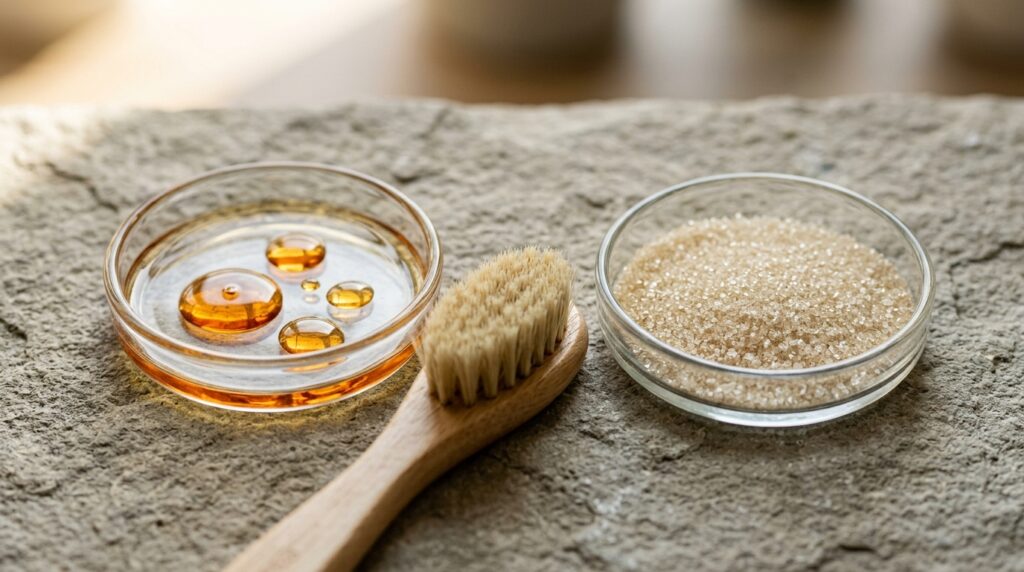
Persistent dryness that returns quickly. When skin dries out quickly after moisturising, this usually is not a sign of an incompatible oil — it points to a
compromised barrier that needs more effective support. Water-based lotions hydrate but do not prevent that moisture from evaporating the way an oil-based product can; oil forms a breathable layer that slows water loss without blocking the skin’s normal function. Rosehip and evening primrose oils are commonly used for barrier support specifically, since their linoleic acid content mirrors part of skin’s natural lipid composition.
Rough texture on elbows, knees and shins. Dead skin buildup and friction from clothing create rough patches that scatter light and prevent an even glow, no matter how much product is applied on top. Weekly gentle exfoliation — a mild lactic acid body wash, for instance — followed immediately by oil on damp skin tends to soften these areas faster than oil alone.
Oils worth using, and why
| Oil | How it behaves on skin | Notes |
|---|---|---|
| Squalane | Absorbs very fast, leaves little residue | Closely resembles natural sebum; a common starting point |
| Jojoba oil | Absorbs fast | Suitable for sensitive or acne-prone areas |
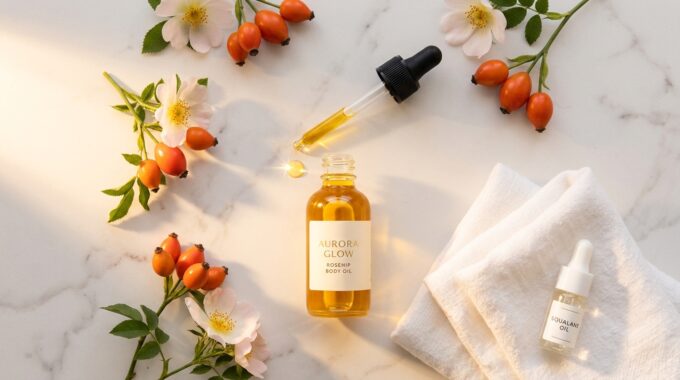
| Rosehip oil | Absorbs at a moderate pace | Good for barrier support and texture |
| Sweet almond oil | Absorbs at a moderate pace | Budget-friendly, good for elbows and knees |
| Marula oil | Absorbs fast but is richer | Use sparingly; more likely to feel heavy |
| Coconut oil | Absorbs slowly, sits on the surface | More likely to contribute to body breakouts, particularly on the chest and back |
| Mineral oil | Does not absorb | Sits on the skin surface, causes a glazed look |
A note on the numbers you will see online: oils are often given a “comedogenicity” rating from 0 to 5, but that scale comes from old animal studies and is not validated for human skin. Treat any rating as a rough guide, not a fact — what matters in practice is how an oil feels on your skin after a few minutes. Most people start with squalane or jojoba, since they absorb quickly and leave little residue.
If a body oil still feels tacky after 5 minutes, it is either too much product or too heavy a formula for your skin — not a sign to add more.
What to avoid
- Mineral oil and petrolatum as the main ingredient: occlusive and do not absorb, contributing to a surface glaze rather than a true glow. (Petrolatum is an effective barrier ingredient in its own right — the point here is that it does not absorb, so it will not give a glow.)
- Heavy synthetic fragrance: a common trigger for irritation and contact sensitivity, unrelated to glow but worth avoiding regardless.
- Shimmer or mica particles: create an instant visual effect that wears off within a few hours and does not reflect actual skin health.
- Coconut oil as a primary ingredient: likely enough to contribute to body breakouts, particularly on the chest and back, for many skin types.
- Citrus oils in daytime products: citrus-derived oils such as bergamot can increase photosensitivity. Never put lemon or lime juice on skin — combined with sunlight it can cause a painful burn-like reaction (phytophotodermatitis). Oil itself provides no sun protection; always apply sunscreen over oil, not the reverse.
How to apply body oil for the best result
- Apply within 3 minutes of showering, while skin is still slightly damp — this allows the oil to seal in moisture rather than being added to already-dry skin.
- Use lukewarm water when showering. Hot water strips the same natural oils you are trying to support, working against the product rather than with it.
- Use less than feels intuitive — 4 to 6 drops is typically enough for a full arm or leg. Warm the oil between your palms for a few seconds before applying.
- Use gentle, sweeping strokes rather than rubbing. Applying oil too aggressively can cause it to warm and evaporate faster, reducing its effectiveness.
- Wait 3 to 5 minutes before dressing to avoid transferring product to clothing.
Patch test first
Before you use a new body oil all over, patch test it. Apply a small amount to a quarter-sized patch of skin on the inside of your arm or the bend of your elbow, twice a day, for 7 to 10 days. If there is redness, itching or swelling, do not use it. A short test of a day or two can miss a reaction that takes several days to appear.
Adjusting for season and time of day
Daytime vs. nighttime use. Daytime application works best with smaller amounts (3 to 4 drops) on visible areas like arms and décolletage, focused on comfort rather than intensity, and always paired with sunscreen. Nighttime use can be slightly more generous, since there is no clothing friction to contend with overnight — night is a practical time for a richer routine, not a biological repair window.
Winter and summer adjustments. Cold, dry air increases moisture loss, so winter often calls for twice-daily application, layering oil over a ceramide-based lotion rather than using oil alone. Summer usually needs less — natural oil production increases with heat, so reducing the amount by roughly a third avoids an unnecessarily heavy feel.
| Season | Adjustment | Reason |
|---|---|---|
| Winter | Twice daily, layer over lotion | Cold air and heating increase moisture loss |
| Summer | Reduce amount by about a third | Natural oil production increases with heat |
| Daytime | 3–4 drops, visible areas | Comfort over intensity, always pair with SPF |
| Nighttime | Slightly more generous | No clothing friction, a practical time for a richer routine |
If using oil during the day in direct sun, remember that oil itself provides no SPF protection. Use a broad-spectrum sunscreen of SPF 30 or higher over the oil, reapplied every two hours outdoors.
Supporting habits that help between applications
- Dry brushing before showering is an optional habit some people enjoy; it has no proven skin benefit, and it should be gentle — never scrub hard enough to redden the skin.
- Drinking enough water enables normal cell function, but there is no good evidence that drinking extra water changes how skin looks. No topical product fully compensates for a poor routine, and no drink replaces one.
- A balanced diet supports overall skin health. No single food — including omega-3-rich foods — has been proven to change the skin’s own lipid production, and diet is not a treatment.
- A gentle body wash avoids undoing the barrier support an oil is trying to provide.
- Most adults need at least 7 hours of sleep a night. Chronic poor sleep is associated with more signs of skin ageing, though the evidence is small-scale and observational.
What a realistic timeline looks like
- Immediately: skin feels more comfortable and less tight; no visible change to texture yet.
- 2–4 weeks: rough patches on elbows and shins begin to soften; skin holds moisture longer between applications.
- 6–12 weeks: meaningfully less product is needed to maintain comfort, and texture improvement becomes visible without any product applied.
This progression reflects how skin barrier repair actually works — cumulatively, not from a single application, regardless of skin tone.
Frequently asked questions
Is body glow oil actually suitable for light skin, or does it always look greasy?
It is suitable when the formula is lightweight and the amount is small — greasiness comes from over-application or a heavy formula, not from skin tone itself. Using 4 to 6 drops per body zone on damp skin avoids the greasy appearance most people are trying to prevent.
Will body oil make light skin look shiny under photos or bright lighting?
Only if it has not fully absorbed before the photo is taken. Waiting the full 3 to 5 minutes for absorption, and using a fast-absorbing oil like squalane or jojoba, minimises the risk of visible shine under bright or direct lighting.
Can body oil be used every day?
Yes, for most skin types daily use is fine, typically once in the evening with an optional lighter morning application in dry winter months. Stop or reduce frequency if breakouts or irritation appear, which usually points to a specific ingredient rather than the practice of daily oiling itself.
Does body oil replace body lotion?
No — lotion provides water-based hydration that oil cannot deliver on its own, since oil seals moisture in rather than adding it. Water moisturises and oil seals. Layering a light moisturiser first and oil second tends to work better than relying on either alone, especially in colder months.
Why does the same body oil look different on different skin tones?
Lighter skin tones reflect more overall light, making both genuine glow and unabsorbed residue more visible than they would be on deeper tones. The oil itself behaves identically — the difference is entirely in how visible the result is, not in how the skin processes the product.
When to get help
See a clinician promptly if you have a rash, blisters or open sores; swelling that lasts more than a day or two; or a reaction to a new product that does not settle after you stop using it. If a skin concern persists despite a steady routine, a dermatologist can identify causes a routine alone will not fix.
The bottom line
The key to having a natural glow on light skin is using the right oil, the right amount, and applying it to damp skin within a few minutes of showering. It is not about using the wrong category of product for a lighter skin tone — it is about using too much of the right category, or a formula too heavy to fully absorb. Consistency over 6 to 12 weeks matters more than any single ingredient choice, and the same fundamentals apply regardless of skin tone.
Sources: American Academy of Dermatology, 7 Rosacea skin care tips (patch-test method: apply a new product to a quarter-sized patch of skin on the inside of the arm for 7–10 days); American Academy of Dermatology, How to select anti-aging skin care products (broad-spectrum sunscreen, SPF 30 or higher, reapply every two hours outdoors). This is a researched overview, not a hands-on review.