Table Of Content
Researched overview — based on published guidance and the brand’s own published information, not on hands-on testing by BeautyKob. No product in this guide was tested by us.
A note on the product name
The live title of this article is “Derma E Radiant Glow Face Oil”, but the formula described here is the Vitamin C Glow Face Oil. The two are not the same product: the “Radiant Glow Face Oil” sold as a collaboration with SunKissAlba is a different blend (sunflower, jojoba, pumpkin seed, seabuckthorn and argan oils, with no vitamin C). This guide covers the Vitamin C Glow Face Oil, because that is the formula whose ingredients are listed below
Quick answer
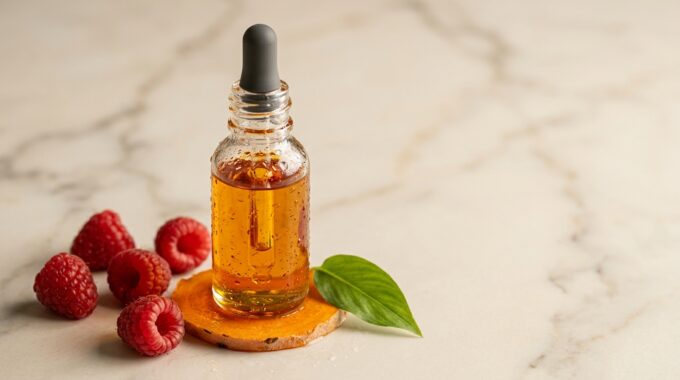
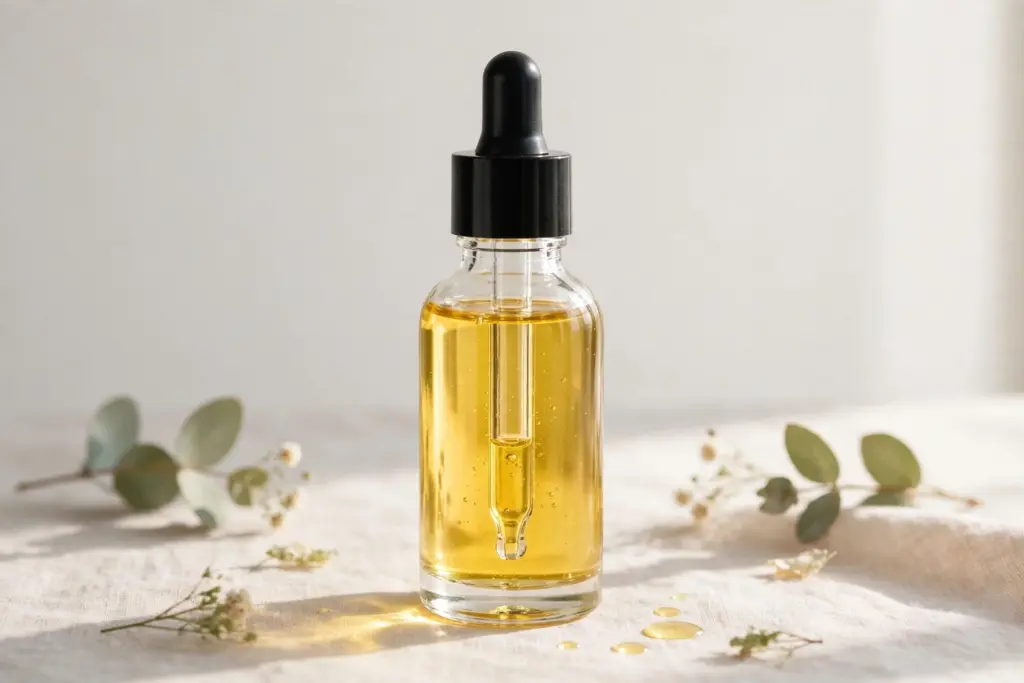
Derma E Vitamin C Glow Face Oil is a lightweight facial oil built around oil-soluble vitamin C (tetrahexyldecyl ascorbate), turmeric, seabuckthorn and red raspberry seed oil, with mica and mineral pigments that give an immediate glow. It is a supporting product for hydration and gentle antioxidant exposure — not a primary treatment for dark spots, and not sun protection.
Use 2–3 drops, pressed onto clean skin, after a water-based serum and before moisturiser and sunscreen. If your main goal is fading pigmentation, a well-formulated vitamin C serum or a dermatologist’s advice will generally do more than this oil. This guide is general information, not medical advice.
Contents: What is in it · The raspberry seed oil SPF claim · What it can and cannot do · How to use it · Who should be careful · How it compares · FAQ
What is actually in it
The published ingredient list for the Vitamin C Glow Face Oil is: caprylic/capric triglyceride, sunflower seed oil, neopentyl glycol diethylhexanoate, tetrahexyldecyl ascorbate, jojoba seed oil, red raspberry seed oil, cranberry seed oil, sea buckthorn seed oil, turmeric root oil, ginger root oil, tocopheryl acetate (vitamin E), mica, titanium dioxide, iron oxides, natural fragrance oils.
| Ingredient | What it is for in this formula |
|---|---|
| Tetrahexyldecyl ascorbate (THD ascorbate) | An oil-soluble form of vitamin C. It is more stable in oil than L-ascorbic acid is in water. Vitamin C is an antioxidant and a cofactor for collagen synthesis in the body, and it can affect melanin production, which is why it is used for the look of uneven tone. (AAD cosmeceuticals review) Whether this oil visibly changes your skin depends on its concentration and formulation — the brand does not publish the concentration, so no strength claim can be made here. |
| Turmeric root oil | The brand presents it as brightening and soothing. Curcumin, the active compound in turmeric, has anti-inflammatory research behind it, but that research is mostly on oral or laboratory use, not on this product. Treat it as a supporting botanical, not a proven treatment. |
| Sea buckthorn seed oil | Rich in essential fatty acids and antioxidants. It is a reasonable moisturising oil. No reliable source was found for the claim that it is specifically recommended for barrier repair after chemical peels or sun damage, so this guide does not make that claim. |
| Red raspberry seed oil | A lightweight oil rich in essential fatty acids and vitamin E. It is a moisturising ingredient — it is not sun protection (see below). |
| Cranberry seed oil, ginger root oil | Supporting botanical oils in the blend. No specific skin outcome is claimed for them here. |
| Jojoba seed oil, sunflower seed oil | Base oils. Jojoba is structurally similar to the skin’s own sebum, which is why it is widely used as a base oil. |
| Vitamin E (tocopheryl acetate) | An antioxidant that also helps stabilise the vitamin C in the formula. |
| Mica, titanium dioxide, iron oxides | Mineral pigments. These are what give the oil its immediate “glow” — a visible, cosmetic shimmer on the skin surface. That glow is not the same as a change in the skin itself. |
| Natural fragrance oils | Scent ingredients. This means the product is not fragrance-free, despite what the previous version of this article said. If you are sensitive to fragrance, patch test first. |
The product is 100% vegan and cruelty-free, and the brand says it contains no parabens, sulfates, mineral oil, lanolin, gluten or GMOs. Derma E describes it as suitable for all skin types; that is the brand’s claim, not a tested result for every skin type.
The raspberry seed oil SPF claim — corrected
This is worth addressing directly, because the claim is everywhere online: red raspberry seed oil is often described as having an “SPF of 28–50”.
That figure comes from a single study published in 2000 (Oomah and colleagues, Food Chemistry), which measured how the oil transmitted UV light in a laboratory instrument. The study never tested the oil on human skin, and it never established an SPF. A valid SPF can only come from a standardised test on human volunteers. (Tisserand Institute, “The Quest for a Natural Sunscreen”)
When raspberry seed oil was tested properly on human skin in 2021 (Ácsová and colleagues, Photochemical & Photobiological Sciences, using the ISO 24444 method), the measured SPF was about 2.6 — far below the SPF 30+ that dermatology guidance recommends for daily use.
So: raspberry seed oil is a genuinely useful moisturising oil, rich in fatty acids and vitamin E. It is not sun protection, and no product containing it should be used as a substitute for a broad-spectrum sunscreen. The American Academy of Dermatology recommends broad-spectrum SPF 30 or higher every day, including on cloudy days, reapplied every two hours outdoors. (AAD sunscreen guidance)
What it can and cannot do
What it can reasonably do: add a light layer of hydration, give an immediate cosmetic glow from the mineral pigments, and provide gentle antioxidant exposure as part of a routine. Oil-based vitamin C formulations generally work more gradually than concentrated water-based serums, because the delivery and the typical concentration differ.
What it cannot do: fade a specific dark spot by a specific date, replace a well-formulated vitamin C serum, replace sunscreen, or repair skin damage. If dramatic pigmentation change is the main goal, a well-formulated L-ascorbic acid serum or a dermatologist-prescribed treatment will generally do more. This oil works better as a supporting, barrier-friendly layer than as a primary treatment.
What is not known: the concentration of the vitamin C in this oil is not published, so no claim can be made about its strength. No peer-reviewed clinical study of this specific product was found, so any percentage improvement figures in marketing should be treated with scepticism unless they cite a specific, verifiable study.

How to use it
- Cleanse gently with lukewarm water and a mild cleanser.
- Apply water-based products first — a hydrating serum, for example. Oil goes after water-based products.
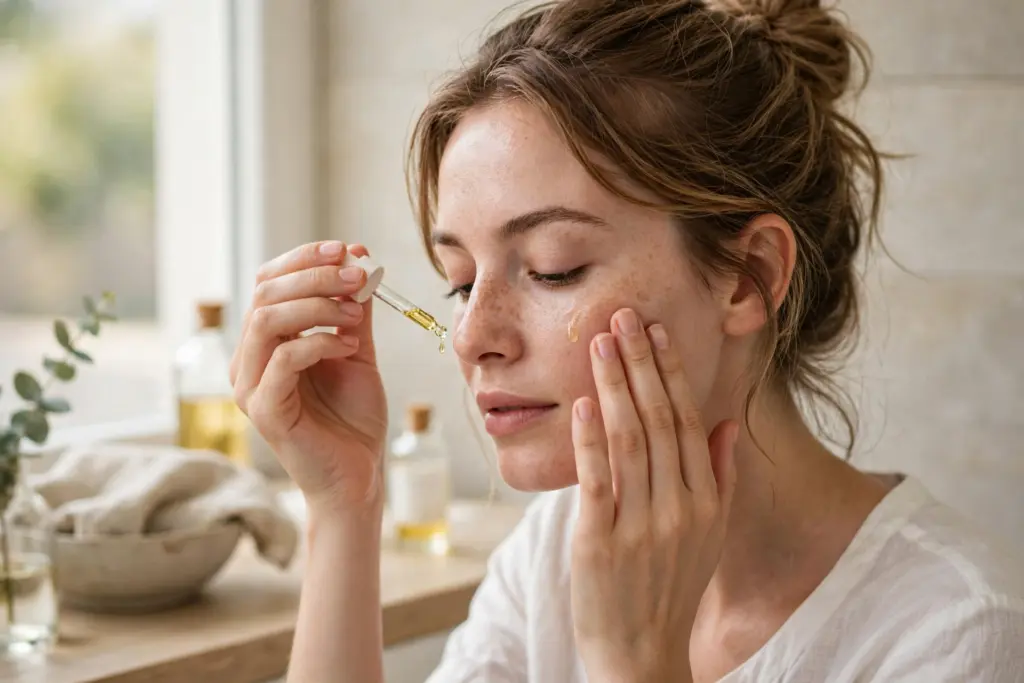
- Press 2–3 drops onto clean face, neck and décolletage. Pressing, rather than rubbing, helps it spread evenly. Shake the bottle first, as the brand directs.
- Moisturise, then sunscreen in the morning — broad-spectrum SPF 30 or higher, as the last step. Sunscreen is not optional with a brightening routine.
At night it can be used as one of the final steps, after treatment serums. Do not layer it in the same session as a strong exfoliating acid or a high-strength retinoid when you are starting out — use them on different nights instead.
Who should be careful
- Fragrance sensitivity: the oil contains natural fragrance oils. It is not fragrance-free. Patch test first — apply a small amount to a quarter-sized patch of skin on the inside of your arm or the bend of your elbow, twice a day for 7–10 days. If there is redness, itching or swelling, do not use it on your face.
- Oily or acne-prone skin: a facial oil can be used in small amounts, often best in the evening, but any new oil can cause congestion in some people. If breakouts start after a new oil, stop it and see whether they settle.
- Very sensitive or damaged skin: patch test first, and do not use it on broken or sunburnt skin.
- Do not use it as sun protection. See the SPF section above.
How it compares to other facial oils
| Oil type | Main goal | Example ingredients | Best for |
|---|---|---|---|
| Brightening (this product) | Even tone, antioxidant support, instant glow | Vitamin C, turmeric, seabuckthorn, mica | Dull or uneven-looking skin |
| Barrier repair | Hydration, calming | Ceramides, jojoba, vitamin E | Dry or reactive skin |
| Pure hydration | Simple moisture, no actives | Squalane alone, plain rosehip | Sensitive skin avoiding actives |
| Anti-ageing | Fine lines, texture | Retinol, peptides, squalane | Mature or photoaged skin |
FAQ
Is this oil good for dark spots?
Its vitamin C content makes it a reasonable choice for gradual tone-evening, but expect subtle, cumulative change over weeks rather than a dramatic shift. Oil-based vitamin C generally works more slowly than a concentrated water-based serum.
Does it provide sun protection?
No. The “SPF 28–50” figure for raspberry seed oil comes from a lab test that was never validated on human skin; proper testing measured about SPF 2.6. Always layer it under a real broad-spectrum sunscreen.
Can oily or acne-prone skin use it?
Usually yes, in small amounts — 2–3 drops, often best in the evening. Patch test first, and stop if breakouts follow.
Should it go before or after moisturiser?
After water-based serums and before a heavier moisturiser or SPF in the morning, or as one of the final evening steps. The general rule is thinnest to thickest.
Is it fragrance-free?
No. The ingredient list includes natural fragrance oils. The previous version of this article said it was fragrance-free; that was wrong.
Summary
Derma E Vitamin C Glow Face Oil is a reasonably formulated, vegan, cruelty-free brightening oil built around oil-soluble vitamin C, turmeric, seabuckthorn and raspberry seed oil, with mineral pigments that give an immediate glow. It is best understood as a supporting layer for hydration and gentle antioxidant exposure — not a primary treatment for pigmentation and not a substitute for sunscreen. Check the label before buying: it contains fragrance oils, and the product name on the bottle should match the formula described here.
Sources: Derma E product ingredient list as published by the brand and quoted by retailers; AAD cosmeceuticals review on vitamin C; AAD sunscreen guidance; Oomah et al. 2000 and Ácsová et al. 2021 on raspberry seed oil UV protection. This is a researched overview, not a hands-on review.