Researched overview. This guide is based on published dermatology guidance, not on hands-on product testing by BeautyKob. No product in this guide was tested by us.
Table Of Content
- Quick answer
- Why tools matter in a daily routine
- Skincare tools for daily use
- Facial cleansing tools
- Facial massage tools
- Blackhead tools and pore care
- Face towels and headbands
- Hair tools for daily use
- Brushes and combs
- Scalp massagers
- Hair drying tools
- Body care tools for daily use
- Body cleansing tools
- Exfoliation tools
- Grooming tools for daily use
- Nail care tools
- Hair removal tools
- High-tech tools: what they can and cannot do
- Microcurrent devices
- LED therapy devices
- Facial steamers
- Cleaning and maintaining your tools
- Seasonal care for your tools
- A daily habit: morning and evening
- Grooming tools you might be missing
- Patch test first
- Mistakes most people make, and how to avoid them
- Frequently asked questions
- When to get help
- The bottom line
Quick answer
Beauty does not mean expensive equipment. It means having the right tools, used regularly and gently, and kept clean. A soft cleansing brush, a wide-tooth comb, a microfibre hair towel and a few basic grooming tools cover most of what a daily routine needs. High-tech devices are optional extras, not the foundation.
Tools do not replace products, and they do not do the work for you. They help with cleaning, detangling and application — and they can also harm skin and hair if they are used too hard, too often, or while dirty. The rules that matter most are simple: light pressure, clean tools, and the right tool for your skin and hair type.
Why tools matter in a daily routine
Washing your face with just your hands, or brushing your hair with whatever is nearest, gets the basic job done. Tools add three things: they reach places hands cannot, they make the job more even, and they make a routine quicker and more comfortable. A soft cleansing brush reaches into the corners around the nose; a wide-tooth comb detangles without pulling; a scalp massager spreads shampoo more evenly than fingertips alone.
The key is consistency. A good tool used occasionally does less than a simple tool used every day. And no tool fixes a routine that is otherwise wrong — a harsh cleanser is still harsh through a brush, and a hot dryer still damages hair no matter how good the brush is.
Skincare tools for daily use
Facial cleansing tools
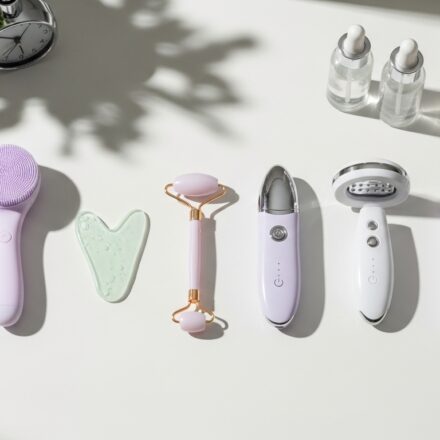
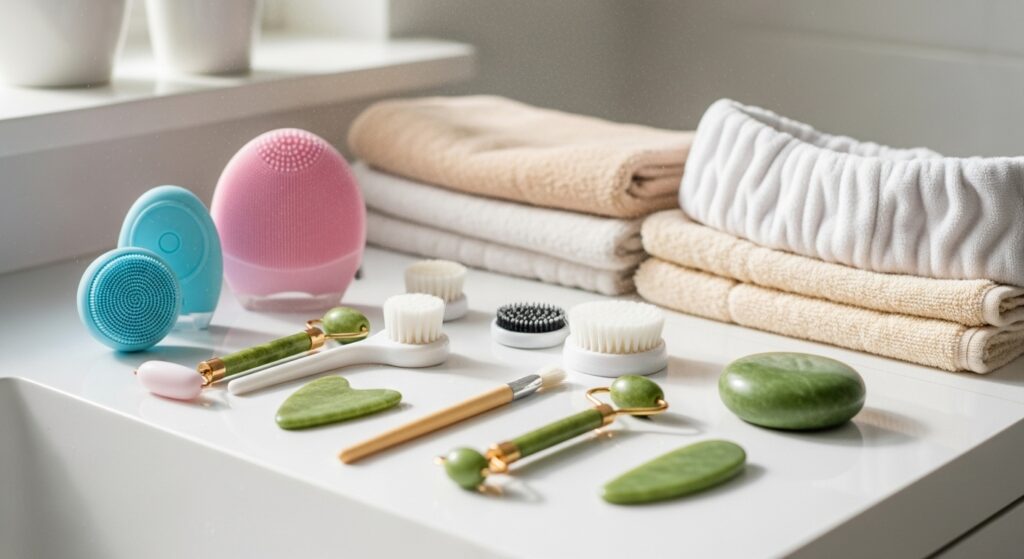
Dirt, sweat and make-up can be removed gently using a silicone cleansing brush or a manual soft-bristled brush. These brushes can also help a cleanser spread more evenly. Choose brushes marked for everyday use. Bristle tools used too hard can over-exfoliate and lead to irritation, especially on sensitive skin. Use a gentle circular motion, morning and evening, with a mild cleanser and lukewarm water — fingertips only for the actual washing, the brush as a light aid, not a scrub.
Facial massage tools
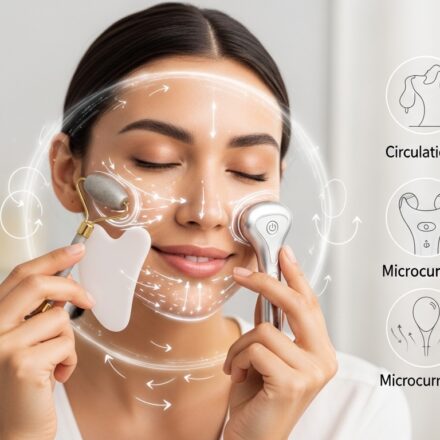
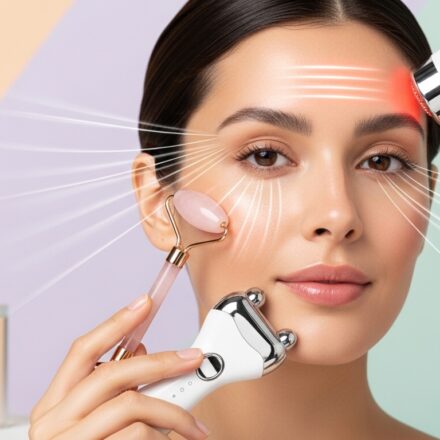
Jade rollers and gua sha stones are popular for stressed or tired-looking skin. A cool roller can feel soothing and can temporarily reduce the look of puffiness. There is no good evidence that they drain lymph, firm skin, or change skin structure — treat them as a pleasant, optional step, not a treatment. Use light pressure and glide outward from the centre of the face. Never pull vigorously, especially around the under-eye area, where the skin is thinnest. A roller kept in the fridge feels cooler and can help the soothing effect.
Blackhead tools and pore care
A comedone extractor can help with a blackhead, but used wrongly it can cause scarring. The dermatology guidance is simple: do not pop a pimple. If you use an extractor at all, use it only on skin that has been softened by warm water, press gently, and sterilise the tool before and after use. There is no magic tool for blackheads, and squeezing too hard or too often makes the problem worse, not better. Pores have no muscles and cannot open or close — steam and warm water soften the skin around them, they do not open them.
Face towels and headbands
The simplest tools are often the most useful. Soft face towels and headbands keep skin clean and hair out of the way while washing or applying products. Use a fresh towel on your face to reduce bacterial buildup, and wash headbands regularly.
Hair tools for daily use
Brushes and combs
Different brushes suit different jobs. A wide-tooth comb is the safest choice for wet or damp hair — and wet hair needs the most care, because it is more fragile than dry hair. Detangle damp hair with conditioner in it, starting at the ends and working upward, and never detangle dry hair roughly. A paddle brush smooths hair and makes it look sleeker; a detangling brush removes knots with less pulling. Fine hair usually does better with a soft brush; thick and curly hair needs a sturdier one to get through it.
Scalp massagers
Scalp care matters as much as skin care. A manual scalp massager used during shampooing can help spread shampoo evenly and feels pleasant, and it may help with a dry scalp. The evidence that scalp massage grows hair is very thin — the one study often cited had only 9 men and no control group — so treat it as a comfort and hygiene step, not a growth treatment.
Hair drying tools
Towels matter more than most people realise. A microfibre hair towel or hair wrap causes less breakage and frizz than an ordinary cotton towel, and is gentler on the hair shaft. Blow dryers are ordinary tools, but heat is heat: a dryer with temperature control reduces damage, it does not eliminate it. Use the lowest heat that gets the job done, keep the dryer about 15 cm from the hair and moving continuously, and apply a heat protectant first.
Body care tools for daily use
Body cleansing tools
A soft loofah or silicone scrubber can help remove dead skin and improve how a body wash spreads. These are gentle instruments for daily use. Do not scrub hard — aggressive washing can damage the skin barrier.
Exfoliation tools
Foot files and dry brushes help with rough skin on feet and body, and with removing dead cells. Brush gently before showering, starting at the feet and moving upward. Dry brushing has no proven skin benefit beyond removing surface dead cells, so keep it light and optional. In winter, exfoliate less often and more gently, since cold air already dries the skin.
Grooming tools for daily use
Nail care tools
Nail cleaning and shaping help appearance and prevent infection. A basic set is a nail clipper, a nail file and a cuticle pusher. File in one direction rather than sawing back and forth, clip nails straight across, and push cuticles back gently rather than cutting them. Clean your instruments after use to avoid bacterial buildup.
Hair removal tools
Shaving or trimming is a personal choice. Use a sharp, clean razor or trimmer, shave in the direction of hair growth where possible, and use a moisturiser afterwards so skin stays smooth. A blunt or dirty razor is the usual cause of irritation and ingrown hairs, not the act of shaving itself.
High-tech tools: what they can and cannot do
These devices are optional. None of them is necessary for healthy skin or hair, and none of them replaces the basics — gentle cleansing, moisturising and sunscreen.
Microcurrent devices
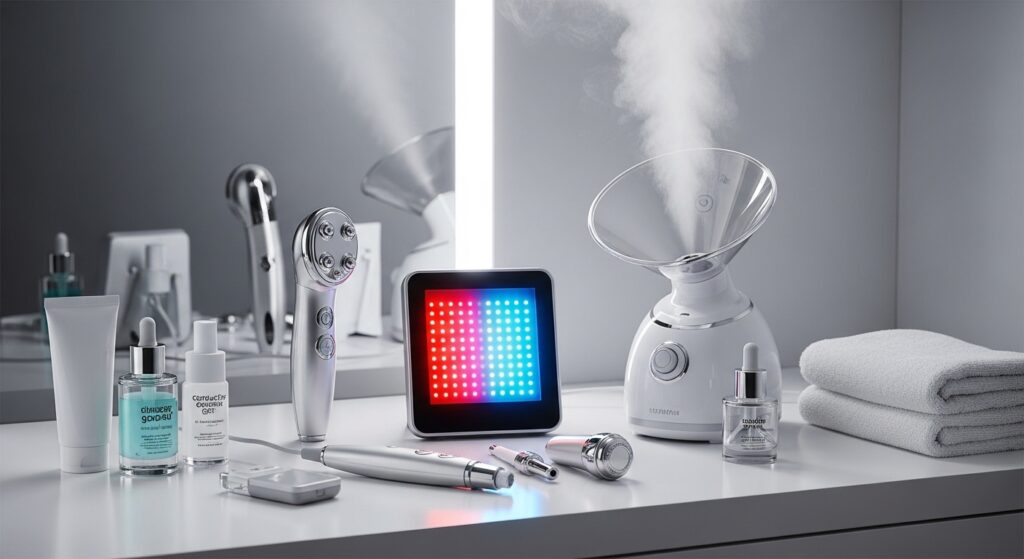
Microcurrent devices apply a low-voltage electric current to the muscles of the face. They are marketed as tightening and firming, but the evidence for lasting firming is limited and mostly comes from small or manufacturer-run studies. A session of a few minutes a day is the usual pattern. Before using one, wash the device and apply it with a conductive gel as the manufacturer directs, and do not press hard. Do not expect a device to replace the effects of time, sun protection and a steady routine.
LED therapy devices
LED devices use different wavelengths of light for different skin concerns. Blue light has some evidence for acne, since it can affect the bacteria involved; red light is marketed for collagen, but the evidence there is limited. A session of a few minutes, a few times a week, is the usual pattern — follow the manufacturer’s instructions for your specific device. LED devices are not a treatment for stubborn acne or early ageing on their own; if a skin concern persists, a dermatologist can advise better than a device can.
Facial steamers
A facial steamer is a simple, useful device. Warm mist softens the skin and can make cleansing feel more thorough, and it may help a moisturiser spread more evenly afterwards. It does not open pores — pores cannot open or close — and it does not increase how much product your skin absorbs. Use it briefly, a few times a week at most, and never on broken, sunburnt or very sensitive skin.
Cleaning and maintaining your tools
Tools that touch your face and hair every day need the same hygiene as anything else that touches your skin.
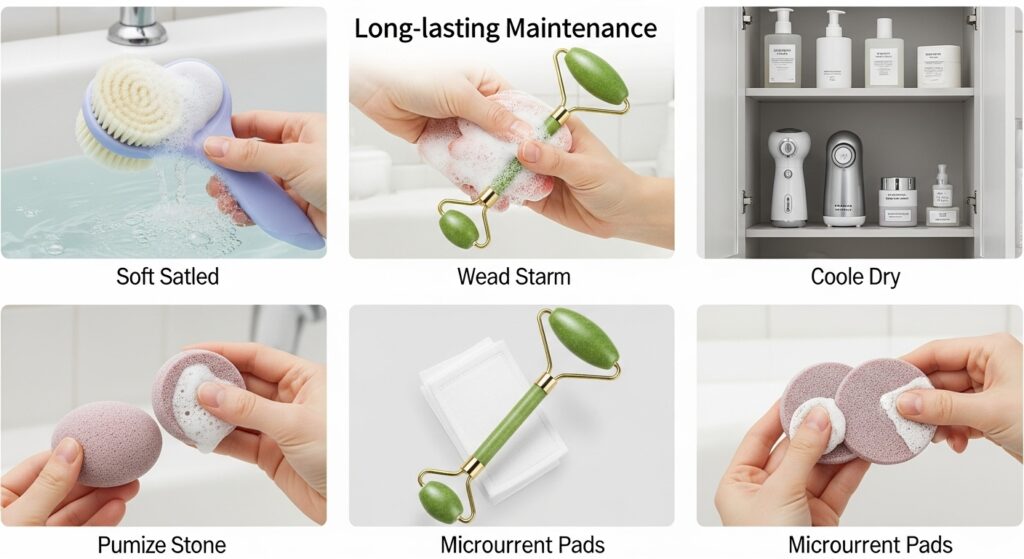
- Clean brushes and rollers with soft soap and warm water, and let them dry fully before storing.
- Keep electrical appliances in cool, dry places to prevent moisture damage.
- Clean hard tools such as pumice stones, pads and sponges regularly, and replace them when they wear out.
- Do not share personal tools — sharing spreads bacteria between people.
A tool that is kept clean works better and is safer. A dirty brush can irritate skin and undo the work of a good routine.
Seasonal care for your tools
Skin and hair change with the seasons, and the tools you reach for should change with them.
Winter. Dry air takes moisture from skin and hair. Moisturising brushes and scalp massagers used with oils can help, and a humidifier in the bedroom is useful. Exfoliate less often and more gently in the cold months, since the skin is already drier.
Summer. Hot days mean more sweat and oil. Wash the body more often, use lightweight exfoliating tools, and use a scalp massager to clear congested pores. Silicone cleansing brushes suit summer because they are easy to clean and less irritating.
Transitional seasons. Spring and autumn bring temperature changes that affect oil production. Gentle stimulation with facial rollers or soft body brushes can help the skin adjust without stress.
A daily habit: morning and evening
The order tools are used in matters as much as consistency.
Morning. Use a gentle cleansing brush, then a facial roller or gua sha stone if you use one, then moisturiser and sunscreen — a broad-spectrum sunscreen with SPF 30 or higher, reapplied every 2 hours when you are outdoors. Hair tools such as a scalp massager and a detangling brush can be used during shampooing.
Evening. Use a deeper cleansing tool if needed, then a microcurrent or LED device if you own one, then moisturiser. Body exfoliation tools fit here too, where needed.
Short, regular routines beat long, irregular ones. The tools should make the routine easier, not turn it into a chore.
Grooming tools you might be missing
Eyebrow and lash tools. Small brow brushes, tweezers and eyelash curlers are useful with minimal effort. Use clean, precise tools — tugging and damage are avoided by working gently and accurately, especially near the eyes.
Oral and dental tools. Oral care counts as part of a daily routine: electric toothbrushes, tongue scrapers and water flossers affect your smile, which is the first thing people notice. These are everyday items that support confidence as much as any skincare tool.
Patch test first
Before you use a new product on your face — including any product used with a tool, such as a cleanser with a brush or a serum with a roller — patch test it. Apply a small amount to a quarter-sized patch of skin on the inside of your arm or the bend of your elbow, twice a day, for 7 to 10 days. If there is redness, itching or swelling, do not use it on your face. A short test of a day or two can miss a reaction that takes several days to appear.
Mistakes most people make, and how to avoid them
- Pressing too hard. Pressing or pushing a tool harder does not make it work better — soft motions are more effective and less irritating.
- Skipping cleaning. Dirty tools can irritate skin and break down faster. Clean them regularly.
- Ignoring your skin or hair type. A rough brush can cut delicate skin, and too soft a brush may not get through coarse hair. Match the tool to your type.
- Overusing high-tech devices. Microcurrent or LED devices used every day, or for longer than directed, can irritate skin. Follow the manufacturer’s instructions.
- Using a tool on damaged skin. Do not use cleansing brushes, exfoliating tools or devices on broken, sunburnt or inflamed skin.
Stop and check. If you notice redness, breakage or irritation after using a tool, stop using it and check whether the tool, the pressure or the product is the cause. Do not push through irritation — it is a signal, not a stage to endure.
Frequently asked questions
Are beauty tools worth it?
The right tools can make a routine quicker, more even and more comfortable. Their results show up over weeks of steady use, not overnight, and they depend on the rest of the routine being sound. No tool on its own transforms skin or hair.
Can tools damage skin or hair?
Yes — if they are used too hard, too often, or while dirty. Always follow the instructions, use light pressure, and choose tools suited to your skin and hair type.
Do I need expensive tools?
Not always. Good-quality mid-range tools usually offer the same benefits as expensive ones. Material and consistency matter more than brand or price.
How long does it take to see results?
After a few weeks of daily use, skin may feel smoother and hair may feel easier to manage. Meaningful change takes longer — typically two to three months of consistent use — and it comes from the whole routine, not from one tool.
When to get help
See a clinician promptly if you have a rash, blisters or open sores; swelling that lasts more than a day or two; pain or vision changes near the eyes; or a reaction to a new product or tool that does not settle after you stop using it. If a skin concern persists despite a steady routine, a dermatologist can identify causes a routine alone will not fix.
The bottom line
Regularity, gentle handling and the right equipment are what make a beauty routine work. A cleansing brush, a jade roller, a scalp massager and a microfibre hair towel each have their place — they make a routine quicker, more comfortable and more consistent. Start simple, keep your tools clean, use light pressure, and add more complex tools only when you find you need them. Over time, that adds up to skin that looks healthier and hair that is easier to manage — not because of any one tool, but because the whole routine works together.
Sources: American Academy of Dermatology, 7 Rosacea skin care tips (patch-test method: apply a new product to a quarter-sized patch of skin on the inside of the arm for 7–10 days); American Academy of Dermatology, How to select anti-aging skin care products (broad-spectrum sunscreen, SPF 30 or higher, reapply every two hours outdoors). This is a researched overview, not a hands-on review.