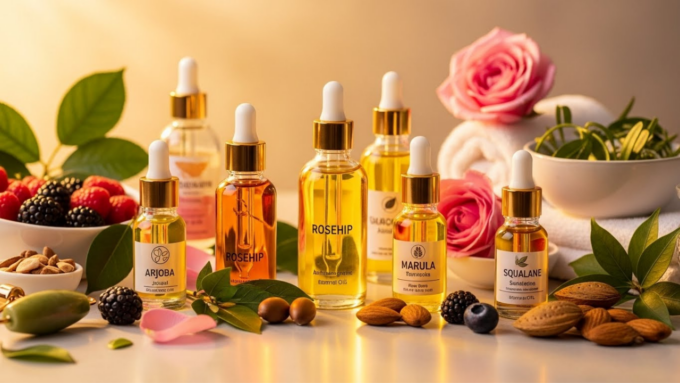
Researched overview. This guide is based on published dermatology guidance, not on hands-on product testing by BeautyKob. No product in this guide was tested by us, and no oil is recommended.
Table Of Content
Quick answer
A face oil is a moisturiser, not a treatment. It sits on the surface of the skin, seals in water, and makes dry skin feel softer and look smoother. That is useful — mature skin gets drier as its natural oil production falls — but it is all an oil does. No face oil repairs damaged skin, improves elasticity, corrects uneven tone, or erases fine lines. The anti-ageing steps with real evidence are daily broad-spectrum sunscreen, a retinoid, and a plain moisturiser (see the Batch 10 guide, “Anti-Aging Skincare Routine for Women Over 40”, for the full evidence hierarchy). A face oil can sit alongside those steps; it cannot replace them.
If your skin is red, sore, or has open sores or a rash, ask a dermatologist or pharmacist before using any new product. This guide is general information, not medical advice.
Contents: What face oils actually do · Oil by oil · Retinol oils are different · How to choose by skin type · How to use · Mistakes · Habits · When to see a dermatologist · FAQ
What face oils actually do
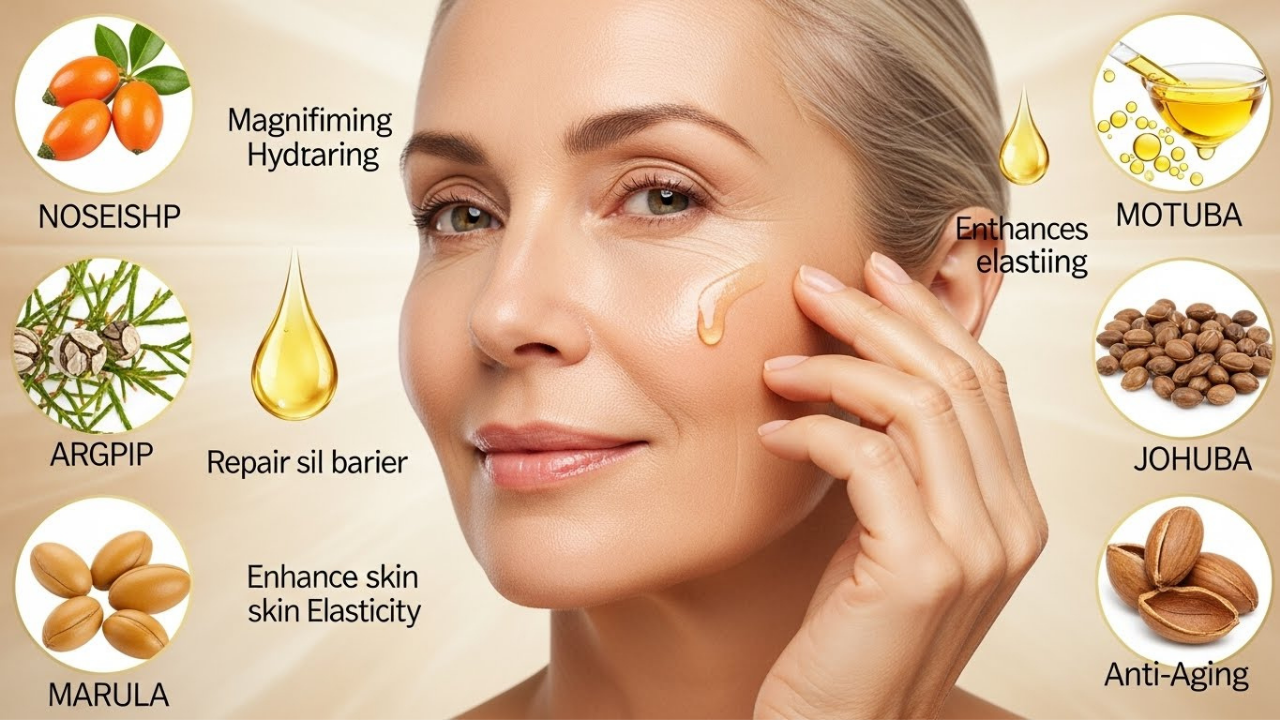
As skin ages, it produces less of its own oil, the barrier gets thinner, and the skin loses water more easily. That is why mature skin often feels tight, dry and rough. A face oil helps in one specific way: it is an emollient and an occlusive. It fills the gaps between skin cells so the surface feels smoother, and it slows water loss from the skin. Used on damp skin, it seals in the hydration underneath.
What an oil does not do:
- It does not penetrate deeply. Most of an oil stays in the outer layer of skin. Claims that oils “penetrate to nourish and repair” are not supported.
- It does not repair damage or improve elasticity. There is no published evidence that any face oil repairs sun damage, corrects uneven tone, or increases elasticity.
- It does not make other products work better. Oils do not prepare the skin to absorb serums or moisturisers, and they do not multiply the effect of other products.
- It does not replace moisturiser or sunscreen. An oil seals in water; it does not add water the way a humectant moisturiser does, and it offers no sun protection.
Used honestly, a face oil is a reasonable extra step for dry, mature skin. It is not an anti-ageing treatment.
Oil by oil
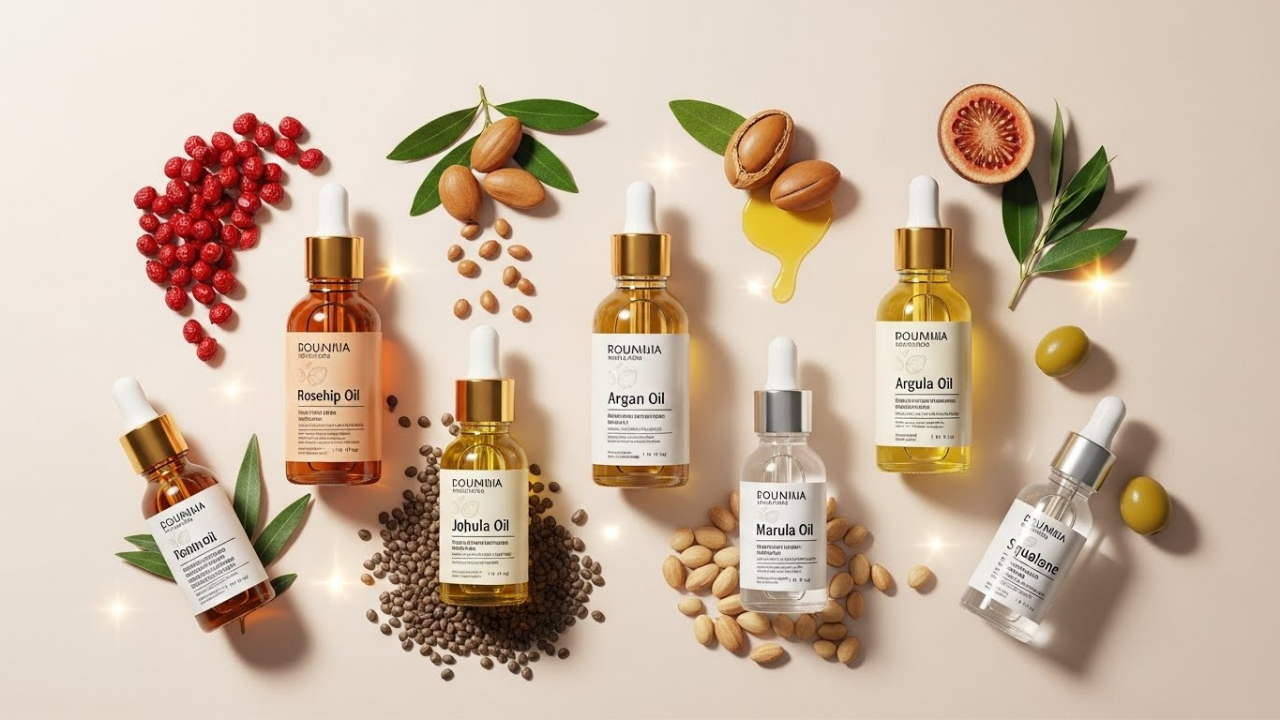
| Oil | What it is | What it can do | What it cannot do |
|---|---|---|---|
| Rosehip oil | Cold-pressed from rosehip seeds; rich in linoleic and linolenic acids, carotenoids (provitamin A) and vitamin E. Light, fast-absorbing, low-comedogenic. | Moisturises and softens dry skin; a reasonable choice for mature skin that feels tight. | It does not contain vitamin C — that is a common myth; the vitamin C is in the fruit and degrades in the oil. Its vitamin A is carotenoids, not retinoic acid, so it is not a natural retinol and does not renew cells or fade dark spots. No good evidence it reduces fine lines. It oxidises quickly, so keep it in a cool, dark place and replace it if it smells rancid. |
| Argan oil | Pressed from argan kernels; rich in oleic and linoleic acids and vitamin E. Medium weight. | Moisturises and softens dry skin; a reasonable choice for very dry mature skin. | No evidence it improves elasticity, repairs damage, or reduces lines. |
| Jojoba oil | A liquid wax ester, chemically similar to the skin’s own sebum. Light and well tolerated. | Moisturises without feeling heavy; a reasonable choice for combination or sensitive mature skin. | No evidence it balances oil production or has any anti-ageing effect beyond moisture. |
| Marula oil | Pressed from marula kernels; rich in oleic acid and antioxidants. Light but nourishing. | Moisturises and softens skin; a reasonable choice for sensitive mature skin. | No evidence it protects against environmental damage or improves texture beyond moisture. |
| Squalane oil | A stable, hydrogenated form of squalene, a lipid the skin makes itself. Very light, non-comedogenic. | Moisturises and softens skin; mixes well with other products; a reasonable choice for almost any skin type. | No evidence it increases elasticity or has any anti-ageing effect beyond moisture. |
No oil in this table is “the best” for ageing skin. They are all moisturisers with different textures. Choose by how the oil feels on your skin, not by anti-ageing promises on the label.
Retinol oils are different
Some oils contain retinol or a vitamin A derivative. These are not ordinary face oils — they are active retinoid products, and the rules for retinoids apply:
- Start slowly. Two or three nights a week, a few drops, and increase only if your skin stays comfortable. Retinol can irritate, especially on mature or sensitive skin.
- Patch test first. Apply a quarter-sized amount to the underside of your arm or the bend of your elbow, twice a day, for 7–10 days. Stop if you get redness, itching or swelling.
- Do not combine with exfoliants when starting out. Retinol plus a chemical exfoliant or scrub in the same routine is a common cause of irritation.
- Pregnancy and breastfeeding: Topical retinoids are not suitable during pregnancy, because there is a risk they may cause birth defects, according to NHS guidance. If you are pregnant, planning pregnancy or breastfeeding, avoid retinoid oils and ask a healthcare professional first.
- A retinol oil does not replace a retinoid cream or serum. If you want a retinoid, a plain retinol product with a stated strength is a clearer choice than an oil that does not say how much retinol it contains.
Do not buy a rosehip or other plant oil expecting a retinoid effect. If you want a retinoid, buy a retinoid.
How to choose by skin type
- Very dry skin: a richer oil such as argan or rosehip, used after moisturiser to seal in hydration. A few drops is enough.
- Combination or slightly oily skin: a lighter oil such as jojoba or squalane. It moisturises without feeling heavy.
- Sensitive skin: a plain, fragrance-free oil such as squalane or jojoba. Avoid oils with added fragrance or essential oils, which are common irritants.
- Acne-prone mature skin: a light, low-comedogenic oil such as squalane or jojoba, used sparingly. If breakouts start after a new oil, stop it and see whether they settle.
Whatever your skin type, look for a short ingredient list, no added fragrance, and packaging that protects the oil from light and air. Price alone does not tell you whether an oil is well made.
How to use a face oil
Order (thinnest to thickest):
1. Cleanse gently with lukewarm water and a mild cleanser.
2. Serum, if you use one (for example vitamin C in the morning, or a retinoid at night — not both when starting out).
3. Moisturiser. This is the step that adds water and hydrating ingredients.
4. Face oil, last. A few drops, warmed between your palms and patted — not rubbed — onto slightly damp skin. The oil seals in the moisture underneath.
5. Sunscreen (morning, last). Broad-spectrum SPF 30 or higher, over the oil. An oil is not a substitute for sunscreen.
How much and how often: two to four drops is enough for the whole face. Once or twice a day, according to your skin and the weight of the oil. Start with once a day and see how your skin reacts. If your skin feels greasy or breaks out, use less, or use it only at night.
Patch test: apply a quarter-sized amount to the underside of your arm or the bend of your elbow, twice a day, for 7–10 days, before using a new oil on your face.
Mistakes to avoid
- Using too much. A few drops is enough. Too much oil sits on the skin, looks greasy, and can clog pores.
- Applying oil to dirty skin. Cleanse first, or trapped dirt and makeup can cause breakouts.
- Expecting an oil to replace moisturiser or sunscreen. An oil seals in moisture; it does not hydrate on its own and it offers no sun protection.
- Exfoliating to “help oils penetrate”. Exfoliation does not make oils penetrate more deeply, and over-exfoliating mature skin causes irritation.
- Using a retinol oil like an ordinary oil. Retinol oils are actives. Start slowly, patch test, and do not use them in pregnancy.
- Changing oils every few days. You will never learn what helps. Give one oil a few weeks before judging it.
- Believing “natural retinol” or “repairs damage” on a label. These are marketing claims, not evidence.
Habits that help
- Sun protection beyond sunscreen: a hat and shade on bright days. Sunscreen is the main step, but the small choices add up.
- Sleep and stress: poor sleep and ongoing stress are not good for skin, and they make it harder to stick to a routine. They do not directly change how an oil works.
- Food: a balanced diet with enough protein, healthy fats and a variety of fruit and vegetables supports general health. It does not multiply the effect of a face oil, and no food can be presented as an anti-ageing treatment.
- Do not smoke. Smoking speeds skin ageing, according to the American Academy of Dermatology.
When to see a dermatologist
Ask a dermatologist or pharmacist if: a new oil causes persistent redness, itching, swelling or breakouts; your skin is persistently dry despite a steady routine; or you have a skin condition such as eczema, rosacea or acne that is getting worse. A dermatologist can also advise on whether a retinoid is right for you, and which strength to start with.
FAQ
What is the best face oil for dry mature skin?
There is no single best oil. Rosehip and argan oils are reasonable choices because they are rich and moisturising, but they hydrate — they do not treat ageing.
Can oily skin use face oils?
Yes — light oils such as jojoba or squalane usually suit oily skin, because they moisturise without feeling heavy. Use a few drops and watch how your skin reacts.
How often should I use a face oil?
Once or twice a day, according to your skin and the weight of the oil. Start once a day.
Do face oils reduce the appearance of fine lines?
They can make dehydration lines look softer for a while, because hydrated skin looks smoother. They do not reduce fine lines themselves, and they do not change the skin underneath.
Should face oil come before or after moisturiser?
After moisturiser, as the last step before sunscreen in the morning. The oil seals in the moisture underneath. Some people mix a drop into their moisturiser instead — that is fine too.
Is rosehip oil a natural retinol?
No. Rosehip oil contains carotenoids, which are vitamin A precursors, not retinoic acid. There is no good evidence it delivers a retinoid effect. If you want a retinoid, buy a retinoid.
Summary
A face oil is a moisturiser: it seals in water and makes dry, mature skin feel softer. It does not repair damage, improve elasticity, correct tone, or erase lines. The anti-ageing steps with real evidence are daily sunscreen, a retinoid, and a plain moisturiser. Choose an oil by texture and skin type, use a few drops on damp skin after moisturiser, patch test first, and treat any retinol-containing oil as an active — start slowly, and avoid it in pregnancy.
Sources: AAD sunscreen guidance and AAD guidance on reducing premature skin ageing; Hughes et al. 2013 (daily sunscreen and skin ageing, Annals of Internal Medicine); AAD cosmeceuticals review on vitamin C; NHS 111 Wales guidance on topical retinoids in pregnancy; AAD patch-test method; rosehip oil composition (Frontiers in Pharmacology 2024 review and dermatology sources — carotenoids, not pharmaceutical tretinoin; no vitamin C in the oil). This is a researched overview, not a hands-on review.