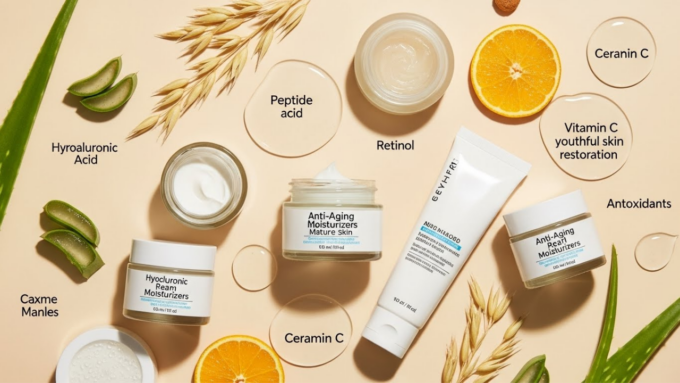
Researched overview. This guide is based on published dermatology guidance, not on hands-on product testing by BeautyKob. No product in this guide was tested by us, and no moisturiser is recommended.
Table Of Content
Quick answer
A good moisturiser for mature skin does three things: it adds water, it seals that water in, and it supports the skin barrier so the skin feels comfortable and looks smoother. The ingredients with the best evidence for that job are humectants such as hyaluronic acid and glycerin, barrier lipids such as ceramides, and — for fine lines over months — a retinoid, used slowly and carefully. Peptides and antioxidants are popular additions with thinner evidence.
What no moisturiser does: remove wrinkles, firm sagging skin, or make skin look young again. A moisturiser is also not a substitute for sunscreen — daily broad-spectrum sunscreen is the single most effective anti-ageing step, and it goes on over your moisturiser every morning. Any product that promises to “reverse ageing” or “restore youth” is not telling the truth.
If your skin is red, sore, or has open sores or a rash, ask a dermatologist or pharmacist before using any new product. This guide is general information, not medical advice.
Contents: How mature skin changes · What a moisturizer can and cannot do · Ingredients, honestly · How to choose by skin type · How to use · Starting retinol safely · Mistakes · Habits · When to see a dermatologist · FAQ
How mature skin changes
As skin ages, it produces less collagen and elastin, so it gradually loses firmness and becomes thinner. It also produces less of its own oil, and ceramide levels fall, so the barrier weakens: the skin loses water more easily, dries out, and becomes more sensitive to fragrance and harsh ingredients. Years of sun exposure show up as dark spots and uneven tone. Dead skin stays on the surface longer, so skin can look dull or rough.
These changes are slow, and the routine that helps is slow and steady. The goal is not to look younger. It is to protect the skin you have, keep it comfortable, and use the few steps that have real evidence behind them.
What a moisturizer can and cannot do
| What it can do | What it cannot do |
|---|---|
| Add and hold water in the outer layer of skin, so dehydration lines look softer within days | Remove wrinkles or fine lines permanently |
| Support the barrier with ceramides and lipids, so skin feels less tight and dry | Firm sagging skin or restore elasticity |
| Make skin feel smoother and look more even, which helps makeup sit better | Lighten dark spots on its own, or “repair” sun damage |
| Help you tolerate a retinoid, by buffering dryness and irritation | Replace sunscreen — a moisturiser with SPF is only a substitute if it is a broad-spectrum sunscreen with SPF 30 or higher |
| Keep skin comfortable through the day and night | Work in a few days on ageing itself — changes in fine lines take months of steady use, and only from a retinoid, not from a moisturiser alone |
Ingredients, honestly
| Ingredient | Evidence | What it can do |
|---|---|---|
| Hyaluronic acid | Good for hydration | A humectant that draws water into the upper layer of skin. Makes dehydration lines look softer temporarily. Suits most skin types, including sensitive skin. It does not diminish fine lines. |
| Glycerin | Good for hydration | A humectant that draws and holds water. A reliable, gentle ingredient in most moisturisers. |
| Ceramides | Good for the barrier | Natural lipids that help rebuild the skin barrier and seal in moisture. Particularly useful for mature skin, where ceramide levels fall with age. |
| Retinol / retinoids | Strong for tretinoin, moderate for retinol | The most-studied topical for fine lines and texture. Improves fine lines over months, not weeks. Can irritate, especially at first. See “Starting retinol safely” below. Not suitable in pregnancy. |
| Peptides | Thin | Small amino acid chains that are popular in anti-ageing moisturisers. There is no published evidence they make skin produce more collagen, increase elasticity, or prevent sagging. A reasonable addition, not a reason to choose a product. |
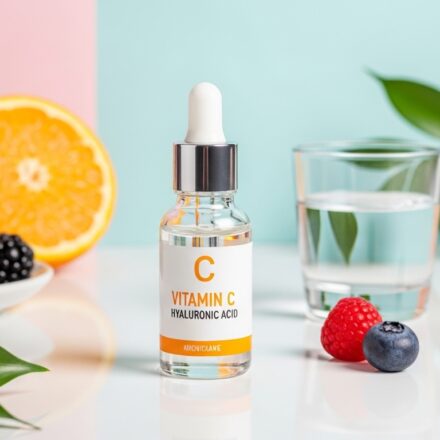
| Vitamin C | Supporting | An antioxidant and a cofactor for collagen synthesis in the body. It can help the look of uneven tone over time. It does not lighten the face or repair damage on its own. |
| Vitamin E | Supporting | An antioxidant. It does not “fix” skin or reduce inflammation in any proven way. |
| Fragrance and essential oils | Avoid in mature, sensitive skin | A common cause of redness and irritation. Fragrance-free formulas are a safer choice for mature skin. |
| Niacinamide | Supporting | Supports the barrier and can help the look of redness and uneven texture. Usually well tolerated. |
A moisturiser that only hydrates is not a failure — hydration is its main job. A product that claims to do everything (hydrate, repair, firm, lift, lighten) in one jar is making promises no moisturiser can keep.
How to choose by skin type
- Very dry skin: a richer cream with hyaluronic acid and ceramides. Creams seal in moisture better than lotions. Look for ceramides, glycerin and hyaluronic acid on the label.
- Combination skin: a lighter gel-cream that hydrates without feeling heavy. Use a richer cream only on dry areas if you need it.
- Sensitive skin: a fragrance-free formula with soothing ingredients such as aloe vera or oat extract. Avoid fragrance, essential oils and drying alcohols. Patch test every new product.
- Oily mature skin: a light, gel or lotion texture. Do not skip moisturiser — dehydrated skin can look older, not younger.
- Skin with dark spots: a moisturiser alone will not fade them. Sunscreen every morning is the step that stops new spots forming; a retinoid or vitamin C can help the look of uneven tone over months.
Whatever your skin type, check the label, not the marketing: short ingredient list, the ingredients above, no added fragrance, and packaging that protects the product from light and air. Price alone does not tell you whether a moisturiser is well formulated.
How to use a moisturizer
Morning:
1. Cleanse gently with lukewarm water and a mild cleanser.
2. Serum, if you use one (for example vitamin C in the morning).
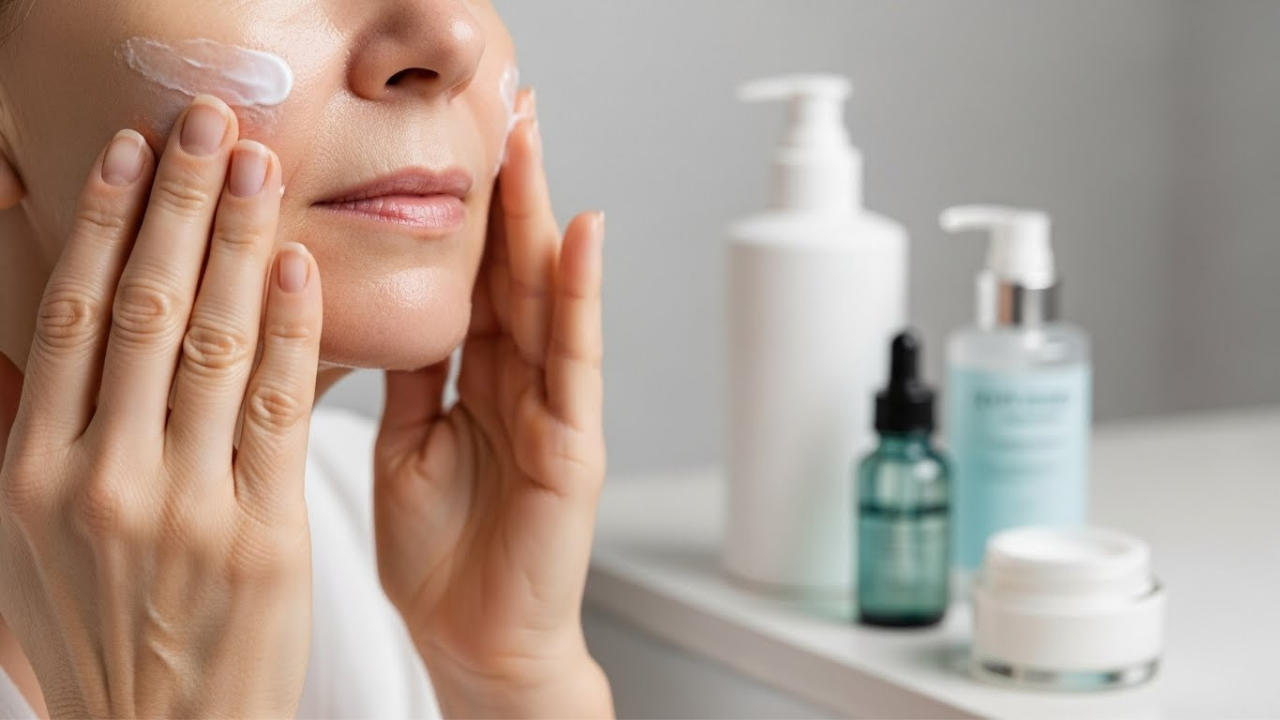
3. Moisturiser. A generous amount, applied to slightly damp skin — damp skin holds extra hydration. Pat it on gently with upward strokes; do not pull at the skin, especially around the eyes.
4. Sunscreen — every morning, last step. Broad-spectrum SPF 30 or higher, over the moisturiser. The AAD recommends this daily, including on cloudy days, and reapplying every two hours when outdoors. A moisturiser is not a substitute for sunscreen.
Evening:
1. Cleanse. A creamy or balm cleanser that removes makeup, sunscreen and the day’s build-up without stripping moisture.
2. Retinoid, if you use one. See below — a pea-sized amount for the whole face.
3. Moisturiser. A richer night cream helps rehydrate and support the barrier while the retinoid does its work.
How much and how often: a generous amount, morning and evening, every day. Skipping days reduces the benefit. There is no single product that suits everyone — if a moisturiser stings, feels greasy, or causes breakouts, stop it and try a simpler formula.
Starting retinol safely
Retinol is the most effective over-the-counter anti-ageing ingredient, and also the one most likely to irritate. If your moisturiser contains retinol, the same rules apply as for a retinol serum:
- Patch test first. Apply a quarter-sized amount to the underside of your arm or the bend of your elbow, twice a day, for 7–10 days. Stop if you get redness, itching or swelling.
- Start with two or three nights a week. Use a pea-sized amount for the whole face. Increase only if your skin stays comfortable after a few weeks.
- Moisturise before and after if your skin is sensitive. This “sandwich” method can make retinol easier to tolerate.
- Expect some tightness or light peeling in the first weeks. That is common. If irritation is persistent, red or painful, stop and go back to cleanser, moisturiser and sunscreen until the skin settles.
- Do not start retinol and a chemical exfoliant in the same week. Introduce one active at a time so you know which one is causing a problem.
- Give it three to six months before judging fine lines. Retinoids work slowly. Hydration improves within days; changes in fine lines take months.
- Pregnancy and breastfeeding: Topical retinoids are not suitable during pregnancy, because there is a risk they may cause birth defects, according to NHS guidance. If you are pregnant, planning pregnancy or breastfeeding, avoid retinoids and ask a healthcare professional before starting any new active.
Mistakes to avoid
- Choosing a harsh or heavily fragranced product. Mature skin is often sensitive; strong fragrance and harsh chemicals cause redness, flaking and breakouts.
- Skipping sunscreen. No moisturiser, however good, protects against UV damage. Sunscreen every morning is essential.
- Using retinol alone without hydration. A retinoid without a moisturiser is more likely to irritate. Hydration, repair and protection work together.
- Expecting fast results and changing products every week. Hydration improves in days; fine lines take months, and only from a retinoid. Changing products constantly means you never learn what helps.
- Exfoliating to “help the moisturiser penetrate”. Exfoliation does not make a moisturiser penetrate more. Gentle exfoliation once a week can help remove dead skin that makes the surface look rough, but over-exfoliating irritates mature skin.
- Believing “waterproof coating”, “repairs damage” or “restores youth” on a label. These are marketing claims, not evidence.
Habits that help
- Sun protection beyond sunscreen: a hat and shade on bright days. Sunscreen is the main step, but the small choices add up.
- Sleep and stress: poor sleep and ongoing stress are not good for skin, and they make it harder to stick to a routine. They do not directly change how a moisturiser works.
- Food: a balanced diet with enough protein, healthy fats and a variety of fruit and vegetables supports general health. It does not directly produce collagen in the skin, and no food can be presented as an anti-ageing treatment.
- Do not smoke. Smoking speeds skin ageing, according to the American Academy of Dermatology.
When to see a dermatologist
Ask a dermatologist or pharmacist if: a moisturiser causes persistent redness, itching, swelling or breakouts; your skin stays tight and dry despite a steady routine; dark spots or wrinkles do not improve after several months of a steady routine; or you have a skin condition such as eczema, rosacea or acne that is getting worse. A dermatologist can also advise on whether a retinoid is right for you, and which strength to start with.
FAQ
What is the best moisturizer for very dry mature skin?
There is no single best moisturiser. A rich cream with hyaluronic acid and ceramides is a reasonable choice, because it hydrates deeply and supports the barrier. Choose by skin type and label, not by brand promises.
Is retinol safe to use on mature skin every day?
Only after a slow start. Begin two or three nights a week, and increase only if your skin stays comfortable. Daily use is fine for skin that tolerates it, but starting daily is a common cause of irritation. Avoid retinoids entirely in pregnancy.
Are there anti-aging moisturizers for sensitive skin?
Yes — choose fragrance-free, gentle formulas with calming ingredients such as aloe vera or oat extract, and patch test every new product.
Do I need different moisturizers for day and night?
It helps, but it is not essential. A lighter, antioxidant-rich moisturiser in the morning and a richer, repair-oriented one at night is a common pattern. What matters most is using one consistently, with sunscreen every morning.
How long before I see results from an anti-aging moisturizer?
Hydration and texture can feel better within days to a few weeks. Changes in fine lines take several months of regular use, and only if the product contains a retinoid — a moisturiser alone does not reduce fine lines.
Summary
A good anti-ageing moisturiser for mature skin is simple: hyaluronic acid and glycerin for hydration, ceramides for the barrier, fragrance-free, used morning and evening on slightly damp skin. A retinoid, started slowly, is the only ingredient with strong evidence for fine lines over months — and it is not suitable in pregnancy. Peptides and antioxidants are supporting players with thinner evidence. No moisturiser removes wrinkles, firms sagging skin, or replaces sunscreen. Use it steadily, with broad-spectrum SPF 30+ every morning, and ask a dermatologist if things do not improve.
Sources: AAD sunscreen guidance and AAD guidance on reducing premature skin ageing; Hughes et al. 2013 (daily sunscreen and skin ageing, Annals of Internal Medicine); AAD cosmeceuticals review on vitamin C; NHS 111 Wales guidance on topical retinoids in pregnancy; AAD patch-test method. This is a researched overview, not a hands-on review.