Researched overview. This guide is based on published dermatology and regulatory guidance, not on hands-on treatment experience by BeautyKob. No treatment in this guide was tested by us, and no client stories are included.
Table Of Content
- Quick answer
- What a medical spa is — and what it is not
- Chemical peels
- Microneedling
- Laser treatments
- HydraFacial
- Injectables: botulinum toxin and dermal fillers
- What results to expect — honestly
- Before treatment
- Aftercare
- Who should be careful
- Home skincare vs professional treatments
- Costs
- Frequently asked questions
- Summary
Quick answer
A medical spa offers cosmetic treatments that go deeper than an ordinary facial: chemical peels, microneedling, laser treatments, HydraFacial, and injectables such as botulinum toxin (Botox) and dermal fillers. These are medical procedures, not pampering. They can improve the look of fine lines, uneven tone, rough texture and some scars, but no treatment removes all signs of ageing, and every one of them carries real risks — redness, swelling, pigment changes, infection, and, rarely, scarring or worse.
The single most important choice is not which treatment, but who performs it. The American Academy of Dermatology Association states that cosmetic medical procedures, including laser treatments, are safest when performed in a dermatologist’s office or under the direct, on-site supervision of a physician. Before booking anything, have a consultation with a qualified professional, ask who will treat you and what their training and licence are, and ask what can go wrong.
This guide is general information, not medical advice. If you have a skin condition, are pregnant or breastfeeding, take medicines that affect healing, or have a history of keloids or cold sores, talk to a dermatologist or your doctor first.
Contents: What a medical spa is · Chemical peels · Microneedling · Laser treatments · HydraFacial · Injectables · What results to expect · Before treatment · Aftercare · Who should be careful · Home skincare vs professional treatments · Costs · FAQ
What a medical spa is — and what it is not
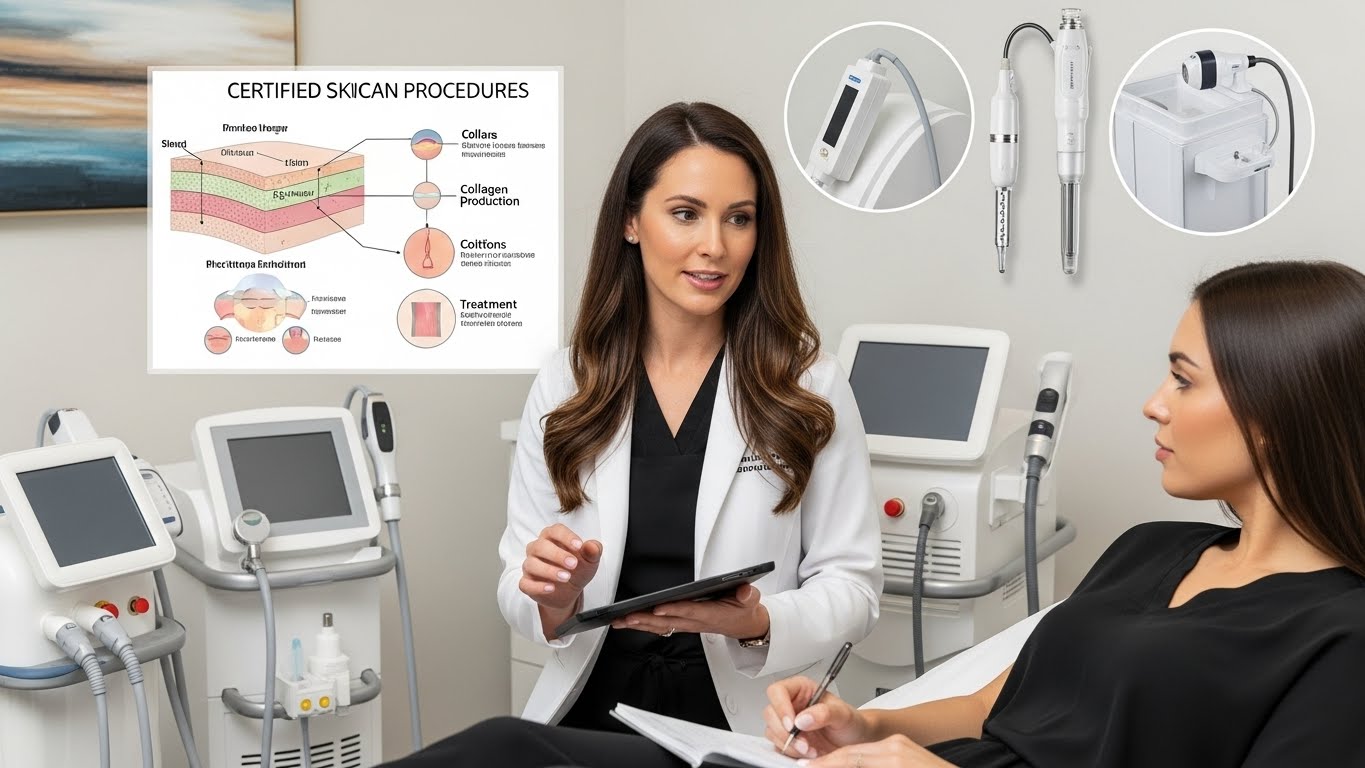
An ordinary spa facial cleanses and hydrates the surface of the skin. A medical spa offers treatments that reach deeper: acids that remove layers of skin, needles that puncture it, lasers that heat it, and injections that relax muscles or add volume. These treatments are normally done by trained practitioners using medical devices and prescription products.
That difference matters for safety. Cosmetic treatments may look simple, but performing them safely requires medical knowledge of the skin and what lies beneath it. The American Academy of Dermatology Association has warned that medicine and surgery practised in a medical spa does not have the clear regulation and oversight that a physician’s office has, and that consumers can be confused about how much training the person treating them has. (AADA joint statement on medical spas)
A note on the name “Honey”: it is the name of the studio, not an ingredient claim. Honey as a skincare ingredient is a separate topic. Manuka honey has antibacterial and anti-inflammatory properties, and the US Food and Drug Administration has approved medical-grade manuka honey for wound treatment; Cleveland Clinic notes it can hydrate skin and help with acne, while also saying plainly that it “isn’t a cure-all” and is used alongside conventional treatments, not instead of them. There is no good published evidence that honey in an ordinary cream reverses ageing or rejuvenates skin. (Cleveland Clinic, manuka honey benefits)
Chemical peels
A chemical peel applies an acid solution to the skin so the outer layers exfoliate and peel away, revealing newer skin underneath. Peels are grouped by how deep they reach: light (superficial), medium, or deep.
What they are used for. The American Academy of Dermatology lists fine lines (especially under the eyes and around the mouth), some types of acne, age spots, freckles, melasma, rough skin, sun damage, a dull complexion and uneven tone. Peels do not treat sagging skin, deep scars or severe wrinkles well — other treatments suit those better.
What to expect. A light peel leaves the skin red, with scaling for about three to seven days. A medium peel leaves the skin red and swollen, with crusting and peeling over seven to fourteen days. A deep peel is a bigger procedure: it requires general anaesthesia, is done in a surgical setting, the area is bandaged, and recovery at home takes two to three weeks. More than one peel is often needed, and the AAD notes that three to five peels, repeated every two to five weeks, may be needed for some concerns.
Risks. Redness that can last for months, temporary darkening of the skin, lighter skin colour after medium and deep peels, reactivation of cold sores, and, rarely, scarring. People with skin of colour can safely have a peel, but the risk of dark marks afterwards is higher, so the peel should be chosen by someone experienced with darker skin tones. Do not pick, rub or scratch peeling skin — that can cause infection.
Aftercare. Avoid the sun while healing, use a gentle cleanser and a plain moisturiser, and wear broad-spectrum sunscreen with SPF 30 or higher every day once the skin has healed. The AAD advises against tanning beds entirely after a peel. The FDA has warned that some chemical peels sold for home use have caused serious injuries, and advises using a peel only under the supervision of a licensed, trained provider.
Microneedling
Microneedling — also called collagen induction therapy — uses a device with tiny sterile needles to make thousands of small punctures in the skin. The body repairs those punctures by producing new collagen, which can gradually improve texture and the look of scars and fine lines.
What it is used for. Dermatologists use it for acne scars and other scars, wrinkles and fine lines, large pores, dark spots, melasma, sagging skin, uneven texture and tone, and stretch marks. The US Food and Drug Administration has authorised microneedling devices for three uses in adults aged 22 and older: facial acne scars, facial wrinkles and abdominal scars.
What to expect. Redness, a sunburned feeling and swelling that usually settle within a few days to a week. Improvement appears gradually — some change within a few weeks, with full results usually taking several months. A series of sessions is often needed; for acne scars, three to five sessions spaced two to four weeks apart are commonly described.
Risks. Redness, dryness, peeling, bruising and bleeding are common. Pigment changes, cold sore reactivation and infection are less common. Microneedling is not suitable for everyone: the AAD advises against it if you heal slowly or poorly, have or have had a keloid scar, or have a weakened immune system. Tell your provider if you have active acne, eczema, psoriasis, a cold sore, or take blood thinners.
A warning about radiofrequency microneedling. Some devices add radiofrequency heat through the needles. In October 2025 the FDA issued a safety communication (FDA safety communication on radiofrequency microneedling) after reports of serious complications with certain uses of radiofrequency microneedling, including burns, scarring, fat loss, disfigurement and nerve damage, some needing surgery. The AAD states that radiofrequency microneedling should only be performed by qualified medical professionals. Ask which device your provider plans to use.
Home devices. Products sold for home use are not meant to puncture the skin and give less noticeable results than treatment from a dermatologist. Home use can still irritate the skin, cause infection, scarring or colour changes, and spread warts and cold sores.
Laser treatments
Laser skin resurfacing uses concentrated light to remove or heat targeted layers of skin so the body rebuilds smoother, more even-toned skin. There are two main kinds: ablative lasers (such as CO2 and erbium:YAG), which remove thin layers of skin, and non-ablative or fractional lasers, which heat deeper layers with less injury to the surface.
What they are used for. Fine lines and wrinkles, sun spots and uneven tone, rough texture, and some scars. Ablative lasers tend to give stronger change with longer recovery; non-ablative lasers give milder change with shorter downtime.
What to expect. After non-ablative treatment, a sunburn-like feeling fades within hours and peeling is typical around days three to four. After ablative resurfacing, healing takes roughly three to ten days depending on depth and laser type, with oozing and crusting followed by pinkness that can last weeks. Collagen keeps maturing for months afterwards, so the final result is not visible straight away.
Risks. Redness, swelling, oozing, acne flares, infection, and cold sore reactivation. Pigment changes — darkening or lightening — are a real risk, and darker skin is more prone to burns and dark marks after laser treatment, so device choice and the operator’s experience with your skin tone matter. Scarring is possible but uncommon. Lasers may not suit you if you have active acne, very dark skin, deep wrinkles or a lot of sagging skin. If you arrive for laser treatment with a tan or sunburn, your dermatologist cannot treat you.
HydraFacial
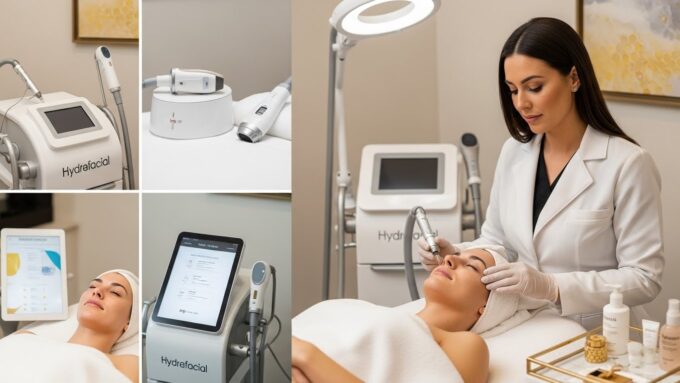
HydraFacial is a branded, machine-based facial. Its three steps are: cleanse and peel (a gentle exfoliating tip and a mild glycolic and salicylic acid solution loosen dead skin and debris in the pores), extract and hydrate (suction lifts out blackheads and congestion while hydrating serum is applied), and fuse and protect (serums containing ingredients such as hyaluronic acid, peptides and antioxidants are infused, followed by moisturiser and sunscreen). A session usually takes 30 to 45 minutes, and most people have no downtime.
What it can and cannot do. It can leave skin looking cleaner, smoother and more hydrated in the short term. It does not treat acne scars, melasma or deep lines, and active inflamed acne or a rosacea flare should be treated medically first. There is no strong published evidence that a HydraFacial produces lasting change to the skin; the visible effect is mainly short-term hydration and a fresher look. Do not judge it by the same standard as a chemical peel, microneedling or laser treatment — it is a facial, not a resurfacing procedure.
Injectables: botulinum toxin and dermal fillers
These are two different treatments, and they do different things.
Botulinum toxin (Botox, Dysport, Xeomin, Jeuveau) is an injectable drug that keeps muscles from tightening, so the wrinkles those muscles cause do not show as much. The FDA has approved these products for the temporary improvement of frown lines, forehead lines and crow’s feet. The effect is temporary and wears off over months. Reported side effects include facial weakness, eyelid or brow drooping, and pain, swelling, reddening and bruising where injected. Rarely, injections have caused double vision, dry eyes, or difficulty swallowing or breathing. Injection for cosmetic purposes is not recommended while pregnant or breastfeeding.
Dermal fillers are gels injected under the skin to restore volume and smooth lines. The FDA has approved fillers for specific uses in people aged 22 and older, including moderate-to-severe facial wrinkles and folds, and adding fullness to the lips, cheeks, chin, under-eye hollows, jawline and the back of the hand. The FDA has not approved injectable silicone or any injectable fillers for body contouring. Common side effects are bruising, redness, swelling, pain, tenderness, itching and rash, usually settling within days to weeks. The most serious risk is accidental injection into a blood vessel: filler in a blood vessel can cause skin necrosis (death of tissue), stroke, or blindness. The FDA warns against needle-free devices for injecting fillers, and against counterfeit products — use only FDA-approved products from a licensed provider.
Neither treatment is permanent, and neither is risk-free. The safe use of fillers combined with botulinum toxin has not been evaluated in clinical studies, according to the FDA. (FDA, Dermal Filler Do’s and Don’ts)
What results to expect — honestly
- Short term: After one session you may see fresher, more hydrated-looking skin, or less visible surface roughness. That is the most reliable result, and it is also the most temporary.
- Longer term: Real change in texture, tone or fine lines takes weeks to months, usually needs a series of sessions, and varies from person to person. No treatment can promise a specific result by a specific date.
- Limits: No treatment in this guide removes all signs of ageing, restores lost volume on its own (except fillers, temporarily), or fixes sagging skin the way surgery can. Results fade as skin keeps ageing. Daily sunscreen and not smoking slow that loss; without them, results fade faster.
- Maintenance: Most of these treatments need repeating to keep the effect, and every repeat carries the same risks again. Ask what maintenance involves — and what it costs — before your first session.
Before treatment
Have a consultation first. A consultation is not a sales conversation. It is where a qualified professional looks at your skin, hears your goals, and tells you whether a treatment suits you — or whether it does not. Ask:
- Who will perform the treatment, and what is their training and licence?
- Is a doctor on site, or directly supervising?
- What results can I realistically expect, and over what time?
- What are the risks for my skin type and tone?
- What should I do before and after, and what does follow-up cost?
Tell the provider about: any skin condition (eczema, rosacea, psoriasis, acne), allergies, cold sores, a history of keloids or abnormal scarring, medicines that affect healing or bleeding (including blood thinners), recent isotretinoin use, pregnancy or breastfeeding, and any previous cosmetic treatment and how your skin reacted to it.
Preparation. Some treatments require avoiding retinoids or exfoliating products for days or weeks beforehand, and avoiding sun and tanning. Follow your provider’s instructions, not a general rule from the internet — the right preparation depends on the treatment and your skin.
Patch test. For home skincare products, the AAD patch-test method is: apply a small amount to a quarter-sized patch of skin where it will not be rubbed off (the underside of the arm or the bend of the elbow), twice a day for seven to ten days, and stop if you get redness, itching or swelling. A patch test is for a skincare product. It is not a substitute for a consultation before a medical-spa treatment.
Aftercare
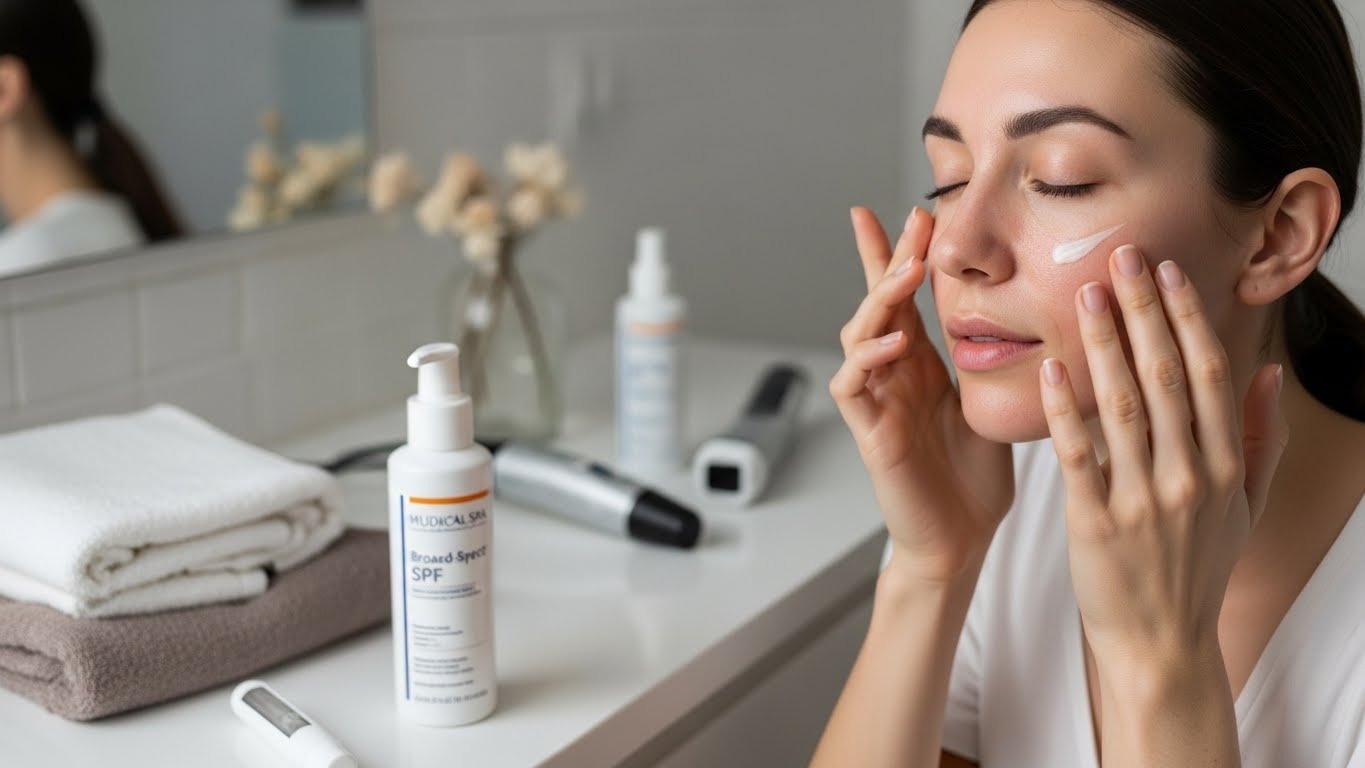
- Be gentle. Cleanse with lukewarm water and a mild cleanser, and moisturise with a plain moisturiser. Do not scrub, pick or peel treated skin.
- Sun protection is part of the treatment. Wear broad-spectrum sunscreen with SPF 30 or higher every day once the skin has healed, and reapply every two hours when outdoors, or after swimming or sweating. Avoid tanning beds. New skin after a peel or laser treatment is fragile and more easily damaged by the sun.
- Expect some reaction. Redness, swelling, dryness or flaking are common after most of these treatments and usually settle within days. Your provider should tell you what is normal for your treatment and what is not.
- Get help promptly if: redness spreads or gets worse after a few days, you develop blisters, pus, severe pain, or a fever; your skin turns pale, blotchy or very dark in patches; or, after a filler injection, you notice vision changes, severe pain, or skin that turns white or grey. These need urgent medical attention — do not wait for your next appointment.
Who should be careful
See a dermatologist or your doctor first — rather than booking a treatment directly — if you:
- have very sensitive skin, a skin condition, or allergies;
- have a history of keloids, abnormal scarring, or cold sores;
- have darker skin and are considering a peel or laser (the risk of pigment change is higher, and the provider’s experience with your skin tone matters);
- are pregnant or breastfeeding, or planning pregnancy (botulinum toxin injections are not recommended in pregnancy or lactation, and retinoids should be avoided — see below);
- take medicines that slow healing or thin the blood;
- have an active skin infection or a cold sore at the time of treatment.
Pregnancy note: Topical retinoids are not suitable during pregnancy, because there is a risk they may cause birth defects, according to NHS guidance. If you are pregnant, planning pregnancy or breastfeeding, avoid retinoids and ask a healthcare professional before starting any new active or treatment. (NHS 111 Wales, Acne)
Home skincare vs professional treatments
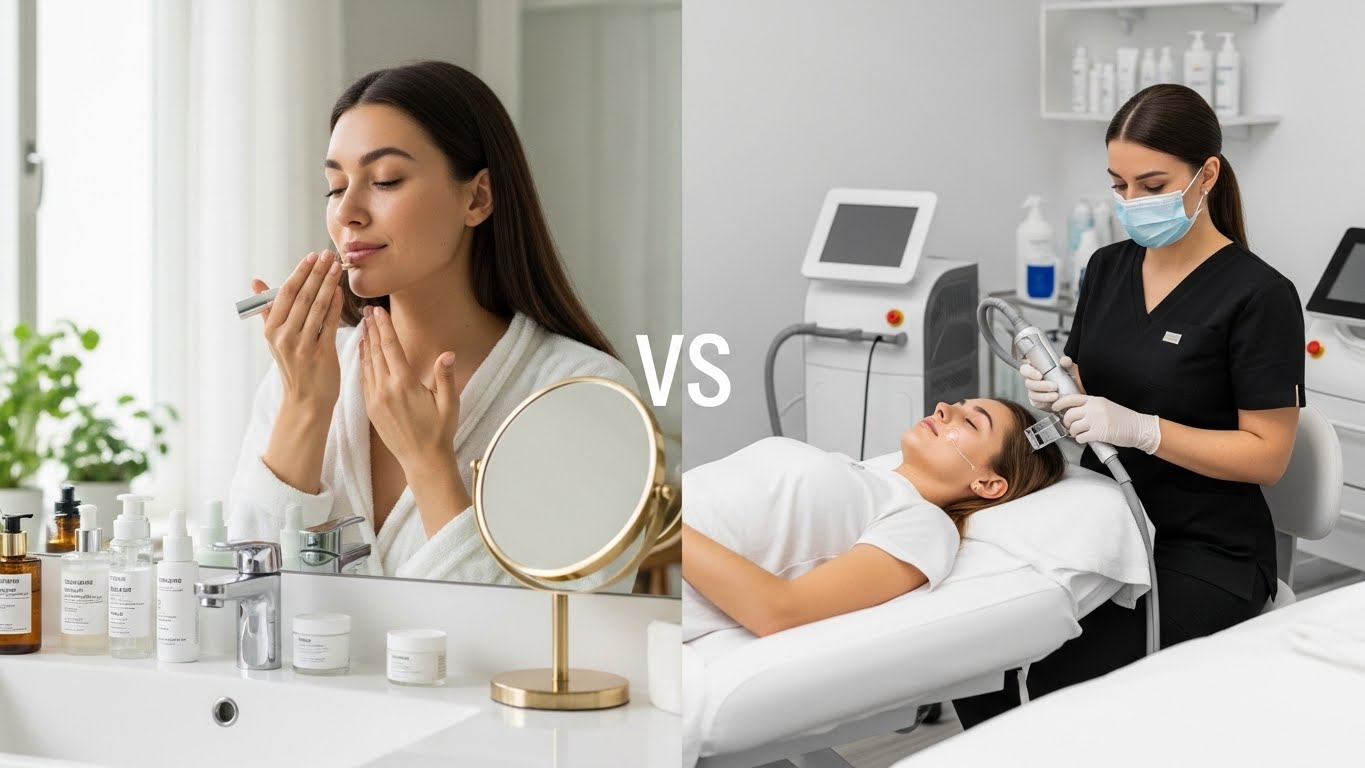
A home routine and a professional treatment do different jobs. Cleanser, moisturiser and daily sunscreen keep skin healthy and protected, and they are the base that every other step sits on. A home routine cannot stimulate collagen or remove pigmentation the way a peel, microneedling or laser can. But a professional treatment cannot replace a home routine either: without daily sun protection, the results of any treatment fade faster, and new sun damage appears.
The honest order is: a short, steady home routine first (gentle cleanse, moisturise, SPF 30+ every morning), and professional treatments only as an addition — after a consultation, with realistic expectations, and with the risks understood.
Costs
Prices vary by treatment, area treated, provider and place, and a series usually costs more than a single session. This guide gives no prices, because prices vary too much by treatment, area and provider to state reliably. Before booking, ask for the full price in writing, including the consultation, any follow-up visits, and what happens if you need extra care afterwards. Be cautious of a clinic that pressures you to book a course of treatments on the spot.
Frequently asked questions
How long do results last?
It depends on the treatment, your skin and how you care for it afterwards. Short-term effects such as hydration can be seen after one session. Longer-term change takes weeks to months and a series of sessions, and it fades over time. Daily sunscreen slows that fading.
Are treatments painful?
It varies. A HydraFacial is usually comfortable. Microneedling and laser treatments can sting or feel like sunburn, and a numbing cream is often used. Chemical peels can burn or sting while the solution is on the skin. Pain that is severe or does not settle should be reported to the provider promptly.
How many sessions are needed?
It depends on your skin and what you want. A single session can freshen the skin, but a series is usually needed for a lasting change in texture, tone or scars. Your provider should give you a plan — including how many sessions, how far apart, and what it will cost — before you start, and you should be free to say no.
Who should not have these treatments?
People with an active skin infection, a cold sore, or a skin condition that is flaring should wait. People with a history of keloids should avoid microneedling. People who are pregnant or breastfeeding should avoid botulinum toxin injections. Your provider should screen for all of this at the consultation — if they do not ask, that is a warning sign.
What should I ask before booking?
Who will treat me, what is their training and licence, is a doctor on site or supervising, what can go wrong for my skin type, what will it cost in total, and what aftercare and follow-up are included. If a clinic cannot answer these plainly, do not book.
Summary
Medical-spa treatments — chemical peels, microneedling, laser, HydraFacial, botulinum toxin and dermal fillers — are medical procedures with real benefits and real risks. They can improve the look of fine lines, uneven tone, rough texture and some scars, but they cannot stop ageing, and no result is guaranteed. The most important decision is who performs the treatment: choose a qualified professional, preferably in a dermatologist’s office or under a physician’s direct supervision, and ask plainly about training, risks and total cost. Keep a short home routine — gentle cleansing, moisturiser and broad-spectrum SPF 30+ every morning — whatever else you decide.
Sources: American Academy of Dermatology (chemical peels, microneedling, sunscreen, medical-spa safety); US Food and Drug Administration (dermal fillers and botulinum toxin; radiofrequency microneedling safety communication, October 2025); Cleveland Clinic (manuka honey); NHS 111 Wales (topical retinoids in pregnancy). This is a researched overview, not a hands-on review.