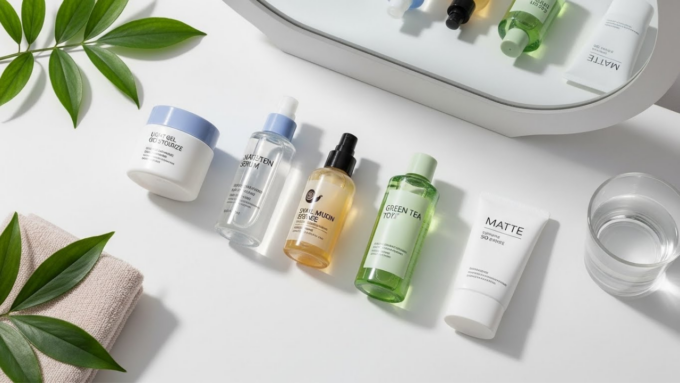
Researched overview. This guide is based on published dermatology guidance and published studies, not on hands-on product testing by BeautyKob. No product in this guide was tested by us, and no brand is recommended.
Table Of Content
- Quick answer
- Why oily skin happens
- What Korean skincare is — and why it suits oily skin
- Key Korean skincare ingredients for oily skin — what the evidence says
- The Korean skincare routine for oily skin
- Cleansers: the foundation
- Toners and essences: light hydration
- Serums: one active at a time
- Moisturisers: lightweight hydration
- What Korean skincare does not do
- FAQ
- Summary
Quick answer
Korean skincare suits oily skin for a simple reason: it is usually lightweight, water-based and gentle. That is the whole advantage. It does not “balance oil production”, it does not make pores smaller, and it does not guarantee results. What it does well is hydrate without heaviness, cleanse gently, and layer thin products instead of one heavy cream.
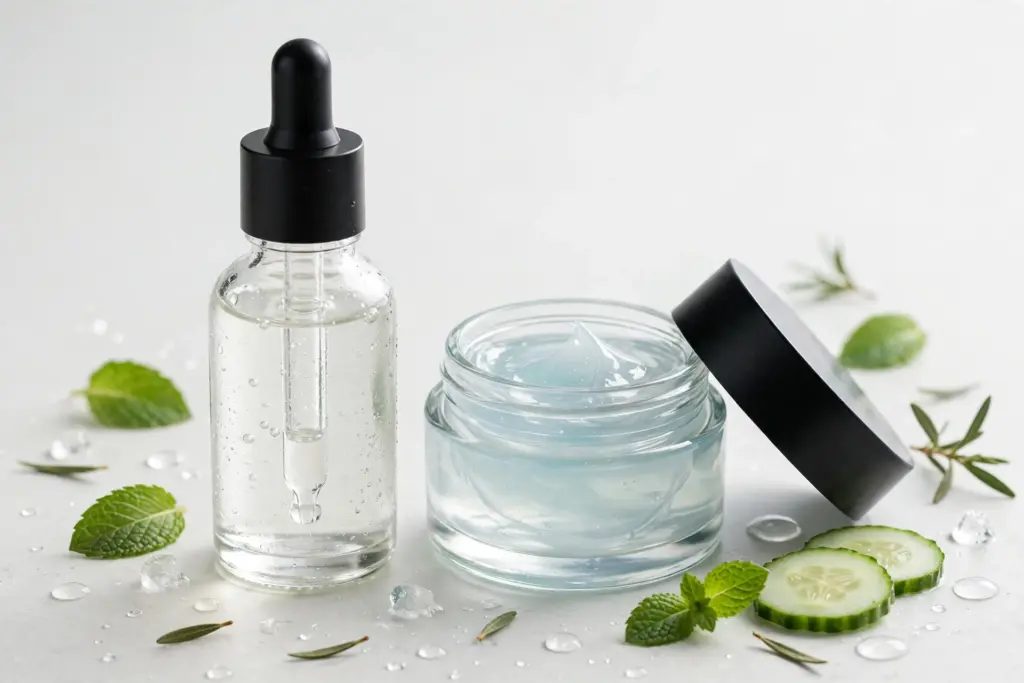
What helps most:
- A gentle gel or foam cleanser, twice a day. Mild enough that skin does not feel tight afterwards.
- Lightweight hydration. Water-based toners, essences and gel moisturisers.
- One treatment ingredient. Salicylic acid is the usual first choice for oily, breakout-prone skin; niacinamide is a gentler option.
- Gel sunscreen, every morning. Broad-spectrum SPF 30 or higher.
One myth to drop first: there is no good evidence that skin “produces more oil” to compensate for washing or drying products, and hydration does not make glands produce less oil. Over-washing is still a bad idea — because it irritates and dries the skin, not because of rebound oil.
If your skin is red, sore, or has open sores or a rash, or if acne is painful, deep or cystic, ask a dermatologist or pharmacist before using any active. This guide is general information, not medical advice.
Contents: Why oily skin happens · What Korean skincare is · Key ingredients and their evidence · The routine · Cleansers, toners, serums, moisturisers · What it does not do · Patch test · FAQ
Why oily skin happens
Oil (sebum) is made by glands in the skin. How much you make is mostly genetics and hormones — which is why oiliness is common in the teens and during hormonal changes. Heat and humidity can make skin feel oilier, but they do not change how much oil your glands make in the long term.
Common problems with oily skin are enlarged-looking pores, blackheads, frequent breakouts and shine. Oily skin can also be dehydrated underneath — shiny on the surface and tight underneath — usually because of harsh products, not because of the oil itself.
What Korean skincare is — and why it suits oily skin
Korean skincare is not one product or one routine. It is a style: many thin, water-based layers instead of a few heavy ones, gentle cleansing, and a focus on hydration and barrier comfort rather than strong, stripping treatments. A typical routine has more steps than a Western one, but each step is light.
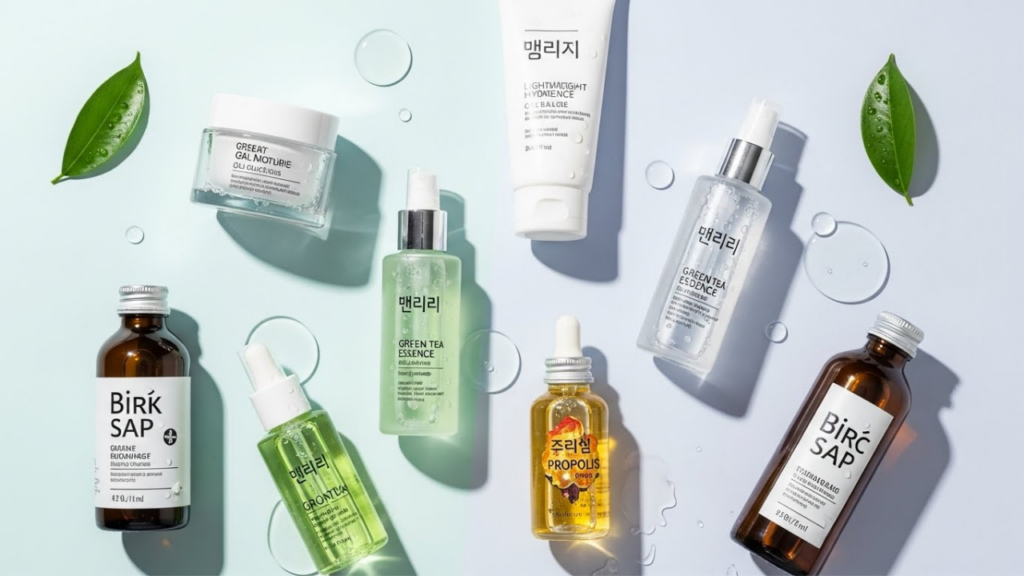
Three things about it suit oily skin:
- Light, water-based formulas. Gels, essences and water creams hydrate without a heavy or greasy feel.
- Gentle ingredients. Soothing ingredients such as green tea and centella are common, and harsh alcohols and strong scrubs are less common.
- Barrier care. The routine is built around keeping the skin barrier comfortable, not around drying the skin out.
None of this changes how much oil your glands make. The benefit is comfort and fewer clogged pores, not “balanced oil production”.
Key Korean skincare ingredients for oily skin — what the evidence says
| Ingredient | What it is used for | What the evidence says |
|---|---|---|
| Green tea | Antioxidant; sometimes used for oiliness | The most promising of the Korean ingredients for oil: two small human studies found a green tea emulsion reduced sebum — Mahmood et al. 2010 (3% emulsion, 10 healthy men, 8 weeks, no placebo control) and Mahmood et al. 2013 (5% green tea, 22 men, 60 days, 27% reduction vs placebo). Small studies, not proof. It does not “minimise shine” on its own. |
| Snail mucin | Hydration and texture | Small human studies support hydration and comfort; a 2024 review (Journal of Cosmetic Dermatology) calls for larger trials. It is not a proven anti-ageing or oil-control ingredient, and it does not “repair” the skin barrier in the way ceramides do. |
| Centella (cica) | Soothing redness and irritation | Limited evidence. Small human trials support faster recovery of irritated or freshly treated skin. No good evidence it controls oil or clears breakouts. Allergic contact dermatitis to centella is uncommon but documented — patch test first. |
| Propolis | Calming and mild acne support | Lab studies show activity against acne-related bacteria, and a few small human trials are encouraging (one small trial of a propolis/tea tree/aloe blend performed comparably to an antibiotic cream). Evidence is thin. Propolis can cause allergic contact dermatitis, especially in people allergic to bee products — patch test first. |
| Rice water | Brightness and clarity | No good published evidence found for rice water skincare claims. Traditional use is not evidence. Treat it as a cosmetic ingredient, not a treatment. |
| Niacinamide | Barrier support and even tone | The evidence for reducing sebum is one study: 2% niacinamide reduced sebum excretion in Japanese subjects only, not significantly in Caucasian subjects (Draelos et al. 2006). It does not “regulate” oil production, and it does not minimise pores. |
| Tea tree oil | Sometimes used for breakouts | Some limited evidence for acne, and it can irritate. Not a substitute for an established treatment. |
| Salicylic acid (BHA) | Clogged pores and breakouts | The usual first choice for oily, breakout-prone skin. Over-the-counter products are usually 0.5–2%. Start with a lower strength. |
No ingredient in this table shrinks pores. Pore size is largely genetic; keeping pores clean can make them look less noticeable, but no serum “reduces pore volume”. Peptides and fermented extracts are popular in Korean skincare, but the evidence for them is thin — they are not proven anti-ageing or oil-control ingredients.
The Korean skincare routine for oily skin
You do not need to buy a whole set of products. A short routine with light products is enough. Product order matters only in one way: thinnest to thickest, so each layer absorbs before the next.
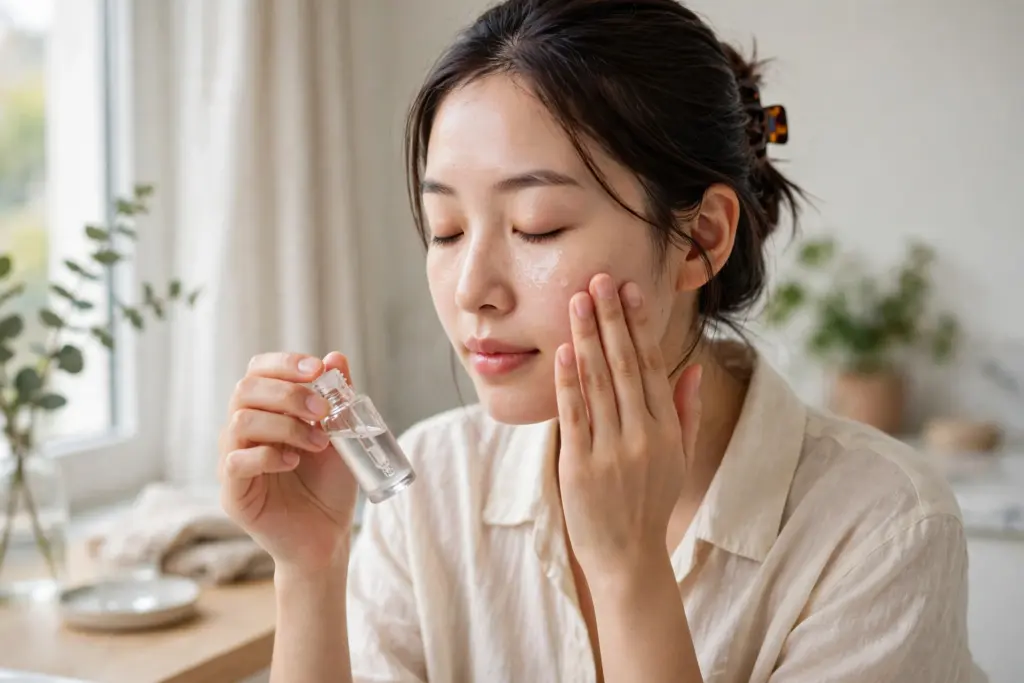
Morning:
- Gentle gel cleanser.
- Light, water-based toner — optional.
- Hydrating essence or serum — optional, one at a time.
- Light gel moisturiser.
- Matte-finish, gel sunscreen, SPF 30+. Reapply every two hours when outdoors.
Evening:
- Double cleanse — a cleansing oil or balm first to remove sunscreen and makeup, then a gentle water-based cleanser. Double cleansing is a common K-beauty practice. It is for removing sunscreen and makeup, not for controlling oil.
- Cooling toner — optional.
- One treatment serum — salicylic acid or niacinamide, not both at once when starting out.
- Light gel moisturiser.
Patch test: before using a new product, apply a small amount to a quarter-sized area on the underside of your arm or the bend of your elbow, twice a day, for 7–10 days. If there is redness, itching or swelling, do not use it on your face. (AAD patch-test method.) This matters more with Korean products that contain propolis, centella or tea tree, because allergies to those ingredients are documented.
Cleansers: the foundation
Cleansing is the foundation, and the common mistake with oily skin is using a tough foaming cleanser to control oil. A light foam or soft gel removes dirt and excess oil without damaging the skin barrier. Many Korean cleansers use botanical extracts such as green tea, centella or rice water — those ingredients are soothing, but they do not control oil. Switching to a gentler cleanser usually makes skin feel more comfortable. It does not change how much oil your glands make, and it does not work “within one week” on a fixed schedule.
Toners and essences: light hydration
Toners and essences are thin, water-based steps that add hydration without weight. Korean toners are usually gentle and alcohol-free. Essences with snail mucin or rice water can make skin feel smoother and more hydrated, but they do not firm the skin or reduce shine by midday. These steps are optional — if your routine already feels complete without them, skip them.
Serums: one active at a time
Serums deliver concentrated ingredients without greasiness. For oily skin, the useful ones are:
- Niacinamide serum — barrier support and tone. It does not regulate oil.
- Propolis serum — calming, with thin evidence for mild acne support. Patch test first.
- Snail mucin serum — hydration and comfort. Not an oil-control treatment.
- Tea tree serum — limited evidence for acne; can irritate.
Do not layer several serums at once. One treatment serum at a time is enough, and a new serum should be introduced on its own so you can tell whether it helps or irritates.
Moisturisers: lightweight hydration
Water-based gels and creams are lightweight, absorb quickly, and lock in hydration without clogging pores. Many Korean moisturisers have a matte finish, which makes skin look less shiny under makeup. A moisturiser does not reduce sebum production — it keeps the skin comfortable. Skipping moisturiser does not reduce oil; it leaves skin dry and uncomfortable.
What Korean skincare does not do
- It does not “balance oil production” or make skin produce less oil.
- It does not make pores smaller or “clear breakouts faster” on a fixed timeline.
- It does not firm the skin or make it “less shiny by midday”.
- It does not guarantee results. Any product that “guarantees growth” is making a promise no skincare product can keep.
- It is not a treatment for acne. Persistent, painful, deep or cystic acne needs a dermatologist, not a longer routine.
FAQ
Is Korean skincare good for oily skin?
Its lightweight, water-based style usually suits oily skin well. The benefit is comfort and gentle hydration, not oil control.
Do I need a 10-step Korean routine?
No. A short routine — gentle cleanser, one treatment, light moisturiser, sunscreen — covers what oily skin needs. Extra steps are optional.
Does snail mucin help oily skin?
It can help with hydration and comfort, based on small human studies. There is no good evidence it controls oil.
Does green tea reduce oil?
Two small human studies found a green tea emulsion reduced sebum, but both were small and one had no placebo control. It is promising, not proven.
Does rice water help oily skin?
No good published evidence was found for rice water skincare claims.
Will Korean products make my pores smaller?
No. No product shrinks pores. Keeping pores clean can make them look less noticeable.
Summary
Korean skincare suits oily skin because it is light, water-based and gentle — not because it controls oil. Use a gentle cleanser, one treatment ingredient, a light gel moisturiser and daily sunscreen. Judge the ingredients by their evidence, not by their marketing: green tea and snail mucin have small human studies behind them, centella and propolis have limited evidence, and rice water has none found. No product in this guide was tested by us, and no brand is recommended.
Sources: AAD guidance on controlling oily skin; AAD sunscreen guidance; Draelos et al. 2006 (niacinamide 2% and sebum excretion, PMID 16766489); Mahmood et al. 2010 (3% green tea emulsion and sebum, PMID 20846135) and Mahmood et al. 2013 (5% green tea, split-face, 27% reduction vs placebo), reviewed in Antioxidants 2017 (PMC5384166); Journal of Cosmetic Dermatology 2024 review of snail extract (small human studies, larger RCTs needed); AAD patch-test method. This is a researched overview, not a hands-on review.