Researched overview. This guide is based on published dermatology guidance, not on hands-on product testing by BeautyKob. No product in this guide was tested by us, and no brand is recommended.
Table Of Content
Quick answer
 Oily skin responds to a short, steady routine, not to more products. Cleanse gently twice a day, use one treatment ingredient, moisturise with a light gel, and wear sunscreen every morning. The most common reason a routine fails is not the wrong product — it is too many strong products at once, or changing products every week.
What helps most:
- A gentle cleanser, twice a day. Foaming or gel, mild enough that skin does not feel tight afterwards.
- One treatment ingredient. Salicylic acid is the usual first choice for oily, breakout-prone skin.
- Lightweight hydration. Oily skin still needs a moisturiser — a gel or water-based one.
- Gel sunscreen, every morning. Broad-spectrum SPF 30 or higher.
One myth to drop first: there is no good evidence that skin “produces more oil” to compensate for washing or drying products. Over-washing is still a bad idea — because it irritates and dries the skin, not because of rebound oil.
If your skin is red, sore, or has open sores or a rash, or if acne is painful, deep or cystic, ask a dermatologist or pharmacist before using any active. This guide is general information, not medical advice.
Contents: Why skin gets oily · The morning approach · The evening approach · Hydration · Products by step · Weekly treatments · Mistakes · Patch test · FAQ
Why skin gets oily
Oil (sebum) is made by glands in the skin. How much you make is mostly genetics and hormones — which is why oiliness is common in the teens and during hormonal changes. Heat and humidity can make skin feel oilier, but they do not change how much oil your glands make in the long term. Sun and heat do not make your skin produce more oil.
Common problems with oily skin are enlarged-looking pores, blackheads, frequent breakouts and shine. Oily skin can also be dehydrated underneath — shiny on the surface and tight underneath — usually because of harsh products, not because of the oil itself.
The morning approach
The morning goal is to refresh the skin, not to strip it.
- Cleanse gently. Lukewarm water and a mild foaming or gel cleanser. If your skin feels tight after washing, your cleanser is too strong.
- Light toner if you use one — optional. A simple, alcohol-free formula. Skip it if it stings.
- Light gel moisturiser. A water-based, non-comedogenic formula that absorbs quickly.
- Gel sunscreen, SPF 30+. Broad-spectrum, as the last step. Reapply every two hours when outdoors.
That is the whole morning routine. You do not need to check your face in the mirror every hour — blotting paper pressed gently against shiny areas during the day is enough.
The evening approach
Night is for removing the day and letting the skin rest.
- Remove makeup and sunscreen, then cleanse gently. Double cleansing (a cleansing oil or balm followed by a water-based cleanser) is only needed if you wear heavy makeup or water-resistant sunscreen.
- One treatment serum. Salicylic acid or niacinamide — not both at once when you are starting out.
- Light moisturiser or gel. Oily skin still needs moisturiser at night. Skipping it does not reduce oil; it leaves skin dry and uncomfortable.
Do not use a strong exfoliant on the same night as a retinoid or benzoyl peroxide when you are starting out.
The significance of hydration for oily skin
Hydration is not the enemy of oily skin. Oily skin still needs water in the skin barrier, and a light gel moisturiser keeps it comfortable without adding shine. But hydration does not reduce oil production — a moisturiser keeps skin comfortable; it does not make glands produce less oil. If your skin feels tight after washing, the problem is usually a cleanser that is too strong, not a lack of moisturiser.
Products by step
Cleansers
 The best cleanser for oily skin is one that does not leave skin tight. Use a gentle foaming or gel cleanser, twice a day and after sweating. The American Academy of Dermatology (AAD) advises against oil-based and alcohol-based cleansers for oily skin, and against scrubbing, even to remove makeup. A rough foaming cleanser does not fix oiliness — it irritates the skin.
Toners
A toner should refresh, not sting. A stinging feeling is usually irritation, not a sign the toner is working. Choose a light, water-based, alcohol-free toner, or skip the step entirely.
Moisturisers
Choose a gel or water-based, non-comedogenic moisturiser. It should feel light and absorb fast. Heavy creams and oily serums can clog pores and add shine. Switching from a heavy cream to a light gel moisturiser often makes skin feel more comfortable — but it does not change how much oil your glands make.
Sunscreens
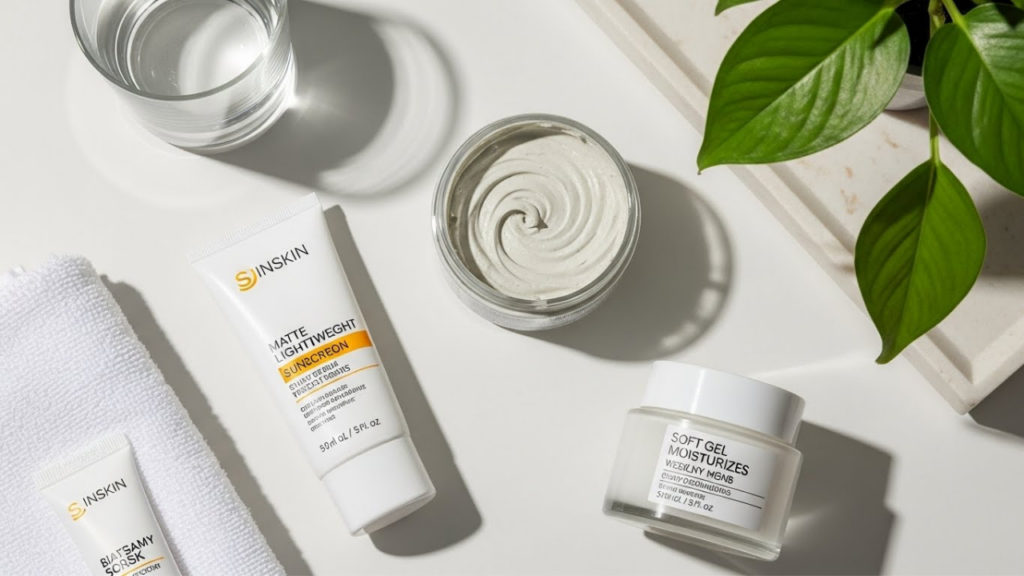 Choose a light, matte, oil-free sunscreen with broad-spectrum SPF 30 or higher. Gel or water-based formulas usually feel best on oily skin. Sunscreen does not make skin produce more oil, and it does not make oily skin greasy if the formula is light. Reapply every two hours when outdoors.
Weekly treatments
- Clay mask, once a week. Clay absorbs surface oil and can help shine control. Choose a creamy, gentle mask — a mask that leaves skin tight and dry is too strong. Evidence for clay is limited; treat it as a cosmetic option, not a treatment.
- Gentle exfoliation, once or twice a week. A chemical exfoliant (salicylic acid or a low-strength AHA) clears dead skin and helps keep pores clean. Physical scrubs should be gentle and infrequent. Exfoliation does not shrink pores — pore size is largely genetic.
Mistakes that fuel oily skin
- Washing your face too often. More than twice a day, plus after sweating, does not reduce oil. It irritates the skin. Twice a day is enough.
- Wearing excessively heavy products. Rich creams and oily serums clog pores and add shine. Light formulas suit oily skin.
- Omitting moisturiser. Skipping moisturiser does not reduce oil. It leaves skin dry and uncomfortable.
- Touching your face often. Hands carry dirt and oil, and touching spreads them onto the face. It is a hygiene habit worth keeping, but touching the face is not established as a cause of new breakouts.
- Layering several strong actives at once. Benzoyl peroxide, salicylic acid and a retinoid together are a common cause of irritation.
- Changing products every week. Breakouts take 6–8 weeks of consistent use to judge — the usual dermatology timeframe for acne treatments. Switching constantly means never finding out if a product would have worked.
- Expecting diet to fix oily skin. Eating less fried or sweet food will not change how much oil your skin makes. A balanced diet supports general health, and that is all it does for skin.
Patch test: before using a new active, apply a small amount to a quarter-sized area on the underside of your arm or the bend of your elbow, twice a day, for 7–10 days. If there is redness, itching or swelling, do not use it on your face. (AAD patch-test method.)
FAQ
How often should I wash oily skin?
Twice a day, plus after sweating. Use a gentle foaming cleanser and do not scrub. Washing more often does not reduce oil; it irritates the skin.
Does oily skin need moisturiser?
Yes. Oily skin still needs hydration to stay comfortable. A light gel moisturiser does not add oil, and it does not reduce oil production either — it keeps the skin balanced and comfortable.
Which ingredients help oily skin?
Salicylic acid is the usual first choice for clogged pores and breakouts. Niacinamide supports the barrier; the evidence for it reducing sebum is one small study (Draelos et al. 2006). Zinc has limited evidence. Over-the-counter salicylic acid products are usually 0.5–2%.
Does sunscreen make oily skin greasy?
A heavy or greasy sunscreen can feel oily, but a lightweight, matte, oil-free formula usually does not. Choose by texture.
Does oily skin get better with the right products?
A steady routine can mean less shine, fewer clogged pores and fewer breakouts over weeks of consistent use. It does not change your skin type, and no routine gives “natural and permanent” results.
Summary
Cleanse gently twice a day, use one treatment ingredient, moisturise with a light gel, and wear gel sunscreen every morning. Add a clay mask and gentle exfoliation once a week if you like. Keep the routine the same for six to eight weeks before judging it. No product in this guide was tested by us, and no brand is recommended.
Sources: AAD guidance on controlling oily skin; AAD sunscreen guidance; Draelos et al. 2006 (niacinamide 2% and sebum excretion, PMID 16766489); AAD patch-test method. This is a researched overview, not a hands-on review.