Researched overview. This guide is based on published dermatology guidance, not on hands-on product testing by BeautyKob. No product in this guide was tested by us, and no product or brand is recommended.
Table Of Content
- Quick answer
- What changes in your 30s
- Why simple is better
- The morning routine
- Step 1: Gentle cleansing
- Step 2: Antioxidant serum (vitamin C)
- Step 3: Lightweight moisturiser
- Step 4: Sunscreen is non-negotiable
- The night routine
- Double cleansing, if needed
- Retinol introduction (slow and smart)
- Barrier-supporting moisturiser
- Eye care in your 30s — necessary or not?
- Weekly treatments
- Gentle chemical exfoliation
- Hydrating masks
- Common skin concerns in your 30s and how to handle them
- Lifestyle habits — honestly
- Seasonal adjustments
- Mistakes women in their 30s commonly make
- Patch test before you commit
- When to see a dermatologist
- Long-term strategy for your 30s
- FAQ
- Summary
Quick answer
Your 30s are when prevention starts to matter more than correction. Collagen production slows, early fine lines stay visible longer, sun damage from your 20s starts to show as uneven tone, and hormones can bring adult acne or new dryness. The routine that works is short: gentle cleansing, one antioxidant in the morning, a light moisturiser, sunscreen every day, and a retinoid introduced slowly at night. Fewer products used properly beat a complicated routine. This guide is general information, not medical advice.
Contents: What changes in your 30s · Why simple is better · The morning routine · The night routine · Eye care · Weekly treatments · Common concerns · Lifestyle — honestly · Seasons · Mistakes · When to get help · FAQ
What changes in your 30s
- Slower collagen production. From the early 30s, the skin makes collagen more slowly and loses what it has faster. This does not make your face old overnight, but fine lines — especially around the eyes and smile lines — that used to fade by morning may stay visible longer. Sunscreen, antioxidants and gentle renewal are the honest ways to support collagen.
- Hormonal fluctuations. Stress, pregnancy, postpartum changes and small shifts in your cycle can bring adult acne, often around the jaw and chin. At the same time, hormones can lower oil production elsewhere, leaving combination skin that is oily in some areas and dry in others. That needs balance, not the aggressive acne products made for teenage skin.
- A weaker barrier. Years of over-exfoliation or harsh cleansers can leave the barrier compromised. In your 30s that can show up as sensitivity, redness and dryness — and products that used to work may start to sting. Repairing the barrier is a priority, not an afterthought.
- Sun damage starts showing. UV exposure and pollution from your 20s take years to appear. By your 30s they show as pigmentation, uneven tone and rough texture. That does not mean the damage is done — it means protection and repair matter every day from now on.
Why simple is better
Too many actives at once — acids, retinoids, brighteners — can overload the skin and cause irritation, breakouts and barrier damage instead of better texture. Trends come and go; fewer, carefully chosen products used regularly keep skin healthier in the long run.
The routine rests on five steps: cleanse, treat, moisturise, protect, repair. Done correctly, they keep the skin working on its own. It is not about fixing the skin — it is about maintaining it day by day.
The morning routine
Step 1: Gentle cleansing
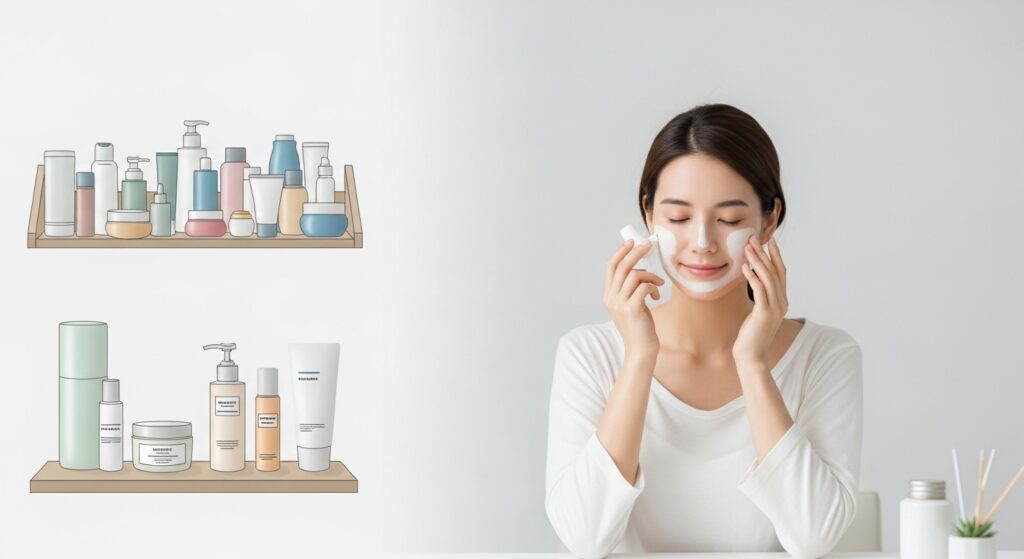
Wash with lukewarm water and a gentle cleanser that removes overnight oil, sweat and product residue without stripping the skin. Harsh cleansers break the barrier and cause dryness and sensitivity over time. Cream-based cleansers suit dry or sensitive skin; mild gel cleansers suit combination or oily skin. After cleansing, the skin should feel relaxed and comfortable, not tight.
Step 2: Antioxidant serum (vitamin C)
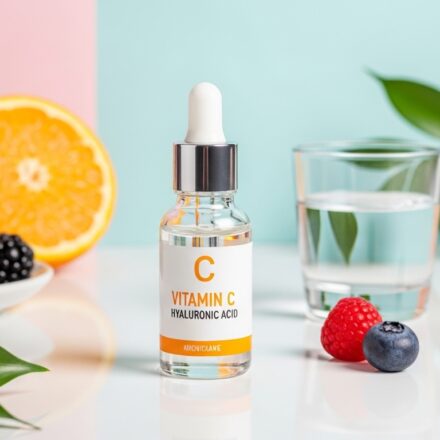
Antioxidants help shield the skin against environmental stressors including pollution and UV. Vitamin C is an antioxidant that can help the look of uneven tone over time and supports collagen. Used in the morning, it supports the skin’s defences during the day. Start with a low concentration if your skin is sensitive.
Step 3: Lightweight moisturiser
Moisture keeps skin firm and comfortable, and even oily skin needs it in your 30s. A lightweight formula hydrates without blocking pores and helps reduce the look of fine lines caused by dehydration. Ceramides support the skin barrier. Peptides are often marketed as firming ingredients, but the evidence for them is thin — treat them as a nice-to-have, not as the reason a product works.
Step 4: Sunscreen is non-negotiable
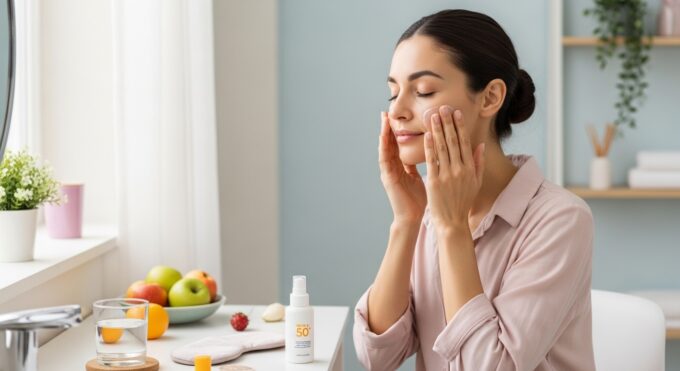
Daily sunscreen is the best anti-ageing habit you can have. UV exposure increases wrinkles, pigmentation and collagen loss. Use a broad-spectrum sunscreen with SPF 30 or higher every morning as the last step of your routine, and reapply every two hours when outdoors. It is the most effective anti-ageing step there is (Hughes et al. 2013) — more effective than any serum. If you spend the day indoors away from windows, you do not need to reapply indoors; window glass blocks UVB but not all UVA, so sunscreen still matters near windows and outdoors.
The night routine
Night is a practical time for treatment products because you are not layering makeup and sunscreen over them — not because the skin has a special repair window at night.
Double cleansing, if needed
If you wear sunscreen or makeup, double cleansing removes the build-up without over-scrubbing: the first wash removes sunscreen, makeup and pollution; the second cleans the skin gently. It does not make treatment products absorb better — that claim has no good evidence behind it.
Retinol introduction (slow and smart)
Retinol promotes cell renewal and supports collagen, which helps with early fine lines and uneven texture. In your 30s the key is patience. Begin with a low-strength formula two to three nights per week, buffered with moisturiser. Increase gradually only if the skin stays comfortable. Retinoid effects on fine lines take 3 to 6 months. Do not combine a retinoid with a strong exfoliant on the same night when starting out. Do not use retinoids if you are pregnant or trying to become pregnant, and ask a doctor first if you are breastfeeding.
Barrier-supporting moisturiser
A ceramide-based moisturiser with hydrating ingredients seals in moisture and reinforces the barrier overnight. A richer cream at night is practical because it does not have to sit under makeup — not because the skin heals best at night.
Eye care in your 30s — necessary or not?
The skin around the eyes has fewer oil glands and dries out easily. Early fine lines there are mostly caused by dehydration, not deep wrinkles, and light hydration can make a visible difference. A plain moisturiser is usually enough; a separate eye cream is optional, not necessary.
For puffiness, caffeine is sometimes marketed as a fix, but the evidence is limited — treat it as a possible comfort aid, not a treatment. Peptides are marketed as firming ingredients, but the evidence is thin. Hyaluronic acid hydrates. None of these is a medical treatment for the eye area, and if you have persistent swelling, irritation or a lump near the eye, ask a doctor.
Weekly treatments
Gentle chemical exfoliation
Exfoliate once a week to remove dead cells and brighten the skin. Lactic acid exfoliates and hydrates very mildly; glycolic acid exfoliates more deeply but may not suit sensitive skin. Over-exfoliation weakens the barrier, so hold back if the skin stings, turns red or flakes. Exfoliation removes dead cells from the surface; it does not make other products absorb better.
Hydrating masks
Hydrating masks replenish moisture and refresh tired skin, especially with seasonal changes, stress or travel. Use them once a week or when needed. They add comfort and hydration; they are not a treatment in themselves.
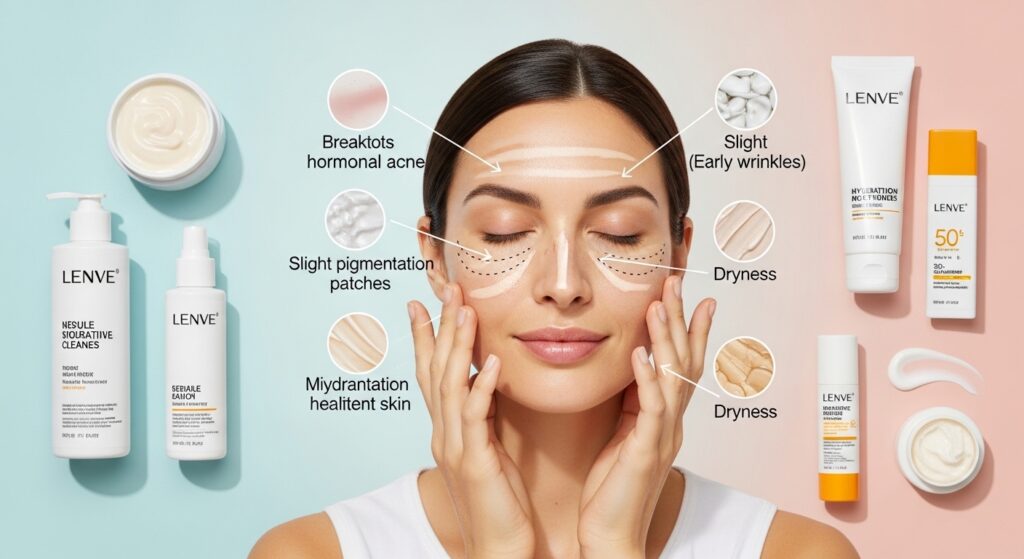
Common skin concerns in your 30s and how to handle them
- Hormonal acne. Treat adult acne gently. Over-drying products disrupt the balance and make breakouts worse. Good cleansing, mild actives and hydration help balance oil and prevent sensitivity. Do not pop a pimple — the AAD advises against it (Dr. Jacqueline Watchmaker, MD, FAAD). If acne is painful, deep, scarring, or does not improve after 8 to 12 weeks of consistent over-the-counter care, ask a dermatologist.
- Early wrinkles. Prevention works best: daily sunscreen and a retinoid used slowly over time help texture and reduce the appearance of ageing. No product removes wrinkles.
- Pigmentation and uneven tone. Pigmentation tends to increase in your 30s. Ingredients that can help the look of uneven tone over time include vitamin C, niacinamide and azelaic acid — used regularly, they improve tone slowly. They do not lighten skin overnight, and sunscreen is essential alongside them, because UV worsens pigmentation.
- Dryness and sensitivity. When skin feels reactive, simplify the routine. Focus on hydration and barrier repair, temporarily reducing strong actives until balance is restored.
Lifestyle habits — honestly
- Sleep. Poor sleep is associated with worse-looking skin — one small study (Oyetakin-White et al. 2015, 60 women) found poor sleepers had roughly double the intrinsic ageing score and about 30% slower barrier recovery at 72 hours — but it was small, observational and funded by a cosmetics company, so it shows an association, not proof. Aim for 7 or more hours of sleep a night, as the CDC recommends for adults, because it is good for your health, not because sleep is a skin treatment.
- Stress. Stress can make skin feel worse, but the claim that cortisol directly causes breakouts, sensitivity and collagen loss is overstated. Managing stress helps your health generally; it is not a skin treatment.
- Nutrition. A balanced diet supports your health. Protein provides the building blocks of skin, and a varied diet is good for you — but no food or supplement has been shown to treat skin ageing, and no diet is a skin treatment. Omega-3 and antioxidant supplements have no good evidence as a skin treatment in people who are not deficient.
- Water. Drinking enough water is good for your health, but drinking water does not directly hydrate your skin. If your skin feels tight despite good topical care, the answer is a better moisturiser, not more water.
Seasonal adjustments
- Winter: cold air and indoor heating increase moisture loss. Use richer moisturisers, reduce exfoliation, and add hydration to protect the barrier.
- Summer: sun and heat raise the risk of pigmentation. Use lighter textures, regular sunscreen and antioxidants. Reapply sunscreen every two hours when outdoors.
Mistakes women in their 30s commonly make
- Skipping sunscreen on a routine basis.
- Using harsh products made for teenage acne.
- Ignoring the neck and hands, and rotating products too frequently.
- Exfoliating too much in the hope of quick results.
- Adding several new actives at once. If your skin reacts, you will not know which one caused it.
Patch test before you commit
The American Academy of Dermatology recommends testing a new product before using it on your face. Apply the product to a quarter-sized patch of skin where it will not be rubbed or washed away — the underside of your arm or the bend of your elbow — twice a day for 7 to 10 days. For a rinse-off product such as a cleanser, leave it on for about five minutes, or as long as the label says, then rinse it off. If the test area becomes red, itchy, swollen or painful, stop using the product. If the area stays clear for the full 7 to 10 days, the product is less likely to cause a reaction on your face — but a patch test cannot guarantee it.
A 24-hour test can miss an allergic reaction, which often takes several days to appear — that is why this guide uses the AAD 7–10 day patch-test method.
When to see a dermatologist
Ask a dermatologist or pharmacist if: acne does not stop, melasma appears, sensitivity is new or unexpected, or your skin changes in a way you do not understand. A timely consultation prevents future trouble and unnecessary trial and error. Bring the products you use, or photos of their ingredient lists.
Long-term strategy for your 30s
- Prevention over correction.
- Consistency over trends.
- Simplicity over complexity.
Your 30s are not a deadline — they are a good time to build a habit that keeps your skin healthy, comfortable and confident in the long run. You do not have to be perfect; you only need to be consistent with what actually works.
FAQ
At what age should women start a proper skincare routine for their 30s?
Ideally, adjust your routine in your late 20s or early 30s, when collagen production slows and early signs of ageing such as fine lines, dullness and uneven texture may start appearing. Early prevention delivers better long-term results.
Is retinol necessary in a simple skin care routine for women in 30s?
Retinol is not mandatory, but it is helpful. When introduced slowly and used correctly, it supports collagen, improves texture, and reduces early fine lines. A simple routine can still include retinol just a few nights per week without becoming complicated.
Can women in their 30s still have acne?
Yes, adult acne is very common in the 30s due to hormonal fluctuations, stress and lifestyle factors. Treatment should be gentle and barrier-focused rather than aggressive or drying.
How important is sunscreen in your 30s?
Sunscreen is essential and non-negotiable. Daily SPF use prevents premature wrinkles, pigmentation and collagen loss. It is the most effective anti-ageing step in any skincare routine, regardless of skin type.
Should skincare change with seasons in your 30s?
Yes. Skin often needs richer hydration in winter and lighter textures with stronger sun protection in summer. Adapting your routine helps maintain balance and prevents unnecessary irritation.
Summary
In your 30s, prevention matters more than correction: gentle cleansing, one antioxidant in the morning, a light moisturiser, broad-spectrum SPF 30+ every day with reapplication outdoors, and a retinoid introduced slowly at night, two to three nights a week, buffered with moisturiser. Keep the routine short, introduce one product at a time, and patch test every new product for 7 to 10 days. Eye care is optional — a plain moisturiser is usually enough. Food, water, sleep and stress management support your health but are not skin treatments. If acne does not improve after 8 to 12 weeks, or your skin changes in a way you do not understand, ask a dermatologist.
Sources: American Academy of Dermatology, 7 Rosacea skin care tips (patch-test method: apply a new product to a quarter-sized patch of skin on the inside of the arm for 7–10 days); American Academy of Dermatology, How to select anti-aging skin care products (broad-spectrum sunscreen, SPF 30 or higher every morning, reapply every two hours outdoors). This is a researched overview, not a hands-on review.