Researched overview. This guide is based on published dermatology guidance and drug labels, not on hands-on product testing by BeautyKob. No product in this guide was tested by us, and no product is recommended.
Table Of Content
- Quick answer
- What benzoyl peroxide is
- Which strength to use
- What it does not do
- How to use it
- Benzene and storage — what happened in 2024–2025
- An example: Effaclar Duo
- Who should be careful
- Sunscreen
- Mistakes that make things worse
- Diet, sleep and stress — what is actually known
- When to see a dermatologist
- FAQ
- Summary
Quick answer
Benzoyl peroxide is one of the standard over-the-counter acne treatments, and one of the few the American Academy of Dermatology (AAD) strongly recommends. It kills the bacteria involved in inflamed acne and helps keep pores clear of dead skin. It is a treatment for mild to moderate acne, not a cure, and it does not control how much oil your skin produces.
Use a thin layer on the areas that break out once a day to start, with a gentle cleanser, a light moisturiser and sunscreen every morning. Start with the lowest strength — 2.5% works about as well as higher strengths for many people, with less irritation. Give it 6 to 8 weeks before judging it. If your skin is very sensitive, or you have reacted badly to benzoyl peroxide before, ask a pharmacist first.
One practical note: benzoyl peroxide can break down into benzene if a product is stored badly or kept too long. The US Food and Drug Administration (FDA) tested 95 benzoyl peroxide acne products in 2025 and found more than 90% had undetectable or extremely low benzene levels; a small number were recalled. Store your product at room temperature or cooler, replace it every 10 to 12 weeks, and throw it away if it has been left in heat. The storage advice is in the section below.
If your skin is red, sore, or has open sores or a rash, ask a dermatologist or pharmacist before using any acne treatment. This guide is general information, not medical advice.
Contents: What benzoyl peroxide is · Which strength to use · What it does not do · How to use it · Benzene and storage · An example: Effaclar Duo · Who should be careful · Sunscreen · Mistakes · When to see a dermatologist · FAQ
What benzoyl peroxide is
Benzoyl peroxide is an over-the-counter acne treatment sold as a gel, cream, wash or spot treatment. It works in two ways: it kills Cutibacterium acnes, the bacteria involved in inflamed acne, and it helps keep pores clear of dead skin. The AAD’s 2024 acne guideline strongly recommends benzoyl peroxide, and recommends using it alongside any topical antibiotic to reduce the risk of antibiotic resistance. (2024 AAD acne guideline summary)
It is different from the other common acne actives. Salicylic acid exfoliates inside the pore; retinoids speed up skin cell turnover; benzoyl peroxide’s main job is killing acne bacteria. That is why it is often used together with one of the others — but not started at the same time (see “How to use it” below).
Which strength to use
Benzoyl peroxide is sold in strengths from 2.5% to 10%. Higher is not better. In three double-blind studies with 153 patients, 2.5% benzoyl peroxide reduced inflammatory acne as well as 5% and 10%, with less peeling, redness and burning than 10%.
- Start with 2.5%. It is the usual starting point, especially for sensitive or dry skin, and the evidence says it works about as well as higher strengths for many people.
- Move up only if you need to. If 2.5% is tolerated but your acne is not improving after 6 to 8 weeks, a 5% product is the next step — or ask a pharmacist or dermatologist first.
- 10% is the maximum, not the goal. It irritates more without clearly working better, and it is the strength most likely to cause peeling and redness.
Check the drug facts label on the packaging of the product you actually buy — that label, not a retailer’s description, is what is in the tube.
What it does not do
- It does not control sebum production. Benzoyl peroxide does not change how much oil your sebaceous glands make. It can make skin look less shiny by drying the surface and clearing pores, but that is not the same as regulating oil output.
- It does not cure acne. Benzoyl peroxide controls acne while you use it. If you stop, breakouts can return.
- It does not work in days. The AAD advises giving an acne treatment 6 to 8 weeks before judging it, and says complete clearing generally takes 3 to 4 months. (AAD acne timeline summary)
- It is not gentle for everyone. Dryness, redness, peeling and stinging are common, especially in the first few weeks. Drug labels warn that skin irritation may occur, with redness, burning, itching, peeling or swelling.
How to use it
Patch test first: Apply a small amount to a quarter-sized spot on the underside of your arm or the bend of your elbow, twice a day for 7 to 10 days. The AAD recommends this length because allergic reactions can take several days to appear, and a 24-hour test can miss them. If the spot becomes red, itchy, swollen or blistered, stop and do not use the product on your face.
Daily routine:
- Cleanse gently. Lukewarm water and a mild cleanser. Do not scrub, and do not wash more than twice a day — over-washing strips the skin and can make irritation worse.
- Apply a thin layer. Spread a thin layer over the areas that break out, not just on individual pimples. The AAD advises treating the whole area that breaks out, because a spot treatment alone does not reach the pimples forming underneath. Start once a day. If your skin tolerates it after a week or two, you can go to twice a day, following the label.
- Moisturise. Use a light, non-comedogenic moisturiser. Oily skin still needs moisturiser, and it helps with the dryness benzoyl peroxide causes.
- Sunscreen in the morning. Broad-spectrum SPF 30 or higher, every day. (AAD sunscreen guidance)
Do not use it at the same time as another strong acne treatment — a retinoid, a strong acid exfoliant, or another benzoyl peroxide product — unless a dermatologist has advised it. Combining them usually adds irritation without adding benefit.
Fabric warning: Benzoyl peroxide can bleach hair and dyed fabric, including pillowcases and towels. Let it dry fully before your face touches bedding, and use white towels and pillowcases while you use it.
Benzene and storage — what happened in 2024–2025
In March 2024, an independent laboratory reported that benzoyl peroxide can break down into benzene — a substance classified as a human carcinogen — particularly when products are stored at high temperatures. That report led the FDA to test 95 benzoyl peroxide acne products itself. In March 2025 the FDA reported that more than 90% of the products tested had undetectable or extremely low levels of benzene, and that six products with elevated levels were voluntarily recalled at the retail level. The FDA also said that even with daily use of these products for decades, the risk of developing cancer from the benzene levels found is very low.
The AAD issued a statement on March 24, 2025 with practical advice for anyone using benzoyl peroxide: (AAD statement on benzoyl peroxide)
- Store products according to the manufacturer’s instructions, at room temperature or cooler.
- Replace products containing benzoyl peroxide every 10 to 12 weeks.
- Throw a product away if it has been exposed to high temperatures, for example above 78°F (about 26°C) — such as being left in a hot car.
In plain terms: buy a fresh tube, keep it somewhere cool, do not stockpile it, and respect the expiry date. This does not mean benzoyl peroxide itself is unsafe — the AAD’s 2024 guideline still strongly recommends it, and the FDA’s testing found the large majority of products had no detectable or very low benzene. It means storage matters.
An example: Effaclar Duo
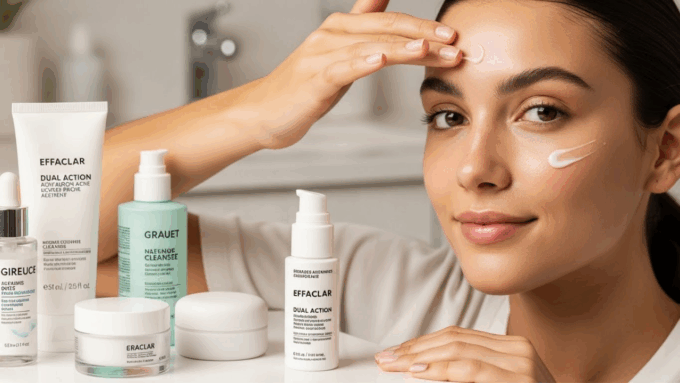
This article was originally written about one product, La Roche-Posay Effaclar Duo, so it is worth saying plainly what happened to it. The US version listed one active ingredient on its drug label: benzoyl peroxide 5.5%, with lipo-hydroxy acid (capryloyl salicylic acid) among the inactive ingredients, a mild exfoliant. At 5.5% it sat in the middle of the 2.5% to 10% range. The manufacturer’s own directions were to apply a thin layer to the affected areas 1 to 3 times daily, after cleansing, avoiding the eye area. (DailyMed, Effaclar Duo drug label)
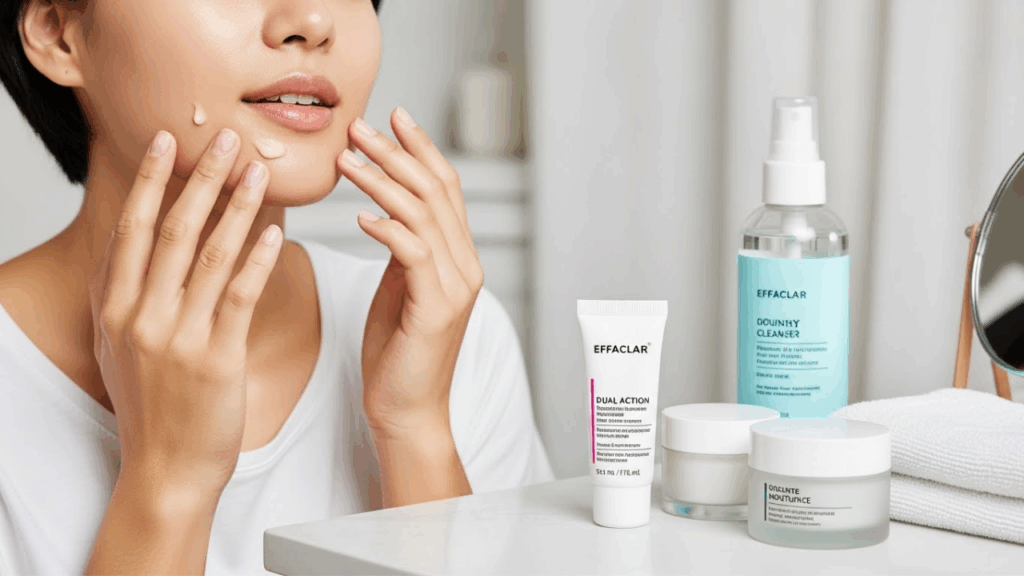
That product is no longer sold in the US. The manufacturer’s US website now says: “We regret to inform you that this product has been discontinued.” In March 2025, L’Oréal announced it was recalling all lots of Effaclar Duo in the US, in coordination with the FDA, after the benzene findings described above, and said a new formula was in development. (La Roche-Posay US, discontinued product page)
Do not buy old stock of a discontinued product, and do not rely on a second-hand tube with no instructions, no expiry date and no support. The same product name is also sold in different formulas in different countries — the European version of Effaclar Duo does not contain benzoyl peroxide — so check the drug facts label on the packaging of any product you actually buy.
Who should be careful
Be careful, and consider a lower-strength product or asking a pharmacist first, if you have:
- Very sensitive skin. Drug labels say do not use benzoyl peroxide if you have very sensitive skin or are sensitive to benzoyl peroxide.
- Dry or easily irritated skin. A 2.5% benzoyl peroxide product is the usual starting point for sensitive skin.
- Eczema, rosacea, or broken or sunburnt skin. Do not apply acne treatment to broken or irritated skin.
- A history of reacting to benzoyl peroxide. If a lower strength irritated you before, a higher one will not be easier.
If you are pregnant or breastfeeding, ask your doctor before starting any new acne treatment.
Stop and ask a doctor if: you get severe redness, swelling, blistering, or a rash that spreads; your skin becomes very painful; or you have trouble breathing or swelling of the face or lips after using it. These are rare, but they are reasons to stop and get medical help.
Sunscreen
Sun protection matters more while you use benzoyl peroxide, because treated skin can be more sensitive to sun. Use a broad-spectrum sunscreen with SPF 30 or higher every morning as the last step, and reapply every two hours when outdoors, or after swimming or sweating. Sunscreen also helps prevent the dark marks that acne leaves behind from getting darker.
Mistakes that make things worse
- Using too much, too often. More product does not clear acne faster. It usually just adds dryness and peeling. A thin layer, once a day to start, is enough.
- Spot-treating only the pimple you can see. Acne forms under the surface before it appears. Treating the whole breakout area works better than dotting single pimples.
- Adding a second strong active in the same week. If you want to try a retinoid or an acid exfoliant as well, introduce one product at a time and give each several weeks.
- Squeezing or picking pimples. Picking pushes bacteria and debris deeper, increases inflammation, and raises the chance of scarring.
- Judging it after a week. Acne treatments need 6 to 8 weeks before you can fairly judge them. Switching products every week makes it impossible to know what helped.
- Keeping an old tube. Benzoyl peroxide can break down over time and in heat. Replace it every 10 to 12 weeks and throw it away if it has been left somewhere hot.
Diet, sleep and stress — what is actually known
Some studies have linked high-glycemic foods — sugary drinks, white bread, processed snacks — with worse acne, and a low-glycemic diet with improvement in some people. The evidence is limited and mixed, and no food has been shown to cause or cure acne on its own. Eating a balanced diet and getting regular sleep support general health, but they are not a substitute for acne treatment, and changing your diet does not guarantee clearer skin.

When to see a dermatologist
See a dermatologist if: your acne does not improve after 6 to 8 weeks of consistent use; your breakouts are deep, painful or cystic; your acne is leaving scars or dark marks; or your skin becomes very irritated and does not settle when you use the product less often. A dermatologist can check whether what you have is acne at all — some rashes only look like acne — and can discuss prescription options such as a topical retinoid, an antibiotic, or a hormonal treatment where appropriate.
FAQ
Is benzoyl peroxide safe for sensitive skin?
Not necessarily. Benzoyl peroxide commonly causes dryness and redness, and labels say not to use it if you have very sensitive skin. Patch test first, start once a day with a 2.5% product, and stop if your skin reacts.
What strength should I start with?
2.5%. In three double-blind studies it worked about as well as 5% and 10% for inflammatory acne, with less irritation. Move up only if your skin tolerates it and your acne is not improving after 6 to 8 weeks.
How long before I see results?
The AAD advises giving an acne treatment 6 to 8 weeks, with complete clearing often taking 3 to 4 months. Early dryness or redness in the first weeks does not mean it is working or failing — it is a common side effect.
Can I use it with a retinoid or salicylic acid?
Not when you are starting out. Combining strong actives in the same routine increases irritation. If you want to use more than one, ask a dermatologist how to space them out.
Will it stop my skin being oily?
No. It does not change how much oil your skin produces. It can reduce shine by drying the surface and clearing pores, but oil production itself is driven by hormones and genetics.
Why does it bleach my pillowcase?
Benzoyl peroxide is an oxidising agent and bleaches dyed fabric and hair. Let it dry before contact with fabric, and use white bedding and towels.
Is benzoyl peroxide still safe after the benzene reports?
The FDA tested 95 benzoyl peroxide acne products in 2025 and found more than 90% had undetectable or extremely low benzene levels; six products with elevated levels were recalled. The FDA said the cancer risk from the levels found is very low even with decades of daily use. The AAD still strongly recommends benzoyl peroxide, and advises storing it cool, replacing it every 10 to 12 weeks, and discarding it if it has been exposed to heat.
Summary
Benzoyl peroxide kills acne bacteria and helps keep pores clear, but it does not control oil production and does not cure acne. Start with 2.5%, patch test for 7 to 10 days, use a thin layer once a day to start, moisturise, wear sunscreen every morning, and give it 6 to 8 weeks. Buy a fresh tube, store it somewhere cool, and replace it every 10 to 12 weeks. If your skin is very sensitive, start with the lowest strength instead. See a dermatologist if acne does not improve in 6 to 8 weeks, or if breakouts are deep, painful or scarring.
Sources: DailyMed Effaclar Duo drug label (benzoyl peroxide 5.5%); AAD 2024 acne guideline and acne timeline guidance; AAD statement on benzoyl peroxide in OTC personal care products (March 24, 2025); FDA testing of 95 benzoyl peroxide acne products for benzene (March 2025); AAD sunscreen guidance; AAD guidance on testing skin care products (7–10 day patch test). This is a researched overview, not a hands-on review.