Researched overview. This guide is based on published research and dermatology guidance, not on hands-on product testing by BeautyKob. No product in this guide was tested by us.
Table Of Content
- Quick answer
- Why your evening shower sets up your sleep
- The temperature drop that triggers sleep
- Why slower beats scrubby
- What touch and scent actually do
- The touch effect
- What the lavender research actually shows
- Moisturising at the right moment
- Locking in moisture
- Choosing ingredients that won’t undo the calm
- Designing your bathroom for sleep, not stimulation
- Why dim light helps
- Bath versus shower for muscle relaxation
- Four approaches compared
- Common mistakes that undercut the whole routine
- FAQ
- Summary
Quick answer
A calming nighttime body routine needs the right sequence at the right moment — not ten products or a spa-level budget. Warm water 1–2 hours before bed, moisturiser applied while skin is still slightly damp, dim lighting and a slow pace cover most of what the research actually supports. Night is a practical time for this routine, not a proven biological repair window: nothing in it “repairs” your skin overnight, and no product makes you fall asleep.
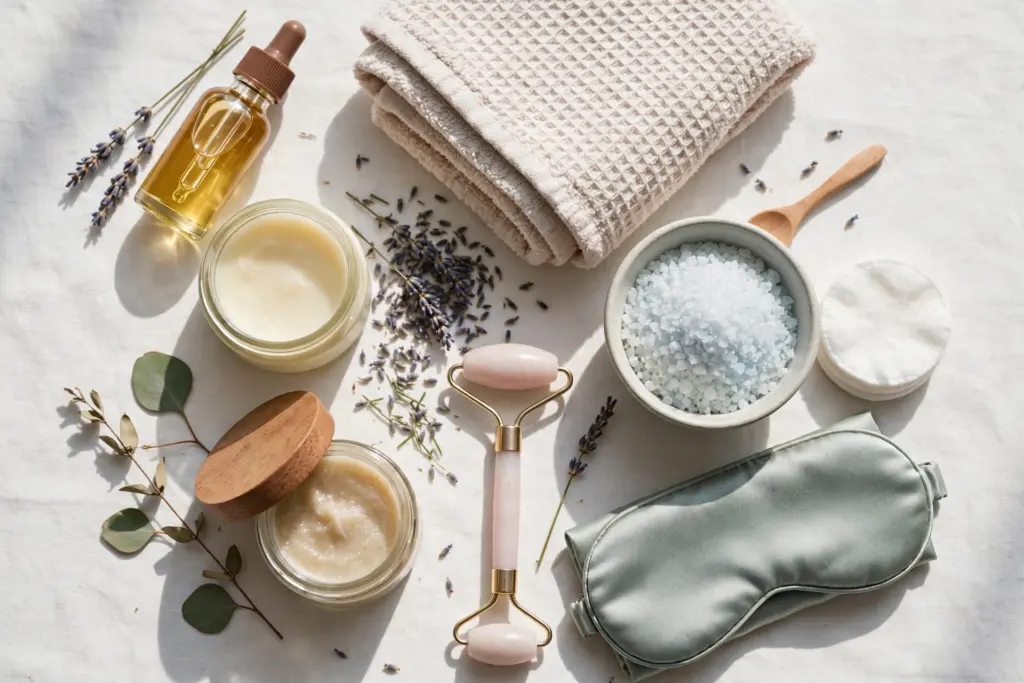
What helps most:
- A warm bath or shower, 60–90 minutes before bed — the timing with the best evidence for falling asleep sooner.
- Moisturiser on damp skin — applied right after patting dry, while skin is still slightly damp.
- Dim light — bright bathroom light works against the wind-down; dim light does not suppress melatonin the way bright light can.
- A slow pace — rushing through the routine keeps your body in the same alert state you are trying to switch off.
What does not help: a cold shower right before bed, scrubbing hard, layering several strong actives at once, or treating the routine as one more item on a stressful to-do list. If you have a diagnosed sleep disorder, or you rely on prescribed sleep medication, treat this routine as a complement to medical care, not a replacement — and check with a doctor before changing an existing routine. This guide is general information, not medical advice.
Contents: Why your evening shower sets up your sleep · The temperature drop · Why slower beats scrubby · Touch and scent · Moisturising at the right moment · Ingredients that won’t undo the calm · Your bathroom environment · Bath vs shower · Four approaches compared · Mistakes · Patch test · FAQ
Why your evening shower sets up your sleep
The temperature drop that triggers sleep
When you rinse with warm water near bedtime, the blood vessels near the skin’s surface dilate. Once you are out of the water, that heat dissipates quickly and your core temperature starts to drop. That dip is one of the bodily signals tied to the transition into sleep.
A 2019 systematic review and meta-analysis in Sleep Medicine Reviews (Haghayegh et al.) pooled the trials of warm baths and showers before bed. It found that bathing about 1–2 hours before bedtime, in water around 40–42.5 °C (104–108.5 °F), was linked to better self-rated sleep quality and to falling asleep about 10 minutes sooner on average. The effect is modest, and the trials were mostly small and done in generally healthy people — but the timing is the useful part: a bath taken too close to bedtime, while the body is still shedding the borrowed heat, works less well than one taken an hour or two earlier.
A shower that is too cold does not help here either. Cold water does not dilate the blood vessels near the skin, so it does not set up the same cool-down afterwards — and a cold shock right before bed can be stimulating rather than calming. Warm water, then time to cool down, is the pattern the evidence supports.
Why slower beats scrubby
When you are scrubbing fast and hard, you are keeping your body in a low-grade “get it done” state, which is not what you want an hour before bed. Slow, gentle movements with a mild, fragrance-free wash clean the skin without stripping the lipids your barrier needs. The American Academy of Dermatology’s dry-skin guidance recommends short showers or baths of 5–10 minutes in warm, not hot, water, and patting skin dry instead of rubbing.
What touch and scent actually do
The touch effect
Every slow stroke of a warm towel or a gentle hand massage gives your skin something calm to pay attention to. Massage is best understood as a comfort aid: it can ease the feeling of tightness and help you slow down. Claims that massage drains lymph, increases blood flow or removes toxins are not supported by good evidence, so this guide does not make them. Keep pressure gentle — if it hurts, you are pressing too hard.
What the lavender research actually shows
Lavender has a reputation as an instant sleep aid, and the data is more modest than the reputation. In a small crossover trial, researchers measuring stress markers during sleep found that lavender essential oil inhalation reduced markers of sympathetic nervous system activity, such as alpha-amylase, even though salivary cortisol itself did not move much. In plain terms: lavender may help you feel calmer, but it does not work like a sedative, and the evidence comes from small studies.
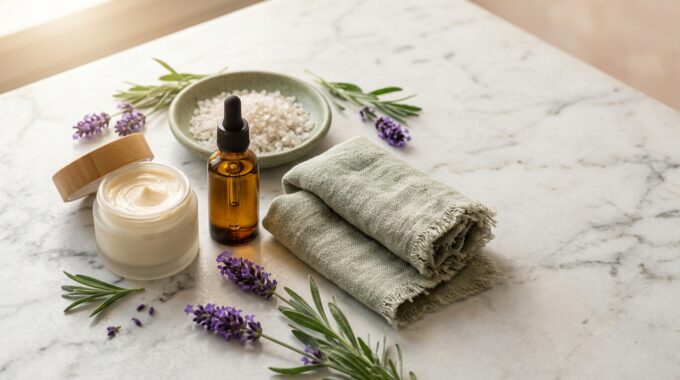
If you use lavender, use a candle or a diffuser rather than putting essential oil on your skin. Essential oils are common irritants, should never be used undiluted, and should be patch tested first (see below). Spraying a lavender mist on your pillowcase rather than directly on your face avoids irritating sensitive skin while still delivering the scent.
Moisturising at the right moment
Locking in moisture
A ceramide-rich body cream applied to skin that is still slightly damp creates a far better seal than the same cream applied to fully dry skin. The American Academy of Dermatology’s dry-skin guidance recommends applying moisturiser to skin that is still a bit damp after bathing, because that is when it traps water most effectively. Creams and ointments add more moisture than lotions and work better for dry skin; look for at least one of these in the ingredient list: ceramides, glycerin, hyaluronic acid, petrolatum, shea butter or dimethicone.
Applying cream to fully dry skin is the single most common error in a nighttime routine: it leaves a greasy feel without actually sealing in moisture, because there is no water left to trap.
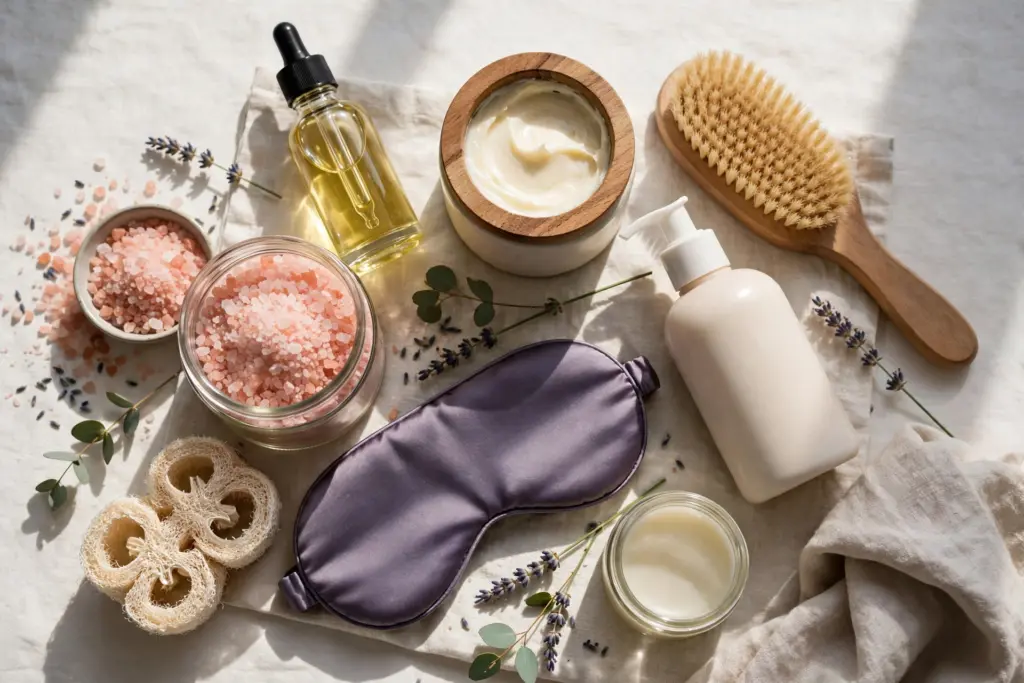
Choosing ingredients that won’t undo the calm
- Ceramides help restore the lipid layer in your skin’s outer layer.
- Colloidal oatmeal can soothe itchy or reactive patches.
- Glycerin and hyaluronic acid draw water into the skin and are light, well-tolerated hydrators.
- Fragrance and drying alcohols are common triggers for nighttime skin irritation — in some people they also make it harder to settle. Choose fragrance-free products when your skin is sensitive.
- Magnesium flakes in a bath are often sold as a muscle relaxant, but the evidence for magnesium being absorbed through the skin in meaningful amounts is limited. The warmth and relaxation of the bath likely do more of the work than the magnesium itself.
- Strong actives at night — retinoids, strong acids and heavy fragrance — do not belong in a calming routine. Layering them without spacing can cause irritation instead of calm. If you use a retinoid, keep it separate from this routine and follow its own instructions; retinoids are not suitable during pregnancy.
No brand is recommended in this guide. Read the ingredient list rather than trusting front-of-bottle words like “calming” or “natural” — neither term is regulated for cosmetics, and the US Food and Drug Administration has never legally defined “natural” for cosmetics.
Designing your bathroom for sleep, not stimulation
Why dim light helps
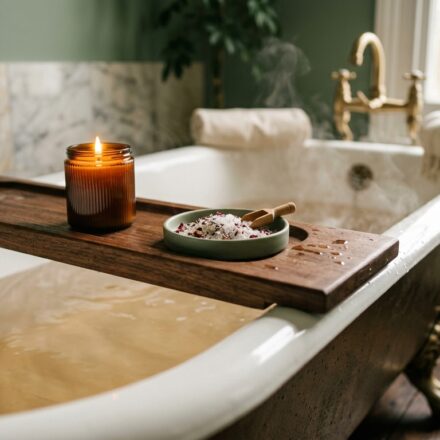
Dimming the bathroom lights, or swapping them for a single warm-toned candle, does two things at once. Bright light in the evening can suppress melatonin release, so dim light removes that obstacle; and it draws your focus to touch and sound rather than sight, which helps you slow down. That sensory narrowing is part of why people report feeling calmer within minutes of switching to a dimly lit routine.
Bath versus shower for muscle relaxation
A 15–20 minute soak in warm water gives sore muscles more sustained relaxation than a shower can. If you do not have time for a full bath, a warm shower of 5–10 minutes still sets up the temperature drop described above. Keep bath soaks under 20 minutes — longer soaks can strip more oil from the skin than they replace, undoing some of the barrier benefit you are going for. Water should feel warm and comfortable, not hot: very hot water strips oils, irritates skin and carries a scald risk.
Four approaches compared
| Approach | Time needed | Best for |
|---|---|---|
| Quick 3-step routine | Under 5 minutes | Busy weeknights: gentle wash, one moisturiser on damp skin, dim light |
| Full sensory ritual | 30–40 minutes | Weekly reset nights: warm bath, moisturiser on damp skin, dim light |
| Dim-light shower only | 8–12 minutes | People whose thoughts race at bedtime: fragrance-light wash, dim lighting |
| Simple, low-waste routine | 10–15 minutes | Reducing packaging and water use: solid lotion bars, concentrated oils, tap off while scrubbing |
Any of these works. Pick the one you will actually repeat — a short routine done nightly beats an elaborate one done once a month.
Common mistakes that undercut the whole routine
- Applying cream to fully dry skin. Moisturise while skin is still slightly damp.
- Rushing. Treating the routine as one more item on a stress-filled to-do list keeps your body in the same alert state you are trying to switch off.
- Water that is too hot, or a bath that is too long. Lukewarm water, 5–10 minute showers, baths under 20 minutes.
- Too many actives at once. A calming routine is not the place for retinoids, strong acids and heavy fragrance together.
- A cold shower right before bed. Warm water 1–2 hours before bed is the supported pattern.
- Expecting a sedative effect. Lavender and warm water can help you feel calmer; neither replaces treatment for a diagnosed sleep disorder.
Patch test: before using a new body product more widely, patch test it: apply a quarter-sized amount to the underside of your arm or the bend of your elbow, twice a day, for 7 to 10 days. If you get redness, itching, swelling or a rash, stop using it. A 24-hour test can miss an allergic reaction, which often takes several days to appear — that is why this guide uses the AAD 7–10 day patch-test method. This is the American Academy of Dermatology’s patch-test method.
The morning after: a nighttime routine ends in the morning. Cleanse gently, moisturise, and use a broad-spectrum sunscreen with SPF 30 or higher before going outside — sunscreen is a daily step, and the American Academy of Dermatology recommends it even on cloudy days, with reapplication every two hours outdoors.
FAQ
How long before bed should I do my nighttime body care routine?
Most people benefit from starting 60–90 minutes before sleep, which allows a warm bath or shower’s temperature-drop effect to line up with the body’s natural melatonin release. Applying products at least 30 minutes before lying down also means less product transfers onto sheets.
Does a warm bath before bed actually improve sleep quality?
Warming the skin’s surface causes blood vessels to dilate, and the rapid heat loss after getting out helps lower core body temperature, a signal tied to falling asleep. A 2019 meta-analysis found people fell asleep about 10 minutes sooner on average when the bath happened 1–2 hours before bedtime rather than immediately beforehand.
Can lavender body mist replace a sleep medication routine?
Lavender inhalation has been shown to calm markers of sympathetic nervous system activity in small studies, but it is not a substitute for medical treatment of a diagnosed sleep disorder. Anyone relying on prescribed sleep medication should treat aromatherapy as a complementary step, not a replacement, and check with a doctor before changing an existing routine.
Is it bad to use body oil and body cream in the same routine?
Layering a lightweight oil under a thicker ceramide cream is fine and can help on very dry patches like elbows and heels. The order matters: apply the oil first to damp skin, then seal it with cream, rather than the reverse.
Why does my skin still feel dry even though I moisturise every night?
The most common cause is applying product to fully dry skin, which traps far less moisture than applying to skin that is still slightly damp from a shower or bath. Fragrance and drying alcohols in a formula can also compound dryness, so checking the ingredient list before switching products is worth doing first.
Summary
A calming nighttime body routine does not need ten products or a spa-level budget to work — it needs the right sequence at the right moment. Warm water 1–2 hours before bed, moisturiser on skin that is still damp, dim lighting and a slow pace cover most of what the research actually supports. Add a gentle touch and, if you like it, a lavender scent — and the rest of the “luxury” framing becomes optional rather than necessary.
Sources: Haghayegh et al. 2019 (Sleep Med. Rev. 46:124–135, doi:10.1016/j.smrv.2019.04.008); AAD dry-skin guidance (short warm showers, moisturise on damp skin, creams over lotions, fragrance-free); AAD sunscreen guidance; AAD patch-test method; FDA has never legally defined “natural” for cosmetics (Mayo Clinic). This is a researched overview, not a hands-on review.