Researched overview. This guide is based on published dermatology guidance, not on hands-on product testing by BeautyKob. No product in this guide was tested by us, and no brand is recommended.
Table Of Content
Quick answer
Korean skincare is a way of caring for skin, not a treatment. Its ideas are simple: cleanse gently, add hydration in thin layers, use one targeted product at a time, moisturise, and protect with sunscreen every morning. The parts with the strongest evidence are the least exotic ones — daily sunscreen and moisturiser are, in the American Academy of Dermatology’s words, the two most effective anti-ageing products most people can buy. No routine can prevent ageing, erase wrinkles, or guarantee firm skin. What a good routine can do is keep skin hydrated and protected, which softens the look of fine lines and slows visible sun damage.
If your skin is red, sore, flaking badly, or you have a rash or open sores, skip the active products and ask a dermatologist or pharmacist first. This guide is general information, not medical advice.
Contents: What Korean skincare is · What the evidence supports · Key ingredients, honestly · Morning routine · Evening routine · Weekly treatments · Who should be careful · Realistic expectations · Mistakes · When to get help
What Korean skincare is
Korean skincare (often called K-beauty) is a routine style built on three ideas:
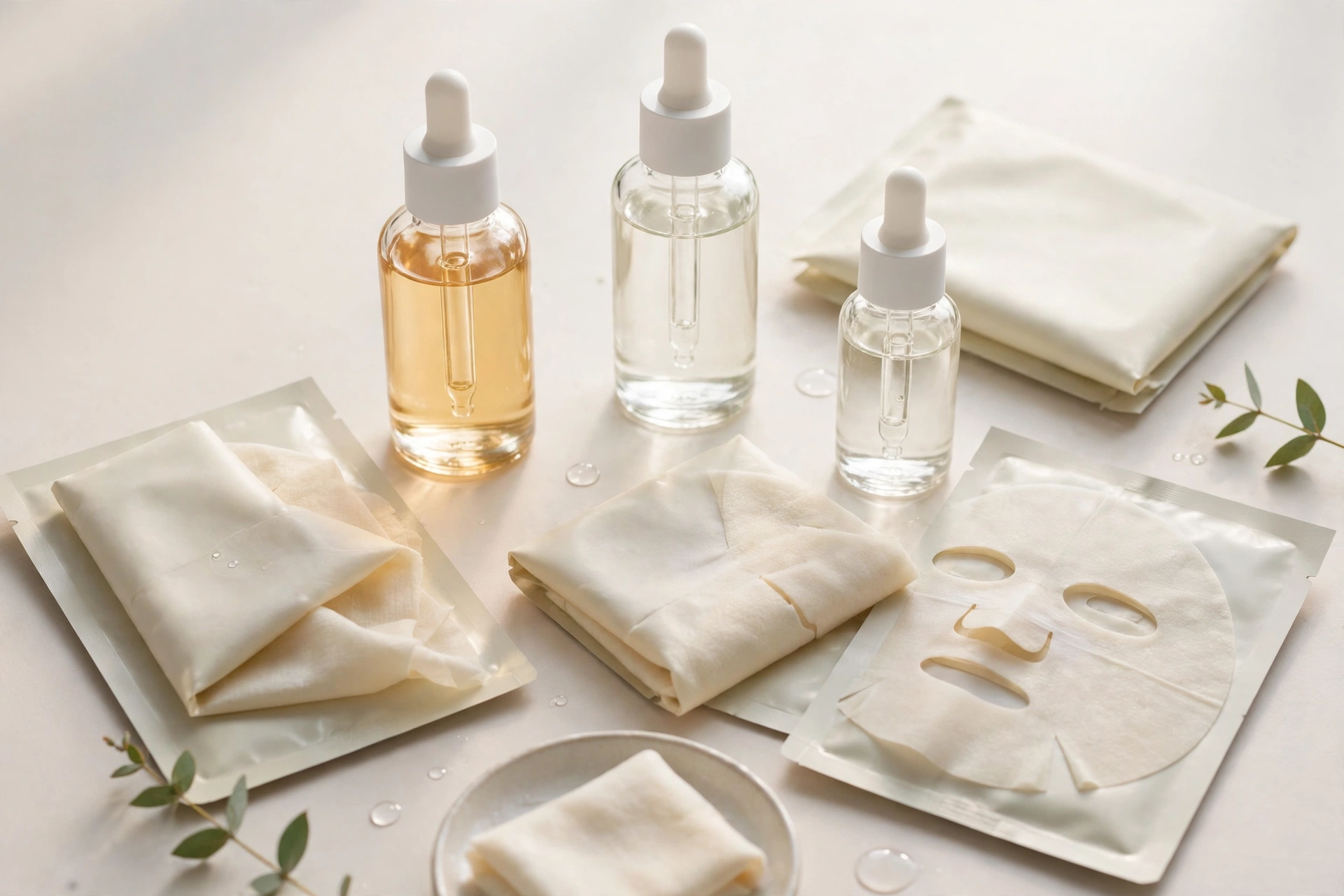
- Layered hydration. Several light, watery layers (toner, essence, serum) instead of one heavy cream. Thin layers absorb easily and let you add hydration gradually.
- Prevention over quick fixes. Daily sun protection and barrier care from an early age, rather than waiting for visible damage and then trying to reverse it.
- Gentle, steady care. Mild products used consistently, rather than harsh treatments used aggressively.
None of this is unique to Korea, and none of it requires Korean brands. The same routine can be built with products from anywhere, as long as the products themselves are well formulated.
What the evidence actually supports
It helps to separate what is proven from what is popular:
- Sunscreen — the strongest evidence. UV exposure is a main cause of premature ageing: wrinkles, dark spots and loss of firmness. The AAD recommends a broad-spectrum sunscreen with SPF 30 or higher every day, including on cloudy days, reapplied every two hours outdoors or after swimming or sweating. (AAD sunscreen guidance) Sunscreen does not undo existing damage, but it is the single most effective step against further visible ageing.
- Moisturiser. A good moisturiser combines a humectant (draws in water, for example glycerin or hyaluronic acid), an emollient (softens, for example ceramides or squalane) and, for dry skin, an occlusive (seals water in, for example petrolatum or shea butter). Hydrated skin looks plumper and smoother, which softens the appearance of fine lines. It does not remove wrinkles.
- Retinoids — the most evidence of any active ingredient. Retinoids are vitamin A derivatives. The AAD’s guidance is that they speed up skin cell turnover and support collagen, and can help mild fine lines and uneven tone and texture. Retinol is the over-the-counter form; stronger retinoids such as tretinoin need a prescription. Start with the least intense formula, every other night, and build up only if your skin tolerates it. Use retinoids at night and wear sunscreen daily, because they can make skin more sensitive to the sun. Do not use retinoids during pregnancy.
- Vitamin C. Vitamin C is an antioxidant, and in the body it is a cofactor for the enzymes that build collagen. It can help the look of uneven tone over time. (AAD cosmeceuticals review) That biochemical role does not mean every serum will visibly change your skin — formulation, stability and regular use with sunscreen all matter.
Key ingredients, honestly
| Ingredient | What it does | What to know |
|---|---|---|
| Hyaluronic acid | Humectant — draws water into the skin so it looks plump and smooth | Use on damp skin, under moisturiser. It is hydration, not a treatment on its own. |
| Ceramides | Support the skin barrier and help hold moisture in | A common, well-tolerated ingredient in moisturisers. |
| Niacinamide | Supports the skin barrier; can help the look of redness and uneven texture | Usually well tolerated; a good first active for sensitive skin. |
| Vitamin C | Antioxidant; can help the look of uneven tone over time | Start with a lower strength if sensitive; store away from light and heat; replace if it turns dark brown. |
| Retinol / retinoid | The active with the most evidence for fine lines and uneven texture | Night only; start every other night; expect some dryness at first; not for use in pregnancy. |
| Peptides | Marketed as supporting collagen and firmness | The evidence for peptide products improving skin is limited and mostly comes from small or manufacturer-funded studies. They are not a proven substitute for retinoids or sunscreen. |
| Fermented extracts | Marketed as improving absorption, hydration and texture | There is no reliable published evidence that fermentation makes these ingredients work better on skin, or that they stimulate collagen. Treat them as pleasant extras, not as anti-ageing treatment. |
Do not use vitamin C, a strong acid and a retinoid all in the same routine on the same day when you are starting out.
Morning routine
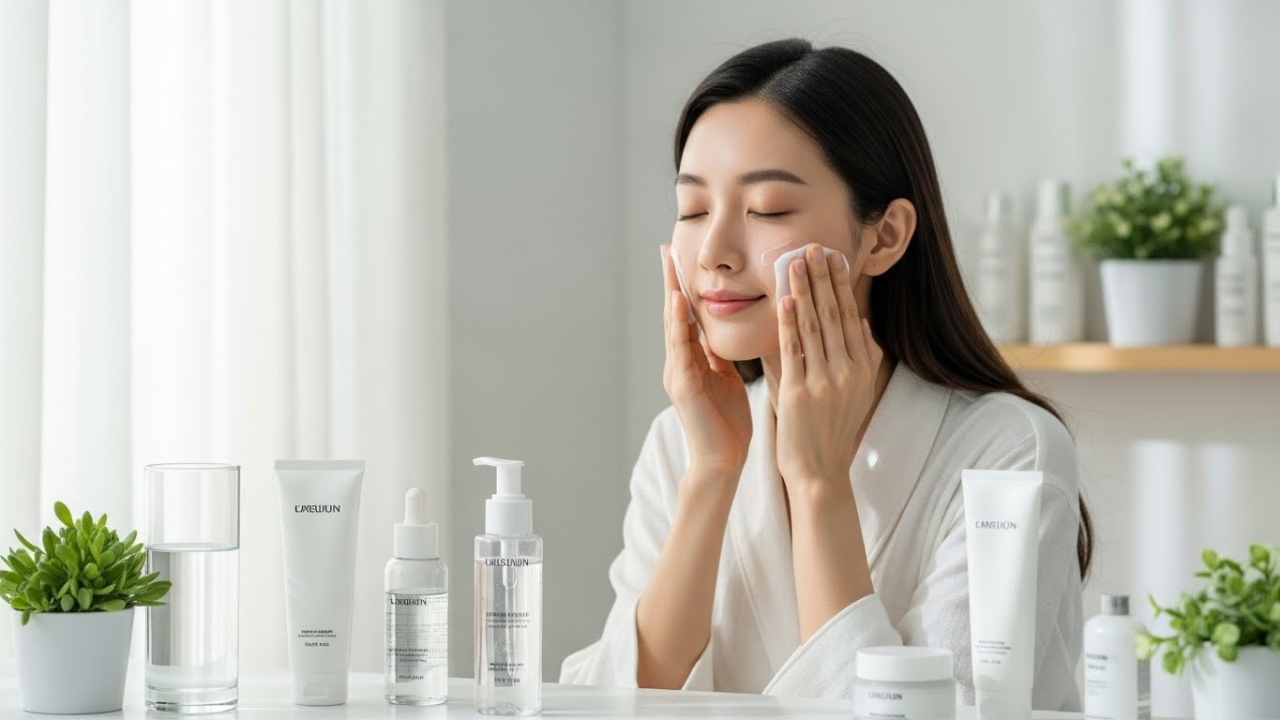
- Gentle cleanser. Lukewarm water and a mild cleanser. No hot water, no scrubbing.
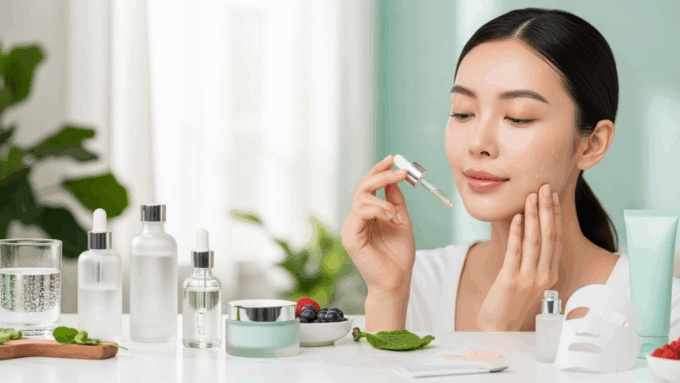
- Toner, then essence. A hydrating toner, then an essence — a light, watery step that adds hydration and prepares the skin for the next products. Pat each layer in gently and let it settle before the next.
- Serum — one. Pick one for your main concern (see the table above). More than one new serum at a time makes it impossible to tell what helps and what irritates.
- Moisturiser. Choose by texture: a light lotion for oily skin, a cream for dry skin.
- Sunscreen — every morning. Broad-spectrum, SPF 30 or higher, as the last step. Reapply as above.
Evening routine
- Double cleanse (only if needed). If you wear makeup or water-resistant sunscreen, remove it first with an oil-based cleanser, then wash with a gentle water-based cleanser. If you wore neither, one gentle cleanse is enough.
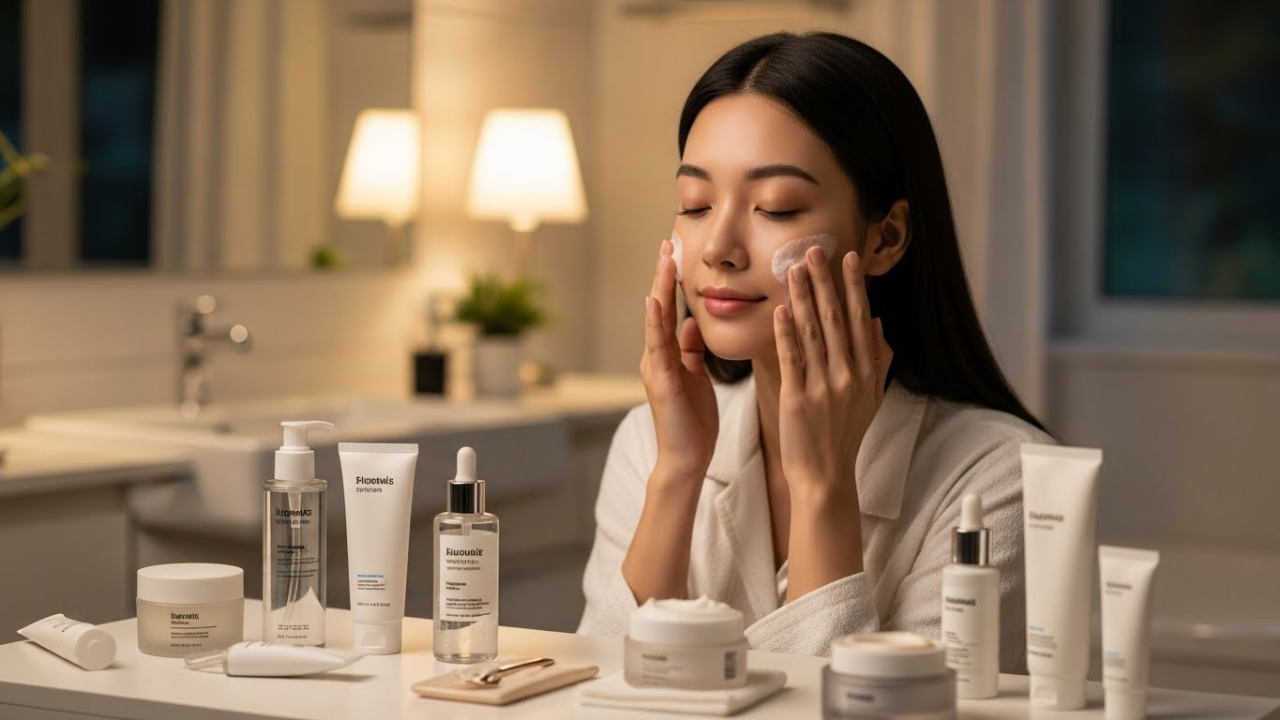
- Toner and essence. The same hydrating layers as in the morning.
- Serum or treatment. The same one serum, or your retinoid on its night — not both at full strength when you are starting out.
- Moisturiser. A slightly richer cream at night is fine. A sleeping mask is an optional extra, not a requirement.
Weekly treatments
- Exfoliation — once or twice a week at most. A gentle chemical exfoliant (for example a low-strength lactic acid product) removes dead skin from the surface so light reflects more evenly. Start once a week. Stop if you get redness, stinging, flaking or tightness. The AAD’s guidance is to choose a method that suits your skin type and to exfoliate gently. (AAD, How to safely exfoliate at home)
- Sheet masks and ampoules (optional). A sheet mask or a concentrated ampoule adds a one-off dose of hydration. They are a pleasant extra for dry or stressed skin, not a treatment that changes skin long-term.
- Spot treatments. Apply to individual problem areas only, such as fine lines around the eyes, rather than over the whole face.
Who should be careful
- Sensitive skin: keep the routine shorter, not longer. Fragrance-free products, one active at a time, and patch test a new product first (see below).
- Many layers, many actives: a 10-step routine is not better than a 5-step one. Each extra product is another chance of irritation, and it becomes impossible to tell which product caused a reaction.
- Pregnancy and breastfeeding: avoid retinoids — topical retinoids are not suitable during pregnancy, according to NHS guidance. (NHS 111 Wales, Acne) Ask a healthcare professional before starting any new active.
- Skin conditions: if you have eczema, rosacea or acne that is getting worse, ask a dermatologist before adding actives.
Patch testing: apply a new product to a quarter-sized area where it will not be rubbed or washed off, such as the underside of your arm or the bend of your elbow, twice a day for 7 to 10 days, using the amount and thickness you would normally use. If the area becomes red, itchy, swollen or painful, wash it off and do not use it on your face. If there is no reaction after 7 to 10 days, you can start using it as directed.
Realistic expectations
- Days: hydration can make skin feel better and look plumper quickly.
- Weeks: with steady use, texture and tone may start to look more even. The timing varies from person to person.
- Months: a retinoid, used consistently, may soften the look of fine lines over months. Sunscreen’s benefit is measured in years — it slows further visible damage rather than reversing what is already there.
- Never: no cream or routine can prevent ageing, erase deep wrinkles, restore lost volume, or guarantee firm, glowing skin. Claims that a routine “guarantees” results are not honest, and this guide does not make them.
Mistakes to avoid
- Using harsh cleansers or scrubs that damage the skin barrier.
- Skipping sunscreen or hydration — the two steps that matter most.
- Using too many products, or changing the routine too often.
- Layering several strong actives at once when starting out.
- Ignoring sleep, diet and stress entirely — they do not replace skincare, but they affect how skin looks. No food or habit can be promised to make skin younger on its own.
When to get help
See a dermatologist if: you have deep wrinkles, pronounced sun damage or dark spots that do not fade, a rash that does not settle, persistent redness or irritation from products, or a skin condition that is getting worse. Ask a qualified professional before any in-clinic treatment — these are not a substitute for daily care, and at-home peels can injure the skin.
Summary
Korean skincare is a gentle, layered routine: cleanse softly, hydrate in thin layers, use one serum, moisturise, and wear broad-spectrum SPF 30+ every morning. Sunscreen and moisturiser have the strongest evidence; retinoids have the most evidence of any active ingredient; peptides and fermented extracts are popular but not proven. Keep the routine steady for weeks before judging it, and do not expect any product to prevent ageing.
Sources: AAD sunscreen guidance; AAD exfoliation guidance; AAD guidance on retinoids/retinol; AAD cosmeceuticals review on vitamin C; AAD guidance on testing a new skin care product (7–10 day method); NHS guidance on topical retinoids in pregnancy; NHS emollient guidance on humectants, emollients and ceramides. This is a researched overview, not a hands-on review.