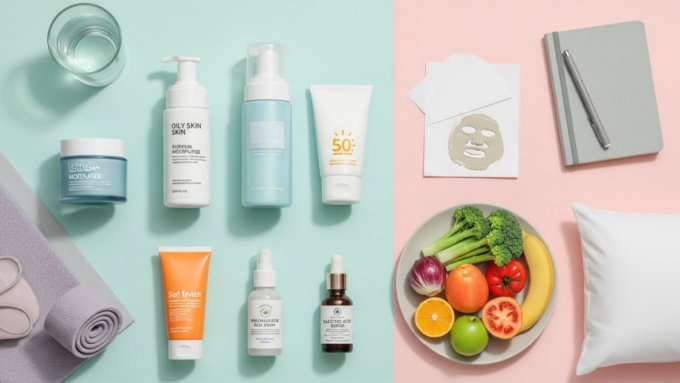
Researched overview. This guide is based on published dermatology guidance, not on hands-on product testing by BeautyKob. No product in this guide was tested by us.
Table Of Content
Quick answer
Oily skin is skin whose oil glands make more oil than the surface needs. It is not a hygiene problem, and it is not something you can wash away. The essential steps are few: cleanse gently twice a day, moisturise with a light formula, wear sunscreen every morning, and add one treatment at a time — usually salicylic acid first. Everything else is optional.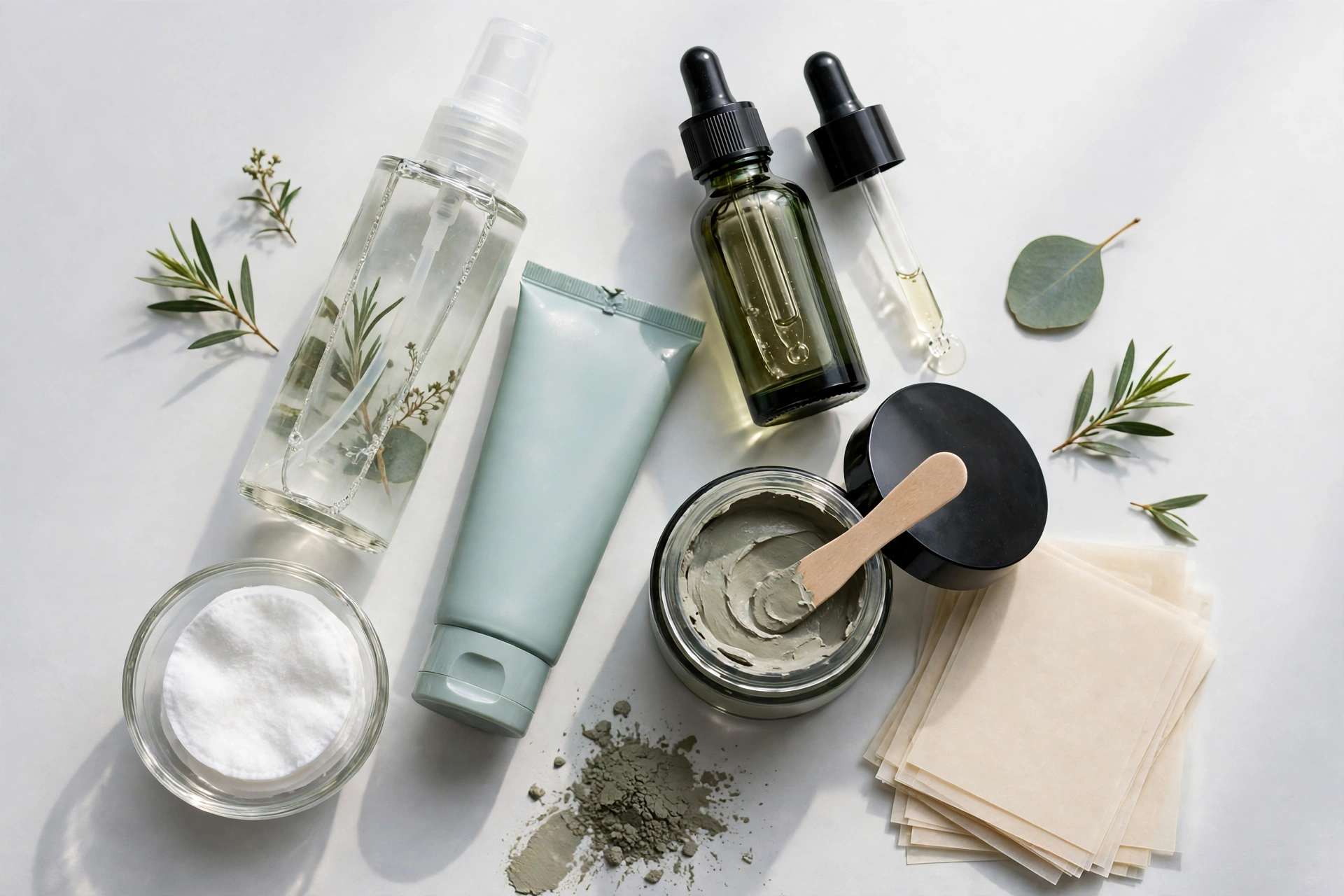
If your skin is painful, swollen, blistering, or you have deep, painful spots that do not settle, skip the actives and ask a dermatologist or pharmacist first. This guide is general information, not medical advice.
Contents: What oily skin is · The essential steps · Morning · Night · Weekly treatments · Ingredients · Makeup · Mistakes · When to get help
What oily skin is — and what it is not
Oily skin happens when the oil glands produce more oil than the skin needs. The main drivers are genetics and hormones, plus heat and humidity. That means the amount of oil your skin makes is mostly outside your direct control, and no routine changes your skin type.
Oily skin is not dirty skin. Washing more often does not fix it. Over-washing and harsh products irritate and dry the skin, and irritated, dry skin is reason enough to avoid them — that is the reason to wash gently, not a claim that your skin will “fight back” by making more oil. Whether stripping the skin triggers extra oil production is disputed: the American Academy of Dermatology’s own guidance says a harsh face wash can irritate skin and trigger increased oil production, while other sources note there is no good evidence that skin compensates this way. This guide does not present either direction as proven fact.
Shine is usually strongest in the T-zone — forehead, nose and chin. That is normal. Oily skin can also be dehydrated at the same time: shiny on the surface but tight or flaky in patches. In that case the fix is more hydration, not stronger oil control.
The essential steps
You need four kinds of step, not four of each kind:
- Gentle cleanser, twice a day
- Light moisturiser
- Sunscreen in the morning (SPF 30+)
- One treatment at a time (salicylic acid is the usual first choice)
Toner, masks and spot treatments are optional extras, not essentials.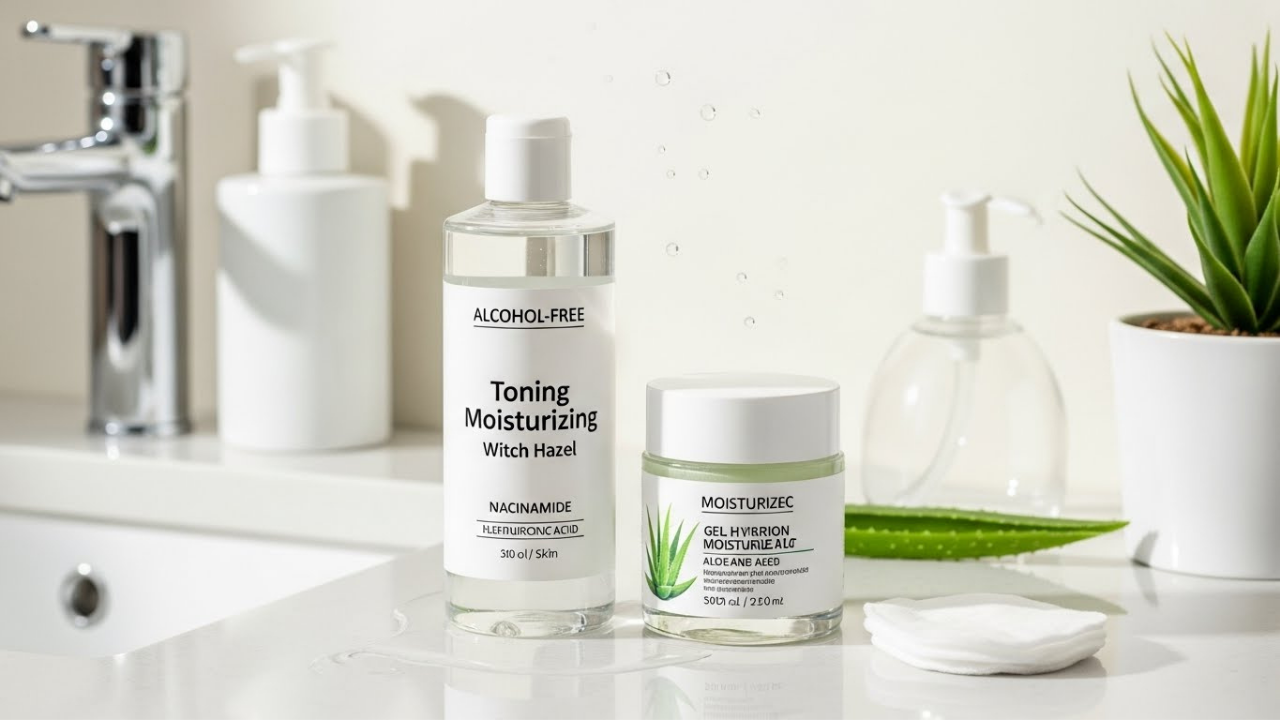
Morning steps
- Cleanse gently. Lukewarm water and a mild foaming or gel cleanser. Wash twice a day — morning and night — and no more than that. If your skin feels tight after washing, your cleanser is probably too strong.
- Treatment serum (optional). If you use one, niacinamide is a common choice. The evidence for niacinamide and oil is one study: 2% reduced sebum in Japanese subjects only, not significantly in Caucasian subjects (Draelos et al. 2006). It supports the skin barrier, but it does not shrink pores and it is not proven to control oil.
- Moisturise lightly. Use a gel or oil-free moisturiser. Oily skin still needs moisturiser — skipping it leaves skin dehydrated and uncomfortable. Moisturiser does not reduce oil production; it replaces the water your skin loses and keeps the barrier comfortable.
- Sunscreen — every morning. Use a broad-spectrum sunscreen with SPF 30 or higher as the last step. Fluid or gel sunscreens suit oily skin because they feel lighter and absorb faster. The American Academy of Dermatology recommends daily sunscreen, including on cloudy days, and reapplying every two hours when outdoors, or after swimming or sweating. Sunscreen protects against sun damage; it does not prevent oiliness.
Night steps
- Cleanse. Remove sunscreen, makeup and the day’s build-up. Double cleansing — a light oil or micellar water first, then your regular cleanser — is only needed if you wear heavy makeup or water-resistant sunscreen.
- Treatment — one at a time. Salicylic acid is the usual first choice for oily, breakout-prone skin: it works inside the pore, where blackheads form. Over-the-counter products are usually 0.5–2%. Start two or three times a week, on nights when you are not using retinol.
- Moisturise. The same light moisturiser as in the morning.
Do not use a strong exfoliant and a retinoid on the same night. If irritation appears, stop the newest product first and go back to cleanser, moisturiser and sunscreen until the skin settles.
Weekly treatments
- Clay mask, once a week. A clay mask can temporarily absorb surface oil. There is only limited published evidence for this, and the effect is temporary. Leave it on for 10–15 minutes and do not let it dry until it cracks.
- Blotting papers. For midday shine, press — do not rub — a blotting paper on the shiny areas. They remove surface oil without disturbing makeup or irritating the skin.
- Spot treatment. For an occasional spot, a benzoyl peroxide or salicylic acid spot treatment used only on the spot can help. Benzoyl peroxide kills acne-causing bacteria and can bleach fabric, so let it dry before contact with pillowcases or towels. Start with a low strength.
Ingredients — what they do and what they do not do
| Ingredient | What it does | What it does not do |
|---|---|---|
| Salicylic acid (0.5–2%) | Exfoliates inside the pore; the usual first choice for blackheads and breakouts | Does not shrink pores; can irritate if used too often |
| Niacinamide | Supports the skin barrier; 2% reduced sebum in one study (Japanese subjects only) | Does not shrink pores; not proven to control oil |
| Hyaluronic acid, glycerin, aloe | Lightweight hydration without adding oil | Do not control oil production |
| Benzoyl peroxide | Kills acne-causing bacteria; useful as a spot treatment | Does not reduce oil production; bleaches fabric |
| Clay (kaolin, bentonite) | Temporarily absorbs surface oil | Limited evidence; effect is temporary |
| Witch hazel | An astringent that can feel tightening | Can irritate; not recommended as a routine toner |
| Tea tree oil | Some limited evidence for acne; can irritate | Not a proven treatment; use only diluted, never undiluted |
Patch test: before using a new product, apply a quarter-sized amount to the underside of your arm or the bend of your elbow, twice a day, for 7–10 days. If there is no reaction, it is usually safe to use on your face. Stop and wash off if you get redness, stinging, flaking or itching.
Makeup tips for oily skin
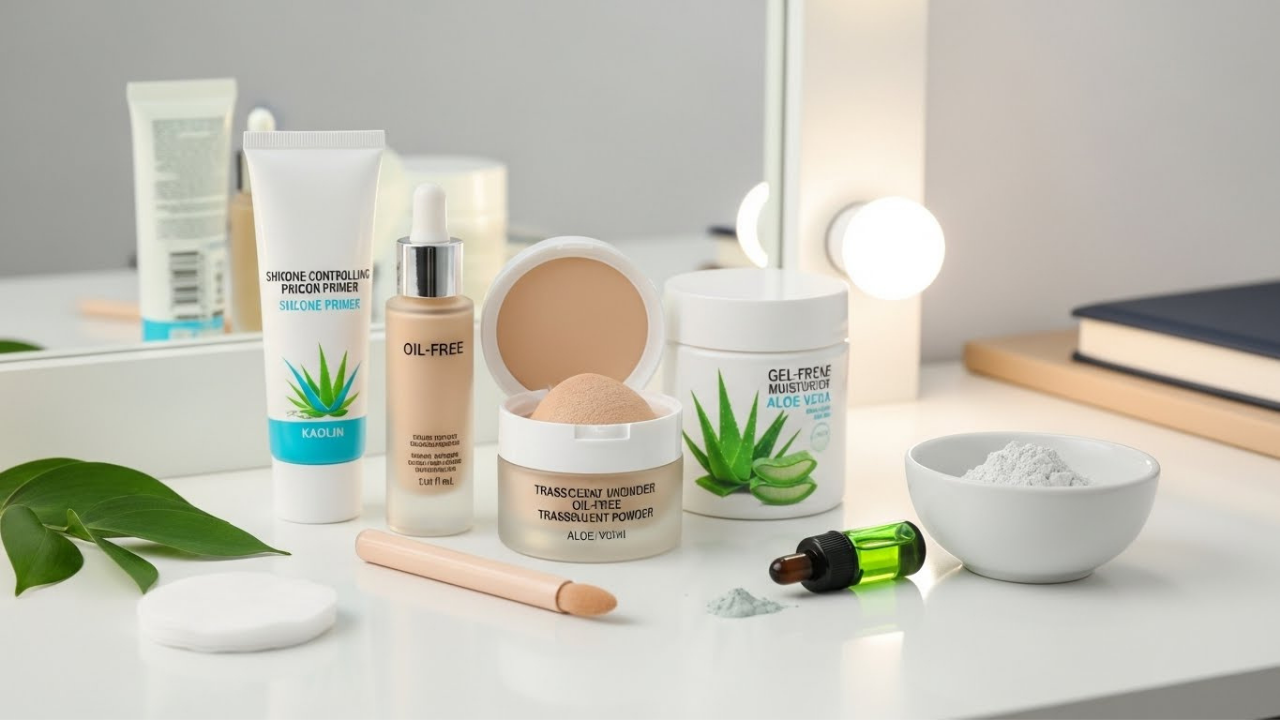
- Start with a shine-control or mattifying primer if you use one. Primers sit on the skin surface; they do not seal pores.
- Use oil-free, non-comedogenic foundations. “Non-comedogenic” is not a regulated term, so it is not a guarantee — check how your skin responds.
- Translucent or oil-absorbing powders can reduce shine without caking.
- Always remove makeup at night. Sleeping in foundation leaves residue in pores overnight.
Diet, sleep and stress — honestly
Eating well, drinking enough water, sleeping and managing stress are good for general health, but there is no good evidence that food choices, water intake or sleep control how much oil your skin makes. Do not treat diet as a treatment for oily skin. Stress and hormone changes can affect breakouts, but they do not give you a way to control oil production directly.
Common mistakes to avoid
- Washing more than twice a day, or using harsh scrubs and high-alcohol products. They irritate and dry the skin.
- Skipping moisturiser because your skin is oily. It does not reduce oil — it leaves skin dehydrated.
- Using several strong actives at once, or exfoliating every day.
- Skipping sunscreen because it feels greasy. A fluid or gel SPF 30+ avoids most of that problem.
- Changing products every few days, so you never learn what helps.
- Expecting a fixed result by a fixed date. Skin changes take weeks of steady use, and the timing varies from person to person.
When to get help
Ask a dermatologist or pharmacist if: breakouts are painful, deep or cystic; acne does not improve after three or more months of consistent care; you have scarring or marks that last for months; or oiliness comes with other symptoms that could suggest a hormonal cause. A dermatologist can offer prescription options — for example prescription retinoids or chemical peels — that are not available over the counter.
Pregnancy and breastfeeding: Topical retinoids are not suitable during pregnancy, because there is a risk they may cause birth defects, according to NHS guidance. If you are pregnant, planning pregnancy or breastfeeding, avoid retinoids and ask a healthcare professional before starting any new active.
Summary
Cleanse gently twice a day, moisturise with a light gel or oil-free formula, wear broad-spectrum SPF 30+ every morning, and add one treatment at a time — salicylic acid first. Keep the routine the same for a few weeks before judging it. If your skin becomes irritated, simplify back to cleanser, moisturiser and sunscreen.
Sources: AAD sunscreen guidance; AAD oily-skin guidance; Draelos et al. 2006 (niacinamide and sebum); NHS guidance on topical retinoids in pregnancy. This is a researched overview, not a hands-on review.