Researched overview. This guide is based on published device information and dermatology guidance, not on hands-on product testing by BeautyKob. No product in this guide was tested by us, and no product is recommended.
Table Of Content
Quick answer
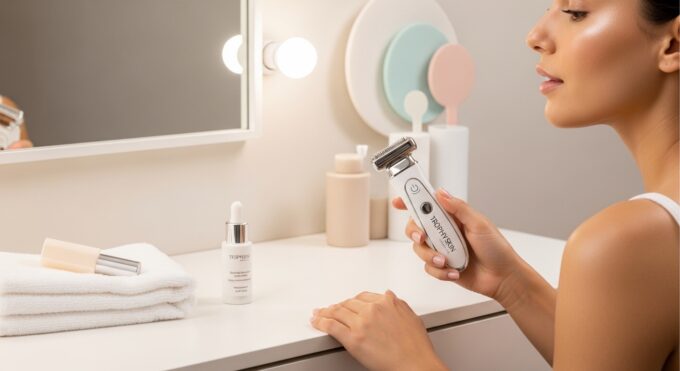
The Trophy Skin UltraDermaMD is a compact home microdermabrasion device. It uses a diamond tip and vacuum suction to remove the top layer of dead skin cells. It is the smaller version of Trophy Skin’s MicrodermMD, and it shares that device’s design: three modes (Auto, Sensitive and Manual), a touch screen that guides the session, and interchangeable tips for exfoliation, pore extraction and serum infusion.
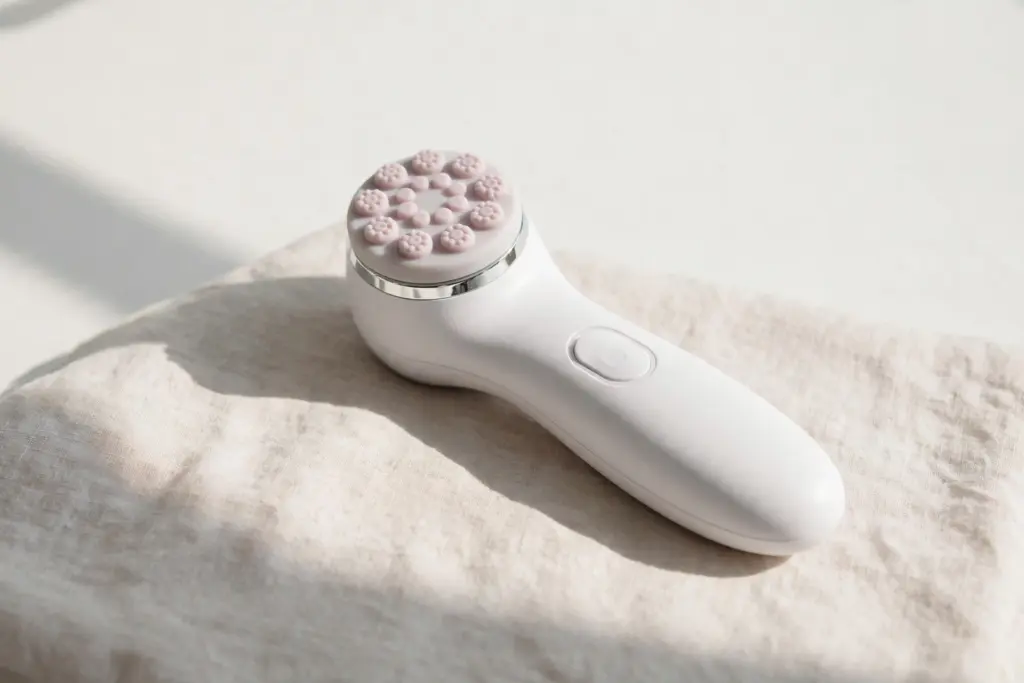
The “3-in-1” in the title is easy to misunderstand. It does not mean three different skin technologies. It refers to the three modes and the three interchangeable tips in one device.
Microdermabrasion at home is maintenance, not a treatment. A home device is weaker than a clinic machine, and its results are temporary and gradual. It can make skin feel smoother and look brighter for a while. It does not remove wrinkles, deep scars or sun damage, and it does not replace professional treatment. This guide is general information, not medical advice.
Contents: What the device is · How microdermabrasion works · How to use it · How often · Who should be careful · Cleaning and care · What it can and cannot do · Cost and value · A decision framework
What the device is
The UltraDermaMD is Trophy Skin’s compact home microdermabrasion machine — small enough to keep in a bathroom drawer, with a touch screen and a mirror in the lid. It is part of the same device family as the MicrodermMD, the RejuvadermMD and the MiniMD, and it uses the same kind of diamond-tip accessories.
What is in the system:
- A diamond tip that buffs away the outermost layer of dead skin cells. The kit includes different tips: a standard diamond tip for general exfoliation, a precision or fine diamond tip for delicate areas and sensitive skin, a pore extraction tip for clogged pores, and an infusion tip that helps press serum into the skin.
- Vacuum suction that lifts away the loosened dead skin and, with the extraction tip, helps clear pores. Suction is adjustable — the MicrodermMD family has 8 suction levels — and the guidance is always to start at the lowest level and increase only if your skin tolerates it.
- Three modes. Auto is a guided session of about five minutes, with the screen setting the suction for each part of the face. Sensitive is the same guided session with lower suction, for delicate or easily irritated skin. Manual lets you choose the area and the suction level yourself.
No price is stated in this guide, because no current price for the UltraDermaMD was verified. Prices for the larger MicrodermMD vary widely by retailer, so a price quoted from one shop would be misleading.
How microdermabrasion works
Microdermabrasion is a cosmetic procedure that exfoliates the outer layer of the skin, removing dead skin cells and encouraging the surface to renew. The diamond tip does the exfoliating; the suction removes the debris and, with the extraction tip, loosens material from pores.
Two facts set realistic expectations:
- Home devices are weaker than clinic machines. A home unit works best as regular upkeep for smoother-feeling skin, not as a fix for deep scars or wrinkles.
- Results are temporary. The American Academy of Dermatology’s patient guidance, as reported in independent round-ups of home devices, is that most patients need between 5 and 16 professional treatments to see results, and that the results tend to be temporary. A home device does not change that — it only maintains the surface between professional treatments, if you use it regularly.
There is no published independent clinical study of the UltraDermaMD itself that was found in this review. The evidence in this guide is for microdermabrasion in general and for the device family’s published design, not for this model’s results.
How to use it
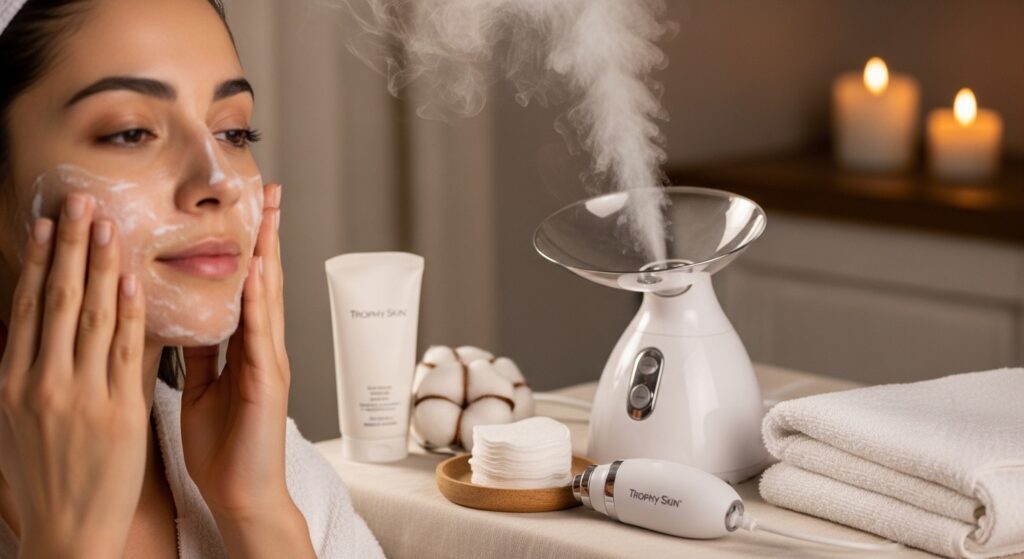
Follow the manual that came with your device. In general, for this device family:
- Start with clean, dry skin. Remove makeup and sunscreen. Microdermabrasion is done on dry skin, not on damp skin or over creams — thick creams reduce how well the tip works.
- Choose Sensitive mode first. Use the lowest suction level. You can increase it later if your skin stays comfortable.
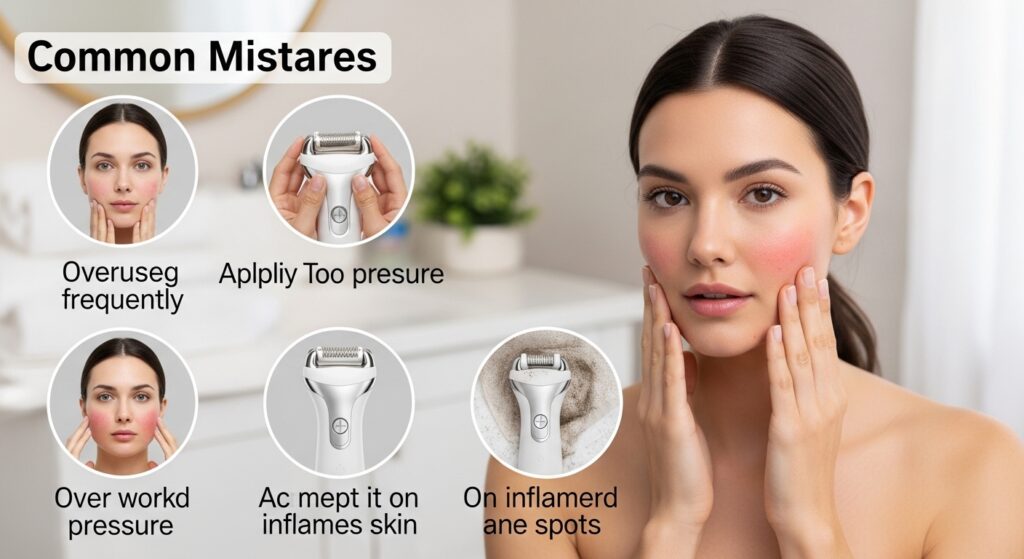
- Keep the tip flat against the skin so the suction holds, and move it in short, even strokes, upwards and outwards. Do not press hard — light pressure is the point. Do not go over the same spot more than twice, and do not hold the tip still in one place, or you can get suction marks.
- Stay away from the eyes. Use the lowest suction at the sides of the eyes, and do not go beyond the bone around the eye. Never use it on the eyelid or directly under the eye.
- A session takes a few minutes. The Auto mode runs about five minutes for the face. Longer is not better — it only adds irritation.
- Moisturise afterwards and wear sunscreen. Microdermabrasion leaves the surface more exposed, so apply a gentle moisturiser, then a broad-spectrum sunscreen with SPF 30 or higher in the morning. The American Academy of Dermatology recommends sunscreen daily, including on cloudy days, and reapplying every two hours when outdoors. (AAD sunscreen guidance)
How often
One to three sessions a week is the usual range given for home devices of this kind. Start with once a week. Increase only if your skin stays comfortable, and take rest days — skin needs time to recover between sessions. If you notice persistent redness, stinging or flaking, go back to once a week or stop for a while. More frequent use does not speed up results; it weakens the skin barrier.
Who should be careful
Do not use the device on:
- Inflamed or swollen acne, open wounds, broken skin, or sunburn. It is a maintenance tool, not a treatment for active skin damage, and using it there slows healing.
- A rosacea flare, an eczema flare, or any rash. Wait until the skin has settled.
- Skin that has just had a professional peel, laser treatment or microneedling, unless the professional who treated you says it is safe.
Be extra careful if you have sensitive skin: use Sensitive mode, the fine diamond tip, the lowest suction, and shorter sessions. Test on a small area first. If you take medicines that make your skin more sensitive, or you use a prescription retinoid or a strong exfoliant, ask your dermatologist before using a suction device — the combination can be too much for the barrier.
Stop and get advice if: you get bruising, broken capillaries, suction marks that do not fade in a day, blistering, or a rash that does not settle. These are signs the suction or pressure was too strong, or the device is not right for your skin.
Cleaning and care
The device touches your face, so a dirty device puts oil, dead skin and product residue back onto your skin and can cause irritation or breakouts.
- After every session, switch the device off and unplug it, then wipe the treatment head with a soft cloth. Mild soap or cleanser can be used on the removable tips; dry them fully before refitting.
- Do not pour water into the device body. Water inside can damage the internal parts.
- Check it weekly for build-up around the edges and treatment areas, and replace the wool filters and worn tips as the manual directs. A tip that is worn, cracked or stiff should be replaced, not kept in use.
- Store it dry. A bathroom is convenient but damp; keep the device in its case or pouch, in a dry place, so it stays clean and undamaged.
What it can and cannot do
It can: help the skin feel smoother and look brighter for a while, keep pores clearer with regular maintenance, and make a routine more consistent by combining the steps in one device.
It cannot: remove wrinkles, erase deep acne scars or sun damage, lift the skin, shrink pores permanently, or replace a professional facial or a dermatologist’s treatment. There is no evidence behind “skin stimulation” or “circulation” claims — the benefit is exfoliation and suction, nothing more.
Results, honestly: the first thing most people notice is softer, cleaner-feeling skin after a session. Visible changes in brightness and smoothness, if they come, take several weeks of regular use, and they vary with skin type, consistency and the products used alongside. They fade if you stop.
Cost and value
The device costs more than a basic facial brush and less than repeated professional treatments — but that comparison is only meaningful if you actually use it regularly for months. A device bought and used twice is the most expensive option of all. Before buying, check the current price, what is included in the box (tips, filters, warranty), and whether replacement tips and filters are available to buy — a device you cannot maintain is a device you will stop using.
No recommendation is made here. There is no independent study of this model, and whether it is worth buying depends on whether you will use it weekly, whether your skin tolerates suction, and whether you are happy with gradual, temporary results.
A decision framework (not a recommendation)
- It may suit you if you enjoy a guided routine, your skin is generally healthy, you want smoother-feeling skin and clearer-looking pores, and you are willing to use it once a week or so, gently, for months.
- It probably will not suit you if you have active acne, rosacea, eczema or very sensitive skin; if you want a visible change in wrinkles or scars; or if you want a one-off fix rather than a habit.
- Consider a professional treatment instead if you have scarring, deep lines, persistent breakouts or a skin condition — a dermatologist or aesthetician can assess your skin and choose a treatment that fits it.
Summary
The UltraDermaMD is a compact home microdermabrasion device: diamond tip plus suction, three modes, three interchangeable tips, about five minutes a session. Used gently once a week or so on clean, dry, healthy skin, it can keep skin feeling smoother. It will not remove wrinkles or scars, it is not for inflamed or broken skin, and it needs cleaning after every use. If your skin is not healthy or you want a medical result, see a professional instead.
Sources: Trophy Skin MicrodermMD user manual (same device family — diamond tip, vacuum suction, Auto/Sensitive/Manual modes, 8 suction levels); independent round-up of home microdermabrasion machines (UltraDermaMD compact design, ~5-minute session, AAD 5–16 treatments and temporary results, FDA Class I context); AAD sunscreen guidance. This is a researched overview, not a hands-on review.