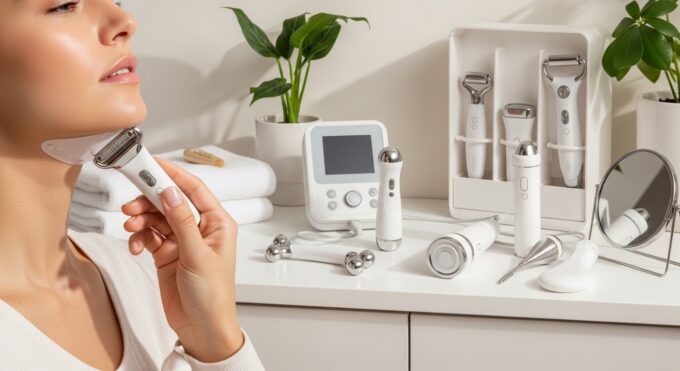
Researched overview. This guide is based on published dermatology guidance, not on hands-on product testing by BeautyKob. No product in this guide was tested by us, and no product is recommended.
Table Of Content
- Quick answer
- What “tightening” really means
- Microcurrent devices
- Radiofrequency devices
- LED light therapy tools
- Ultrasonic and vibration tools
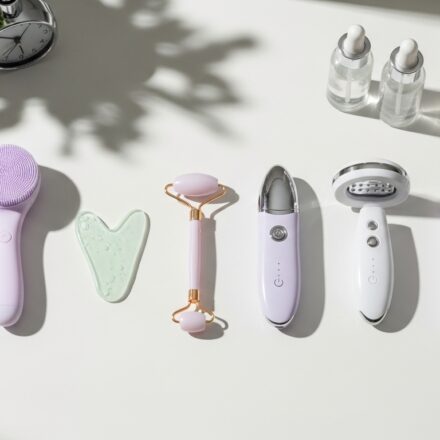
- Manual tools: rollers and massage tools
- By area: face, neck and body
- Face and jawline
- Neck and décolletage
- Body: arms, thighs, abdomen
- Choosing a tool
- Using it safely
- Hygiene and care
- Home tools vs professional treatments
- Cost and value
- When to see a dermatologist
- Summary
Quick answer
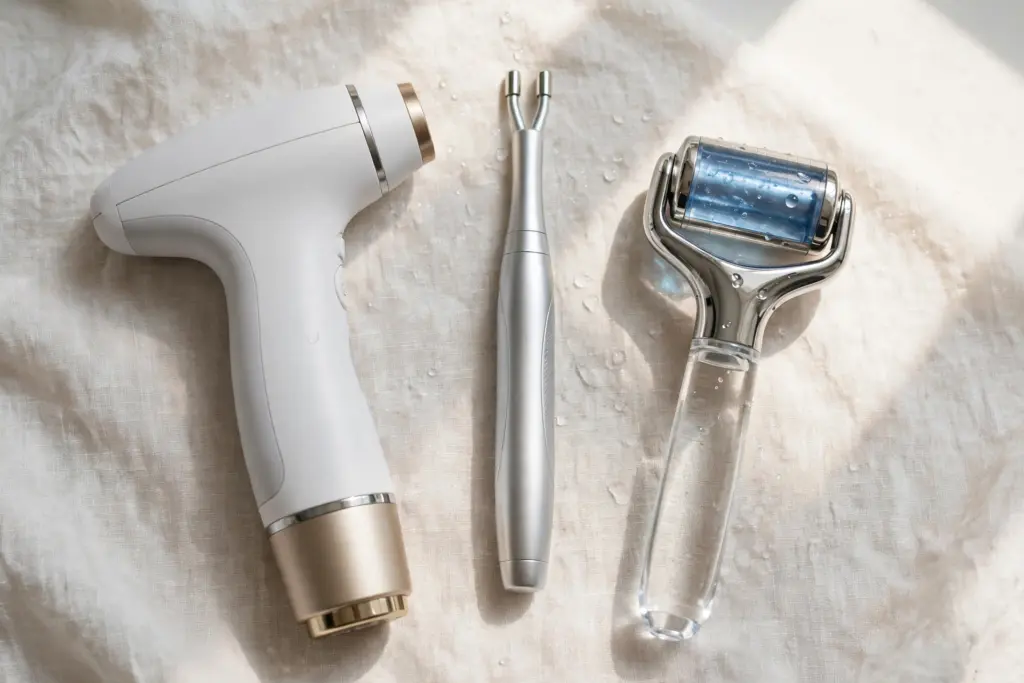
Skin tightening tools are at-home devices and manual tools that claim to make skin look firmer. None of them removes sagging skin, and none of them replaces a professional treatment. What they can do, at best, is maintain the skin’s surface — smoother feel, a temporary lifted look, a little more brightness — when used gently and regularly over weeks.
The honest order of evidence is: LED (red and near-infrared light) has the best evidence of the home devices, and it is still modest and gradual. Home radiofrequency is modest and depends on the device. Microcurrent has only small studies behind it, and its effect is modest and temporary. Ultrasonic and vibration tools have no good evidence for firming skin at all. Manual tools — rollers and massage tools — are comfort and application tools, not tightening tools.
This guide explains each technology, how to use one safely, and when to see a dermatologist instead. It is general information, not medical advice.
Contents: What tightening means · Microcurrent · Radiofrequency · LED · Ultrasonic and vibration · Manual tools · By area: face, neck, body · Choosing a tool · Using it safely · Hygiene · Home vs professional · When to see a dermatologist
What “tightening” really means
Skin looks less firm when collagen and elastin weaken with age, sun exposure and weight changes, and when the muscles under the skin lose tone. A cream cannot rebuild collagen. A home device cannot rebuild it either. Professional treatments — in-office radiofrequency, ultrasound, laser and microneedling done by a clinician — work at a strength no home device is allowed to reach, and even those give gradual, temporary results.
That sets the honest frame for this whole guide: an at-home tool is maintenance. It keeps the surface in good condition between professional treatments, if you use it regularly. It does not lift sagging skin, erase deep lines, or replace a facelift or a dermatologist’s treatment.
Two more facts before the details:
- Sunscreen is the single most effective anti-ageing step there is — more effective than any device in this guide. A broad-spectrum sunscreen with SPF 30 or higher, every morning, reapplied every two hours when outdoors, does more for firmness over years than any tool.
- No at-home device has been shown to tighten skin permanently. Any improvement fades if you stop using it. A guide that promises permanent firmness is not being honest with you.
Microcurrent devices
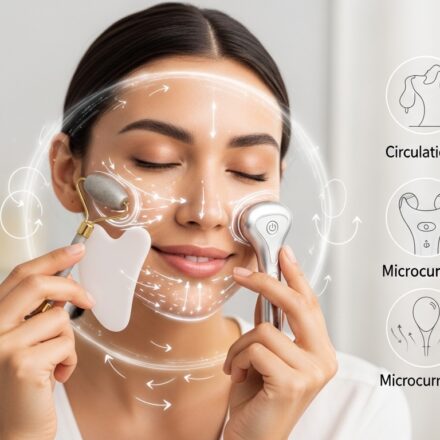
Microcurrent devices send low-level electrical currents through the skin to stimulate the facial muscles, giving a temporary lifted look. They are used with a conductive gel, in slow upward and outward strokes, a few times a week.
The evidence is limited to small studies, and the benefits are modest and temporary. A microcurrent device is not a substitute for sunscreen, retinoids or in-office treatments, and it does not replace a facelift.
Safety rules: never use one on broken, inflamed or sunburnt skin, or during a rosacea or eczema flare. Do not use it if you have a pacemaker or other implanted electronic device unless your doctor says it is safe. Remove metal jewellery first, keep your hands dry, and stop if the skin stays red, stings or blisters.
Radiofrequency devices
Radiofrequency (RF) devices heat the deeper layers of the skin with controlled energy. The idea is that gentle heat encourages the skin to feel firmer over time. Home RF is modest and device-specific — results vary a lot between devices, and no home RF device has been shown to produce the results of an in-office RF treatment.
Heat is also the risk. Too much heat, or too long a session, can burn or irritate the skin. Follow the manufacturer’s instructions exactly, start at the lowest setting, keep the device moving, and never use it on broken, inflamed or sunburnt skin, or on skin that has just had a peel, laser treatment or microneedling unless the professional who treated you says it is safe.
One important boundary: RF microneedling is a medical procedure, not a cosmetic device. It combines radiofrequency energy with needles that penetrate the skin, and the US Food and Drug Administration issued a safety communication about it in October 2025. It belongs in a clinic, with a trained professional — not at home, and not in the same category as the home devices in this guide.
LED light therapy tools
LED tools shine red or near-infrared light onto the skin. Of all the at-home device technologies, red and near-infrared light has the strongest evidence for ageing skin: studies have found increased collagen and reduced signs of ageing with regular use over weeks (Wunsch & Matuschka). The effects are modest and gradual, not dramatic, and they fade if use stops. Blue light is used for acne rather than ageing.
LED is the gentlest powered option in this guide. It does not produce heat or pressure, and it is the most suitable choice for sensitive skin that still wants a device. It is still not a treatment for sagging skin — it is maintenance, and it works slowly.
Safety rules: never look directly into the light, and do not use an LED device near your eyes. Be extra careful if you have an eye condition or take a medicine that increases light sensitivity — ask your doctor first.
Ultrasonic and vibration tools
Ultrasonic and vibration tools use high-frequency movement or shaking on the skin. They can feel pleasant and they clean the surface evenly, but there is no good evidence that they firm skin, tighten anything, or improve circulation in a way that changes the skin.
They also do not increase how much product the skin absorbs. No tool does — there is no good evidence that any device pushes serums deeper into the skin. A vibration tool is a comfort and cleansing aid, not a tightening tool. If a product page claims otherwise, treat it as a marketing claim, not a fact.
Use them gently, on clean skin, with light pressure. Stop if the skin reddens, stings or stays irritated.
Manual tools: rollers and massage tools
Rollers, gua sha stones and sculpting tools are movement-based tools, not electric ones. They are simple to use, easy to control, and suitable for beginners.
What they do: they feel pleasant, they can reduce the look of temporary puffiness by moving fluid in the surface tissue, and they help spread products evenly. What they do not do matters more: there is no good evidence that rollers or gua sha drain the lymphatic system, improve blood circulation in a way that changes the skin, firm the skin, or increase how much product the skin absorbs. A massage tool is a comfort and application tool, not a treatment. Anyone selling it as a lift is overstating the evidence.
Technique is the whole skill: use a serum or oil so the tool glides, move in slow upward and outward strokes with light pressure, never drag dry skin, and stop if the skin turns red and stays red.
By area: face, neck and body
Face and jawline
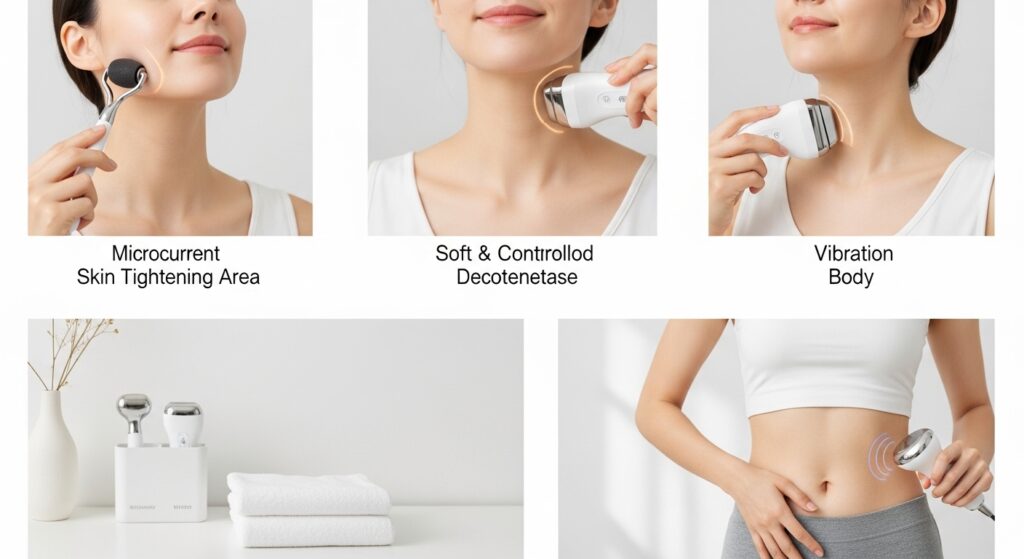
Mild laxity shows first around the jaw and cheeks. This is where lifting claims are made most often, and where they are least supported: direction matters (upward and outward, following the natural contours), but no home device lifts the jawline. Use the gentlest tool that suits your skin, and keep sessions short.
Neck and décolletage
The neck has thinner skin and moves constantly, so it ages visibly and reacts easily. Use less intensity and shorter sessions here than on the face, and skip powered devices entirely if the skin is thin or reactive. The neck is also the area where a professional assessment matters most before any device is used.
Body: arms, thighs, abdomen
Body devices are larger and stronger than face devices, and they are used where the skin is loose or thin. They support comfort and surface smoothness rather than dramatic tightening, and they need a long-term routine. Never use a body device on the face or neck — it is too powerful for those areas.
Choosing a tool
- Start with your goal, not the gadget. If you want maintenance and a smoother feel, a manual tool or an LED device is the honest choice. If you want visible lifting, no home device will give it to you — a dermatologist’s assessment is the honest next step.
- Check clearance, not claims. A device cleared by the regulator in your country has met safety standards for its stated intended use. Clearance is not proof that the marketing claims on the box are true — a “non-surgical facelift” on the packaging is a claim, not a fact.
- Beginner vs advanced. Beginners should start with simple tools with few settings: a manual tool or an LED device. Complex devices with heat or electricity need timing, technique and restraint, and they are easier to misuse.
- Match the tool to your skin. Thin or reactive skin needs low-intensity tools and shorter sessions. Thicker, resilient skin tolerates more stimulation — but more stimulation is not better stimulation. The right level is the lowest one that still feels comfortable.
- Quality over features. A well-made, solid tool that is easy to clean and lasts years is worth more than a feature-packed device that breaks, sheds parts or cannot be cleaned properly. A device you cannot maintain is a device you will stop using safely.
Using it safely
- Follow the manufacturer’s instructions for settings, duration and skin type. Every device has limits, and exceeding them is how skin gets hurt.
- Prepare the skin. Clean skin, no makeup or sunscreen on the area being treated. Microcurrent needs a conductive gel; rollers need a serum or oil so they glide.
- Patch test any new product used with the tool before using it on your face: apply a small amount to a quarter-sized patch of skin on the inside of your arm or the bend of your elbow, twice a day for 7 to 10 days. The American Academy of Dermatology recommends this length because allergic reactions can take several days to appear, and a 24-hour test can miss them.
- Start low. Lowest intensity, lowest setting, shortest session — then increase only if the skin stays comfortable.
- Never use a powered device on broken, inflamed, sunburnt or infected skin, or during a rosacea or eczema flare, or on skin that has just had a professional peel, laser treatment or microneedling.
- Watch the skin, not the clock. Slight warmth or brief redness can be normal. Redness, tenderness or stinging that persists is not — stop, simplify to cleanser, moisturiser and sunscreen, and wait until the skin has been calm for at least a week.
- Rest days matter. Most tools work best several times a week, not every day. Skin needs time to recover between sessions, and more frequent use does not speed up results — it weakens the skin barrier.
Hygiene and care
A dirty tool puts oil, dead skin and product residue back onto your face and can cause irritation or breakouts.
- After every session, switch the device off and unplug it, then wipe the treatment head with a soft cloth. Mild soap or cleanser can be used on removable tips; dry them fully before refitting.
- Do not pour water into the device body. Water inside can damage the internal parts. Electric tools should never be put in water.
- Clean manual tools with mild soap and warm water, and dry them fully before storing.
- Store tools clean and dry, in a pouch or case, in a dry place — not loose in a damp bathroom. Damp storage encourages bacteria and damages materials.
- Replace worn tools. A brush that sheds, a metal tool that rusts, a stone that cracks, a tip that is worn or stiff — replace it. A worn tool cannot be made safe by cleaning it.
Home tools vs professional treatments
Home tools do maintenance and gradual improvement. They help keep firmness, tone and comfort steady between professional treatments, and they suit early signs of laxity.
They cannot replace professional treatments for severe laxity or structural change. Deep tissue tightening, surgical lifting and advanced medical equipment need trained specialists. A home device used in place of a needed professional treatment only delays the right care.
The combination that works is honest about both sides: professional treatments deal with the underlying problem periodically, and home tools maintain the result day to day. Neither side does the other’s job.
Cost and value
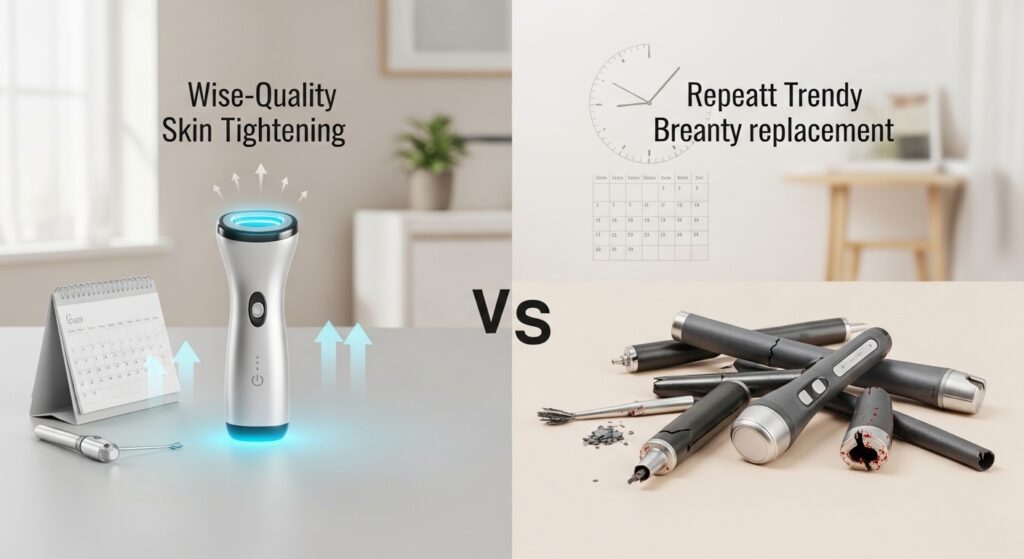
A device costs more than a basic facial brush and less than repeated professional treatments — but that comparison is only meaningful if you actually use it regularly for months. A device bought and used twice is the most expensive option of all. Before buying, check the current price, what is included in the box, and whether replacement tips and filters are available to buy.
No recommendation is made here. There is no independent study of most of these devices, and whether one is worth buying depends on whether you will use it weekly, whether your skin tolerates it, and whether you are happy with gradual, temporary results.
When to see a dermatologist
See a dermatologist promptly if: your skin is sagging noticeably and you want a real assessment of your options; you have a rash, blister or open sore that keeps coming back; your skin is persistently red, painful or irritated after using a device; you have a skin condition such as eczema, rosacea or psoriasis that is getting worse; or you are considering any treatment that breaks the skin, including RF microneedling. A dermatologist can diagnose the cause, arrange formal patch testing, and discuss treatments that over-the-counter devices cannot provide.
Summary
No skin tightening tool removes sagging skin or replaces a professional treatment. LED has the best evidence of the home devices, and it is still modest and gradual. Home radiofrequency is modest and device-specific. Microcurrent has only small studies behind it, and its effect is modest and temporary. Ultrasonic, vibration and manual tools do not firm skin — they are comfort, cleansing and application aids. Sunscreen is the single most effective anti-ageing step. Choose the gentlest tool that suits your skin, start low, follow the manufacturer’s instructions, keep the tool clean, and see a dermatologist if the skin is sagging noticeably or reacts badly to a device.
Sources: American Academy of Dermatology, 7 Rosacea skin care tips (patch-test method: apply a new product to a quarter-sized patch of skin on the inside of the arm for 7–10 days); American Academy of Dermatology, How to select anti-aging skin care products (broad-spectrum sunscreen, SPF 30 or higher every morning, reapply every two hours outdoors). This is a researched overview, not a hands-on review.