Researched overview. This guide is based on published dermatology guidance, not on hands-on product testing by BeautyKob. No product in this guide was tested by us, and no product is recommended.
Table Of Content
Quick answer
Home beauty care works when it is treated as maintenance, not as treatment. A small set of tools, used gently and regularly, keeps skin smoother, hair in better condition, and nails healthier between professional visits. It cannot replace professional care, it cannot fix medical problems, and it cannot produce fast or permanent change.
The best at-home setup is not the biggest one. It is the one that matches what your skin and hair actually need, that you will use several times a week for months, and that you can keep clean. This guide explains how to decide what home care is for, how to match tools to your needs, how to build a routine that lasts, and when to see a professional instead.
Contents: What home care is for · Face · Hair and scalp · Body, hands and feet · Matching tools to your needs · Beginner vs advanced · Safety and quality · Building a routine that lasts · Cleaning and care · Realistic expectations · Cost vs value · Mistakes · When to get help
What home care is for
Home beauty care has three jobs, and only three:
- Maintenance. Keeping skin clean, hydrated and protected, and hair free of breakage, between professional visits.
- Slow improvement. Gradual change over weeks of regular use — smoother-feeling skin, better texture, less breakage.
- Prevention. Protecting what is already healthy: sunscreen against sun damage, gentle handling against breakage, clean tools against infection.
What home care is not: it is not a treatment for acne, eczema, rosacea, hair loss or any medical condition. It is not a substitute for chemical peels, injectables, laser treatment or any medical-grade procedure — those need trained professionals. And it is not fast: any home tool promising overnight change is promising more than the evidence supports.
Face
The face is where most home tools are used, and where the claims are the loudest. Keep the routine short and the expectations honest.
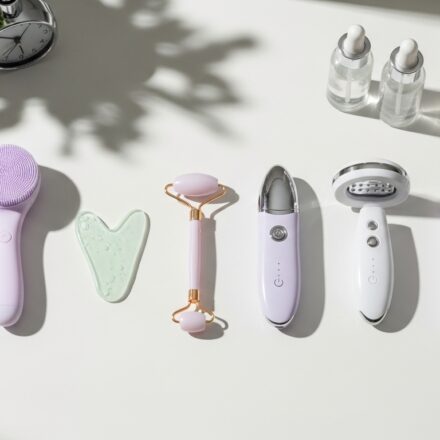
- Cleansing tools. A soft silicone brush or a very soft manual brush helps remove sunscreen, makeup and oil more evenly than hands alone. Use gentle pressure and short sessions — harsh scrubbing damages the barrier and causes irritation.
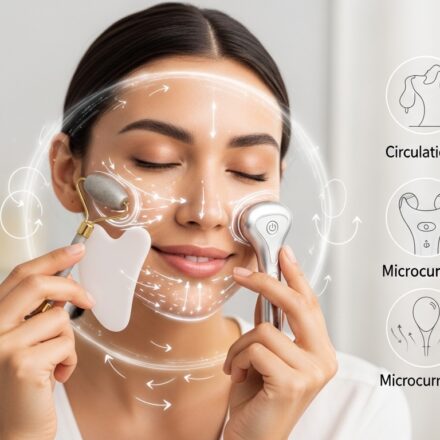
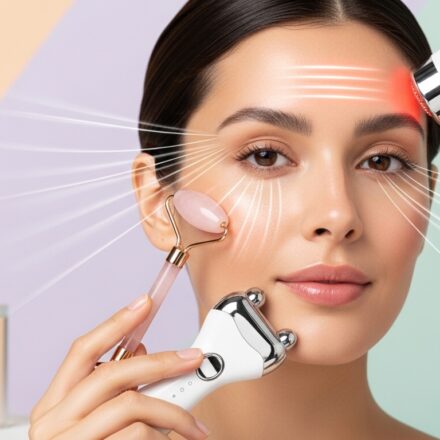
- Massage tools. Rollers and gua sha stones feel pleasant and can reduce the look of temporary puffiness. They do not drain lymph, improve circulation in a way that changes skin, firm the skin, or increase how much product the skin absorbs. Use them as a comfort tool, with a serum or oil so they glide, and never on dry skin.
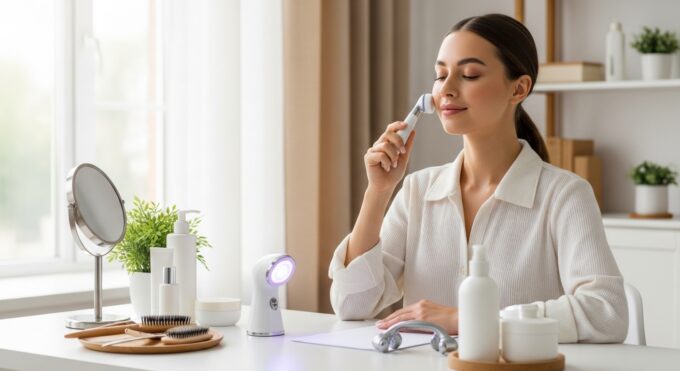
- Face machines. Microcurrent, radiofrequency, LED and ultrasonic devices are covered in depth in the face-machine guide. In short: LED has the best evidence of the group, home RF has modest device-specific evidence, microcurrent gives a modest temporary lift, and ultrasonic devices are a gentle cleansing aid. None of them removes wrinkles, and none of them replaces sunscreen or retinoids.
- Light therapy. Red and near-infrared light has the strongest evidence among home device technologies for ageing skin, with modest, gradual improvement over 8–12 weeks of regular use. Blue light is used for acne. Never look directly into a bright LED device, and do not use it near the eyes.
The face routine underneath the tools matters more than the tools: a gentle cleanser, a moisturiser, and a broad-spectrum sunscreen with SPF 30 or higher every morning. Sunscreen is the single most effective anti-ageing step there is.
Hair and scalp
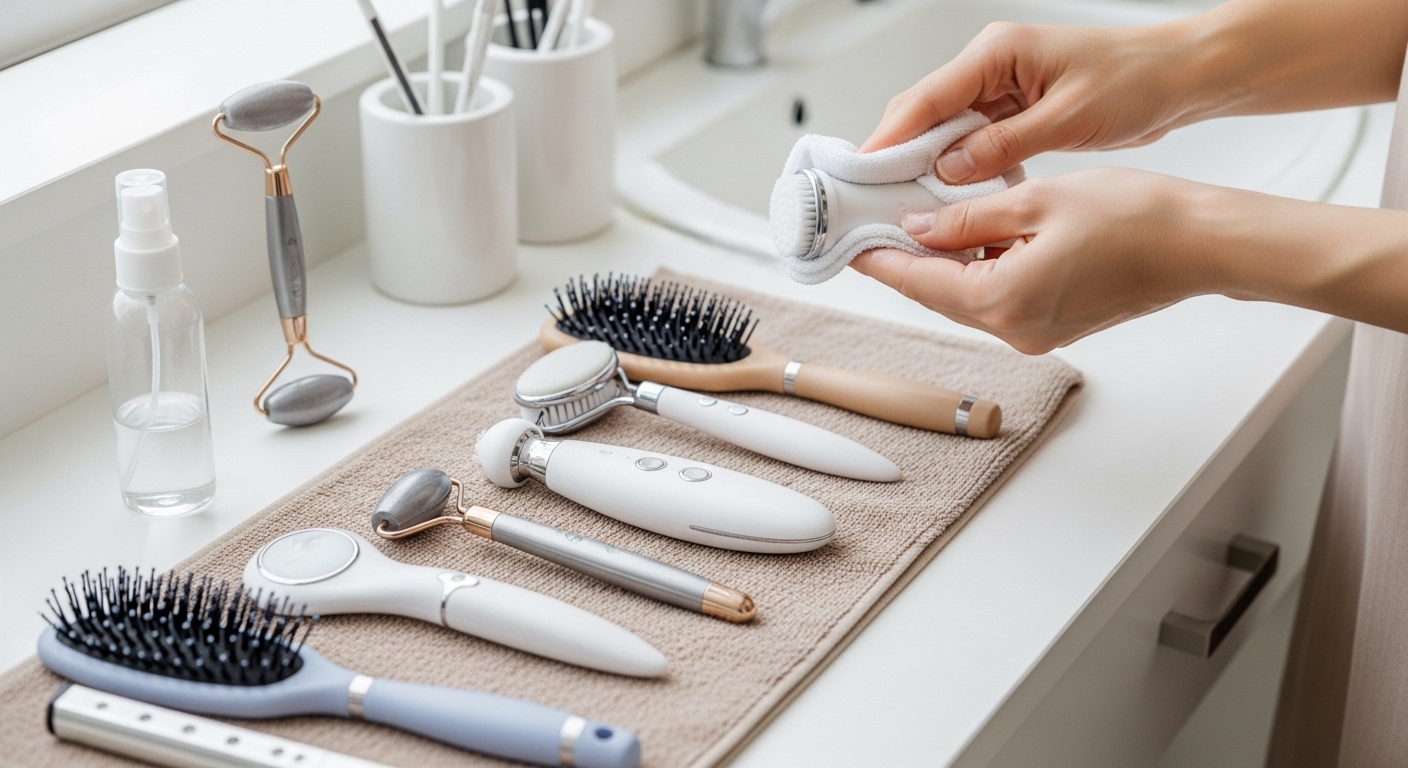
Hair care at home is mostly about preventing damage, not creating growth. Hair grows about half an inch a month, and no tool changes that rate. What tools can do is keep the length you grow — by reducing breakage.
- Scalp care. A scalp massager or soft brush helps distribute oil and remove product residue. Scalp massage feels good and may help with comfort, but the evidence for growth is one small study of nine men with no control group — it does not show fuller hair. Do not expect a massager to grow hair.
- Detangling. A wide-tooth comb is the right tool for damp hair, worked through with conditioner, ends first, never dry. Wet hair is more fragile than dry hair, and dragging a brush through it causes breakage. A paddle brush is for dry, already-detangled hair only.
- Styling without heat. Heat-free styling — braids, rollers, wraps, air-drying — keeps length by avoiding heat damage. It takes more time and planning than a hot tool, and the results are gentler and less dramatic. That is the trade.
- Ties and fasteners. Loose, soft ties and clips cause less damage than tight elastics. Very tight styles worn often can cause traction alopecia — hair loss from pulling — so vary the style and keep it loose.
Damaged hair cannot be repaired. Split ends and broken shafts do not heal; only trimming removes them, every 6–12 weeks. Any product or tool promising to “repair” damaged hair is promising something impossible — the honest claim is that it makes hair feel smoother temporarily.
Body, hands and feet
Body skin gets less attention than the face, but it responds to the same simple care.
- Exfoliation. A gentle body brush, glove or washcloth removes dead skin and helps moisturiser spread evenly. It does not “unblock hydration” or detox the skin — the skin does not need detoxing; the liver and kidneys handle waste removal. Use light pressure, once or twice a week at most, and never on broken or sunburnt skin.
- Massage tools. Body massage tools help with relaxation and comfort after a long day. They do not firm skin, reduce fat, or change skin structure. Treat them as a comfort tool.
- Hands and feet. Nails need clean, dry care: trim straight across, file gently, moisturise the cuticles, and keep tools clean. Do not cut cuticles — they protect the nail from infection. Do not use nail tools on broken or infected skin.
Matching tools to your needs
The right tool depends on what you are trying to do, not on what is popular.
| Need | What helps | What does not help |
|---|---|---|
| Smoother-feeling skin | Gentle cleansing, moisturiser, sunscreen | Harsh scrubs, daily exfoliation |
| Temporary de-puffing | Cool roller, gentle massage, sleep | “Lymphatic drainage” devices |
| Keeping hair length | Wide-tooth comb, heat-free styling, loose ties | Tight styles, brushing wet hair |
| Softer body skin | Gentle exfoliation 1–2× a week, moisturiser | Daily harsh exfoliation |
| Healthier nails | Clean tools, moisturised cuticles, straight trimming | Cutting cuticles, sharing tools |
Sensitive skin needs fewer tools and gentler pressure. Oily skin needs thorough but gentle cleansing, not aggressive scrubbing. Dry skin needs hydration and moisturiser, not more exfoliation. Thick or curly hair needs wider-tooth tools and more patience than fine hair. The pattern is the same everywhere: match the tool to the need, and use the gentlest version that works.
Beginner vs advanced
Beginners should start with the basics: a gentle cleanser, a moisturiser, sunscreen, one detangling tool, and one massage tool if wanted. Learn each tool properly before adding another. A simple routine done well beats a complicated routine done badly.
Advanced users can add one powered device at a time — an LED device, or a home RF device — after learning how it works, what its evidence is, and what its safety rules are. Advanced does not mean more tools in one session; it means using each tool with more skill and more restraint.
The sign of experience is not the size of the kit. It is knowing when to stop: when the skin is irritated, when a tool is not helping, when a problem needs a professional.
Safety and quality
- Materials matter. Tools should be smooth, hard-wearing and cleanable. Cheap tools that break, shed bristles, rust or lose their shape cannot be made safe by cleaning — replace them.
- Check the clearance. Powered devices should be cleared by the regulator in your country for their stated use. Clearance means the device met safety standards for that use; it is not proof that the marketing claims on the box are true.
- Never use tools on broken skin. No tool — manual or powered — should touch cuts, sores, rashes, sunburn or infected skin. It spreads infection and slows healing.
- Electrical devices need extra care. If you have a pacemaker or other implanted electronic device, ask your doctor before using any electrical facial device. If you are pregnant, ask your doctor first, especially for radiofrequency devices. If you take a medicine that increases light sensitivity, ask your doctor first, especially for LED devices.
- RF microneedling is not at-home care. It delivers radiofrequency energy through needles inserted into the skin. In October 2025 the FDA issued a safety communication documenting burns, scarring, fat loss, disfigurement and nerve damage, and stated plainly that it is “a medical procedure, not a cosmetic treatment.” Do not attempt anything needle-based at home.
- Do not share personal tools. Everyone’s skin carries different germs. Do not share brushes, sponges, tweezers or nail tools.
Building a routine that lasts
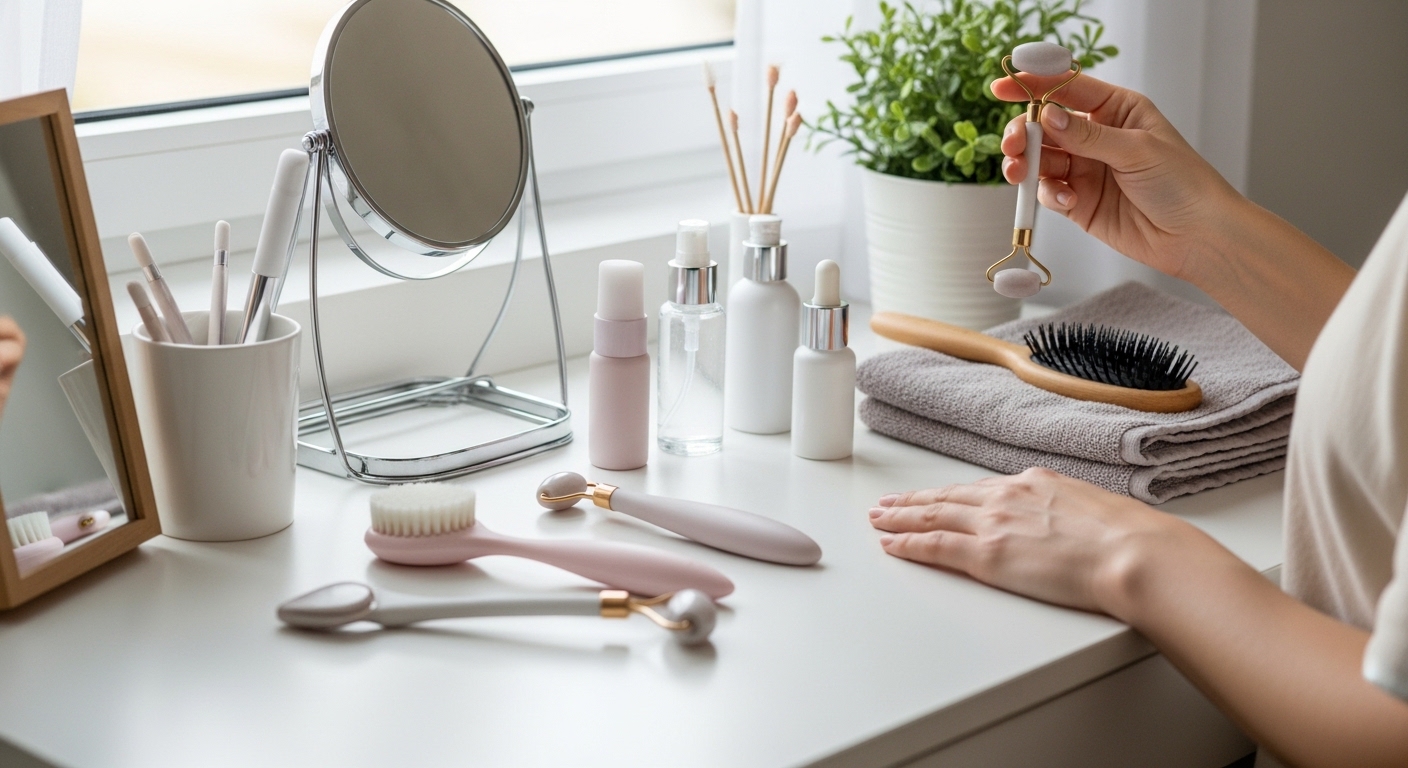
A routine that lasts is a routine that fits real life. Short, repeatable habits beat long, ideal plans that collapse in a week.
Daily (a few minutes): gentle cleanse, moisturise, sunscreen in the morning. Use the tools you use every day — a cleansing brush, a roller — and put them away clean and dry.
Weekly: a deeper session — gentle exfoliation once or twice a week at most, a hair mask or a longer scalp massage, cleaning the tools you used all week.
Monthly: review what is working. Is the skin calmer? Is the hair breaking less? Are the tools still in good condition? Replace anything worn, rusted or broken. Adjust for the season: richer moisturiser in winter, stricter sunscreen in summer.
The test of a routine is not how it feels on day one. It is whether you are still doing it in three months. If a step keeps getting skipped, it does not belong in the routine — remove it, and keep what you actually do.
Cleaning and care
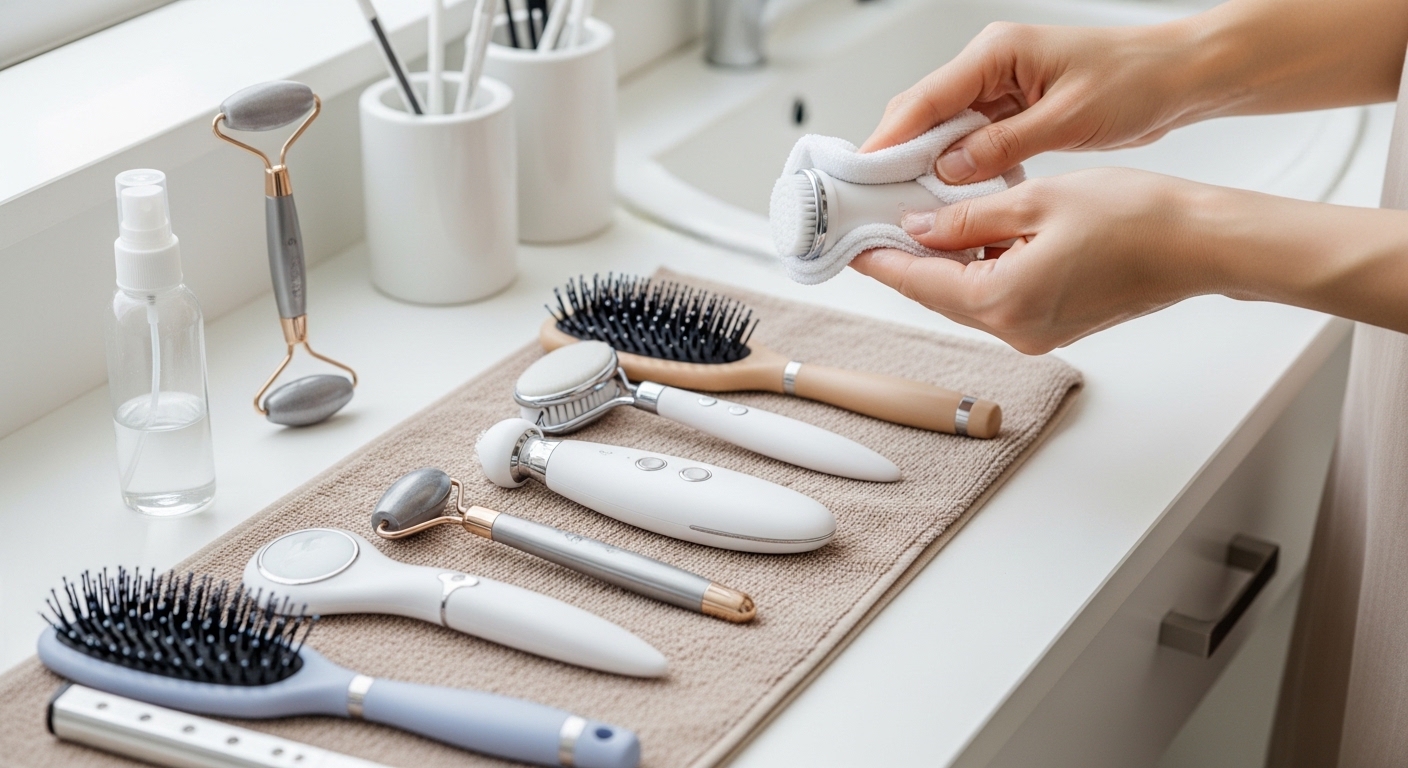
Dirty tools undo the work. Brushes collect makeup and oil, combs collect hair product and dead skin, nail tools collect skin from the cuticles — and a dirty tool rubs those germs back onto clean skin.
The rule, briefly: soap and warm water clean; 70% isopropyl alcohol disinfects; nothing at home sterilizes, and no home method should claim to. Vinegar is a cleaner, not a disinfectant. Lemon juice is not a disinfectant at all, and lemon juice on skin is dangerous — it can cause a sun-triggered burn called phytophotodermatitis. Do not soak tools for hours, do not store them wet, do not share them, and do not steam or microwave sponges — wash and replace them instead. The full cleaning guide, with methods for every tool material, is in the sterilize guide.
Realistic expectations
Home care gives gradual, modest results — and that is a success, not a failure. Skin may feel smoother in days; visible change in tone or texture takes weeks of regular use. Hair becomes easier to manage as breakage falls, but it does not grow faster. Nails improve slowly as new growth replaces damaged nail.
Results fade if use stops. That is normal for maintenance: the point is not a permanent fix, but a steady state that you keep. If a tool or product promises permanent results, instant results, or results “in just one session”, it is promising more than the evidence supports.
Home care and professional care work best together: professional treatments deal with underlying issues, and home care sustains and prolongs the results between visits. That middle ground lowers costs, keeps results, and lets you manage your own routine.
Cost vs value
Beauty tools can look expensive at first sight, and they can save money over time — but only if they are actually used. A tool bought and used twice is the most expensive option of all. Before buying, check the current price, what is included, whether replacement parts are available, and whether you will realistically use it several times a week for months.
Quality beats quantity: fewer, better tools that last years are better value than many cheap tools that break within months. And the cheapest effective steps — sunscreen, a gentle cleanser, a moisturiser — cost less than any device and do more than any device. Spend on the foundation first.
No recommendation is made here. No tool in this guide is named, ranked or recommended, and no price is stated.
Mistakes people make at home
- Using too many tools at once. One or two tools used well beat a shelf of tools used badly. Overloading the skin and hair with stimulation causes irritation, not improvement.
- Expecting instant results. Home care works gradually. Impatience leads to overuse, and overuse leads to irritation — both stop progress.
- Skipping cleaning. Dirty tools cause the breakouts and irritation people blame on products.
- Copying professional treatments. Salon-strength devices, chemical peels and extractions belong in trained hands.
- Trusting labels instead of ingredients. “Hypoallergenic”, “natural” and “unscented” are not guarantees. Read the ingredient list.
- Skipping sunscreen. The tint in a product is not sun protection, and no tool replaces it.
- Treating a medical problem with a tool. A tool cannot diagnose or treat acne, eczema, rosacea or hair loss.
When to get help
See a dermatologist or pharmacist promptly if: redness, burning or stinging does not settle; you have a rash, blisters or open sores; your skin is persistently dry and cracked despite moisturising; you react to many different products and cannot find the cause; your hair is shedding heavily or in patches, or your scalp is painful or sore; or a nail becomes red, swollen, painful or starts to ooze. A dermatologist can diagnose the cause, arrange formal patch testing, and prescribe treatment that over-the-counter products and home tools cannot provide.
Patch test any new product before you use it on your face: apply a small amount to a quarter-sized patch of skin on the inside of your arm or the bend of your elbow, twice a day for 7 to 10 days. The American Academy of Dermatology recommends this length because allergic reactions can take several days to appear, and a 24-hour test can miss them.
Summary
At-home beauty care is maintenance, not treatment: a small set of tools, used gently and regularly, keeps skin smoother, hair in better condition and nails healthier between professional visits. Match tools to your needs, start simple, and add one powered device at a time only after learning its evidence and safety rules. Rollers and gua sha do not drain lymph or firm skin, tools do not increase product absorption, and damaged hair cannot be repaired — only trimmed. Clean tools with soap and water, disinfect with 70% alcohol, and never rely on vinegar or lemon. Sunscreen, a gentle cleanser and a moisturiser do more than any device. If a problem keeps coming back, see a dermatologist.
Sources: American Academy of Dermatology, 7 Rosacea skin care tips (patch-test method: apply a new product to a quarter-sized patch of skin on the inside of the arm for 7–10 days); American Academy of Dermatology, How to select anti-aging skin care products (broad-spectrum sunscreen, SPF 30 or higher every morning). This is a researched overview, not a hands-on review.