Researched overview. This guide is based on published dermatology guidance, not on hands-on product testing by BeautyKob. No product in this guide was tested by us.
Table Of Content
- Quick answer
- What non-electric face tools are
- Why manual tools suit so many people
- Cleansing tools
- Silicone facial cleansing brushes
- Soft-bristle facial brushes
- Exfoliation tools
- Exfoliation pads and sponges
- Natural fibre and stone exfoliation tools
- How often to exfoliate
- Massage tools
- Face rollers
- Gua sha tools
- Massage stones and wands
- Manual pore care tools
- A basic everyday routine with non-electric tools
- Choosing tools by skin type
- Sensitive skin
- Oily and acne-prone skin
- Dry and dehydrated skin
- Mature skin
- How often to use each tool
- Mistakes to avoid
- Washing and storing non-electric tools
- Patch test first
- Frequently asked questions
- When to get help
- The bottom line
Quick answer
Non-electric face tools are manual instruments — cleansing brushes, exfoliation pads, rollers, gua sha stones and extractors — that work through touch, movement and pressure, not through batteries, heat or vibration. They suit many people because you control the pressure and the pace yourself, which makes them less likely to cause harm when used regularly.
They are not a quick fix. They support the skin’s own processes: gentle cleansing, controlled exfoliation and soothing massage. Used lightly, consistently and kept clean, they help the face feel smoother, calmer and more even over weeks. Used hard, too often or while dirty, they irritate the skin and make things worse.
What non-electric face tools are
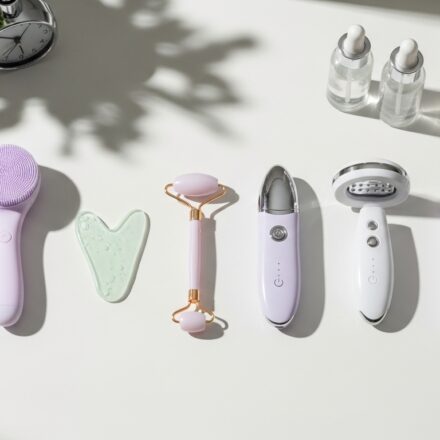
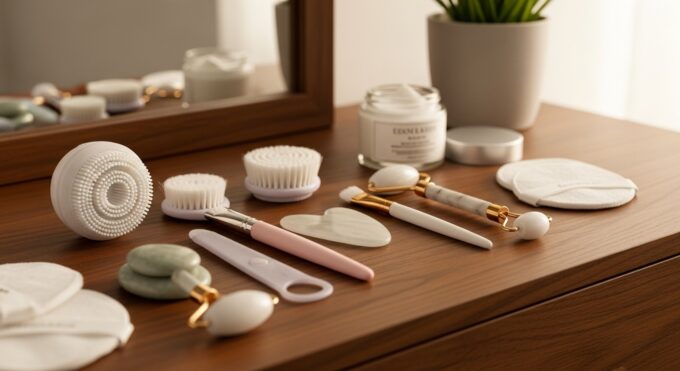
A non-electric tool needs no battery, no cord and no settings. It is made of silicone, stone, wood, fibre or stainless steel, and it works as long as it is used properly and regularly. The most common ones are:
- Cleansing brushes — silicone or soft bristle, for washing.
- Exfoliation pads and sponges — for removing dead surface cells.
- Face rollers — for gentle massage and a cooling, soothing feel.
- Gua sha tools and massage stones — for deeper, slower massage.
- Extractors — for the occasional blocked pore.
Electric devices promise speed through vibration, heat or current. That can work for some people, but it can also irritate the skin more easily when used wrongly. Manual tools are slower, and that slowness is the point: you can feel how your skin reacts, adjust the pressure in the moment, and stop before damage is done.
Why manual tools suit so many people
Manual tools have three advantages over electric ones. First, control: you decide the pressure, the speed and the direction, so you can be gentler on sensitive areas. Second, simplicity: there is nothing to charge, nothing to set, and nothing that can overheat. Third, awareness: working by hand teaches you how your skin responds — where it reddens, where it feels tight, where it needs less. That feedback helps you avoid the damage that a stronger device can cause before you notice it.
None of this makes manual tools a treatment. They do not firm skin, change its structure, or replace skincare products. They make a good routine easier and more consistent.
Cleansing tools
Washing is the foundation of any skincare routine, and cleansing tools make it more even.
Silicone facial cleansing brushes
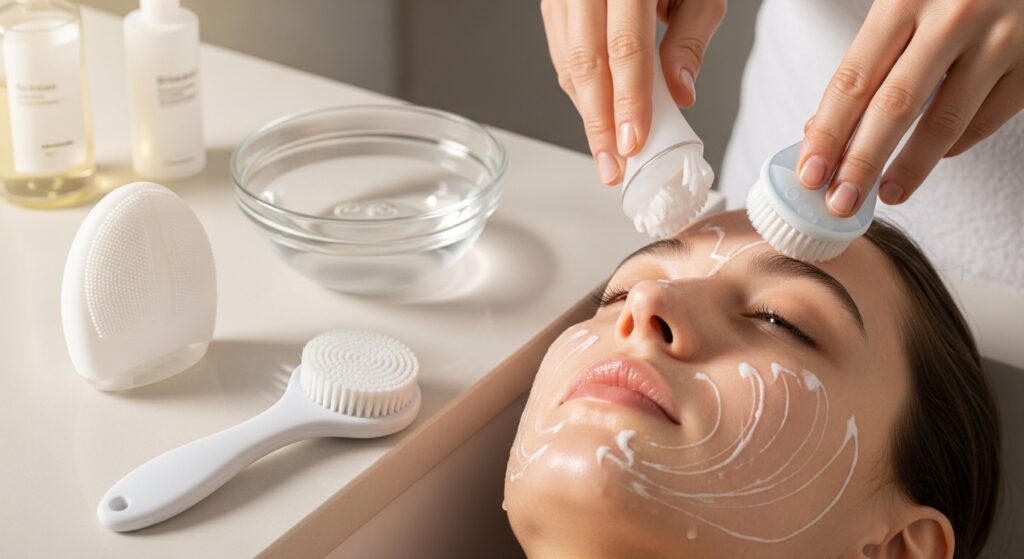
Silicone cleansing brushes are among the safest non-electric face tools. Their soft tips do not scratch the skin, they are easy to wash, and they are gentle enough for daily use. They help lift away sunscreen residue, oil and environmental dirt that hands alone can leave behind. Use them with a mild cleanser and lukewarm water, in small circular movements, and let the tool do the work. Do not press hard. Silicone brushes suit sensitive skin and people new to beauty tools.
Soft-bristle facial brushes
Soft-bristle brushes clean a little more deeply than silicone and can help with coarse or rough skin. They need more care: use them once a day at most, with light pressure, and always with cleanser applied first. Hard bristles can damage the skin barrier, so soft bristles are enough. Do not use any brush on swollen, broken or irritated skin.
Washing is best done with lukewarm water and a gentle, non-abrasive, alcohol-free cleanser, using fingertips for the actual washing and the brush as a light aid. Pat the skin dry — do not rub it.
Exfoliation tools
Dead cells build up on the surface and make the skin look dry and rough. Gentle exfoliation removes that layer; over-exfoliation damages the barrier and makes the skin more sensitive.
Exfoliation pads and sponges
Exfoliating pads and sponges are entry-level tools. Used with cleanser and light pressure, they smooth the skin without irritating it, once or twice a week. They suit people who find scrubs too harsh. Replace them when they wear out, and let them dry fully between uses.
Natural fibre and stone exfoliation tools
Other exfoliation tools are made from natural fibres or smooth stone. They need more attention and more caution than pads and sponges: use them less often, never on dry skin, and always with water or cleanser so the tool glides. They suit people who already know their skin’s limits, not beginners.
How often to exfoliate
For most skin, once or twice a week is enough. Sensitive skin should start with once a week or less. If the skin feels tight, sore or looks red, stop exfoliating and let it recover. Exfoliating every day is not better — it strips the surface and slows recovery.
Massage tools
Facial massage tools work by easing tension and encouraging blood flow. Tension in the face — in the jaw, the forehead, the cheeks — can make the skin look uneven and tired.
Face rollers
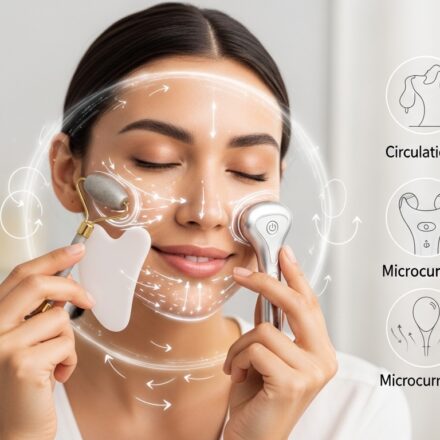
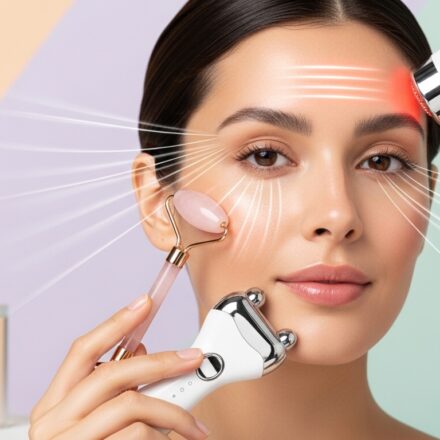
Face rollers are easy to use: they glide across the skin, usually made of stone or metal. A cool roller can feel soothing and can temporarily reduce the look of puffiness. Use light pressure, roll upward and outward, and spend a little extra time on tense areas. A few minutes a day is enough. There is no good evidence that rollers drain lymph or firm skin — treat them as a pleasant, optional step, not a treatment.
Gua sha tools
A gua sha tool works more deeply than a roller. Used properly, it can help ease stiff areas and make the skin feel more flexible. The most common mistakes are pressing too hard and scraping too fast. Gua sha must not be painful — it should feel soothing. Always glide it over a facial oil or serum so it slips, and use slow, fluid strokes. There is no good evidence that gua sha drains lymph, firms skin or changes face shape.
Massage stones and wands
Massage stones and wands let you work on specific areas such as the cheekbones or the jawline. They help relax tight muscles that can make the face look tense. Use them with the same rules as gua sha: light pressure, a slippery surface, and no pain.
Manual pore care tools
Blocked pores affect how the skin feels and looks. Oil, dead skin and debris collect in pores, and when the mixture hardens, the surface feels rough, especially on the nose and cheeks.
A manual extractor can remove visible congestion, but abused, it is harmful. The dermatology guidance is simple: do not pop a pimple. Rules for safe use:
- Only use an extractor on skin softened by warm water.
- Never force an extraction — if it does not come out easily, leave it.
- Clean the tool before and after use.
- Never use it on an active breakout.
Extraction is an occasional step, not a daily habit. Pores have no muscles and cannot open or close — warm water softens the skin around them, it does not open them.
A basic everyday routine with non-electric tools
A routine should fit into life. If it is complicated, it will not last. Five to ten minutes is enough.
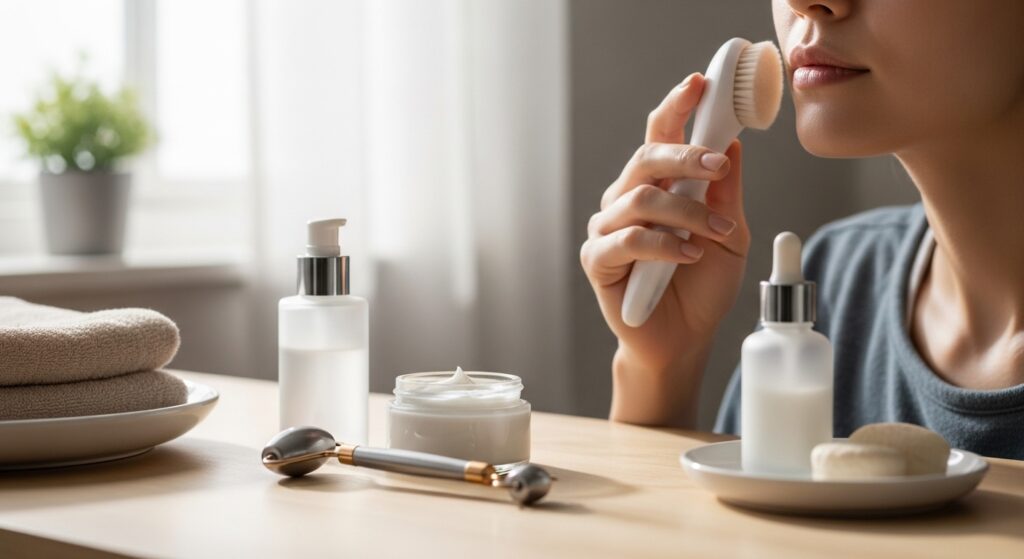
Morning — freshness and circulation. Start with gentle cleansing, using a silicone brush or a soft-bristle brush with a mild cleanser, in slow movements. If your face looks puffy in the morning, use a face roller for one or two minutes, rolling up and outward. Then moisturiser and sunscreen — broad-spectrum SPF 30 or higher, reapplied every two hours outdoors. Sunscreen is the single most effective anti-ageing step.
Evening — recovery and balance. Cleanse again, then apply a facial serum or oil. Use a gua sha tool or a massage stone to ease the tension built up during the day, working slowly over the jaw, cheeks and forehead. Do not rush: evening rituals should be calm, because stress shows on the skin. Exfoliation tools fit here, once or twice a week — not every night.
Choosing tools by skin type
The right tool depends on the skin it is used on.
Sensitive skin
Sensitive skin needs the gentlest tools: a silicone brush, a smooth roller, and soft exfoliation pads used rarely. Avoid harsh exfoliation and strong pressure. Use the smallest amount of stimulation that does the job, and reduce how often you use a tool if the skin stays red for more than an hour afterwards.
Oily and acne-prone skin
Oily skin benefits from thorough cleansing, but too much cleansing can irritate the skin. Use a manual cleansing brush and a light exfoliation tool, and avoid aggressive exfoliation. Use massage tools gently and only on smooth skin — never over active breakouts. Wipe tools clean after every use to stop bacteria building up. Whether harsh cleansing increases oil production is disputed, not proven, so the reason to stay gentle is to protect the skin barrier.
Dry and dehydrated skin
Dry skin needs moisture and gentle stimulation. Use massage tools with a lubricating oil or serum so the tool glides, and follow with a rich moisturiser. Do not brush or scratch the face when it is dry — always use a product first so there is slip.
Mature skin
Mature skin benefits from gentle circulation and easing tension. Gua sha and face rollers can help the skin look more relaxed over time. Do not use heavy pressure — older skin is thinner and bruises more easily. Keep the routine short and calm.
How often to use each tool
- Cleansing brushes: daily, with a mild cleanser, as long as the skin stays calm.
- Exfoliation tools: once or twice a week for most skin; less for sensitive skin.
- Massage tools: daily or a few times a week, as long as it feels comfortable.
- Extractors: occasionally, only when needed.
If the skin feels sore, tight or irritated, take a break and rest the skin. Healthy skincare has rest days built in.
Mistakes to avoid
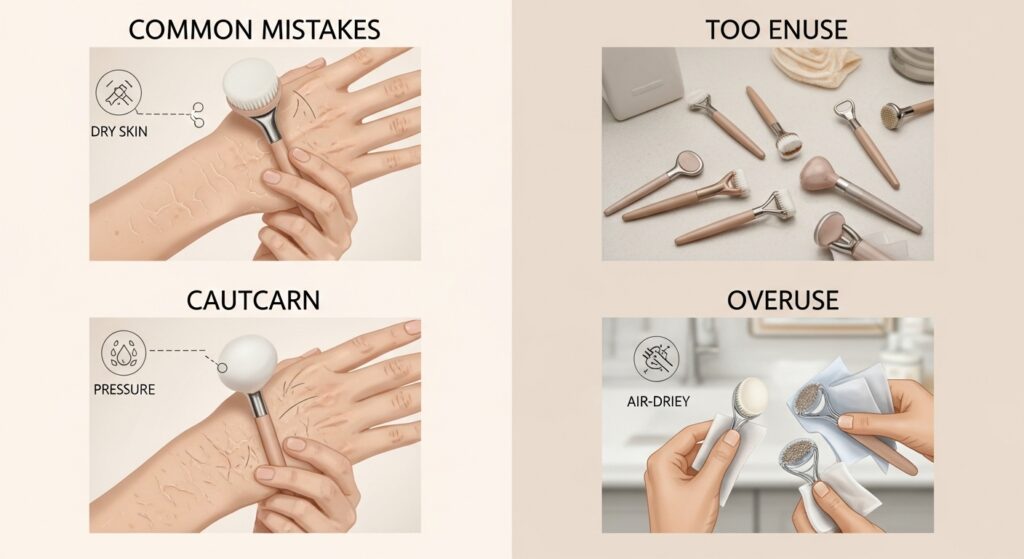
- Using tools on dry skin. Dry skin creates friction, and friction damages the surface and worsens texture. Always use cleanser, water or oil first so the tool glides.
- Applying too much pressure. Pressure causes inflammation. A tool that leaves a mark or causes pain is being used too hard.
- Using too many tools at once. More tools do not mean better results. Using many tools together overworks the skin. Choose one tool per routine step.
- Ignoring tool hygiene. Dirty tools cause irritation and breakouts. Wipe tools clean and dry them after use, and never store them while damp.
Washing and storing non-electric tools
Clean tools last longer and are safer for the skin.
- Silicone and bristle brushes: wash with mild soap and warm water — not hot water, which can damage bristles — rinse thoroughly and air dry.
- Stone tools: wipe clean and store in a dry place. Do not soak them for long periods.
- Extractors: wash and disinfect before and after use.
- Pads and sponges: rinse after use, let them dry fully, and replace them when they wear out.
Patch test first
Before you use a new product on your face — including any product used with a tool, such as a cleanser with a brush or a serum with a roller — patch test it. Apply a small amount to a quarter-sized patch of skin on the inside of your arm or the bend of your elbow, twice a day, for 7 to 10 days. If there is redness, itching or swelling, do not use it on your face. A short test of a day or two can miss a reaction that takes several days to appear.
Frequently asked questions
Do non-electric face tools help the skin? Yes, when they are used regularly and properly. They support gentle cleansing, controlled exfoliation and soothing massage, which together help the skin feel smoother and look healthier.
Can non-electric face tools be used every day? Gentler tools such as a silicone cleansing brush and a face roller can be used daily, as long as the skin is not irritated. Exfoliating tools should be used no more than once or twice a week.
Are non-electric tools safe for sensitive skin? Most non-electric tools are safer for sensitive skin than electric ones, because you control the pressure and the movement. Go slowly, use the gentlest tools first, and watch how the skin responds.
Can I use these tools with skincare products? Yes. Cleansers, serums and oils lubricate the tools so they glide without friction, which prevents irritation. Use a product first, then the tool.
How long does it take to see results? There is no fixed timeline. The skin usually feels smoother within a few weeks of steady, gentle use, and visible change in texture and tone takes longer — several weeks of regular use. Tools are not a quick fix; they work through consistency.
When to get help
See a clinician promptly if you have a rash, blisters or open sores; swelling that lasts more than a day or two; pain or vision changes near the eyes; or a reaction to a new product or tool that does not settle after you stop using it. If a skin concern persists despite a steady routine, a dermatologist can identify causes a routine alone will not fix.
The bottom line
Non-electric beauty tools are the simplest way to care for the face without devices, heat or electricity. Mild cleansing, controlled exfoliation and repeated massage do not interfere with how the skin works — they support it. Consistency, not force, brings real improvement: smoother, calmer, more even-looking skin over time. They are not a quick solution, but a steady companion in skincare — and the healthiest skin comes from a routine you can keep, not from the strongest tool you can buy.
Sources: American Academy of Dermatology, 7 Rosacea skin care tips (patch-test method: apply a new product to a quarter-sized patch of skin on the inside of the arm for 7–10 days); American Academy of Dermatology, How to select anti-aging skin care products (broad-spectrum sunscreen, SPF 30 or higher, reapply every two hours outdoors). This is a researched overview, not a hands-on review.