Researched overview. This guide is based on published dermatology guidance, not on hands-on product testing by BeautyKob. No product in this guide was tested by us.
Table Of Content
- Quick answer
- What skin texture actually is
- The most common causes of uneven texture
- The three tool jobs that help texture
- Cleansing brushes: the foundation of smooth skin
- Silicone cleansing brushes
- Soft-bristle cleansing brushes
- Exfoliation tools: controlled, not aggressive
- Manual exfoliation pads and sponges
- Soft exfoliation brushes
- Home microdermabrasion devices
- Massage tools: circulation, not transformation
- Face rollers
- Gua sha tools
- Pore care tools: less is more
- What does not help texture
- Routines by skin type
- Dry and rough skin
- Oily and uneven skin
- Sensitive or reactive skin
- Pairing tools with products
- Cleaning tools: dirty tools undo progress
- When to stop or change a tool
- Realistic timelines
- Patch test first
- Frequently asked questions
- When to get help
- The bottom line
Quick answer
Skin texture is how the surface of your skin feels and looks — smooth or rough, even or bumpy. Tools help texture in three ways: they cleanse more evenly than hands alone, they remove dead surface cells in a controlled way, and they massage the skin gently. They do not replace skincare products, and they do not work overnight. Texture changes slowly, over weeks of steady use, because the skin renews itself gradually.
The most common mistake is reaching for stronger tools when the problem is a routine that is too harsh, too frequent, or too dirty. Gentle tools, used regularly and kept clean, do more for texture than aggressive ones.
What skin texture actually is
Texture is the touch and the look of the skin’s surface. Healthy skin renews itself constantly: it sheds dead cells and grows new ones. When that process slows down or is interrupted, the surface becomes rough, develops small closed bumps or blocked pores, or never looks smooth no matter how much moisturiser is applied.
Texture problems usually build up slowly, and most people only notice them once they have become persistent. They do not necessarily mean you have bad skin. They usually mean your routine is not supporting the skin in the right way.
The most common causes of uneven texture
- Incomplete cleansing. Sunscreen residue, excess oil and environmental dirt left on the skin can build up in pores and roughen the surface.
- Dead cells building up. When dead cells are not shed evenly, the surface feels dry and rough.
- Too much of a harsh product, with no rest. Strong products used too often can irritate the skin and weaken its surface.
- Over-exfoliation. Scrubbing too hard or too often damages the skin barrier, which makes texture worse, not better.
Texture does not improve while the surface is overloaded or left irritated. The first step is always to make the routine gentler, not stronger.
The three tool jobs that help texture
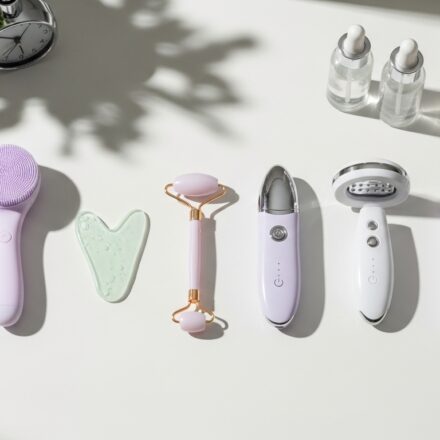
Tools work with the skin, not on it. Three jobs matter for texture:
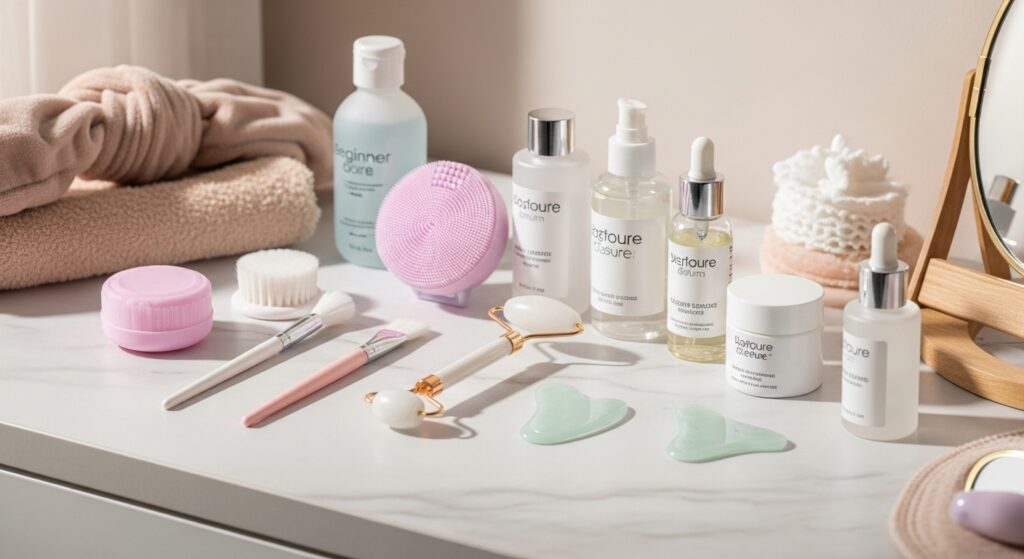
- Gentle cleansing. A cleansing brush helps a cleanser spread evenly and lifts away residue that hands can leave behind.
- Controlled exfoliation. An exfoliation tool removes dead surface cells evenly, without the uneven scratching a rough scrub can cause.
- Massage. A roller or gua sha stone used gently can feel soothing and can temporarily reduce the look of puffiness.
No single tool does all three jobs, and no tool fixes texture on its own. Products still matter — a gentle cleanser, a moisturiser and daily sunscreen do most of the work. Tools support them.
Cleansing brushes: the foundation of smooth skin
Cleansing is where smoothness starts. If cleansing is not effective, the next tool and the next product will both work less well.
Silicone cleansing brushes
Silicone cleansing brushes are among the safest tools for texture. Their soft tips do not scratch the skin, they are easy to wash, and they are gentle enough for daily use. They help clear the build-up that makes skin feel rough, and they let a cleanser reach into the pores without damaging the skin barrier. Use slow, circular movements on the forehead, nose and chin — the places where texture is usually felt most — with a mild cleanser and lukewarm water. Silicone brushes suit sensitive skin, acne-prone skin and people new to beauty tools.
Soft-bristle cleansing brushes
Soft-bristle brushes clean a little more deeply than silicone. They help shed dead skin cells that make the surface look dull and rough. Use them daily or every other day, with light pressure and cleanser applied first. Keep them away from bruised or swollen skin. Overuse can irritate the skin, which works against texture rather than for it.
Washing is best done with lukewarm water and a gentle, non-abrasive, alcohol-free cleanser, using fingertips for the actual washing and the brush as a light aid. Pat the skin dry — do not rub it.
Exfoliation tools: controlled, not aggressive
Exfoliation is the most direct way tools improve texture, and the easiest way to damage it. The difference is control: a tool lets you exfoliate evenly, with light pressure, while a rough scrub can scratch the skin unevenly.
Manual exfoliation pads and sponges
Manual exfoliation tools use soft pads or textured surfaces to loosen dead skin cells. They suit people who notice flakiness, roughness or uneven make-up application. Use them once or twice a week, with cleanser and light pressure. Most skin types can manage that rhythm; sensitive skin should start with once a week or less.
Soft exfoliation brushes
A soft brush used gently can help with dullness and roughness. The rule is the same: light pressure, once or twice a week, and stop if the skin feels sore or looks red. Hard bristles and daily exfoliation are not better — they strip the surface and slow recovery.
Home microdermabrasion devices
Home microdermabrasion devices use fine abrasion or suction to remove surface skin. They work on texture more deeply than a basic exfoliation tool, and they are stronger tools that need respect. They are not a beginner step and not a treatment for scarring or pigmentation. Overuse or pressing too hard can irritate the skin and slow healing. They suit people who are already comfortable with simple tools and know their skin’s limits. Do not use them on broken, sunburnt or very sensitive skin, and do not use them every day.
Massage tools: circulation, not transformation
Massage tools improve how the skin feels and looks in the short term. They do not change its structure.
Face rollers
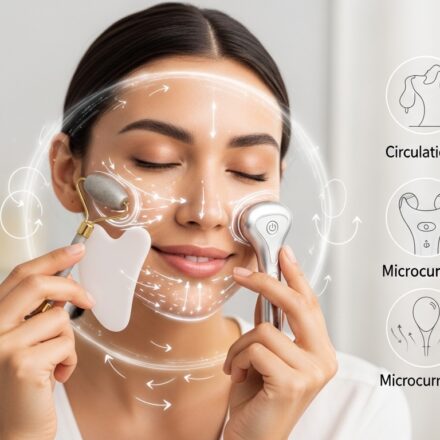
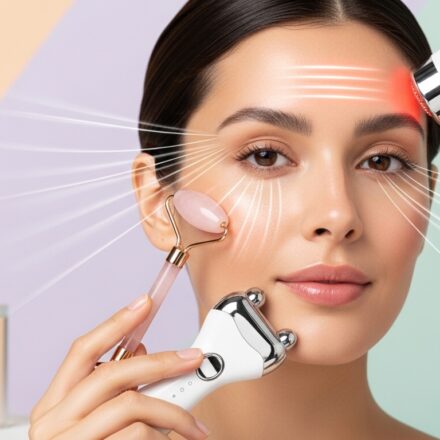
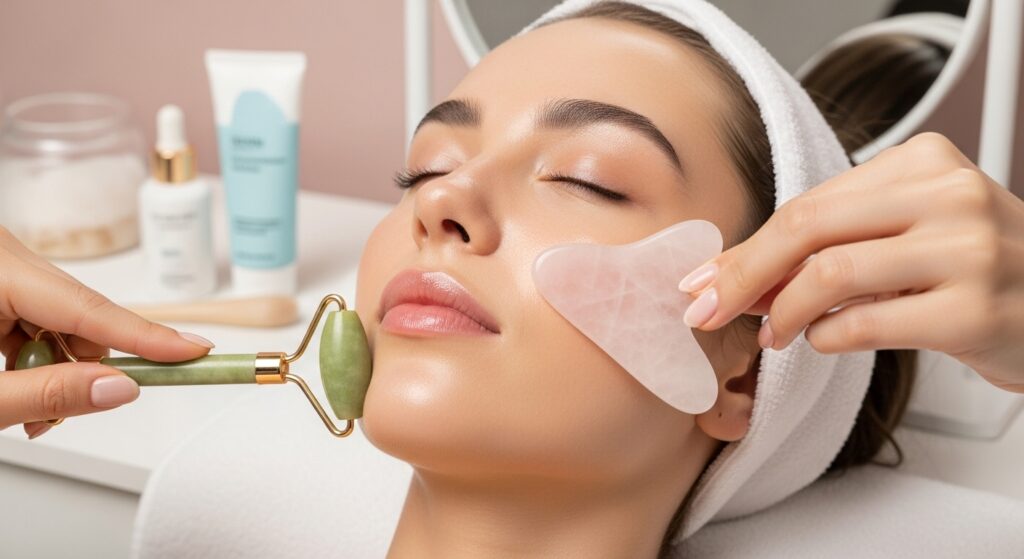
A face roller used gently can ease tension in the jaw and forehead, where tension often contributes to an uneven look. Rolling encourages blood flow and helps the skin renew itself naturally, which over time supports a finer surface. Consistency matters more than pressure: light rolling every day does more than aggressive rolling once a week. A cool roller can temporarily reduce the look of puffiness.
Gua sha tools
A gua sha tool works more deeply than a roller. Used properly, it can help ease stiff areas where tension and congestion collect, and it can make the skin feel more flexible. The most common mistake is scraping too hard or too fast. Gua sha should glide, not press — always use it with a facial oil or serum so the tool slips, and stop if it hurts. There is no good evidence that gua sha drains lymph or firms skin, so treat it as a soothing, optional step, not a treatment.
Pore care tools: less is more
Blocked pores change how the skin feels. Oil, dead skin and debris collect in pores, and when the mixture hardens, the surface looks and feels rough, especially on the nose and cheeks.
A comedone extractor can help with a blackhead, but used wrongly it causes inflammation and scarring, which makes texture worse. The dermatology guidance is simple: do not pop a pimple. If you use an extractor at all, use it only on skin softened by warm water, press gently, never force it, and sterilise the tool before and after use. Never use an extractor on an active breakout. Pores have no muscles and cannot open or close — warm water softens the skin around them, it does not open them.
What does not help texture
- Using tools on dry skin. Dry skin creates friction, and friction causes small surface damage. Always use a thin layer of cleanser, serum, gel or oil first so the tool glides.
- Pressing too hard. Pressure does not make a tool work better. It turns skin red, can break small blood vessels, and roughens the surface over time. If the skin stays red, the pressure is too high.
- Using too many tools at once. A session needs one or two tools, not five. Too many tools at once can irritate the skin and slow down texture improvement. Add rest days between active treatments.
- Expecting tools to make products absorb better. There is no good evidence that tools increase how much product the skin absorbs. A tool helps a product spread evenly; it does not push it deeper into the skin.
- Using tools over make-up or sunscreen. Clean skin comes first, tools come next, moisturiser seals the result. Using a tool over make-up or sunscreen traps debris against the skin.
Routines by skin type
No single routine fits everyone. Texture improves fastest when the routine matches the skin.
Dry and rough skin
Dry texture needs moisture and gentle stimulation. Use a silicone cleansing brush with a creamy cleanser, then a face roller to help the skin feel smoother, then a rich moisturiser. Avoid hard exfoliation tools. Protect the skin from cold and wind, which dry it further.
Oily and uneven skin
Oily skin benefits from cleansing and pore care, but not from aggression. Use a cleansing brush a few times a week, a light exfoliation tool once or twice a week, and a cooling roller for redness. Keep sessions short. Over-cleansing and over-exfoliating can irritate the skin; whether they increase oil production is disputed, not proven, so the reason to stay gentle is to protect the barrier, not to control oil.
Sensitive or reactive skin
Sensitive skin needs the gentlest approach. Use tools that calm rather than stimulate: a silicone brush and a face roller are the most suitable. Avoid vibrating or abrasive tools until the skin barrier is stable. Introduce one tool at a time and watch for redness or soreness before adding another.
Pairing tools with products
Tools work best with the right products, in the right order:
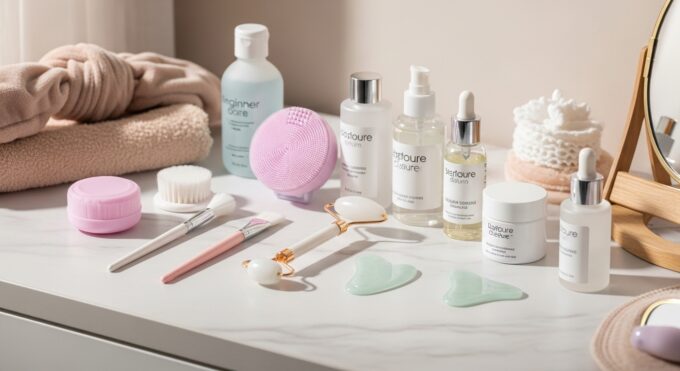
- Light serums work well with rollers, which help them spread evenly.
- Oils support massage tools, giving them the slip they need to glide.
- Do not use tools with strong acids or retinol when you are starting out. Use them on different nights instead. Retinoids are the strongest topical option for fine lines, but they take three to six months to show results, should be started slowly, and must not be used in pregnancy.
- Moisturiser comes after tools, and sunscreen is the last step in the morning — broad-spectrum SPF 30 or higher, reapplied every two hours outdoors. Sunscreen is the single most effective anti-ageing step.
Cleaning tools: dirty tools undo progress
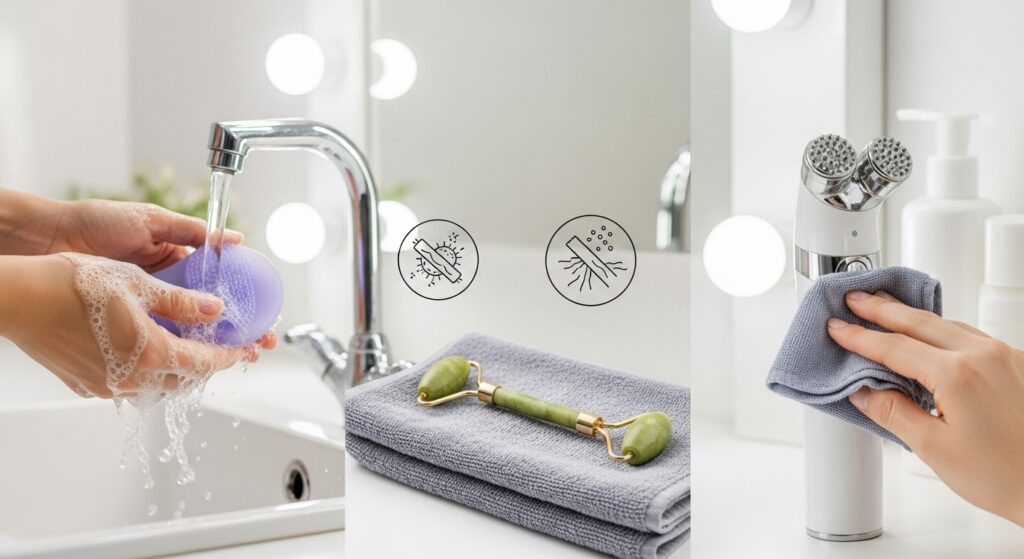
Dirty tools undo texture progress. Bacteria on a tool can cause breakouts and irritation. Wash manual tools with mild soap and warm water after use, rinse well, and let them dry fully before storing. Do not share personal tools — other people’s bacteria do not behave the same way on your skin. Replace worn pads and sponges regularly.
When to stop or change a tool
Skin gives signals, and ignoring them makes texture worse. Stop using a tool if the skin feels sore, burns or peels, and only resume when the skin is back to normal. If redness lasts more than an hour after use, reduce the pressure or the frequency. Listen to the skin’s reaction rather than pushing through pain to improve texture.
Realistic timelines
Texture changes slowly because the skin renews itself over weeks, not days. There is no fixed date by which smooth skin arrives, and anyone promising visible change in two weeks is guessing. A realistic pattern is this: in the first few weeks of a simpler, gentler routine, the skin feels cleaner and calmer; over several weeks of steady use, the surface gradually feels smoother. People who use their tools twice or three times a week, every week, usually do better than people who use them every day for one week and then stop. Consistency beats intensity.
Lifestyle supports the result too: hydration affects how smooth the surface feels, sleep supports repair — adults need seven or more hours a night — and stress can worsen roughness and inflammation. Tools help most when the rest of the routine is steady.
Patch test first
Before you use a new product on your face — including any product used with a tool, such as a cleanser with a brush or a serum with a roller — patch test it. Apply a small amount to a quarter-sized patch of skin on the inside of your arm or the bend of your elbow, twice a day, for 7 to 10 days. If there is redness, itching or swelling, do not use it on your face. A short test of a day or two can miss a reaction that takes several days to appear.
Frequently asked questions
Do beauty tools help skin texture? Yes, when they are used properly and regularly. They help with gentle cleansing, controlled exfoliation and massage, which together support smoother skin over time. They are an addition to skincare, not a replacement for it.
How often should I use beauty tools for texture? Most tools work two or three times a week. Calming tools such as rollers can be used daily, as long as the skin is comfortable.
Can I use several tools in one session? One or two tools per session is enough. Using many tools at once can irritate the skin and slow down texture improvement.
Are beauty tools safe for sensitive skin? Yes, if you choose gentle tools and use them lightly. Avoid abrasive or vibrating tools while the skin barrier is unstable, and introduce one tool at a time.
How long does it take to see results? There is no fixed timeline. The surface usually feels cleaner within a few weeks of a gentler routine, and smoother over several weeks of steady use. Texture improves gradually, not overnight.
When to get help
See a clinician promptly if you have a rash, blisters or open sores; swelling that lasts more than a day or two; pain or vision changes near the eyes; or a reaction to a new product or tool that does not settle after you stop using it. If a skin concern persists despite a steady routine, a dermatologist can identify causes a routine alone will not fix.
The bottom line
Improving texture is about steady, gentle attention, not about buying more tools. A cleansing brush, a soft exfoliation tool and a roller — used lightly, regularly and kept clean — support the skin’s own renewal. The real change is knowing your skin, choosing the tools that fit it, and being patient. Tools do not substitute for skincare; they support it. Used well, they help smooth rough areas, soften uneven ones, and improve how the skin feels and reflects light — slowly, and for the long term.
Sources: American Academy of Dermatology, 7 Rosacea skin care tips (patch-test method: apply a new product to a quarter-sized patch of skin on the inside of the arm for 7–10 days); American Academy of Dermatology, How to select anti-aging skin care products (broad-spectrum sunscreen, SPF 30 or higher, reapply every two hours outdoors). This is a researched overview, not a hands-on review.