Researched overview. This guide is based on published dermatology guidance, not on hands-on product testing by BeautyKob. No product in this guide was tested by us.
Table Of Content
- Quick answer
- How heat damages hair
- How heat-free styling works
- Preparing hair for heat-free styling
- Heat-free curling tools
- Straightening and smoothing without heat
- Volume without heat
- Choosing tools by hair type
- Day styling and overnight styling
- Switching away from heat gradually
- Mistakes that damage hair without heat
- When to get help
- Summary
Quick answer
Heat-free styling works, but it works differently from heat styling. Heat forces hair into a shape quickly. Heat-free styling lets hair dry into a shape slowly — held in place by a tool while the moisture leaves. That is the whole idea: moisture, tension and time shape hair. Heat only speeds the process up, and it charges for the speed with damage.
The damage is cumulative. Blow dryers, straighteners and curling irons weaken the protein bonds that make hair strong and elastic. The hair dries out, hardens, and breaks more easily. Conditioner cannot reverse that: once the inner structure is weakened, the fibre cannot regenerate. Only new growth is undamaged, and only trimming removes the damaged lengths.
This guide covers how heat-free styling works, the tools for curls, smoothing and volume, how to use them by hair type, how to switch away from heat gradually, and the honest limits of what heat-free styling can do.
How heat damages hair
Hair is made of protein and moisture. Heat drives the moisture out and weakens the protein bonds that give hair its strength and elasticity. Repeated many times, the bonds break: the hair loses stretch, hardens, and snaps instead of bending.
Common signs of heat damage are: hair that feels rough even after conditioning; hair that breaks instead of stretching slightly; and loss of curl pattern, especially in wavy and curly hair exposed to a lot of heat. These signs often push people to buy more products. Products are the less efficient answer — the efficient answer is to change the tools.
How heat-free styling works
Hair is more sensitive to moisture, tension and time than to temperature. When hair dries in a held position, it keeps that shape. Heat only makes the drying faster.
That means three things decide whether a heat-free style works:
- Moisture. Hair is most manageable when slightly damp. Fully dry hair cannot be moulded easily, and soaking-wet hair is at its most fragile. The hair should be damp, not dripping.
- Tension. Light, even tension holds the shape. Too much tension breaks hair and hurts the scalp.
- Time. The hair must be completely dry in its styled position before the tool comes out. Removing a tool early is the most common reason a heat-free style fails.
Heat-free styles usually hold less firmly than heat styles and are often softer and less defined. That is the honest trade: less damage, less hold. Patience is the price, and the payoff is hair that breaks less over time.
Preparing hair for heat-free styling
Preparation decides the result more than the tool does.
Moisture balance. Start with clean, slightly damp hair. Fully dry hair cannot be shaped, and wet hair stretches too much and breaks. A light leave-in conditioner or cream helps the hair hold its shape without hardening it. Heavy products drag the hair down and slow drying. Balance matters more than quantity.
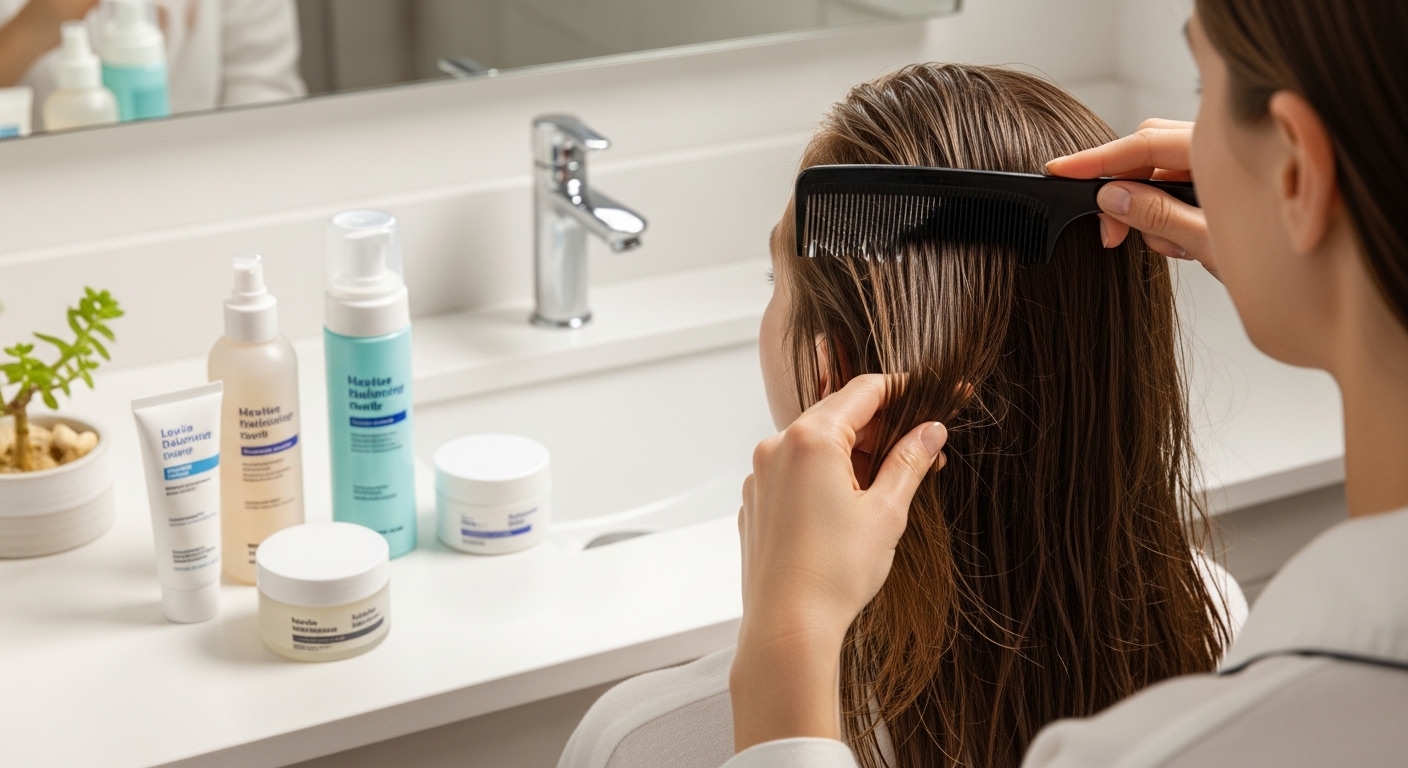
Detangle first. Tangling creates points of tension that break. Before any styling tool, detangle from the ends to the roots with a wide-tooth comb, on damp hair with conditioner in it. This step is often skipped, and skipping it makes styling harder and more damaging, even without heat.
Patch test new products. If you use a new styling product with the tools, patch test it first: apply a small amount to a quarter-sized patch of skin on the inside of your arm or the bend of your elbow, twice a day for 7 to 10 days. If there is redness, itching or swelling, do not use it. The American Academy of Dermatology recommends this length because allergic reactions can take several days to appear, and a 24-hour test can miss them.
Heat-free curling tools
These tools guide the hair into curls while it dries. They do not press or force it.
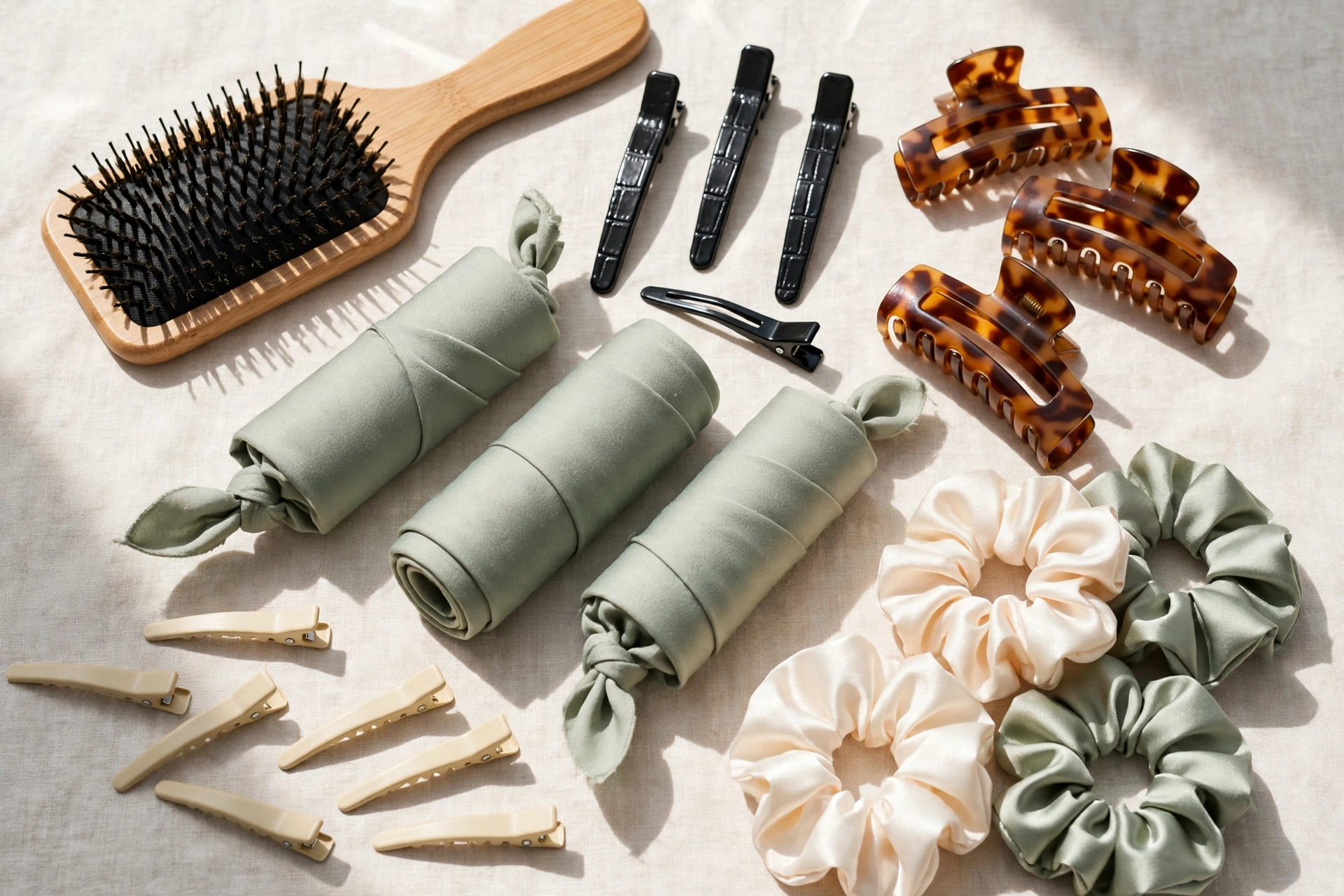
Flexi rods and soft curling rods. Bend to the shape of the head. Wrap damp hair around them and let it dry. Rod thickness and section size decide the curl size: larger sections and thicker rods give looser curls; smaller sections and thinner rods give tighter curls.
Foam rollers. Soft and pull-free, which makes them helpful for beginners. They create soft curls and volume.
Fabric curl tools and curlformers. They surround the hair rather than twisting it, which reduces friction. Good for weak or coloured hair. Drying takes longer, but the results are more even.
For all curling tools: wrap smoothly from root to end, keep the tension even, and do not touch the hair before it is fully dry — touching it while damp creates frizz and breaks the curl.
Straightening and smoothing without heat
Wide-tooth comb. Reduces breakage and helps smooth hair as it air-dries. Works best with light tension and even sections. This is the tool for wet or damp hair — never a paddle brush.
Paddle brush. Spreads tension over a large section, which makes it good for smoothing long or straight hair that is already detangled and dry. Do not use a paddle brush on soaking-wet hair: dragging it through wet hair causes breakage.
Hair wrapping. The hair is wrapped around the head and left to dry in a stretched position. It reduces shrinkage and gives a smooth finish. Keep the wrap loose enough to be comfortable.
Volume without heat
Velcro rollers. Lift the roots while the hair dries. Use them on moderately damp hair. Do not pull them out while the hair is wet — lift them out gently once the hair is dry.
Root clips. Raise the hair at the roots to add volume without affecting the length. Useful for flat hair. Clip them in while the hair is damp and remove them once it is dry.
Volume comes from lift at the roots and the angle at which the hair dries. Never pluck hair to create volume — plucking damages the follicle and can cause permanent loss.
Choosing tools by hair type
Fine hair. Needs smaller tools and lighter products. Large tools or too much product weigh fine hair down, and it dries faster than thick hair — a few hours is often enough.
Thick hair. Needs larger tools and more drying time. Heavier hair often needs overnight drying. Keep the tension moderate — high tension does not shape thick hair better, it breaks it.
Curly and wavy hair. Already shaped naturally. Heat-free tools refine and define the curls rather than creating them. Use low-friction tools and avoid brushing dry curls, which breaks the curl pattern and creates frizz.
Day styling and overnight styling
Day styling. Works for medium and fine hair that dries in a few hours. It allows re-styling during the day. Do not touch the hair while it is drying — touching adds frizz.
Overnight styling. Suits thick or textured hair that dries slowly. Wrap or roll the hair before bed, cover it with a soft scarf or bonnet to reduce friction while you sleep, and remove the tools in the morning once the hair is fully dry. Overnight styles usually hold longer because the hair has hours to set.
Drying time and climate. How long a heat-free style takes depends on the hair and the air. Thick hair holds more water and dries slowly — it often needs overnight. Fine hair dries in a few hours. Humidity slows drying: on a humid day, start earlier or choose an overnight style, and do not remove tools while the hair still feels damp inside the wrap. In dry air, hair dries faster but can feel brittle — a little leave-in conditioner helps. Rushing the process is the most common reason a style fails; patience gives consistent results.
Refreshing a style. Light spraying with water and gentle reshaping by hand is usually enough. Re-wrapping is not always needed. Do not re-wet the whole head every day — that adds handling, and handling adds breakage.
Switching away from heat gradually
There is no need to quit heat tools overnight. Using heat less often — once a week instead of daily — reduces the cumulative damage. As the new growth comes in undamaged, styling gets easier and the hair needs less product.
A practical switch:
- Pick one heat-free style and practise it until it works reliably. Do not try to learn five at once.
- Use heat only for the styles you cannot yet do without it, and keep it to the lowest setting that works.
- Give each new style a fair trial. Heat-free styling takes longer at first. The first few attempts are often the worst — the technique improves with practice, and the hair improves as damaged lengths are trimmed away.
Rest days help too. Not styling at all on some days gives the hair a break from handling, and handling is itself a source of damage.
Mistakes that damage hair without heat
Heat is not the only cause of damage. These mistakes damage hair with no heat involved:
- Too much tension. Hair pulled tight thins over time and hurts the scalp. Comfort is the guide: if the scalp aches, the style is too tight. Tight wrapping or tying every day can cause traction alopecia — hair loss from repeated pulling. Keep styles loose, vary where the hair is tied, and take styles down at night.
- Styling dry, brittle hair. Hair breaks when it is dry. Moisturise first, then style — never the other way round.
- Removing tools too early or too roughly. Rushing the removal disrupts the shape and creates frizz. Unwrap slowly, and let the style settle before touching it.
- Over-handling. Every touch adds friction. Hands also transfer oils to the hair. Once the style is set, leave it alone.
- Expecting heat-free styling to repair damage. It does not. Damaged lengths stay damaged until they are trimmed — trim every 6 to 12 weeks. Heat-free styling protects the new growth; it does not fix what heat already broke.
When to get help
See a doctor or dermatologist if: shedding suddenly increases well beyond the usual 50 to 100 hairs a day; hair is coming out in patches; the scalp is painful, sore, blistered or has sores that do not heal; or hair loss comes with other symptoms such as tiredness, weight change or irregular periods. These can point to a medical cause — thyroid problems, iron deficiency and medication changes are known triggers for shedding — and a doctor can check for them.
Summary
Heat-free styling shapes hair with moisture, light tension and time, instead of heat. Start with clean, slightly damp hair, detangle ends-first with a wide-tooth comb, and let the hair dry completely in its styled position before removing the tool. Use flexi rods, foam rollers or fabric tools for curls; a wide-tooth comb and wrapping for smoothing; velcro rollers and root clips for volume. Never use a paddle brush on wet hair, never pluck hair for volume, and never pull styles tight — comfort is the guide. Heat-free styling will not repair damage that heat already caused; it protects new growth while damaged lengths are trimmed away. Patch test any new styling product for 7 to 10 days, wear SPF 30+ sunscreen on exposed skin when outdoors, and see a doctor if shedding suddenly changes.
Sources: American Academy of Dermatology, 7 Rosacea skin care tips (patch-test method: apply a new product to a quarter-sized patch of skin on the inside of the arm for 7–10 days); American Academy of Dermatology, How to select anti-aging skin care products (sunscreen: SPF 30 or higher on exposed skin when outdoors). This is a researched overview, not a hands-on review.