Researched overview. This guide is based on published dermatology and public-health guidance, not on hands-on product testing by BeautyKob. No product in this guide was tested by us, and no product is recommended.
Table Of Content
- Quick answer
- What facial tools do
- Manual tools
- Massage tools: rollers and gua sha
- Extraction tools
- Spatulas, scoops and brushes
- Powered devices
- Microdermabrasion machines
- High-frequency wands
- Ultrasonic skin scrubbers
- LED devices
- Microcurrent machines
- Diagnostic tools
- Magnifying lamps
- Skin analysers
- Choosing tools
- Material matters
- Ergonomics and comfort
- Quality vs. cost
- Using them safely
- Hygiene between clients
- Common mistakes
- Building a kit
- When to refer to a dermatologist
- Skin care around the tools — a short note
- Summary
Quick answer
An esthetician’s tools are the working end of a facial: they apply products evenly, remove debris from pores, exfoliate the surface, and help the esthetician see the skin clearly. The tools themselves do not treat skin conditions. What makes a facial safe and effective is training, hygiene and knowing the limits of each tool — not the number of gadgets in the kit.
This guide explains what each kind of facial tool does, how to choose tools, how to use them safely, and how to keep them hygienic between clients. It is written for readers who want to understand professional facial tools — whether they are choosing an esthetician, training as one, or deciding what belongs in a professional kit. It is general information, not medical advice, and it is not a training manual: powered devices and extractions need proper training and should not be copied at home.
Contents: What facial tools do · Manual tools · Powered devices · Diagnostic tools · Choosing tools · Using them safely · Hygiene between clients · Common mistakes · Building a kit · When to refer to a dermatologist
What facial tools do
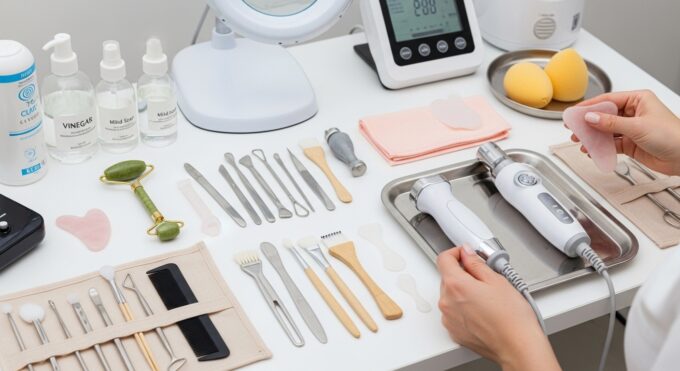
Facial tools fall into four jobs:
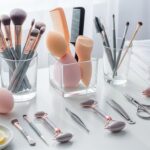
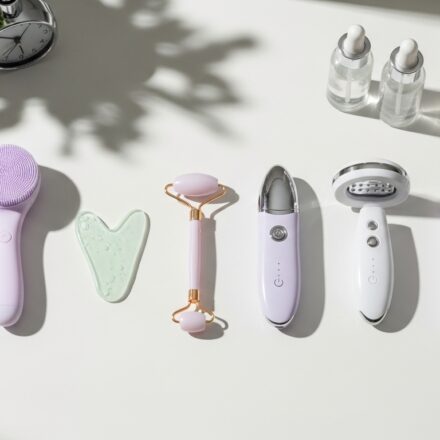
- Massage and application — rollers, gua sha stones, brushes, spatulas and scoops. They spread products evenly and give the hands a consistent surface to work with.
- Extraction — comedo extractors and lancets. They remove material from clogged pores. This is the highest-skill, highest-risk manual job in a facial.
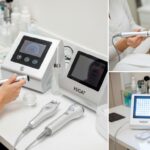
- Powered treatment — microdermabrasion machines, high-frequency wands, ultrasonic scrubbers, LED devices and microcurrent machines. They exfoliate, clean or stimulate the surface under power.
- Diagnosis — magnifying lamps and skin analysers. They help the esthetician see blocked pores, dryness and fine lines that are hard to spot with the naked eye.
One honest limit applies to all of them: no facial tool diagnoses a skin condition or treats a medical problem. A tool can make skin feel smoother and look brighter for a while. It cannot cure acne, remove wrinkles, or replace a dermatologist’s treatment.
Manual tools
Massage tools: rollers and gua sha
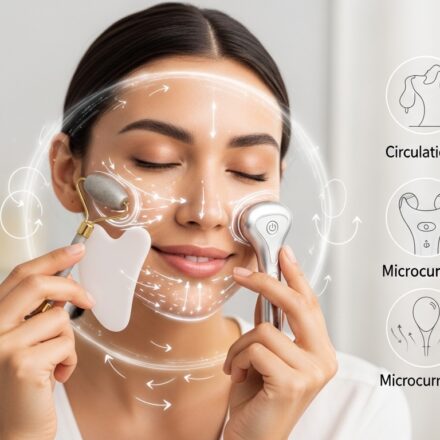
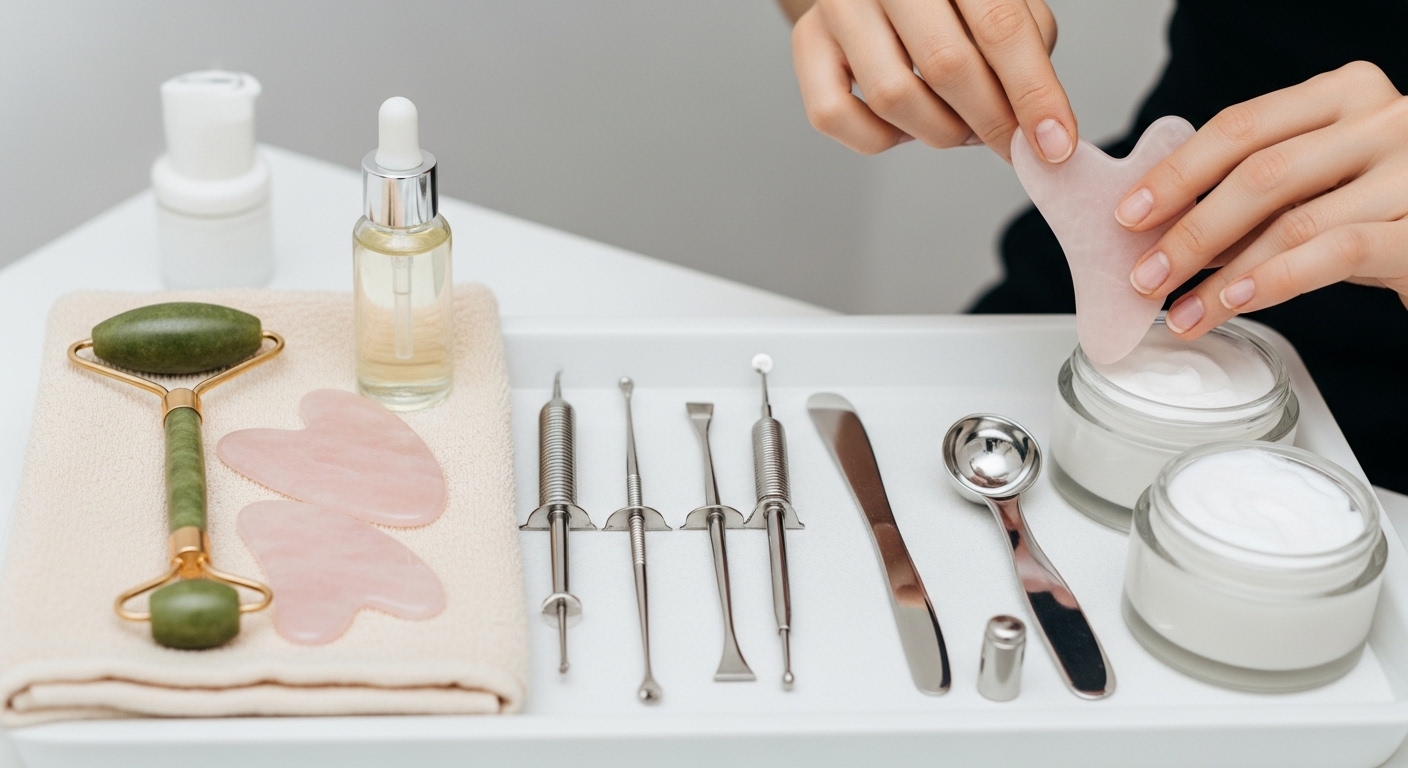
Jade rollers and gua sha stones are the most familiar facial tools. They are used with a serum or oil so they glide, in slow upward and outward strokes, with light pressure. They feel pleasant, they can reduce the look of temporary puffiness by moving fluid in the surface tissue, and they help the esthetician work evenly across the face.
What they do not do matters as much as what they do. There is no good evidence that rollers or gua sha drain the lymphatic system, improve blood circulation in a way that changes the skin, firm the skin, or increase how much product the skin absorbs. A massage tool is a comfort and application tool, not a treatment. Anyone selling it as a lift or a detox is overstating the evidence.
Technique is the whole skill: the wrong direction or too much pressure irritates the skin, especially around the eyes. Use the lightest pressure that still glides, never drag dry skin, and stop if the skin turns red and stays red.
Extraction tools
Comedo extractors are the most sensitive manual tool in the kit. They clear clogged pores, but they only work on the right kind of congestion, with the right pressure, on skin that has been properly prepared and softened. Too much pressure bruises the skin and can push material deeper; too little does nothing.
Extractions are not for every client or every breakout. They should never be done on inflamed or swollen acne, open wounds, broken skin, sunburn, or during a rosacea or eczema flare. The American Academy of Dermatology’s guidance on pimples is clear: do not pop a pimple — squeezing can push bacteria deeper, cause scarring, and make the spot worse. An esthetician’s extraction is a controlled, trained procedure on suitable skin, not a stronger version of squeezing at home.
Spatulas, scoops and brushes
Spatulas and scoops look simple, but they do a real hygiene job: they take product out of a jar without fingers going in, so bacteria from hands never reach the product. Stainless steel spatulas are durable and easy to clean; silicone applicators are gentle on sensitive skin. Brushes apply masks and peels evenly and keep the esthetician’s hands out of the product. The rule is the same for all of them: one tool per client, cleaned before the next use.
Powered devices
Powered devices do more than manual tools, and they carry more risk. Every one of them needs training, the manufacturer’s instructions, and a client whose skin suits it.
Microdermabrasion machines
Microdermabrasion machines exfoliate with a diamond tip and vacuum suction. They remove the top layer of dead skin cells and can make skin feel smoother and look brighter for a while. The results are temporary and gradual, and a salon machine is stronger than a home device — which is exactly why it needs a trained operator. The device family’s published guidance is to start at the lowest suction, move in short even strokes, never hold the tip still in one place, and stay away from the eyes. It is not for inflamed or broken skin, and it does not remove wrinkles, deep scars or sun damage.
High-frequency wands
High-frequency wands pass a small electric current through a glass electrode held just above the skin. They are used mainly for congested or acne-prone skin. The evidence is thin: a small pilot study found fewer inflammatory acne lesions after four weeks of twice-weekly treatment, and a 2022 scoping review of 47 high-frequency devices found no randomized trials supporting their use for facial rejuvenation. The ozone and antibacterial claims made for these wands are manufacturer claims, not proven results. Treat them as a modest add-on for congestion, not as a treatment for acne or ageing.
Safety rules are non-negotiable: never use one with wet hands, remove metal jewellery first, never use it over broken skin or active cysts, and never use it on a client with a pacemaker or other implanted electronic device without a doctor’s say-so.
Ultrasonic skin scrubbers
Ultrasonic scrubbers use high-frequency vibration to loosen debris and exfoliate the surface. They clean more evenly than hands alone, but they do not push serums deeper into the skin — there is no good evidence that any tool increases how much product the skin absorbs. Use them gently, on clean skin, and stop if the skin reddens or stings.
LED devices
LED devices shine red or near-infrared light onto the skin. Of all the at-home and salon device technologies, red and near-infrared light has the strongest evidence for ageing skin: studies have found increased collagen and reduced signs of ageing with regular use over weeks. The effects are modest and gradual, not dramatic, and they fade if use stops. Blue light is used for acne rather than ageing. LED is the gentlest powered option, but it is still not a treatment for wrinkles — it is maintenance.
Microcurrent machines
Microcurrent machines send low-level electrical currents through the skin to stimulate the facial muscles, giving a temporary lifted look. The evidence is limited to small studies, and the benefits are modest and temporary. A microcurrent facial is not a substitute for sunscreen, retinoids or in-office treatments, and it does not replace a facelift. The same electrical safety rules apply as for high-frequency wands.
Diagnostic tools
Magnifying lamps
A magnifying lamp is the esthetician’s most-used diagnostic tool. It shows blocked pores, dryness, flaking and fine lines that the naked eye misses, so the treatment can be matched to what the skin actually shows. It does not diagnose anything — it shows the surface, and the esthetician interprets what is visible.
Skin analysers
LED skin analysers use light to show pigmentation, oiliness and surface texture more clearly. They help track changes over time and give the client something visible to discuss. They do not diagnose vascular problems, measure skin health, or produce “evidence-based” medical recommendations. Any finding that looks like a medical condition — a changing mole, a sore that does not heal, a rash that keeps coming back — is a reason to refer the client to a dermatologist, not to treat it in the salon.
Choosing tools
Material matters
Stainless steel is durable, easy to clean and can be disinfected reliably. Silicone is gentle and does not irritate tender skin. Glass is smooth and easy to wipe but breaks. Natural stone feels cool and pleasant but is porous and harder to disinfect, so it needs more careful cleaning. Match the material to the job and to how the tool will be cleaned.
Ergonomics and comfort
A tool that strains the hand gets used badly. Handles should fit comfortably, feel balanced, and not slip when wet. An esthetician who works with an uncomfortable tool all day will press too hard, rush, or skip steps. Comfort is a safety feature, not a luxury.
Quality vs. cost
Cheap tools break, shed bristles, rust, or lose their shape — and a broken tool cannot be made safe by cleaning it. Good tools last years when they are maintained. Start with solid, mid-range basics and add powered devices as skill and client demand grow. A device’s price says nothing about its evidence: check whether it is cleared by the regulator in your country, what its stated intended use is, and whether any independent study supports it. Clearance means the device met safety standards for its stated use — it is not proof that the marketing claims on the box are true.
Using them safely
- Follow the manufacturer’s instructions for settings, duration and skin type. Every device has limits, and exceeding them is how skin gets hurt.
- Start low. Lowest suction, lowest intensity, shortest session — then increase only if the skin stays comfortable.
- Prepare the skin. Clean skin, no makeup or sunscreen on the area being treated, and a patch test for any new product used with the tools.
- Never use a powered device on broken, inflamed, sunburnt or infected skin, or during a rosacea or eczema flare.
- Watch the skin, not the clock. Redness that does not fade, stinging, blistering or swelling means stop, not push through.
- Keep a record. Note the settings used, the client’s reaction, and anything unusual — so the next session starts from knowledge, not guesswork.
Hygiene between clients
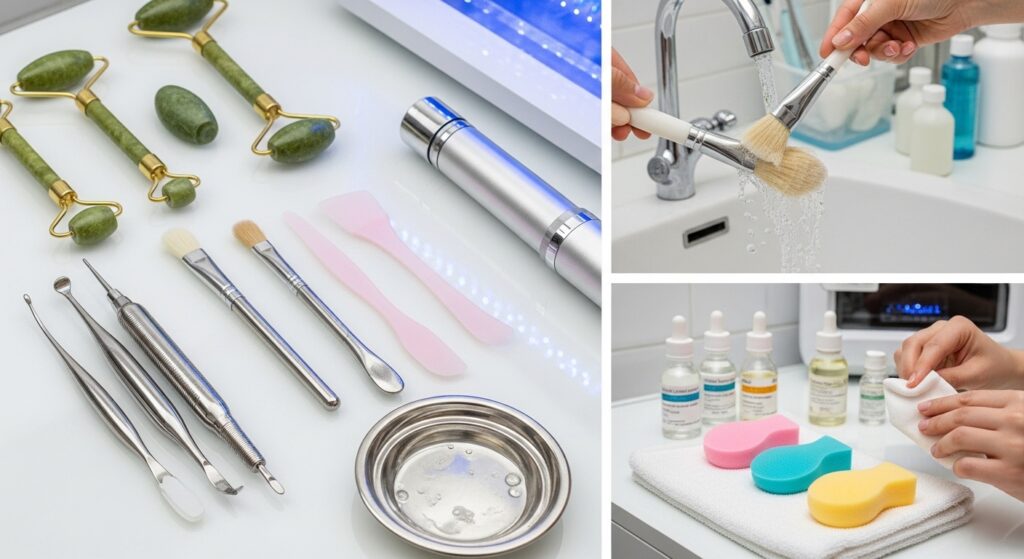
Hygiene is the part of professional practice that protects both the client and the esthetician. Tools touch skin, pores and sometimes blood — a dirty tool spreads bacteria, fungi and viruses from one client to the next.
The rules are simple, and they are not optional:
- Clean and disinfect between EVERY client. Not once a day, not once a week — between every client. Wash with mild soap and warm water to remove visible residue first, because disinfectant cannot reach germs hiding under makeup, oil or dead skin. Then disinfect with an EPA-registered disinfectant or 70% isopropyl alcohol, with the contact time the product states, and let the tool dry fully.
- Sterilize only what needs it, and do it properly. Instruments that break the skin — lancets, and any tool that has touched blood — must be sterilized, and sterilization means an autoclave. Steaming is not sterilization. A UV cabinet is not a sterilizer. Soaking in alcohol is disinfection, not sterilization. Nothing at home or in a salon shortcuts sterilization except proper equipment.
- Vinegar and lemon are not disinfectants. Vinegar is a cleaner: it dissolves grease and grime but is not registered as a disinfectant and does not reliably kill germs. Lemon juice is not a disinfectant at all, and lemon juice on skin is dangerous — it can cause a sun-triggered burn called phytophotodermatitis.
- Do not use household bleach on beauty tools. It corrodes metal, damages bristles and sponges, and irritates skin.
- Use single-use items where they apply. Disposable applicators, cotton, and anything that cannot be disinfected between clients should be used once and thrown away.
- Store tools clean and dry. Dry storage in a clean, dust-free place, in separate trays or pouches. Never store damp tools in closed containers, and never mix clean tools with used ones.
Common mistakes
- Skipping hygiene between clients. The fastest way to lose trust — and to cause an infection.
- Using a powered device without training. Settings, skin type and contraindications are not guesswork.
- Overusing electric devices. More sessions do not mean faster results; they mean irritated skin.
- Treating every skin problem with a tool. A tool cannot diagnose or treat a medical condition.
- Copying professional treatments at home. Salon-strength devices and extractions belong in trained hands.
- Keeping worn tools. A brush that sheds, a metal tool that rusts, a stone that cracks, a sponge that tears — replace it. A worn tool cannot be made safe by cleaning.
- Believing the marketing. “Lymphatic drainage”, “collagen boost”, “product penetration” — if a tool’s claim has no independent evidence behind it, treat it as a claim, not a fact.
Building a kit
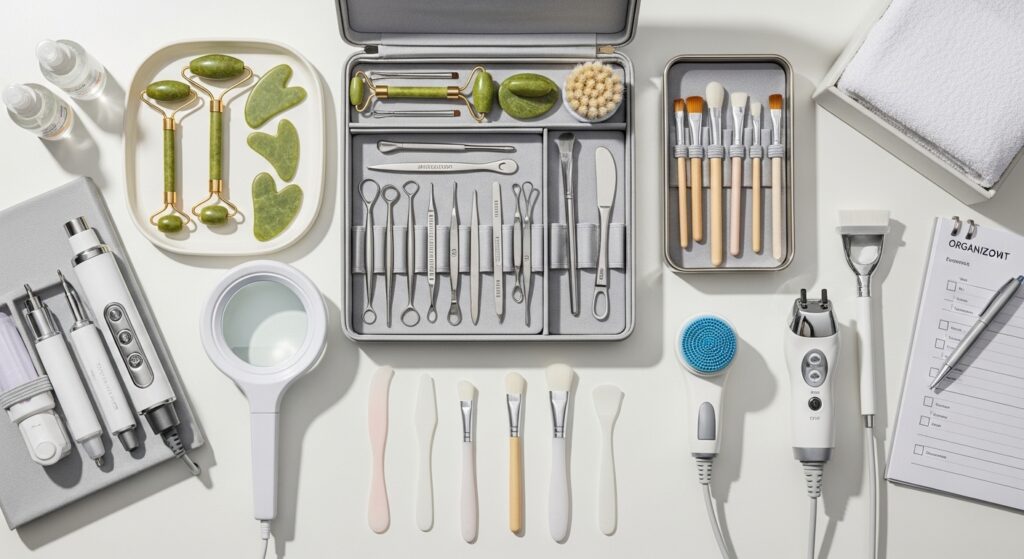
A professional kit is built in stages, not bought all at once:
Starter kit: massage rollers or gua sha stones, extraction tools, spatulas and scoops, brushes, a magnifying lamp, and cleaning supplies. These cover most facials and teach the core skills.
Next stage: one powered device, chosen for the clients you actually see — an ultrasonic scrubber for congestion, or a microdermabrasion machine for texture. Learn it properly before adding another.
Advanced tools: high-frequency wands, LED devices, microcurrent machines and skin analysers, added as experience and client demand grow. Each one needs its own training and its own cleaning routine.
Budget for maintenance, not just purchase: replacement tips, filters, disinfectant, single-use supplies and repairs. A device you cannot maintain is a device you will stop using safely.
When to refer to a dermatologist
Estheticians do not diagnose skin conditions or treat medical problems. Refer a client to a dermatologist promptly if you see: a mole that has changed shape, colour or size; a sore that does not heal; a rash, blister or open sore that keeps coming back; severe, painful or scarring acne; hair loss with scalp pain or sores; or any skin problem that is getting worse despite good care. A referral is good practice, not a failure — it protects the client and the esthetician.
Skin care around the tools — a short note
Tools are one half of a facial. The other half is the skin itself: a gentle cleanser, a moisturiser, and a broad-spectrum sunscreen with SPF 30 or higher every morning, reapplied every two hours when outdoors. Sunscreen is the single most effective anti-ageing step there is — more effective than any device in this guide.
Patch test any new product before using it on a client’s face: apply a small amount to a quarter-sized patch of skin on the inside of the arm or the bend of the elbow, twice a day for 7 to 10 days. The American Academy of Dermatology recommends this length because allergic reactions can take several days to appear, and a 24-hour test can miss them.
Summary
Facial tools are the working end of a facial — massage tools, extractors, spatulas, powered devices and diagnostic tools, each with its own job and its own limits. Choose tools by material, comfort and quality, not by marketing claims. Use them with training, start low, and never on broken or inflamed skin. Clean and disinfect between every client, sterilize properly with an autoclave where sterilization is needed, and never rely on vinegar, lemon or steaming as disinfectants. Rollers and gua sha do not drain lymph or firm skin, and no tool diagnoses or treats a medical condition. Build the kit in stages, replace worn tools, and refer anything medical to a dermatologist.
Sources: American Academy of Dermatology, 7 Rosacea skin care tips (patch-test method: apply a new product to a quarter-sized patch of skin on the inside of the arm for 7–10 days); American Academy of Dermatology, How to select anti-aging skin care products (broad-spectrum sunscreen, SPF 30 or higher every morning, reapply every two hours outdoors). This is a researched overview, not a hands-on review.